

Qianshan Mountain, known locally as Qianshan or “Thousand Lotus Peaks,” sits about 20 kilometres southeast of Anshan in Liaoning Province and ranks among the most rewarding day trips in China’s northeast. This Qianshan Mountain Liaoning guide covers everything you need: how to get to Qianshan from Shenyang, the best Qianshan hiking trails, the Qianshan cable car and tickets, and of course the spectacular Qianshan autumn foliage season that draws photographers from across the region.
Tucked where the Liaodong Peninsula rises into low granite ranges, Qianshan is a Buddhist and Taoist sacred mountain with more than 900 named peaks, dozens of cliffside temples, and a famous pair of naturally formed stone figures said to resemble Maitreya Buddha. The name “Qianshan” literally means “a thousand mountains,” and on a clear morning the layered ridges do look like a thousand lotus petals unfolding toward the horizon. Because the mountain is compact yet varied, it suits both casual walkers and keen trekkers.
A complete Qianshan Mountain Liaoning guide needs context on the wider region. Most travellers base themselves in Shenyang or Dalian and visit as a side trip. If you are building a northeast itinerary, pair this with our Shenyang travel guide for the provincial capital’s palaces and tombs, or our Dalian travel guide if you prefer the coast and seafood.
How to get to Qianshan from Shenyang
The simplest way to understand how to get to Qianshan from Shenyang is by high-speed train. Services run frequently from Shenyang to Anshan, taking roughly 40 to 70 minutes depending on whether you catch a G or D train. From Anshan railway station you can take a dedicated tourist bus or a taxi to the Qianshan scenic area entrance, about 30 minutes away. Driving the whole way takes around two hours without traffic and is easy via the expressway.
If you are coming from Dalian, the high-speed rail to Anshan is longer, around two hours, so many visitors instead combine Qianshan with a night in Anshan itself. Anshan is also famous for its jade market and the giant jade Buddha, which makes a natural pairing with a mountain day. Either way, arriving before 9 a.m. lets you beat both the tour buses and the afternoon haze.
Qianshan hiking trails
There are two main ridges: the West Ridge (Xishan) and the North Ridge (Beishan). The classic Qianshan hiking trails loop between them and take between three and six hours depending on your pace and how many temples you stop at. The West Ridge is steeper and more dramatic, passing the Wuliang Taoist temple and the strange “totem” rock formations. The North Ridge is gentler and delivers the signature view of the Maitreya stone, the mountain’s most photographed natural wonder.
For a relaxed visit, ride the Qianshan cable car and tickets cover the lower section so you can save your legs for the upper ridge. The cable car splits into two sections, and a combined ticket lets you take the first lift and then walk the summit loop. Trekkers who want a longer day can follow the ridge all the way to Five Buddha Peak, the highest point at 708 metres, which gives sweeping views over the Liaodong plain and, on clear days, toward the Bohai coast.
If you enjoy walking in the hills, our China hiking treks guide lists other accessible day hikes across the country, from Guilin karst to quiet Great Wall stretches near Beijing. Qianshan is a fine warm-up for those bigger adventures.

Qianshan cable car and tickets
Understanding the Qianshan cable car and tickets saves both money and time. A standard entry ticket covers the park, and the cable car is sold as an add-on in one or two stages. As of recent seasons, a combined entry-plus-cable-car pass is the best value if you plan to use the lifts. Students and seniors usually get discounted admission on presentation of valid ID, and children under a certain height enter free.
Buy tickets at the official window or through major Chinese travel apps; for foreigners, having your passport ready speeds up the process. The scenic area is large, so even with the cable car you will still walk a fair amount on shaded stone paths. Keep some cash as a backup, because signal can drop on the upper ridges and card terminals occasionally fail.
Best time to visit Qianshan
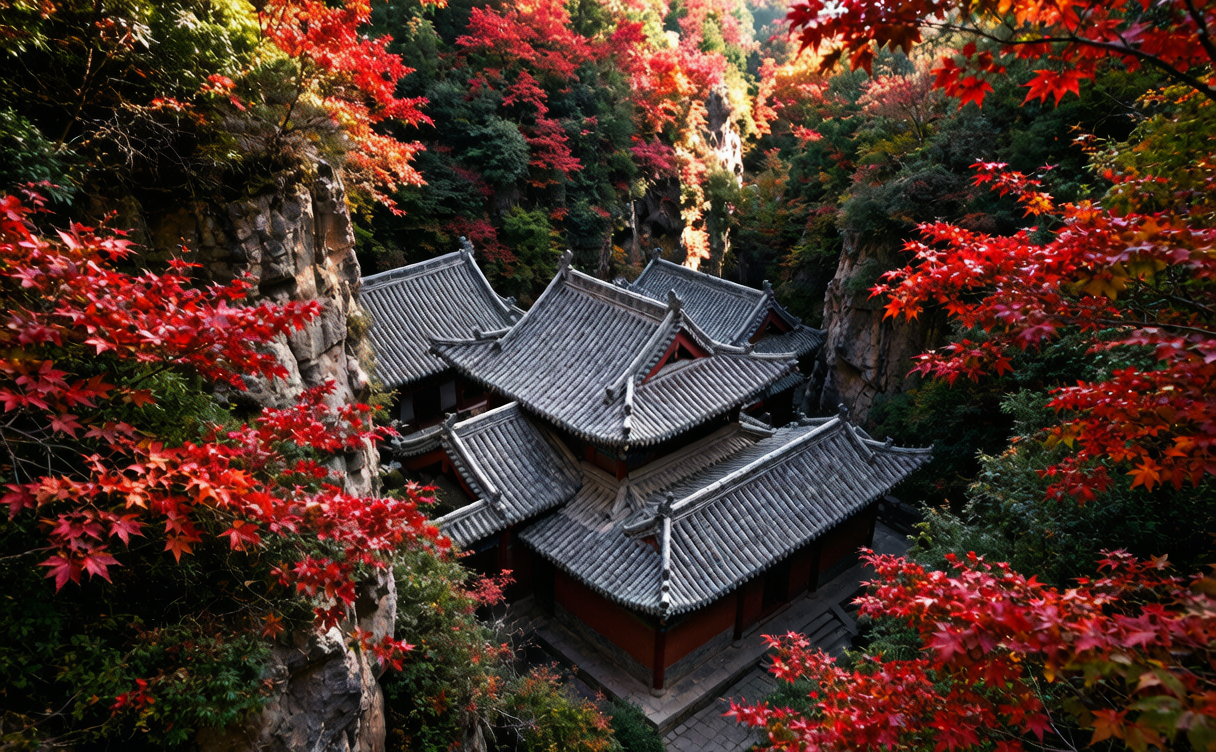
The Qianshan autumn foliage season is the headline draw. From late September through mid-October, the maple, oak and elm forests turn deep red and gold, and the mountain hosts an autumn festival with local food stalls. This is the best time to visit Qianshan for photography and comfortable temperatures, with crisp air and clear sightlines.
Spring brings wild azaleas and far fewer crowds, while summer is green and humid but pleasant for escaping the city heat under the forest canopy. Winter is quiet and sometimes snow-dusted, though some paths and the upper cable car can close in heavy snow. For a broader picture of the season across the country, see our best autumn destinations in China roundup, which ranks Qianshan highly for colour and accessibility.
Food, temples and practical stops
Inside the park, small stalls sell roasted sweet potatoes, corn, and jade-themed souvenirs, but for a proper meal head back to Anshan. The Wuliang Taoist temple on the West Ridge is worth a pause for its cliff carvings, and the Qianshan Great Buddha, a giant carved Maitreya, is a short walk from the North Ridge path. Toilets are basic but present at major stops, and mobile coverage is decent on the ridges.
If you want a natural hot spring afterwards, Anshan and the nearby Tanggangzi area have spring resorts that pair perfectly with a hiking day. Soaking tired legs in mineral water while the autumn light fades is a local ritual you should not skip.
Combine Qianshan with more of Liaoning
Qianshan works well as part of a northeast China loop. From Anshan you can head east to Dandong on the Yalu River border, covered in our Dandong travel guide, or north toward Changbai Mountain if you have more time, described in our Changbai Mountain guide. Each adds a different flavour, from riverfront cities to volcanic lakes.
For official opening hours, ticketing and conservation notices, consult the Anshan Culture and Tourism Bureau information page or the broader Liaoning tourism portal. A helpful overview of how China’s sacred mountains are evaluated for their cultural and scenic value is maintained by UNESCO on its World Heritage natural and mixed sites listing, which explains the criteria used to protect places like Qianshan’s forested ridges.
This Qianshan Mountain Liaoning guide should give you the confidence to plan a smooth trip. Whether you come for the autumn colour, the cliff temples, or a quiet ridge walk, Qianshan rewards travellers who arrive prepared, and it remains one of the most underrated stops in northeast China.