

This Qikou ancient town guide is about one of the least-visited historic places in northern China: a stone-built river port clinging to the loess cliffs of Lin County, in the Lüliang region of Shanxi province, where the Yellow River swings past in a wide muddy curve. For roughly two centuries Qikou was one of the busiest inland harbours in the empire, because a set of rapids downstream made the river unnavigable and every boatload of grain, salt, oil, and wool had to be unloaded here and carried east by camel and mule train. When the railways came, the town simply stopped. What is left is a Qing-dynasty merchant port frozen mid-sentence, plus the extraordinary stacked cave village of Lijiashan on the hill behind it.
Why Qikou Is Worth the Effort
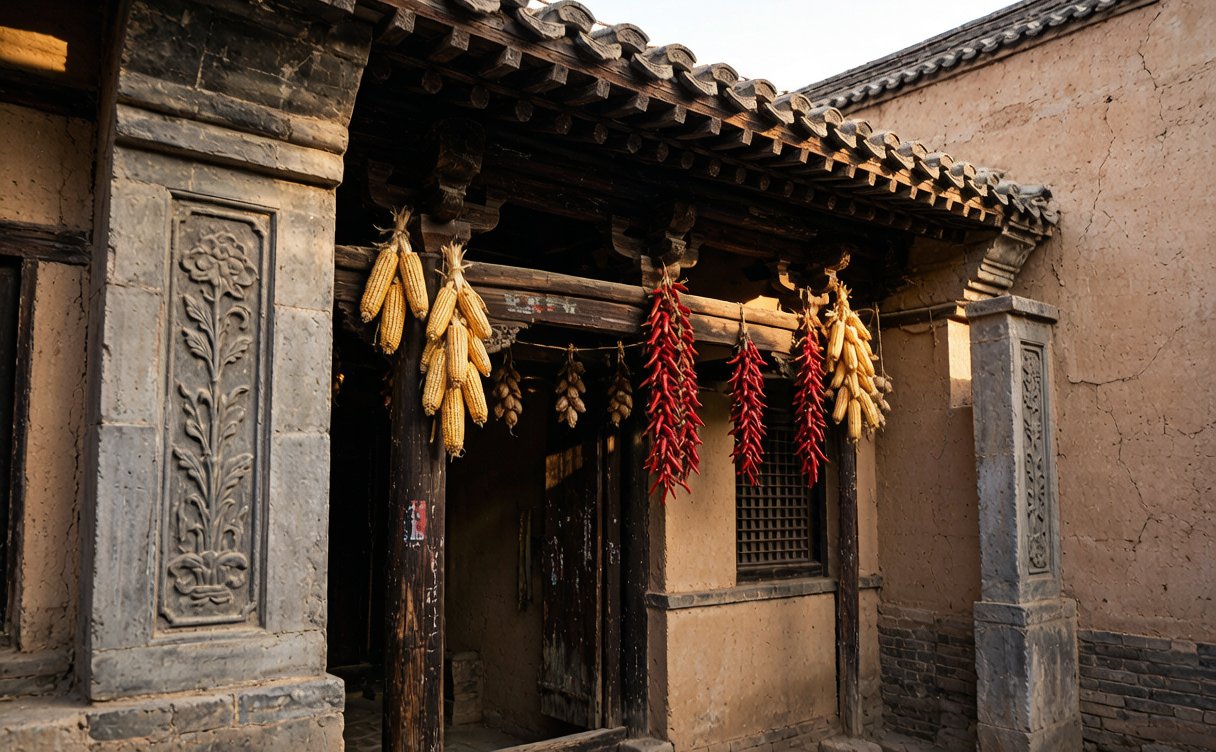
Qikou is not on the way to anywhere. Getting there takes half a day from Taiyuan, and there is no bullet train, no international hotel, and very little English. What you get in return is a genuinely unrestored landscape: hand-cut stone warehouses along a single sloping main street, courtyards with carved beams and faded shop signs, donkeys still working the lanes, and a river the colour of milky tea running below.
The town is also the gateway to yaodong country — the loess cave dwellings that shelter millions of people across northern Shanxi and Shaanxi. Nowhere shows them off better than Lijiashan, a village of arched cave homes stacked up a 70-degree slope in as many as eleven tiers. The painter Wu Guanzhong stumbled on it in 1989 and described it as looking like an ancient tomb from the outside and a paradise from within; it has been a pilgrimage for Chinese art students ever since.
Best Time to Visit Qikou
The best time to visit Qikou is September and October, hands down.
- September–October: 12–25°C, dry, sharp blue skies, and the jujube harvest in full swing — Lin County is famous for its red dates, and the terraces and rooftops fill with drying fruit. The loess glows gold in low autumn light.
- April–June: Pleasant at 14–28°C, but spring brings wind and dust off the plateau. River levels are low and the water runs clear-ish rather than yellow.
- July–August: 22–33°C and the wettest months. This is when the Yellow River actually looks yellow, running high and thick with silt — dramatic, though rain can turn dirt tracks to mud.
- November–March: Cold and stark, −10 to 5°C, with bare terraces and ice at the river’s edge. Guesthouses are cheap but many close. Chinese New Year brings village folk performances, stilt walkers, and drum troupes.
Planning around Chinese seasons is half the battle in the north — see our best time to visit China guide for the regional breakdown.
How to Get There
There is no direct rail service worth relying on. Almost everyone routes through Taiyuan, the Shanxi capital, then continues by road to Lishi (the seat of Lüliang city) and on to Qikou. Allow a full travel day.
| From | Option | Time | Approx. Cost |
|—|—|—|—|
| Beijing West | High-speed train to Taiyuan South | 2.5–3 hr | RMB 210–260 (US$30–37) |
| Xi’an North | High-speed train to Taiyuan South | 3–3.5 hr | RMB 240–300 (US$34–42) |
| Pingyao Ancient City | Train to Taiyuan, then coach west | 3.5–4.5 hr | RMB 90–130 (US$13–18) |
| Taiyuan | Train to Lüliang (Lishi) | 2–2.5 hr | RMB 40–70 (US$6–10) |
| Taiyuan | Express coach to Lishi | 2.5–3 hr | RMB 70–90 (US$10–13) |
| Lishi | Local bus to Qikou | 1.5–2 hr | RMB 20–30 (US$3–4) |
| Lishi | Chartered car or taxi to Qikou | 1.5 hr | RMB 250–350 (US$35–49) |
| Taiyuan | Full-day chartered car, door to door | 3.5–4 hr | RMB 700–900 (US$99–127) |
Nearest airports are Lüliang Dawu (about 1.5 hours by road) and Taiyuan Wusu International (about four hours). If you are stitching Shanxi together by rail, our China high-speed train guide for foreigners explains bookings and station procedure. Honestly, for Qikou a hired car from Lishi is worth the money — local buses are infrequent and stop running by mid-afternoon.
Where to Stay
Cave guesthouses in Qikou town. Converted yaodong rooms in old merchant courtyards along the main street: arched brick ceilings, kang beds, thick walls that stay cool in summer. RMB 100–260 (US$14–37) with breakfast. Bathrooms are usually shared or basic.
Lijiashan village homestays. A dozen families up the hill rent simple cave rooms for RMB 80–180 (US$11–25), often including home-cooked meals. Waking up here at dawn, with the terraces below in mist, is the single best experience in the area. Bring a torch — lanes are unlit and steep.
Lishi (Lüliang city) business hotels. Standard Chinese chains, RMB 180–350 (US$25–49), if you prefer a modern bathroom and want to visit Qikou as a day trip.
Things to Do in Qikou
The Old Wharf Street
Qikou’s main street runs downhill from the loess bluff toward the water, lined with stone-arched shopfronts and warehouses from the town’s Qing-dynasty peak, when hundreds of firms handled cargo here. Look for the mooring rings still set into the rock at the old landings, the worn cart grooves in the paving, and the faded characters of trading-house signs above doorways.
Black Dragon Temple
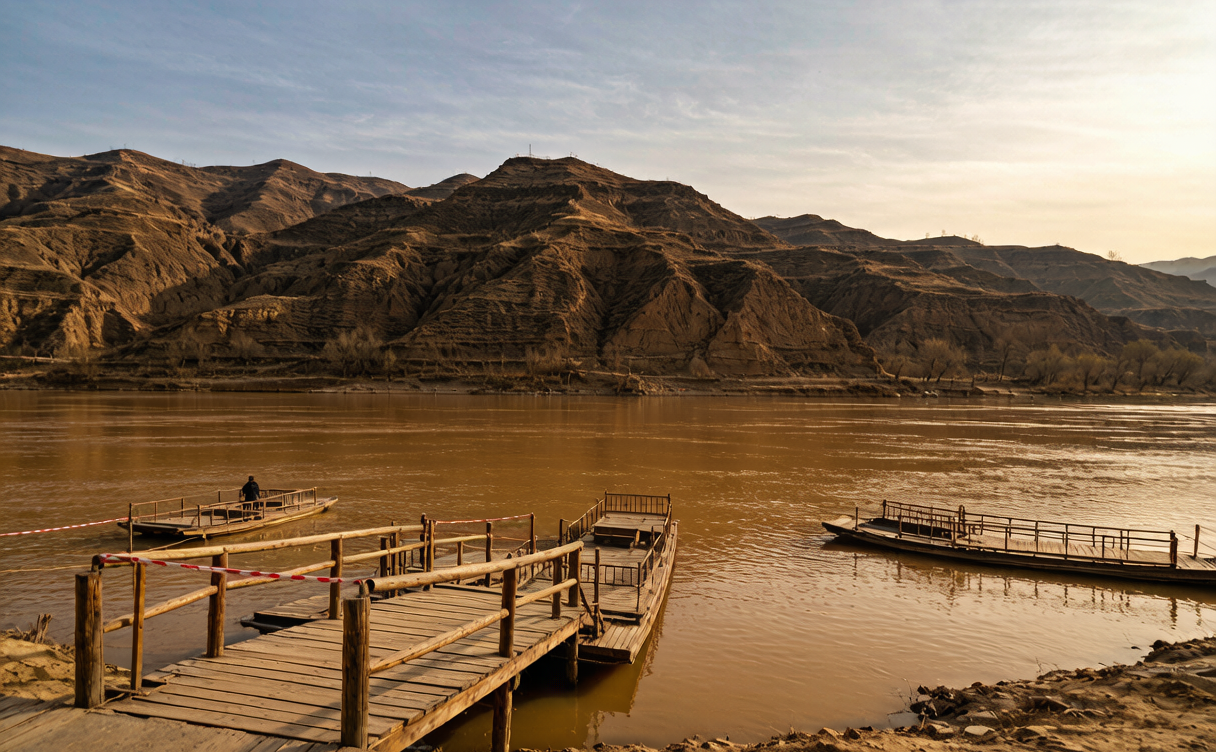
The Ming-era Heilong Miao sits on the bluff directly above the town, and its terrace is the best viewpoint in Qikou: the whole river bend, the ferry landing, and the ochre hills on the Shaanxi bank opposite. The stage building in the courtyard is famous locally for its acoustics.
Lijiashan Cave Village
Five kilometres south and reached by a rough road or a steep two-hour walk, Lijiashan is the highlight. Cave homes are cut into the slope in tiers, one household’s courtyard forming the next household’s roof. Some 400 years old, many are still lived in by elderly residents; others host art students with easels. Go early or stay the night — the light at both ends of the day is what people come for.
Xiwan Village
Just north of town, Xiwan is a walled compound of some 30 linked courtyards built by the Chen merchant family, climbing the hillside on a single connected axis so you can walk the whole village without ever stepping onto a street. It is a masterclass in Shanxi merchant architecture.
The Yellow River and Datongqi Rapids
Boatmen at the landing run short trips on the river for around RMB 60–120 (US$8–17) per person, depending on season and numbers. Downstream lies Datongqi, the rapid that made Qikou’s fortune by stopping every boat that tried to pass.
What to Eat
Lüliang cooking is wheat, millet, and buckwheat country — hearty, cheap, and quite unlike southern Chinese food.
- Wantuo — chilled buckwheat jelly cut into strips and dressed with vinegar, garlic, and chilli oil. The regional signature, about RMB 8–12 (US$1–2).
- Kaolaolao — oat-flour tubes steamed in a honeycomb rack and eaten with a mutton or tomato sauce.
- Yellow River carp — braised, when the boats have brought some in.
- Red dates — Lin County jujubes, eaten fresh in autumn, dried year-round, or steamed into date buns.
- Shanxi aged vinegar goes on everything, and Fenjiu, the clear grain spirit distilled in nearby Fenyang, is the local toast.
Meals in guesthouses run RMB 25–50 (US$4–7) a head.
Sample Itinerary: One Night and Two Half-Days
Day 1. Arrive from Lishi around midday. Lunch of wantuo on the main street. 14:00 Walk the old wharf street and warehouses. 16:00 Climb to Black Dragon Temple for the river view. 17:30 Drive or walk to Lijiashan and check into a cave homestay. 19:00 Home-cooked dinner and stars.
Day 2. 06:00 Sunrise over the terraces from the upper tiers of Lijiashan. 08:00 Breakfast, then wander the village lanes. 10:00 Back down to Qikou for a short boat trip on the Yellow River. 12:00 Lunch, then Xiwan village on the way out. 15:00 Car back to Lishi for an evening train to Taiyuan or Pingyao.
Practical Tips
- Tickets: A combined scenic-area ticket covering Qikou old street, Xiwan, Lijiashan, and Black Dragon Temple runs roughly RMB 60–90 (US$8–13). Prices change; buy at the gate and confirm what is included.
- Hours: Sites are open roughly 08:00–18:00, but Qikou is a living village — the streets themselves have no gate.
- Payment: WeChat Pay and Alipay work in most shops and guesthouses, but bring RMB 500–800 in cash. Boatmen, village grandmothers, and rural buses often prefer notes, and there are few ATMs.
- Language: Expect zero English and a strong local dialect. A translation app and written Chinese addresses are essential.
- Footwear: Loess dust gets into everything, and the Lijiashan paths are steep and loose. Closed shoes with grip, not sandals.
- Visas and entry: Check current transit and visa-free rules on the National Immigration Administration’s official English site before you travel.
FAQ
Is Qikou the same as Ciqikou in Chongqing?
No, and the confusion is common. Ciqikou is a busy snack street on the edge of Chongqing. Qikou is a remote Yellow River wharf town in Shanxi, roughly 1,000 kilometres away and about as different in character as two places can be.
How many days do I need?
One night is enough for the essentials, but two nights lets you walk between Qikou and Lijiashan properly and catch both sunrise and sunset on the loess.
Can I visit as a day trip from Pingyao?
Not comfortably. It is four to five hours each way. Treat Qikou as an overnight stop between Pingyao and Yan’an, or as a two-day loop from Taiyuan.
Is it suitable for children or older travellers?
The town itself is fine, but Lijiashan involves steep, uneven, unlit paths and basic bathrooms. Families should base in Qikou town or Lishi — our China family travel guide covers how to judge rural stops like this.
Do I need a guide?
Not strictly, but a driver-guide from Lishi solves transport, language, and homestay booking in one move, typically RMB 600–900 (US$85–127) per day.
Written by Karl, last updated August 4, 2026.