

Most travellers to Sichuan get as far as Chengdu, Leshan, and Jiuzhaigou and never turn northeast — which is precisely why this Langzhong ancient town guide exists. Langzhong sits in a loop of the Jialing River in northern Sichuan, wrapped by hills on three sides, and it holds one of the four best-preserved historic townscapes in China. Not a rebuilt street or two, but roughly two square kilometres of genuine Ming and Qing courtyards, lattice windows, grey tiled roofs, and a street grid laid out to classical geomantic principles more than a thousand years ago. This Langzhong travel guide covers the best time to visit Langzhong, how to get to Langzhong from Chengdu or Chongqing, where to sleep inside the walls, and what to eat.
Why Langzhong Is Different
Langzhong was founded some 2,300 years ago and served as the capital of the Ba region, then as a prefectural seat for most of imperial history. For a few years in the 1600s it even functioned as Sichuan’s provincial capital. The general Zhang Fei — one of the great figures of the Three Kingdoms era — was garrison commander here for seven years and is buried in the town.
What survived is unusually complete. Because Langzhong was never bombed, never industrialised, and never bulldozed for a ring road, the old quarter still runs on its original chessboard plan, with alleys aligned to the hills and the river. Roughly one hundred courtyard compounds remain standing. It is also, by local tradition, the “hometown of Spring Festival,” thanks to the Han-dynasty astronomer Luo Xiahong, who was born here and helped fix the lunar calendar that still governs Chinese New Year.
Best Time to Visit Langzhong
The best time to visit Langzhong is spring (late March to May) or autumn (late September to November).
- Spring: 15–26°C, blossom along the Jialing River, and light crowds outside the May Day holiday. Northern Sichuan drizzle is common but rarely heavy.
- Summer (June–August): Hot and sticky at 28–36°C with real humidity. Courtyard shade helps, but plan indoor sights for midday.
- Autumn: The sweet spot — 16–27°C, clear light on the tiled roofs, and river mist at dawn.
- Winter (December–February): Damp and grey at 4–12°C, and often foggy. Rooms are cheapest now, and Chinese New Year here is the biggest event of the year, with lantern-lit streets, folk parades, and dragon dances that draw domestic crowds for a fortnight.
For a wider view on timing a Sichuan trip, see our guide to the best time to visit China.
How to Get There
Langzhong has its own railway station on the Lanzhou–Chongqing line, about 15 minutes by taxi from the old town. There is no bullet-train station in the city itself, so most routes from Chengdu involve a high-speed hop to Nanchong and then a short transfer.
| From | Option | Time | Approx. Cost |
|—|—|—|—|
| Chengdu East | High-speed train to Nanchong, then bus/train | 2.5–3.5 hr | RMB 110–160 (US$15–23) |
| Chengdu (Beimen bus station) | Direct express coach | 3.5–4 hr | RMB 100–125 (US$14–18) |
| Chongqing North | Direct train on the Lanzhou–Chongqing line | 2.5–3.5 hr | RMB 90–140 (US$13–20) |
| Xi’an North | High-speed train to Guangyuan, then train | 4–5 hr | RMB 260–330 (US$37–46) |
| Nanchong | Coach or local train | 1–1.5 hr | RMB 30–45 (US$4–6) |
| Nanchong Gaoping Airport | Taxi / ride-hail | 1.5 hr | RMB 250–330 (US$35–46) |
| Langzhong station | Taxi to the old town gates | 15 min | RMB 15–25 (US$2–4) |
Booking these tickets with a foreign passport is easier than it looks; our China high-speed train guide for foreigners walks through the app and the station procedure. The old town itself is pedestrianised, so once you arrive you walk everywhere.
Where to Stay
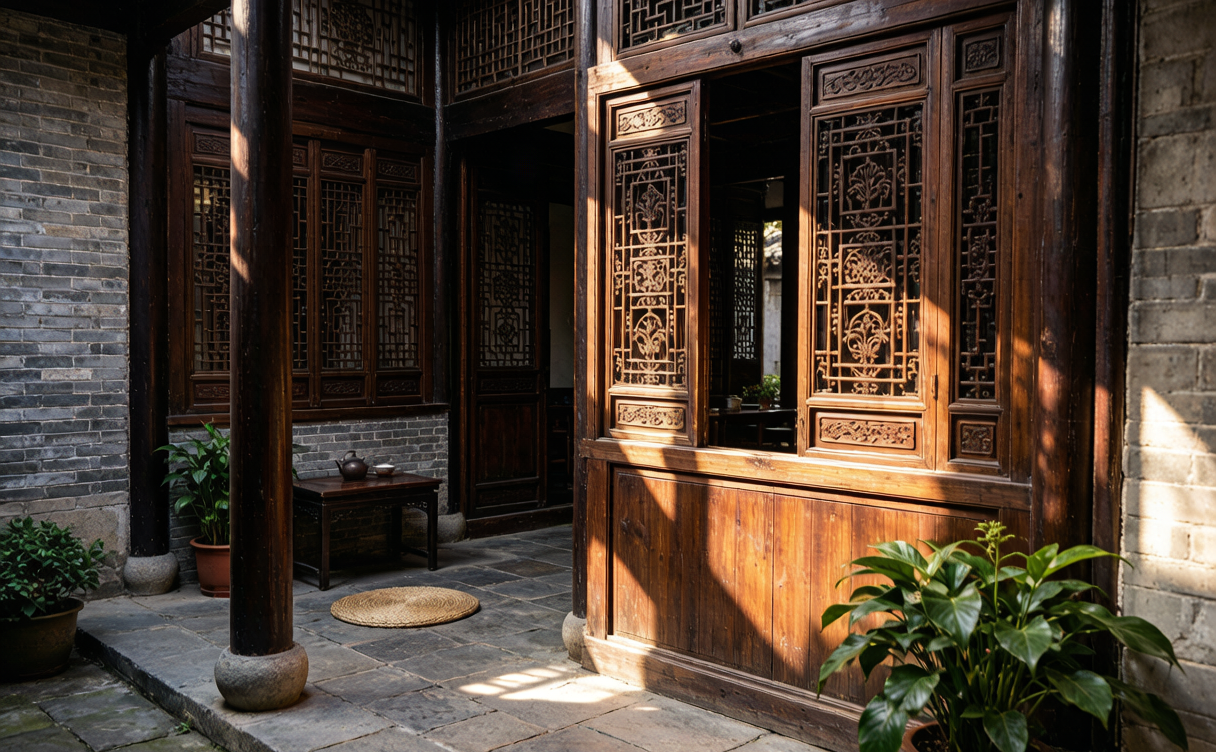
Courtyard guesthouses inside the walls. This is the reason to come. Dozens of Ming and Qing compounds have been converted into small inns, with rooms opening onto stone-flagged courtyards and carved wooden screens. Expect RMB 180–420 (US$25–59) per night, more during Spring Festival. Rooms are often small and bathrooms modest — you are paying for atmosphere and location.
Riverside hotels along the Jialing. Mid-range and boutique properties on the water with balconies facing Jinping Mountain, RMB 280–600 (US$39–85). A five-minute walk from the old streets and quieter at night.
New-town business hotels. Standard domestic chains across the river or near the station, RMB 150–300 (US$21–42). Practical, unromantic, and reliably comfortable.
Things to Do in Langzhong
Zhang Fei Temple
The Han Huanhou Temple, better known as Zhang Fei Temple, is the town’s headline sight: a large walled complex of halls, courtyards, ancient cypresses, and a burial mound honouring the Three Kingdoms general. The statuary and Qing-era carpentry are excellent, and the site is compact enough for an hour.
The Imperial Examination Hall
The Gongyuan is the best-preserved provincial civil service examination hall left in China, and for many visitors it is the most memorable stop. You walk through rows of tiny brick cells where candidates were locked in for days to write essays that could change their family’s fortunes for generations. Costumed re-enactments run in the main courtyard on busy days.
Zhongtian Tower and the Rooftop View
The Zhongtianlou stands at the crossroads of the old town’s main axis. Climb it for the postcard shot: a sea of grey tile broken by courtyards, with green hills closing the view in every direction. Huaguang Tower, down by the river, offers a similar view over the water and is spectacular when floodlit after dark.
Jinping Mountain and the River
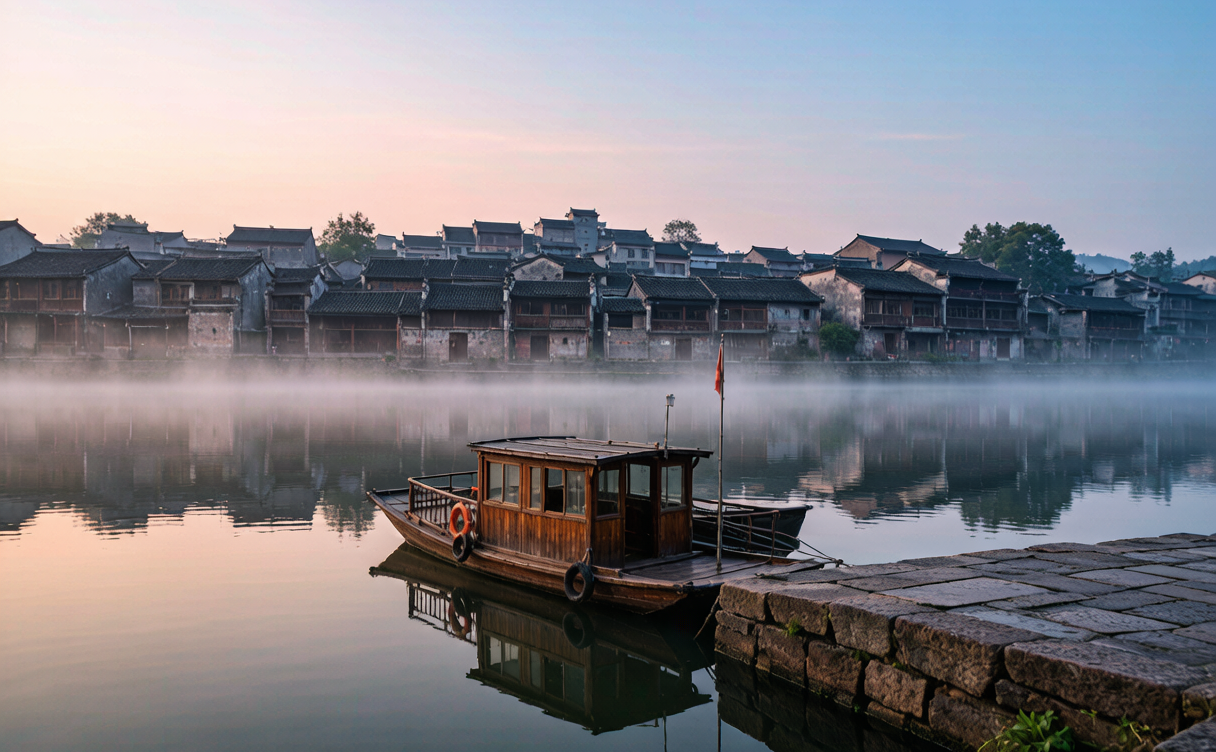
Cross the Jialing by ferry or bridge and climb the paths of Jinping Mountain for a panorama of the entire river loop and the walled town inside it. Early morning, when mist sits on the water, is worth the alarm.
Wenmiao and the Old Streets
The restored Confucian temple, the drum tower, and the vinegar and lantern workshops along Wumiao Street, Xiaxin Street, and Wangjia Lane fill an easy afternoon of wandering. Streets are free; individual sights are ticketed.
What to Eat
Langzhong’s food is northern Sichuan: spicy but with a distinctive sour edge, because this is vinegar country.
- Baoning vinegar — one of China’s four great vinegars, brewed here for over a thousand years with a bran-and-herb mash. Shops sell it by the jar, and you will also see vinegar-based drinks and vinegar foot soaks advertised everywhere.
- Zhang Fei beef — dark, spiced, air-dried beef, black outside and rosy within, sold vacuum-packed on every street.
- Chuanbei liangfen — cold mung-bean jelly noodles under chilli oil, garlic, and vinegar. Slippery, numbing, and about RMB 10 (US$1.40).
- Baitang zhengmo — sweet steamed buns, a Ming-dynasty Langzhong recipe, sold warm from bamboo baskets at breakfast.
- Beef noodle soup — the standard local breakfast, RMB 12–20 (US$2–3).
Sample Itinerary: One Full Day
08:00 Beef noodles or steamed buns at a street stall inside the walls. 09:00 Zhang Fei Temple before tour groups arrive. 10:30 The Gongyuan examination hall. 12:00 Lunch of chuanbei liangfen and river fish. 13:30 Wander Wumiao and Xiaxin streets, stopping at a vinegar workshop. 15:00 Climb Zhongtian Tower for the rooftop view. 16:30 Ferry across the Jialing and walk up Jinping Mountain for sunset over the town. 19:30 Dinner, then the lit riverfront and Huaguang Tower after dark.
With a second day, add a slow morning in the courtyards, a Chinese New Year culture museum visit, and an afternoon train onward to Chongqing or Guangyuan.
Practical Tips
- Tickets: A combination ticket covering the main sights (Zhang Fei Temple, Gongyuan, Zhongtian Tower, Huaguang Tower, Confucian temple and others) runs around RMB 110–120 (US$15–17). Individual entries are roughly RMB 30–60 (US$4–8). Walking the streets costs nothing.
- Hours: Most sights open around 08:00–08:30 and close 17:30–18:00, later in summer.
- Payment: Alipay and WeChat Pay are universal, including at guesthouses and vinegar shops. Keep RMB 200–300 cash for tiny stalls.
- Language: English is rare. Have your guesthouse address saved in Chinese characters.
- Rail planning: Check live schedules on the operator’s official English site, China Railway 12306, before committing to a connection through Nanchong.
- Crowds: Domestic tourism peaks during the May and October holidays and Spring Festival. Weekday mornings are close to empty.
FAQ
How long should I spend in Langzhong?
One full day covers the major sights comfortably. Two nights lets you experience the old town after the day-trippers leave, which is when it is at its best.
Is Langzhong a day trip from Chengdu?
Technically possible, but a bad idea — you would spend seven hours in transit for four hours on the ground. Stay overnight, or route Langzhong between Chengdu and Chongqing.
Is the old town commercialised?
Partly. The main streets have souvenir shops and snack stalls, but Langzhong is still a working town of about 100,000 people, and the side lanes are full of ordinary residents rather than boutiques.
Do I need a guide?
No. The old town is small, safe, and easy to navigate on foot. Signage at the major sights includes some English.
What else is nearby?
Guangyuan and the Shu Road cliff carvings are 1.5 hours north, and Chongqing is under four hours south. For more destinations in this vein, see our off-the-beaten-path China guide.
Written by Karl, last updated August 4, 2026.