

This Mount Sanqingshan guide covers a mountain that most foreign visitors to China have never heard of, even though UNESCO inscribed it as a World Heritage Site in 2008. Rising out of northeastern Jiangxi province near the city of Shangrao, Sanqingshan is a forest of weather-carved granite pillars, twisted pines, and cliff-hugging steel walkways that hang hundreds of metres above pine-filled valleys. On a good morning the ridges float above a sea of cloud; on a bad one you walk through cool white mist that makes the rock towers appear and vanish. Below you will find the best time to visit Mount Sanqingshan, how to get to Mount Sanqingshan by rail, where to sleep, what the walkways are actually like, and a two-day plan that works.
Why Sanqingshan Is Worth the Detour
Sanqingshan means “Three Pure Mountains,” a name taken from its three highest summits — Yujing, Yuxu, and Yuhua — with Yujing Peak topping out at 1,819 metres. What sets it apart from China’s more famous granite mountains is the sheer density of freestanding pillars: geologists count more than 3,000 rock formations shaped by 1.6 billion years of uplift and erosion. Two of them are national celebrities. The “Oriental Goddess” is a 86-metre column that reads unmistakably as a seated woman in profile, and “Giant Python Rising from the Earth” is a 128-metre needle of granite that looks exactly as advertised.
The mountain has been a centre of Taoist practice since the Tang dynasty, and the Ming-era stone architecture around Sanqing Palace on the eastern slopes — altars, gateways, tombs, and paved paths laid out along an astronomical axis — is a genuinely absorbing piece of heritage that almost no international visitors reach.
Best Time to Visit Mount Sanqingshan
The best time to visit Mount Sanqingshan is late April to early June, and again mid-September to early November.
- April–May: Wild rhododendrons bloom along the ridges from late April into May, and the mountain is at its greenest. Summit temperatures sit around 10–18°C while the valley below is 20–26°C. This is also the peak season for cloud seas, because warm air meets cool rock.
- June–August: Warm and wet in Jiangxi, but the summit stays a merciful 18–24°C when Nanchang is roasting at 37°C. Afternoon thunderstorms are common and walkways close in lightning.
- September–October: The most reliable weather of the year — dry, clear, 12–22°C on top. Avoid the October 1–7 national holiday, when queues for the cable car can pass two hours.
- December–February: Cold (−8 to 4°C) but spectacular, with rime ice coating the pines. The entrance fee drops in low season and hotels are cheap, though ice can close sections of walkway.
If you are fitting Jiangxi into a wider route, our guide to the best time to visit China compares regions month by month.
How to Get There
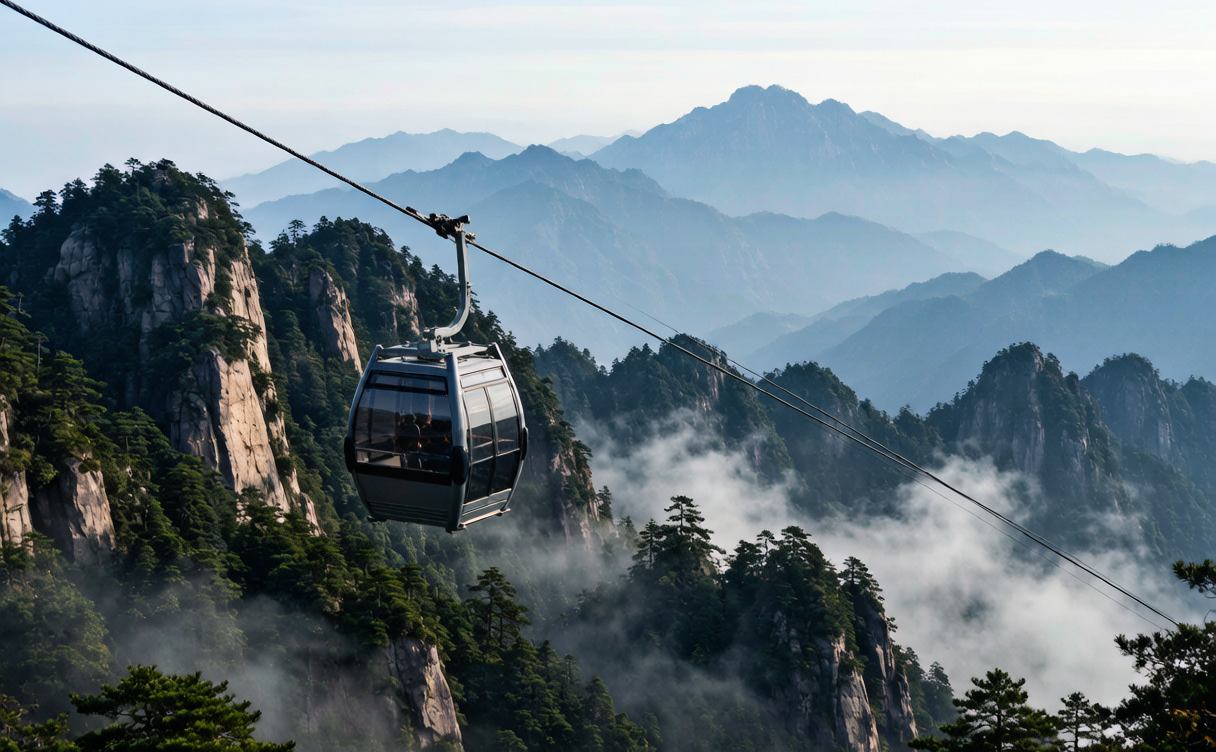
The mountain has two main entrances. The east gate at Jinsha is the busier one, with a cable car up to the Sunshine Coast walkway. The south gate at Waishuangxi has its own cable car and lands you near the West Coast walkway. Trains arrive at Sanqingshan Railway Station in Yushan County (about 45 minutes from the east gate) or at the larger Shangrao Station (about 1.5 hours).
| From | Option | Time | Approx. Cost |
|—|—|—|—|
| Shanghai Hongqiao | High-speed train to Sanqingshan Station | 3–3.5 hr | RMB 250–300 (US$35–42) |
| Hangzhou East | High-speed train to Sanqingshan Station | 1.5–2 hr | RMB 150–185 (US$21–26) |
| Nanchang West | High-speed train to Shangrao | 1–1.5 hr | RMB 95–130 (US$13–18) |
| Huangshan North | High-speed train to Shangrao | 1–1.5 hr | RMB 70–95 (US$10–13) |
| Shangrao / Yushan | Shuttle bus to east or south gate | 45 min–1.5 hr | RMB 20–35 (US$3–5) |
| Shangrao / Yushan | Didi or taxi to the gates | 45 min–1.5 hr | RMB 130–200 (US$18–28) |
| Beijing / Shenzhen | Flight to Shangrao Sanqingshan Airport | 2–2.5 hr | RMB 600–1,300 (US$85–185) |
Booking rail tickets with a foreign passport is straightforward once you know the system — see our China high-speed train guide for foreigners for the steps.
Where to Stay
On the mountain (Sanqing Palace / summit hotel cluster). A handful of simple mountain lodges sit inside the scenic area, and they are the only way to catch sunrise on the walkways without a pre-dawn cable car. Expect RMB 400–900 (US$56–127) for a plain room, thin walls, and no lift for your luggage. Book ahead in autumn.
East gate villages (Jinsha / Shanwu). Family guesthouses and small tourist hotels within a few minutes of the cable car station, RMB 150–350 (US$21–49). Best value, and staff will store bags while you climb.
Yushan County town or Shangrao city. Full-service business hotels and international chains, RMB 220–500 (US$31–70). Sensible if you arrive late by train and want a proper bed before the climb.
Things to Do on Mount Sanqingshan
The Sunshine Coast Walkway
The Yangguang Haian, or Sunshine Coast, is a roughly 3.7-kilometre steel-and-concrete gallery bolted to the eastern cliffs at around 1,600 metres. It is almost entirely flat, which makes it the most accessible high mountain walk in China: strollers and grandparents manage it. The drop below the railing is vertical and constant, and the morning light hits the pillars head-on.
The West Coast Walkway and the Goddess
The Xihaian, or West Coast, runs about 3.6 kilometres along the western cliffs and is the sunset side. Somewhere in the middle you round a corner and the Oriental Goddess appears across the valley, with the Giant Python pillar standing behind her. Between the two coasts, a linking trail climbs past Yuhua Peak, and a spur of stone stairs runs to the summit of Yujing Peak for those who want the top.
Sanqing Palace and the Ancient Stone Route
On the eastern plateau, the Sanqing Palace complex is a cluster of Ming-dynasty stone halls, gateways, and carved altars scattered through pine forest. The paths here are quiet even in high season — most day-trippers never leave the walkways. Allow two hours to wander.
Sea of Cloud Chasing
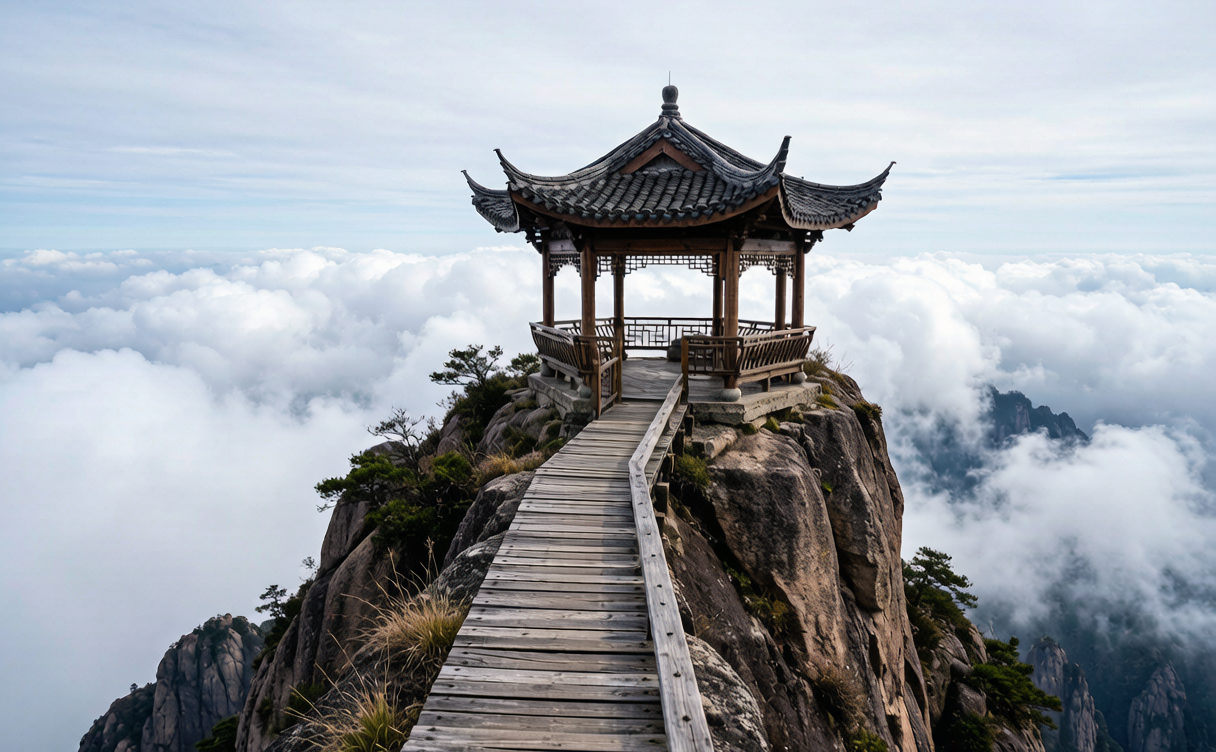
Cloud seas are most common after overnight rain in spring and autumn, typically 5:30–8:00am. Summit hotel guests get the best odds. Bring a windproof layer: it can be 15°C colder up top than at the ticket gate.
What to Eat
Jiangxi food is chilli-forward and less oily than Sichuan. Around the gates, farmhouse restaurants serve stir-fried spring bamboo shoots, cured mountain pork with dried chillies, wild mushroom soup, and Jiangxi rice noodles fried with egg and pickled greens. Yushan tofu, pressed firm and braised, is a local staple. Meals on the mountain itself are expensive and basic — RMB 40–70 (US$6–10) for instant noodles and packaged food carried up by porters — so eat a big breakfast and pack snacks.
Sample Itinerary: Two Days on the Mountain
Day 1. 09:00 arrive at the south gate (Waishuangxi) and ride the cable car up. 10:30 walk the West Coast walkway slowly, stopping at the Goddess viewpoint. 13:00 packed lunch at Yuhua Peak. 14:30 cross to Sanqing Palace and explore the stone complex. 17:00 check into a summit lodge. 18:30 sunset from the eastern ridge.
Day 2. 05:30 out for sunrise and, with luck, the cloud sea. 07:30 breakfast. 08:30 walk the Sunshine Coast walkway end to end. 12:00 optional stair climb to Yujing Peak. 14:00 cable car down at Jinsha east gate. 15:30 bus to Sanqingshan Station for an afternoon train to Hangzhou or Shanghai.
A one-day visit is possible — cable car up, one walkway, cable car down — but you will miss sunrise, which is the point.
Practical Tips
- Tickets: Entry is around RMB 125 (US$18) in high season and roughly RMB 95 (US$13) December–February. Each cable car costs about RMB 70 (US$10) one way. Buy through the official scenic area WeChat mini-program or at the gate with your passport.
- Hours: Gates typically open 06:30–07:00 and last cable car up is late afternoon; confirm on the day, as times shift seasonally.
- UNESCO context: The formal citation and boundaries are on the UNESCO World Heritage listing for Mount Sanqingshan National Park.
- Payment: Alipay and WeChat Pay work everywhere, including village guesthouses. Carry a few hundred RMB in cash for small stalls.
- Language: Almost no English is spoken. Screenshot your hotel name in Chinese and use a translation app offline — mountain signal is patchy.
- Gear: Grippy shoes, a rain shell, and a warm layer regardless of season. Walkway handrails get slick in mist.
FAQ
How many days do I need at Mount Sanqingshan?
Two days is the sweet spot: one afternoon walkway, a night on the mountain, and a sunrise plus the second walkway. One long day works if your train times are tight.
Is Mount Sanqingshan harder than Huangshan?
No. Once the cable car delivers you to the ridge, both major walkways are essentially level. Huangshan involves far more stair climbing. The optional Yujing Peak stairs are the only strenuous section here.
Can children and older travellers manage the walkways?
Yes, provided they are comfortable with heights and long flat distances. There are no ladders or scrambles on the two coast routes. Our China family travel guide has more on pacing mountain days with kids.
What if it rains?
Mist is normal and often beautiful, but heavy rain or lightning closes the walkways and cable cars. Build a spare day into your schedule in June–August.
Do I need a guide or a tour?
No. Signage on the mountain includes English, the walkway loops are impossible to get lost on, and shuttle buses run to both gates. Independent visits here are genuinely simple, even on a first trip to China.
Written by Karl, last updated August 4, 2026.