

Tongcheng is a quiet county-level city in the Anqing prefecture of Anhui Province, and for two centuries it was the literary capital of China. The Tongcheng School of prose shaped how educated Chinese wrote from the early Qing dynasty into the modern period, and you can still walk the lanes where its masters lived. I built Tongcheng into a Hefei–Anqing loop and found it the most atmospheric stop — grey-brick Hui-style mansions, a famous story of a humble alley, and none of the crowds of the big Anhui names. This Tongcheng travel guide gives you the timing, transport, itinerary, and cultural detail you need.
How to get to Tongcheng
Tongcheng has no airport; fly or take the high-speed train to Hefei (about 100 km north) or Anqing (about 70 km south), then continue by bus or train. Hefei Xinqiao Airport has national and some international flights; from Hefei South station, high-speed trains to Tongcheng East take about 40–55 minutes (second class 35–55 yuan). From Anqing, a bus or train to Tongcheng runs 1–1.5 hours (25–50 yuan). Our China high-speed train guide for foreigners covers ticket buying if the network is new to you. Inside Tongcheng, the literary sights are in the old town (walkable, 1 km across) and the rest by DiDi (2–3 yuan short hops) or bus (1–2 yuan). Taxis from the station to the old town run a flat 10–15 yuan. Within the old town, everything is a 10-minute walk; only the train station and the mountain base need a DiDi, and both are under 15 yuan, so you rarely spend more than 30 yuan a day on local rides.
Best time to visit Tongcheng
Spring (March–May) and autumn (September–November) are ideal: 16–25°C, green hills, and good light for the grey-brick architecture. The Tongcheng School scholars wrote about restraint and clarity, and the town reads best in calm weather when you can linger in the lanes. Avoid the wet weeks of the June–July plum-rain season and the furnace heat of late July. If you are combining cities, check our best time to visit China map before you commit, because Anhui’s shoulder seasons are short and theOctober holiday crowds hit the old town hard.
Things to do in Tongcheng
- The Six-foot Lane (Liuchixiang): the famous alley born from a Qing-era neighborly dispute resolved by yielding three feet each; free, and the plaque tells the story in Chinese. Allow 30 minutes, and go early before the tour groups photograph the narrow passage.
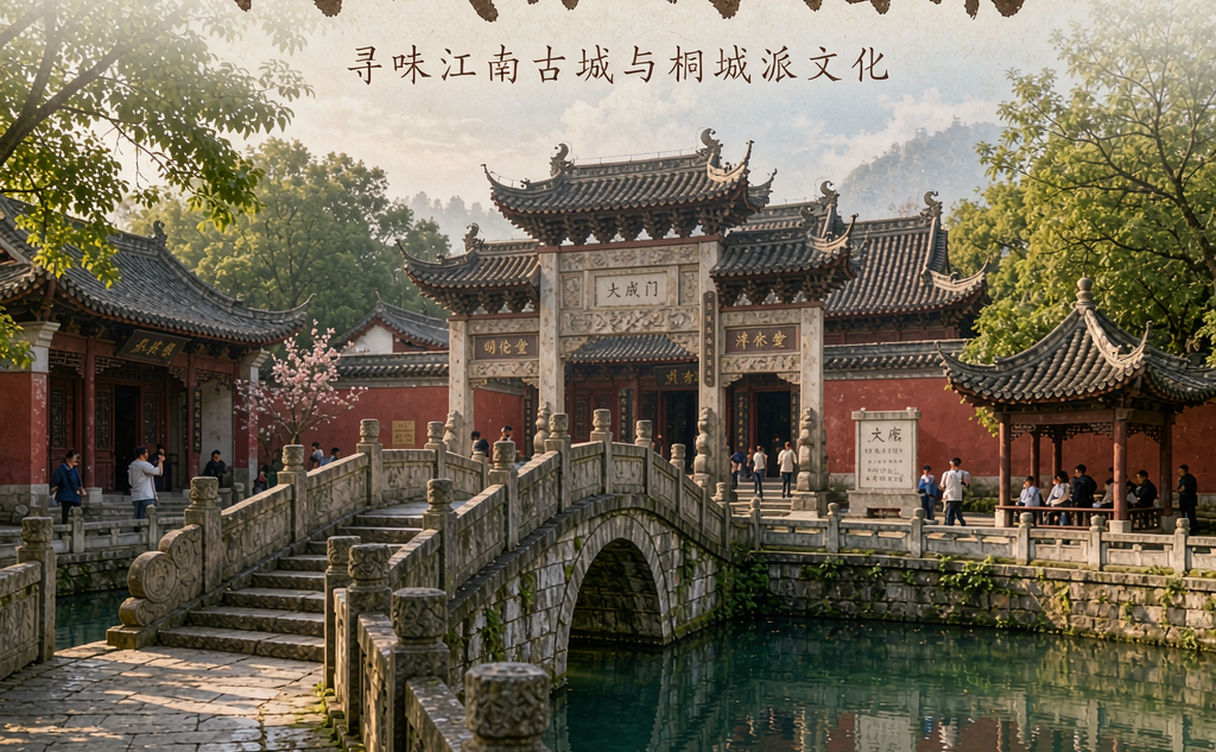
- Tongcheng Confucian Temple (Wenmiao): a restored temple and the spiritual heart of the literary town; free or small donation, with a quiet rear garden worth a sit.
- Longmian Mountain (Longmian Shan): the wooded hill north of town where the prose master Yao Nai retired; gentle trails, 2–3 hours, free, and the stream at the base is a good picnic stop.
- Former residences of the Tongcheng masters: scattered courtyard homes, some open, some still private — ask at the cultural office which are viewable that week, because opening hours shift.
- The riverfront and morning market: best for street food and local life, 6–9 am, when the steamed-bun stalls are at full steam.
For the wider region, our Hefei travel guide covers the provincial capital gateway, and the Anqing travel guide adds the Yangtze-side city just south with its zongzi and lantern heritage.
Tongcheng Anhui culture and a sample itinerary
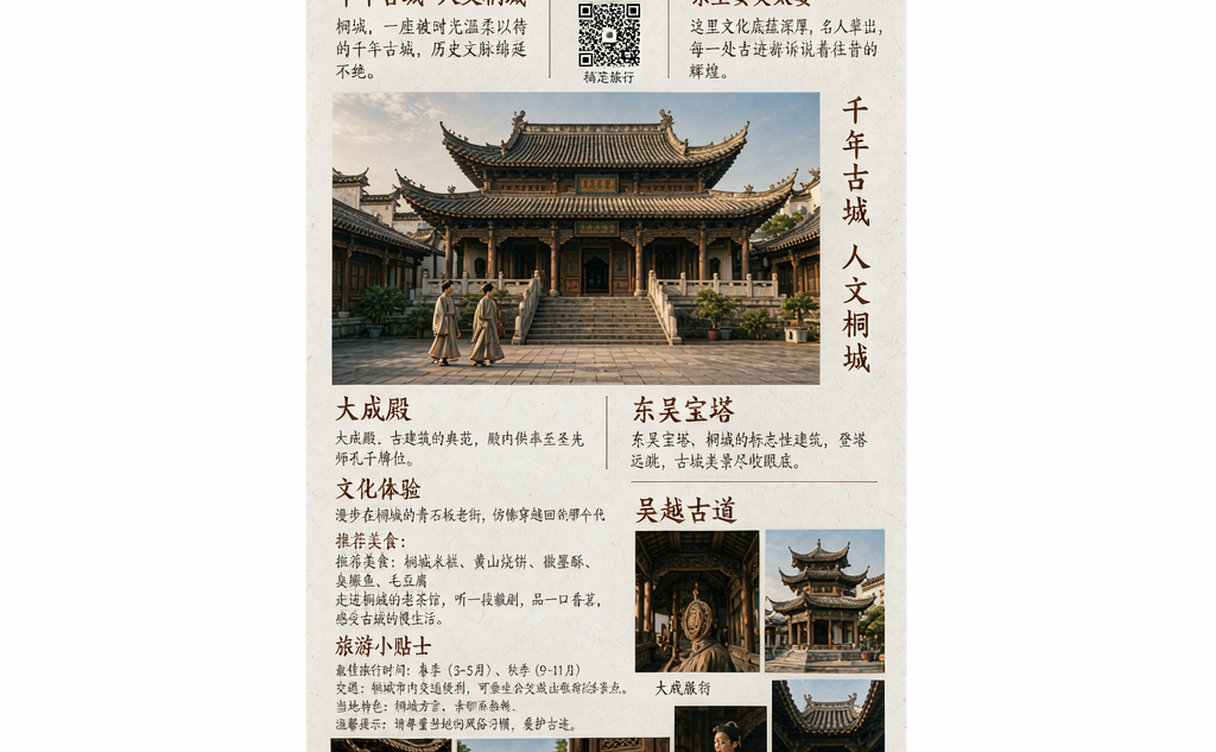
Tongcheng is Hui culture territory: the horse-head gables, the enclosed courtyards, the ink-and-wood aesthetic all come from the same tradition that built Hongcun and Xidi further south. A realistic Tongcheng itinerary is two days — day one on the lanes, the Confucian Temple, and the Six-foot Lane; day two on Longmian Mountain and a courtyard-home visit. Add a third day only if you want to slow right down, which the town rewards. If you are coming from Hefei, an overnight bag is enough; from Anqing, the same. The old town shuts its lane stalls by 8 pm, so plan meals before then or eat at the riverfront.
Use Hefei as your gateway and train straight to Tongcheng — open our Hefei travel guide for flights, stations, and the connection times.
Food in Tongcheng
Anhui Hui cuisine is lighter and more scholarly than the heavy braises of north China: think river fish, bamboo shoots, dried vegetables, and the salted meats of winter. Try Tongcheng’s steamed pork with rice flour (50–80 yuan for two), river shrimp in season (40–60 yuan), and the sesame cakes from the morning market (2–4 yuan). A sit-down meal runs 60–100 yuan for two; street food is 15–30 yuan. Our Anhui Hui cuisine guide explains the regional pantry so you order with confidence, including the preserved-vegetable dishes that define Hui home cooking. Also try the Hui-style stinky tofu (10–15 yuan) and the winter salted-duck braise (40–60 yuan for two) if you want the heartier end of the table, because Tongcheng’s versions are milder and more aromatic than the southern Anhui standard.
Nervous about your first Anhui trip? Read our China travel guide for first-timers before you board, and keep your passport ready for every check.
Longmian Mountain in detail
The trail from the north gate of the old town to the mountain base is a flat 20-minute walk, then a steady climb of about 45 minutes to the first clearing. A small teahouse at the saddle sells tea and peanuts (10–20 yuan) and is the turnaround point for most visitors; continuing to the ridge adds another 40 minutes and opens a view over the Anhui plain. Go in the morning — the light on the horse-head walls from the hillside is the town’s best photo, and the lane stalls are still full on your way down, so you can shop after the walk.
A 2-day Tongcheng plan
Day 1: Six-foot Lane, Confucian Temple, and the old lanes at a slow walk, ending at the riverfront market. Day 2: Longmian Mountain in the morning, a master’s residence in the afternoon, then the train on to Hefei or Anqing. This is enough to feel the literary weight without rushing the courtyards, and it leaves the museums for a rainy-hour filler rather than a forced march.
Side trips: Hefei and Anqing
Hefei gives you the provincial museum and the launch point for further Anhui loops; Anqing adds the Yangtze and its own walled core. Either is a 40–60 minute train ride, so Tongcheng works as a calm midpoint between them rather than a detour. Build it as the quiet night in a louder route, and the contrast is the point.
Costs and etiquette
Tongcheng is inexpensive: 200–320 yuan covers a room, two meals, and local transit. The lanes, the Six-foot Lane, and Longmian Mountain are free; only the odd temple donation applies. Photographing the courtyard homes is fine from the lane, but do not step into a private yard uninvited — many are still family homes, not museums. The literary museums close for lunch (roughly 12–2 pm), so time indoor stops for the morning or late afternoon. The Cultural Office near the Confucian Temple can tell you which master residences are open that week, and staff there read written Chinese fine even if they speak little English.
Where to stay and notes
Tongcheng has decent hotels (180–300 yuan/night) near the bus and train stations; a couple of renovated courtyard stays (250–400 yuan) sit inside the old town and are worth booking ahead for atmosphere. The town is safe, walkable at night, and short on English — your hotel WeChat and a translation app cover gaps. Carry some cash for temple donations and market stalls, because the smallest vendors are card-shy. Download offline maps before arrival; the lane grid is simple but the signage is all Chinese.
Stitch Tongcheng into a Hefei–Anqing loop and taste real Hui culture — start with our Anhui Hui cuisine guide so every meal lands.