

I came to Anqing (安庆) almost by accident, rerouting around a sold-out Huangshan, and it turned into one of my favorite unscripted stops in Anhui. Anqing sits on the north bank of the Yangtze River, was a Qing-dynasty provincial capital, and is the birthplace of Huangmei Opera. Just two hours west by road, Tianzhu Mountain rises straight out of the plain. This Anqing travel guide is from a four-day visit in April 2025, with the prices and trains I actually used, written for travelers who want a real river city plus a serious hike without the Huangshan ticket price.
How to get to Anqing
Anqing has its own high-speed station, Anqing Station (安庆站), on a line that links it to Hefei in about 1 hour 40 minutes (RMB 90 to 130 second class) and to Huangshan in roughly 2 hours. From Shanghai or Nanjing you will change once, usually in Hefei. For the booking mechanics, our China high-speed train guide for foreigners covers apps, IDs, and seat classes, and I lean on it every time I cross into a new province. Trains run frequently through the day, so I never had to book more than a day ahead except around the May holiday, when the whole Yangtze corridor fills up.
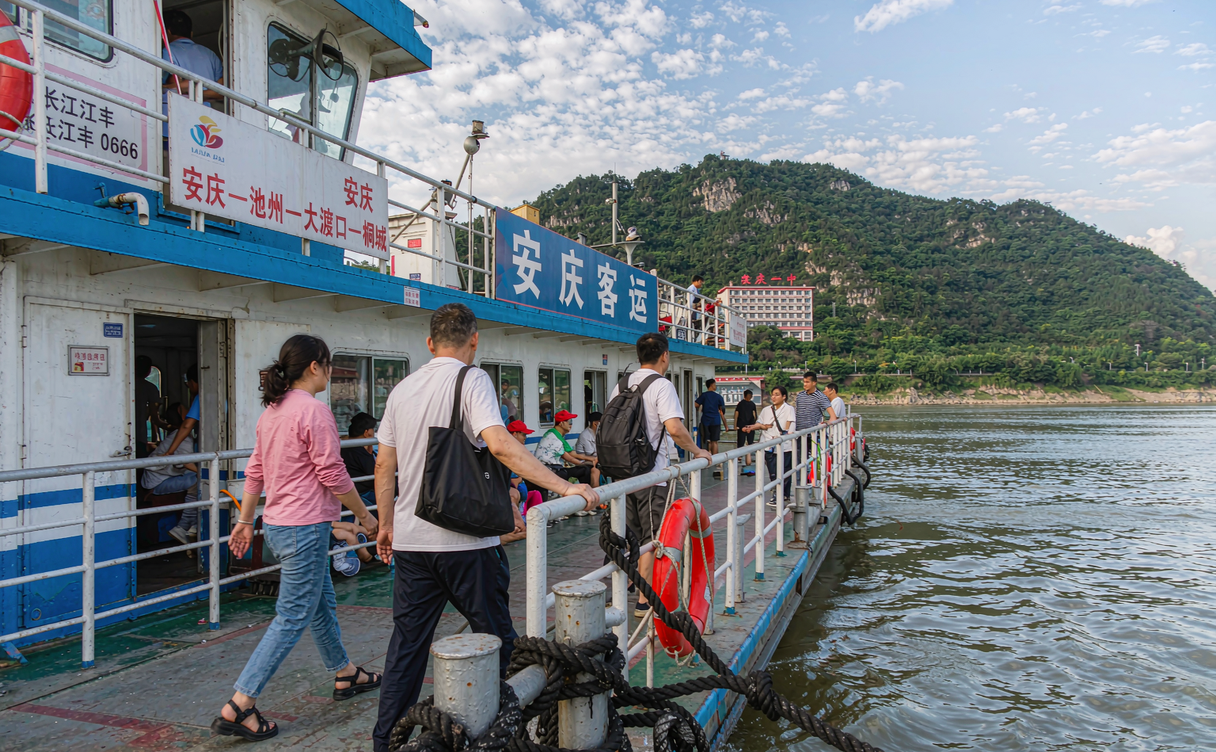
The Hefei travel guide is the natural starting point if you fly into Anhui’s capital, and from there Anqing is a relaxed half-day rail ride north to the river. Anqing also has a river port with slow ferries, but for a visitor the train is faster and the station is closer to the old town than the old wharf was.
Best time to visit Anqing
Spring (March to May) and autumn (September to November) are best, with daytime highs of 18 to 26°C and clear views toward Tianzhu. Summers along the Yangtze are hot and humid, often above 34°C, with mosquitoes on the embankment at dusk, and winters are damp and grey, occasionally dipping below freezing. Our best time to visit China guide sets the national windows if you are stacking Anhui with Sichuan or Jiangsu, and it steered me to April, when the mountain was green and the opera season was just opening. The city’s background is on Anqing at Wikipedia if you want the Qing-era history before you walk the riverfront.
The riverfront, Yingjiang Temple, and Huangmei Opera
Anqing’s old heart is the riverfront. I walked the embankment at dusk as cargo ships slid down the Yangtze, then turned inland to Yingjiang Temple (迎江寺), a working monastery whose Zhenfeng Pagoda (振风塔) leans photogenically over the water. Entry was RMB 10 in 2025, and you can climb partway up the pagoda for a roof-level view of the river. It is one of the calmer temple visits I have had in China, with locals chanting rather than vendors chasing, and the bell tower is worth the climb for the scale of the Yangtze alone.
Anqing also claims to be the home of Huangmei Opera (黄梅戏), the soft, sing-song regional drama. I caught a short evening performance at a small theater near the pedestrian street for RMB 40 to 80 depending on seat; the singing is gentle enough that you can enjoy the melody even without the translation. Check the local listings board when you arrive, because shows are not nightly, and the good troupes tour, so a Wednesday might be dark while a Saturday sells out.
Tianzhu Mountain, the sleeping Buddha peak
The big excursion is Tianzhu Mountain (天柱山) in Qianshan, about 1.5 to 2 hours west of the city by bus or hired car. It is one of Anhui’s great peaks, a granite massif with a main summit around 1,488 meters and cliffs that locals call the “sleeping Buddha.” I took the cable car up (RMB 80 one way, RMB 150 round trip in 2025) and hiked the ridge for most of a day. The scenic-area ticket was RMB 130 in peak season, dropping to around RMB 90 off-season. If Tianzhu is your main goal, our Huangshan Yellow Mountain guide helps you compare the two so you can choose which Anhui peak to climb, because the crowds and the cost are not the same.
The paths are well built but exposed in places, so I was glad of the railings and my trail shoes. On a weekday in April the summit had maybe a hundred people, nothing like the queues on Huangshan two hours east. Bring layers; the top was 10 degrees colder than the city, and the wind along the ridge cuts through a thin jacket.
What to eat in Anqing
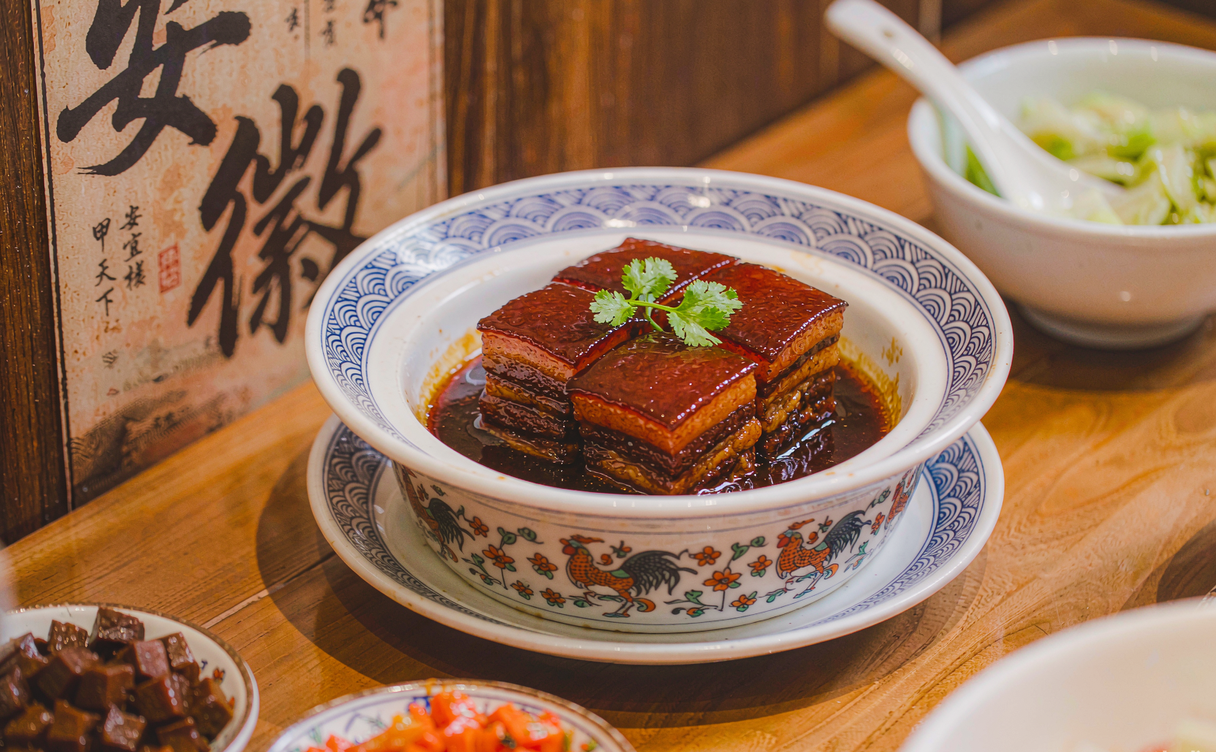
Anqing food sits between the Yangtze fish tradition and the wider Anhui (Hui) cuisine family, which is salty, slightly sweet, and fond of braising. I ate river fish steamed with ham for RMB 58 to 78, and a plate of hongshao pork with chestnuts for RMB 42. The snack I liked best was jiangmao wontons (江毛水饺), tiny pork wontons in clear broth at RMB 12 to 18 a bowl near the old street. For the deeper regional picture, our Anhui Hui cuisine guide explains the mountain-versus-river split in Anhui cooking and which dishes to order when the menu is all Chinese, and Anqing is a good, cheaper place to try Hui flavors before the prices climb at the foot of Huangshan.
I also liked the local tea, a green from the hills west of the city, served free at most restaurants and sold loose at the market for RMB 40 a bag that saw me home.
A practical Anqing itinerary
Here is the three-night plan I used. Day one: train in, riverfront walk, Yingjiang Temple at dusk, opera if there is a show. Day two: full day at Tianzhu Mountain, cable car up, ridge hike, back late. Day three: slow morning in the old streets, wontons and a tea house, optional second Tianzhu lower trail or a river cruise (RMB 50). Day four: train on to Huangshan or back to Hefei. If you are short on time, Days one and two alone make a solid two-night version.
My spend was about RMB 1,000 to 1,350 excluding the intercity train, which is fair for a mountain-plus-city stop. Our China budget travel guide has the hostel and local-bus notes that kept my daily cost near RMB 320, and the biggest saving was sharing the Tianzhu car with two other hostel guests.
Where to stay and book
I booked a city-center hotel on Ctrip with Alipay (RMB 170 to 280 for a clean double) and paid the Tianzhu ticket on site by scanning a WeChat QR. Anqing Station is a short DiDi from the riverfront; for Tianzhu, stay in Qianshan town the night before if you want an early start, where rooms ran RMB 140 to 220. The riverfront hotels cost more for the view but put you next to the temple and the opera house, so the splurge is worth one night.
Anqing is the kind of city that rewards a traveler who likes a working river town more than a postcard peak. You get the Yangtze, a leaning pagoda, an evening of opera, and a serious mountain within a bus ride, all at prices well below the famous resorts. If Huangshan is full or you simply want a calmer Anhui, Anqing is the gateway that delivers more than its name suggests, and the river at dusk is free.