

If Suzhou is famous as the city of gardens, the place that actually lets you walk inside the old water-town texture the gardens were built to echo is Pingjiang Road Suzhou, a roughly 1.6-kilometer street laid out along a canal that has kept its Song- and Yuan-era grid almost intact. There is no ticket gate and no single “attraction” here; the draw is the whole living strip of stone lanes, small bridges, weeping willows, and the low whitewashed houses with their black tiled roofs reflected in the water. We have sent countless visitors down this road, and the ones who slow down are the ones who love it; the ones who treat it as a pass-through miss the point. This Suzhou Pingjiang Road guide covers what the street is, what to look for, what it costs, how to get there, and when to go, so you can fold it into a wider Suzhou travel guide with the gardens and the museum close by.
Pingjiang Road follows the route of the Pingjiang Canal, and the name itself is old, tied to the Pingjiang prefecture label used for Suzhou centuries ago. What makes the street remarkable is that it preserves, better than almost anywhere in the Yangtze delta, the “parallel rivers and streets” layout that classical Suzhou was built around: a main waterway, a matching pedestrian lane, and a lattice of smaller alleys branching off at right angles, many of them dead-straight and lined with the preserved residences of merchants and scholars. A stone map from the Song dynasty, the Pingjiang Map, shows this grid almost exactly as it stands today, which is why historians treat the road as a living document rather than a reconstructed set. The Wikipedia entry on Suzhou covers the city’s canal history and why this layout survived when so many others were paved over, which is worth reading before you walk it.
The walk itself rewards attention to small things. The canal runs on one side, often with laundry and potted plants on the low walls above it and the occasional small boat nudging past, and the lane on the other side is paved with the slab stone Suzhou is known for, worn smooth by centuries of feet. Cross one of the little humpback stone bridges and you are in a side alley where the tourist noise drops away and you can see residents boiling water for tea or trimming a bonsai in a courtyard you only catch through a gate left ajar. We once arranged a slow morning for a couple who wanted “real Suzhou,” and by the third alley they had found a tiny ink-brush shop run by a retired calligrapher, the kind of encounter no garden ticket can buy. The side lanes, whose names you can still read on the engraved stone markers at their mouths, are where the city’s daily life actually happens, and they are free to wander.
Food and craft are woven into the street rather than staged for it. Along the main lane you will find small shops selling the Suzhou staples: silk fans, embroidery, the sweet osmanthus cakes, and the local green rice balls, plus a handful of teahouses where a pot and a window seat over the canal cost little and pass an hour easily. The song-and-story houses, where performers sing the local pingtan repertoire with a pipa and a sanxian, are the cultural heart of the road, and catching a short set in the evening is the most authentic thing you can do here short of living in the lane. There is no charge to walk the road, though individual teahouses, story houses, and boat rides have their own prices, typically modest, from a few dozen RMB for a tea to a bit more for a short canal boat if you want the water-level view.
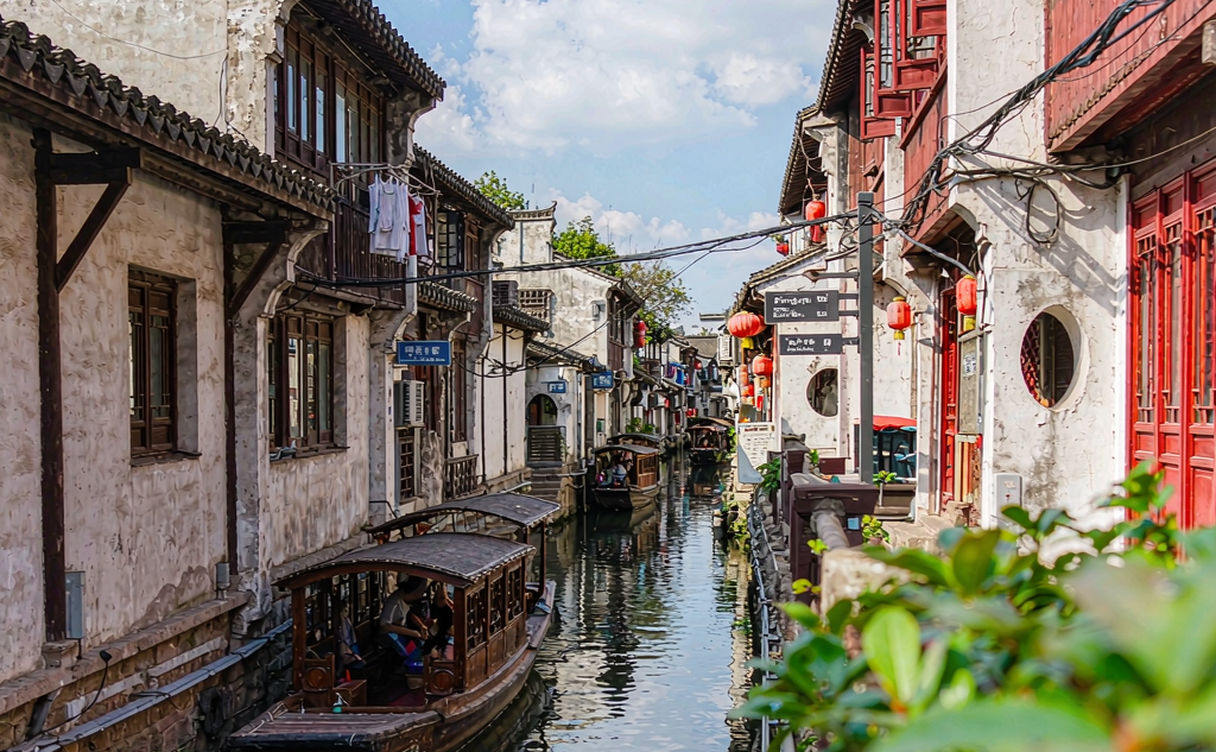
Pingjiang Road’s greatest practical advantage is location. It sits just east of the city’s headline gardens, a flat five to ten minute walk from the Suzhou Humble Administrator’s Garden, the largest and most celebrated of the classical gardens, and equally close to the Suzhou Museum, the modern building by Ieoh Ming Pei that holds the city’s finest collections. We almost always tell visitors to pair the road with one garden and the museum in a single half-day loop, because the walk between them is short and the contrast, from the choreographed garden to the lived lane to the clean museum, is exactly the rhythm that explains Suzhou. The road is open all day and lit in the evening, so you can do the gardens in the morning and return to the lane at dusk when the lanterns come on and the canal turns to silver.
For costs, the street itself is free, which makes it the easiest item on any Suzhou plan, but budget for the adjacent paid sights if you pair them. The Humble Administrator’s Garden ticket runs around RMB 70 to RMB 90 depending on season, the museum is free with a reservation that foreign visitors can usually handle at the door or online, and a canal boat on Pingjiang, when running, is a modest extra. There is no timed entry to the road and no gate, so you simply arrive whenever you like; we suggest early morning for empty lanes and good light on the water, or after 17:00 for the lantern atmosphere, and to avoid the midday weekend crush when tour groups fill the main lane. Give yourself at least two hours if you want to walk the full length, dip into a side alley or two, and sit for a tea, and more if you add a story-house set.
Getting to Suzhou is the easy part of the whole trip. The city sits on the Shanghai-Nanjing high-speed corridor, about 25 minutes by train from Shanghai and reachable from Beijing, Hangzhou, and beyond, so for those asking how to get to Suzhou, the answer is almost always “take the train.” Suzhou Railway Station is the closest to the old town and the road, a short taxi or metro ride from Pingjiang, while Suzhou Station serves some lines and is farther out. Our China high-speed train guide for foreigners explains booking with a foreign passport and which station puts you nearest the lane, which saves a wrong-turn taxi in a city where the old grid can confuse a map app. From the station, a cab to the north end of Pingjiang Road takes roughly fifteen minutes in light traffic.
Timing shapes the mood strongly. The best time to visit Suzhou is spring, from March through May, when the lane’s willows are green, the osmanthus and plum are in the air, and the temperatures sit in the comfortable teens and twenties Celsius, or autumn, from September through early November, when the light is clear and the canal reflects a clean blue sky. Summer is hot and humid with sudden heavy rain, and while the lane’s willows give some shade, the narrow street holds the heat, so go early or late and carry an umbrella. Winter is cold and sometimes grey, but the road in quiet January, with bare branches and few people, has a hushed beauty that photographers love, and the teahouses are all the cozier for it. Weekdays beat weekends, and a weekday morning in the off-season can leave you nearly alone with the water.
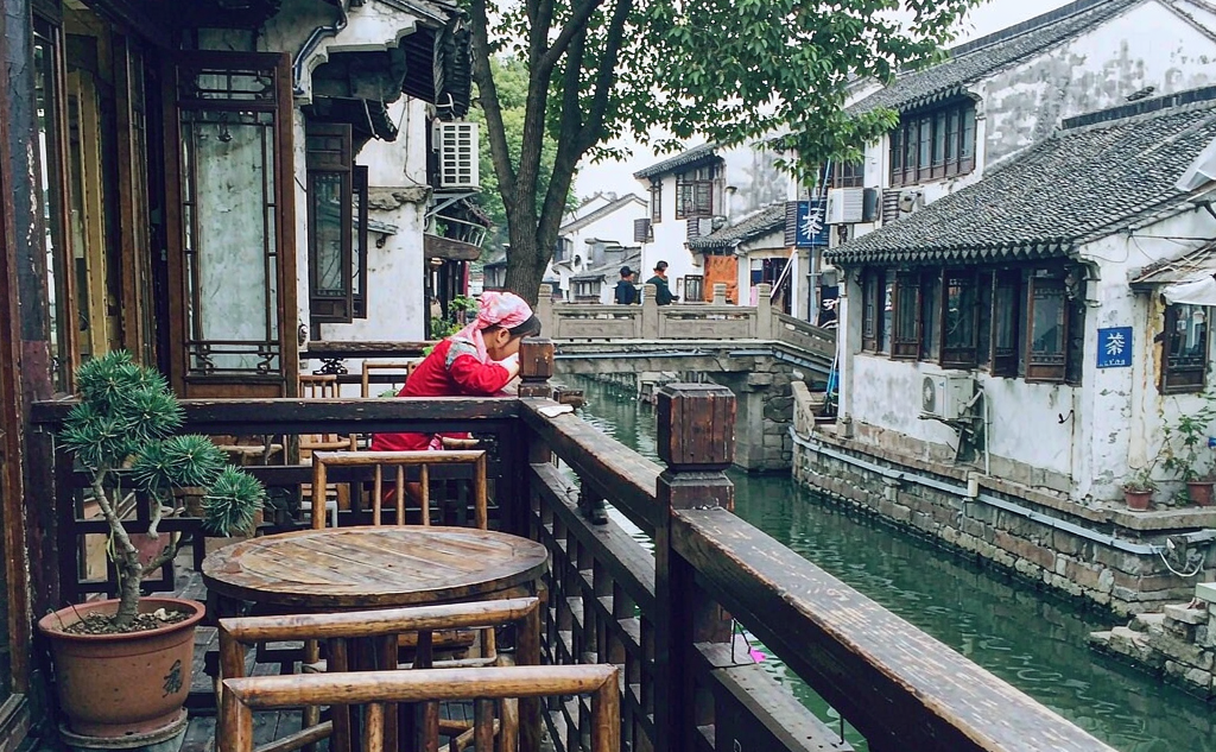
Once you have walked the road, the rest of the city is within easy reach, because things to do in Suzhou radiate from this old core. Beyond the Humble Administrator’s Garden and the museum, the Suzhou Tiger Hill sits a few kilometers northwest and deserves a half-day for its leaning pagoda and wooded paths, best saved for a separate morning. We usually tell visitors to treat Pingjiang Road as the everyday Suzhou you feel, the gardens as the Suzhou you admire, and Tiger Hill as the Suzhou you climb, and to space them so no single day tries to do too much. The road also makes a natural evening anchor: do a garden in the morning, the museum at midday, and return to Pingjiang for lanterns and a story-house set before dinner.
A few practical notes close the loop. The lane is flat and walkable but the slab stone is uneven, so wear comfortable shoes, and the side alleys can be even rougher underfoot. Boats on the canal are weather dependent and not always running, so treat one as a bonus rather than a plan. The teahouses and story houses often have handwritten Chinese signs and little English, but a smile and a point at the pot gets you seated, and prices are posted. If you want a souvenir with real provenance, the embroidery and the silk fans sold by the older shops near the museum end of the lane tend to be better made than the mass-produced goods deeper in the tourist stretch.
Pingjiang Road Suzhou is the city without the ticket, the place where the classical gardens’ ideals spill out into daily life along a working canal. Give it a slow morning or a lantern evening, turn down a side alley, sit for a tea, and let the old grid show you the Suzhou that the postcards only hint at.