

Hangzhou is sold to the world as a lake city, and West Lake earns the praise, but the place that actually puts the old commercial and culinary Hangzhou under your feet is Hefang Street Hangzhou, the restored pedestrian lane at the foot of the Wu Hill where the Southern Song dynasty once ran its imperial street. There is no gate and no ticket; the draw is the whole strip of Ming-Qing style shops selling local medicine, tea, silk, and snacks, with the smell of sizzling cong bao hui and the clack of a woodworker’s plane drifting out of the side alleys. We have walked this street with food tourists, history buffs, and skeptical teenagers, and the ones who arrive hungry and curious are the ones who leave happy. This Hangzhou Hefang Street guide covers what the street is, what to eat and see, what it costs, how to get there, and when to go, so you can fold it into a wider Hangzhou travel guide with the lake and the temple close by.
Hefang Street, properly part of the Qinghefang historic district, follows the line of the old Imperial Street of the Southern Song, the route that ran from the palace toward the river when Hangzhou, then called Lin’an, was the capital of a divided China in the 12th and 13th centuries. What stands today is a careful restoration rather than the original timber, but it sits on the genuine old footprint, and the mix of uses, medicine halls, teahouses, craft stalls, and food counters, echoes what the street was for 800 years. The Wikipedia entry on Hangzhou covers the city’s Southern Song past and why this district remained the commercial heart long after the capital moved, which adds weight to a stroll that can otherwise feel like a theme street. The best approach is to treat it as a living market that happens to wear old clothes, not a museum that happens to sell snacks.
The eating is the headline, and it comes fast. At the east end, around the Drum Tower, the stalls and small shops serve the Hangzhou snacks that locals actually queue for: cong bao hui, a crisp folded pancake wrapped around a fried fritter with scallion, ding sheng gao, a slightly sweet steamed rice cake stamped with a lucky character, and zongzi, the glutinous rice dumplings wrapped in bamboo leaf, savory or sweet depending on the filling. A few steps on, the century-old medicine and food shops sell the dried longjing tea, the lotus root starch, and the preserved plums that make easy, honest souvenirs. We once arranged a snack crawl for a couple who claimed they “weren’t hungry,” and by the Drum Tower they had worked through four stalls and were asking where to find the beggar’s chicken, which tells you how the street wears down resistance. Prices are modest, typically a few RMB per snack and a bit more for a sit-down bowl, so you can graze the length of the street for the price of a single Western cafe stop.
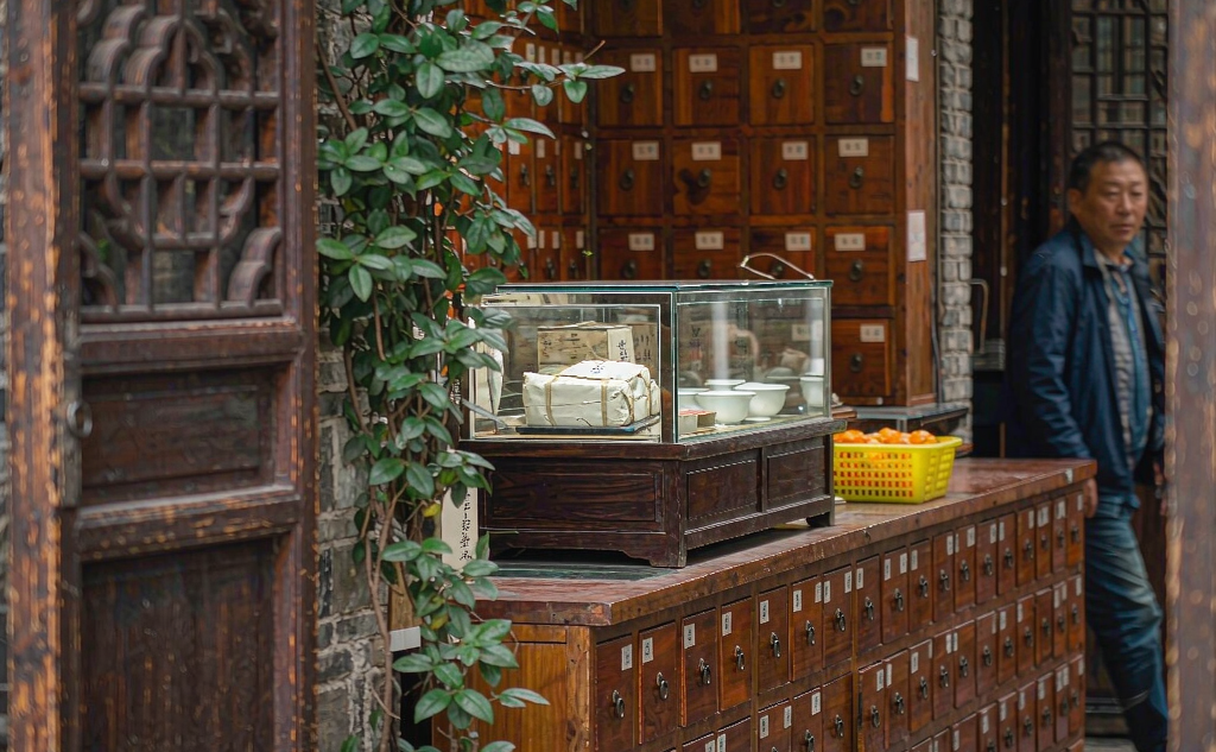
Beyond food, the street holds real heritage if you look up from the skewers. The Hu Qing Yu Tang, a vast traditional Chinese medicine hall near the west end, is built in the style of a Confucian academy and still dispenses herbs across a long counter, and stepping inside feels like walking into a 19th-century apothecary that simply never closed. The nearby shops for Longjing tea and Hangzhou silk are worth a slow look even if you only browse, because the good ones will brew you a cup and explain the grades, and a small packet of genuine early-spring Longjing bought here beats anything at the airport. The side alleys off the main lane, especially those climbing toward Wu Hill, hold quieter courtyards, a temple or two, and views back over the tiled roofs toward the lake, which is the move when the main strip gets crowded.
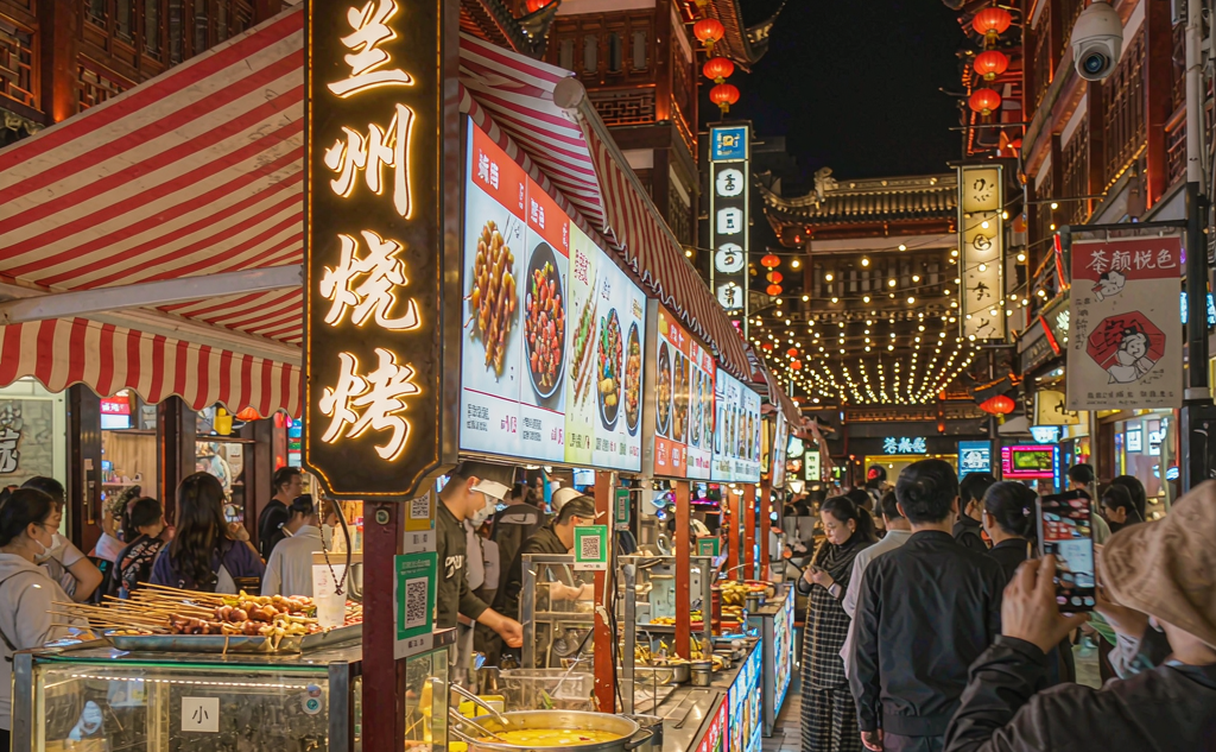
For planning, Hefang Street is free to walk, which makes it the cheapest item on any Hangzhou plan, but budget for the snacks and the occasional paid hall; the Hu Qing Yu Tang has a small museum section that is usually cheap or free, and the tea tastings are often complimentary with a purchase. There is no gate, no timed entry, and no reservation, so you simply arrive when you like; we suggest late afternoon into evening, because the lanterns come on, the food stalls hit full stride, and the heat of the day lifts in the warm months. The street runs roughly from the Drum Tower in the east to the edge of the West Lake scenic area in the west, about a kilometer, and a full graze with a few alley detours takes two to three hours. Pair it with the Hangzhou food guide we maintain if you want the dishes explained before you point at them, because the local names trip up even confident travelers.
Location is the street’s quiet superpower. It sits a flat walk from the south end of West Lake Hangzhou, close enough that you can do the lake in the morning and drift down to Hefang for a snack-driven afternoon, and it is also near the start of routes up Wu Hill for a sunset over the rooftops. The Hangzhou Lingyin Temple guide covers the great monastery to the northwest, best saved for a separate morning, but the two together show the range of old Hangzhou, the sacred and the commercial, within a short ride of each other. We usually tell visitors to treat Hefang as the everyday Hangzhou you taste and the lake as the Hangzhou you admire, and to let the street be the relaxed bookend to a day that started at the water.
Getting to Hangzhou is straightforward on the rail network. The city sits on the Shanghai-Hangzhou high-speed line, about an hour by train from Shanghai and reachable from Nanjing, Beijing, and beyond, so for those asking how to get to Hangzhou, the train is almost always the answer, with Xiaoshan International Airport handling flights for longer hauls. Hangzhou East Railway Station is the main hub and a metro ride from the old town and Hefang Street, while the city metro now reaches close to the lake and the historic districts, cutting the old taxi slog through traffic. Our China high-speed train guide for foreigners explains booking with a foreign passport and which station puts you nearest the old town, which saves a wrong-turn fare in a city whose lake roads snarl at rush hour.
Timing shapes both the crowd and the menu. The best time to visit Hangzhou is spring, from March through May, when the lake willows turn green, the peach by the water blooms, and the temperatures sit in the comfortable teens and low twenties Celsius, or autumn, from September through early November, when the air is clear and the osmanthus scent drifts through the old lanes. Summer is hot and humid with sudden storms, and the crowded street holds the heat, so go in the evening and carry water; winter is cold and sometimes grey, but the street in quiet January, with few tourists and the tea shops serving hot Longjing, has a cozy honesty that regulars prefer. Weekdays beat weekends, and a weekday evening in the off-season lets you actually talk to the stallholders rather than shoulder through them.
Once you have grazed the street, the rest of the city opens up, because things to do in Hangzhou radiate from this old core. Beyond the lake and Lingyin, the tea terraces of Longjing village to the west are a half-day trip in spring when the leaves are picked, and the Grand Canal waterfront to the north offers a different, working-class face of the city. We usually tell visitors to treat Hefang Street as the flavor of Hangzhou, the lake as its beauty, and Lingyin as its calm, and to space them so no single day tries to do too much, because Hangzhou rewards a slow hand more than almost any city in the delta. The street also makes a natural evening anchor after a day at the water, when the lanterns and the snacks are exactly the wind-down the lake’s serenity builds toward.
A few practical notes close the loop. The street is flat and walkable but can be packed shoulder-to-shoulder on weekend evenings, so keep valuables zipped and children close, and photograph the food before you eat it because the stalls move stock fast. The medicine hall and the better tea shops are where the real heritage lives, so don’t judge the street by the trinket stalls alone; step inside Hu Qing Yu Tang even if herbs are not your interest, because the building is the exhibit. Cash helps at the smallest stalls, though mobile payment dominates, and a China-ready payment setup spares you the awkward moment at a dumpling counter that takes only the local app.
Hefang Street Hangzhou is the city you taste before the city you photograph, the place where 800 years of market life still hums under lantern light. Arrive hungry, look up at the old timber, step into the medicine hall, and let the snacks lead you from the Drum Tower toward the lake, with a packet of Longjing in your bag and the smell of scallion pancakes behind you.