

The Jade Buddha Temple Shanghai is one of the few working monasteries inside a Chinese megacity where you can stand three meters from a two-meter-tall statue carved from a single block of Burmese jade, listen to monks chanting the morning sutras, and still hear the faint hum of the elevated metro two streets away. We have sent hundreds of travelers here as a calm half-day counterpoint to the Bund and the skyscrapers, and almost everyone leaves surprised that such a quiet, golden-roofed compound survives in the middle of Putuo District. This guide covers what it actually costs, how to reach it, and what to do once you are inside.
Where the temple sits and why it matters
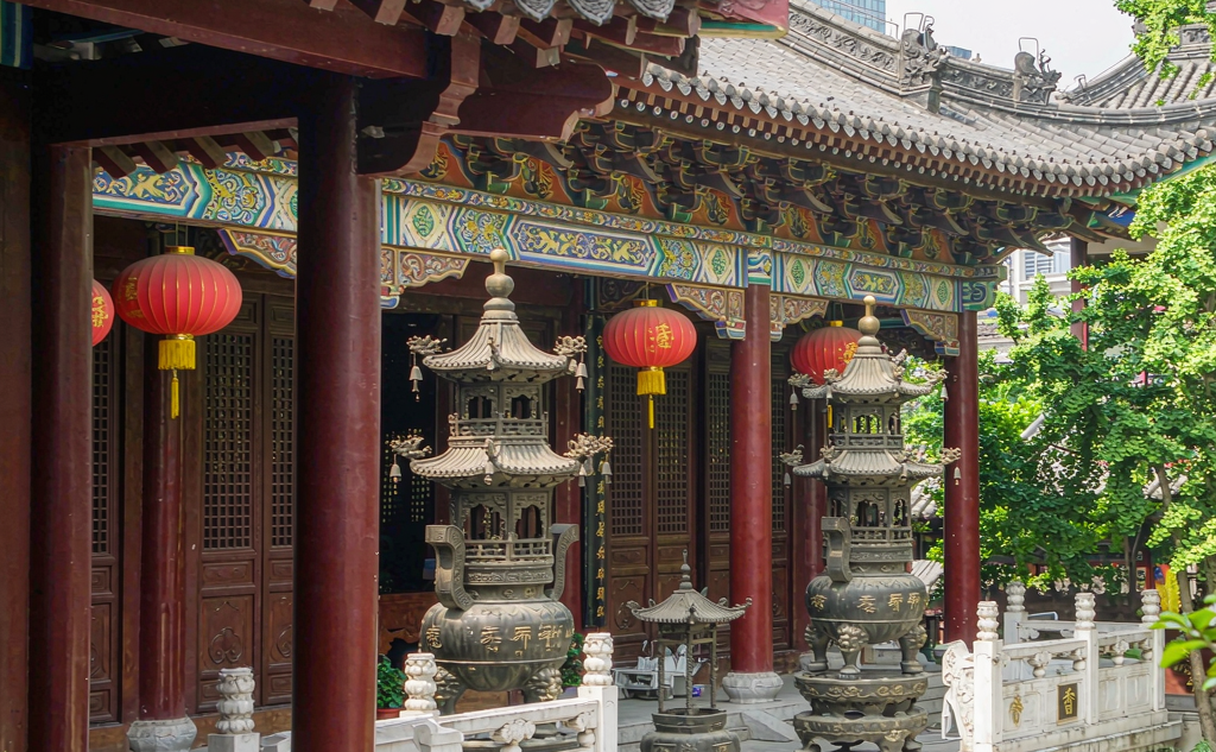
The monastery occupies 170 Anyuan Road, a leafy side street about nine kilometers northwest of People’s Square. Unlike the grand imperial temples of the north, this is a Southern Chan monastery built in the style of the Song and Qing dynasties, with upturned eaves, scarlet pillars, and a layout organized around three main halls rather than one enormous courtyard. The temple was first established in 1882, when a traveling monk named Huigen brought two white jade Buddha statues back from Burma and housed them here. The original structure was damaged in the early 20th century, and the buildings you walk through today were rebuilt between 1918 and 1928. What makes it special for foreign visitors is the rarity of the material: most Chinese Buddhist imagery is gilded wood or bronze, but here the central icons are solid white jade, flawless and cool to the eye even on a humid August afternoon.
Tickets, hours, and what you actually pay
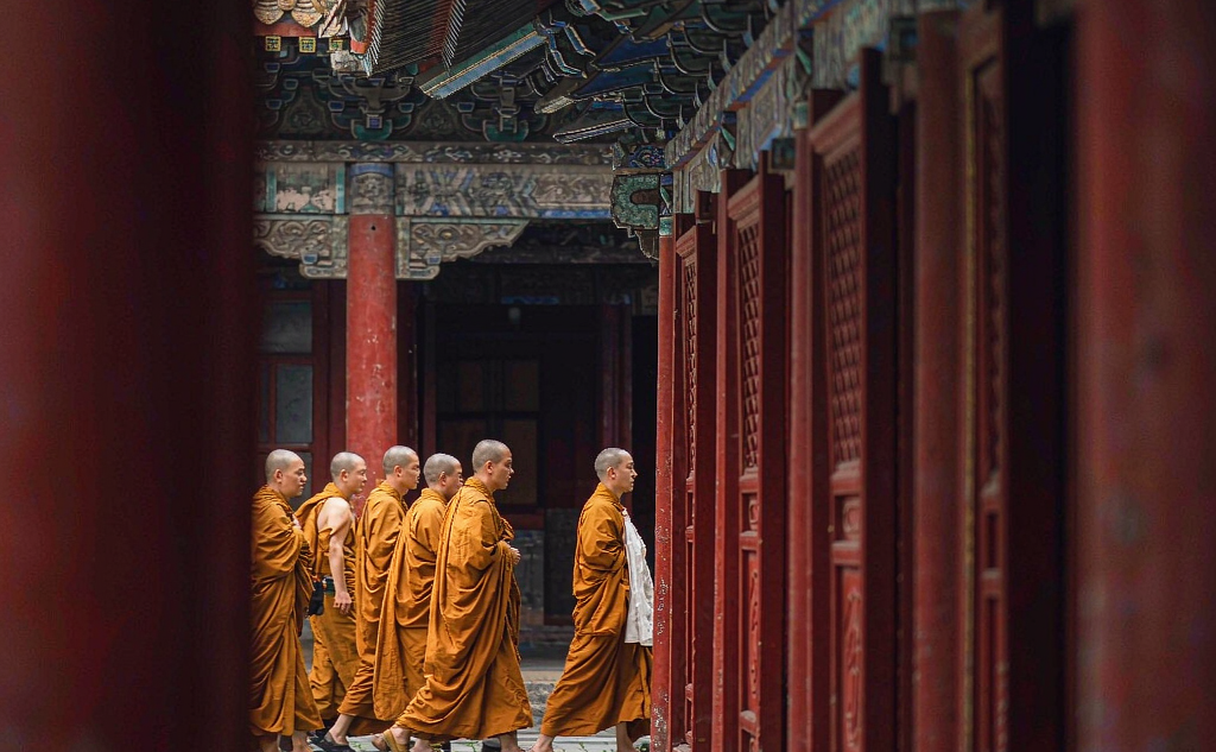
Admission is straightforward. As of our last on-site check in spring 2025, the standard adult ticket costs 20 CNY, about three US dollars. Children under 1.2 meters enter free, and seniors over 70 with valid ID are also admitted without charge. The ticket window sits at the north gate on Anyuan Road and accepts cash, Alipay, and WeChat Pay. Foreign cards are not always reliable at the booth, so carry a little cash or be ready to use a payment app through a Chinese friend or your hotel. Opening hours run from 8:00 to 17:00, with last entry at 16:30. The chanting sessions peak around 9:00 in the morning and again at 15:00, and if you time your visit to either, you will catch the halls at their most atmospheric. Photography is permitted in the open courtyards but strictly forbidden inside the Jade Buddha Hall, where the two precious statues sit behind glass.
A separate vegetarian restaurant inside the temple serves set lunches from 11:00 to 14:00, priced between 30 and 60 CNY per person. The small shop near the exit sells prayer beads, incense, and jade trinkets if you want a keepsake that is not mass-produced.
How to get to Jade Buddha Temple Shanghai
The easiest public route is the metro. Take Line 13 to Jiangning Road Station and use Exit 2 or 3. From there it is a flat ten-minute walk south along Anyuan Road, and the temple’s yellow walls are impossible to miss. Line 7 also runs to Changping Road Station, a slightly longer twelve-minute walk east. If you are coming from the Bund or People’s Square, a taxi or ride-hail costs roughly 30 to 45 CNY and takes twenty to forty minutes depending on traffic. We generally advise first-time visitors to keep the temple on the same side of town as their other northwest plans, since this district shows ordinary Shanghai life rather than the postcard version.
Inside the halls: what to see
The route is linear and well signed in both Chinese and English. The first hall is the Hall of Heavenly Kings, where the mild-eyed Maitreya Buddha greets you and the four heavenly kings stand guard along the walls. Past it lies the Grand Hall, the busiest space in the complex, housing a gilded Sakyamuni Buddha flanked by his disciples and a row of eighteen arhats, each with a distinct, almost playful expression.
The prize is the Jade Buddha Hall at the rear. Here sits the seated jade Buddha, 1.95 meters tall and carved from a single piece of pale green-white Burmese jade, wearing a diamond-studded robe donated by devotees. A few steps away, in a side chamber, lies the reclining jade Buddha, just under a meter long, depicting the moment of the historical Buddha’s entry into nirvana. Both pieces date from the original 1882 shipment and are the reason the temple exists at all. We tell travelers to spend a quiet five minutes in front of the seated statue rather than rushing, because the light through the hall’s high windows does something unusual to the stone.
Best time to visit and how to avoid the crowds
Shanghai’s climate shapes the experience. Spring, from March to May, and autumn, from September to November, are the most comfortable, with daytime highs around 20 to 25 degrees and low humidity. This is also the best time to visit Shanghai for almost every outdoor sight in the city. Summer is hot and sticky, with afternoon thunderstorms, and winter is damp and grey but wonderfully empty. The temple is busiest on the first and fifteenth days of the lunar month and during Chinese New Year, when lines at the gate can stretch twenty minutes. For a calm visit, arrive right at the 8:00 opening on a weekday, or after 15:30 when the tour groups have left.
Combine it with nearby highlights
Because the temple sits on the city’s northwest axis, it pairs naturally with other west-side sights. Our Shanghai Yu Garden guide covers the old-town gardens on the opposite side of the center, best saved for another day, while the Bund’s night skyline is thirty minutes southeast and an easy evening follow-up once you have had your fill of incense. The Shanghai Museum, a short metro ride toward People’s Square, houses one of the finest bronze and ceramic collections in the country, and makes a good half-day with the temple if you are staying nearby.
Practical tips from our guides
A few things we have learned from standing in that courtyard with travelers: wear modest clothing, as shoulders and knees should be covered inside the halls; bring small change for the incense offering if you want to participate; and give yourself at least ninety minutes so you are not hurrying past the jade statues. The monastery is active, not a museum piece, so step aside during chanting rather than walking through the middle of a ceremony. If you are arriving from another city, book a Shanghai-bound high-speed train into Hongqiao or Shanghai Station, both a taxi ride from the temple’s gate.
The documented history of the site and its Burmese jade icons is summarized on Wikipedia, which is a useful read before you go if you want the full lineage of the resident abbots.
Why we keep sending travelers here
Jade Buddha Temple rewards a slow pace. Arrive early, walk the three halls in order, sit for a while by the jade statues, and let the city’s noise fall away for an hour. It is one of the cheapest, calmest, and most genuinely spiritual stops on any Shanghai itinerary, and it fits neatly into a morning before the crowds and the heat build up.
The Bund’s night skyline is a short ride southeast and pairs perfectly with a temple morning if you time it right.
Yu Garden and the old town make a natural second half-day once you have seen the jade statues.