

I went to Tianzifang (田子坊) in October 2025 because I wanted the messy, lived-in version of Shanghai lane life that Xintiandi polishes away. Tianzifang is a tangle of old longtang (lane) housing near Taikang Road in the former French Concession, where artists moved into the ground floors and turned the alleys into galleries, cafes, and tiny shops. This Shanghai Tianzifang guide comes from a few wandering visits, with the metro I took, the coffee I paid for, and the dead-ends I happily got lost in. It is written for travelers who like a place with rough edges and real residents still hanging laundry above the boutiques.
How to visit Tianzifang
Tianzifang is easy by metro and a short walk from the Concession core. Line 9 stops at Dapuqiao (打浦桥站), and I came from People’s Square in about 15 minutes for RMB 3, then walked out Exit 1 and followed the signs five minutes to the lane mouth. Some visitors also use Line 10 to the nearby Site of Jiangnan Arsenal stop and walk in, but Dapuqiao is the cleanest approach. For the rail basics, our China metro and subway guide explains riding with Alipay QR or a foreign card, and it is the guide I used to tap in without buying a physical ticket.
Entry to the lanes is free; you pay only for what you buy or sip. The warren is flat but uneven underfoot in spots, so skip the heels. The lane’s origin and layout are outlined on Tianzifang at Wikipedia if you want the backstory before you go, and it helps to know it grew from a working-class neighborhood, not a rebuilt one.
Best time to visit Tianzifang
Tianzifang is best in cool, uncrowded weather. I went on an October weekday afternoon with temperatures around 22°C, and the lanes were busy but breathable. Weekends and holidays pack the narrow alleys shoulder-to-shoulder, which can spoil the charm. Spring (April to May) and autumn (September to November) are the comfortable seasons; summer is hot and the tight lanes hold the heat, while winter is cold but the Christmas lights on nearby Nanjing Road make a good pairing. Our Shanghai first-time travel guide fits Tianzifang into a relaxed day and notes that a weekday visit is the trick to enjoying it.
Getting lost in the Tianzifang lane
The whole point is the maze. A Tianzifang lane folds back on itself every few meters, with brick walls, potted plants, and the occasional resident’s bike blocking the way; I got turned around three times and enjoyed every wrong turn. This is where things to do in Tianzifang begin — not at one monument, but in the act of wandering. The alleys open without warning onto a courtyard cafe or a wall of hanging lanterns, and the scale is human in a way the big shopping streets are not.
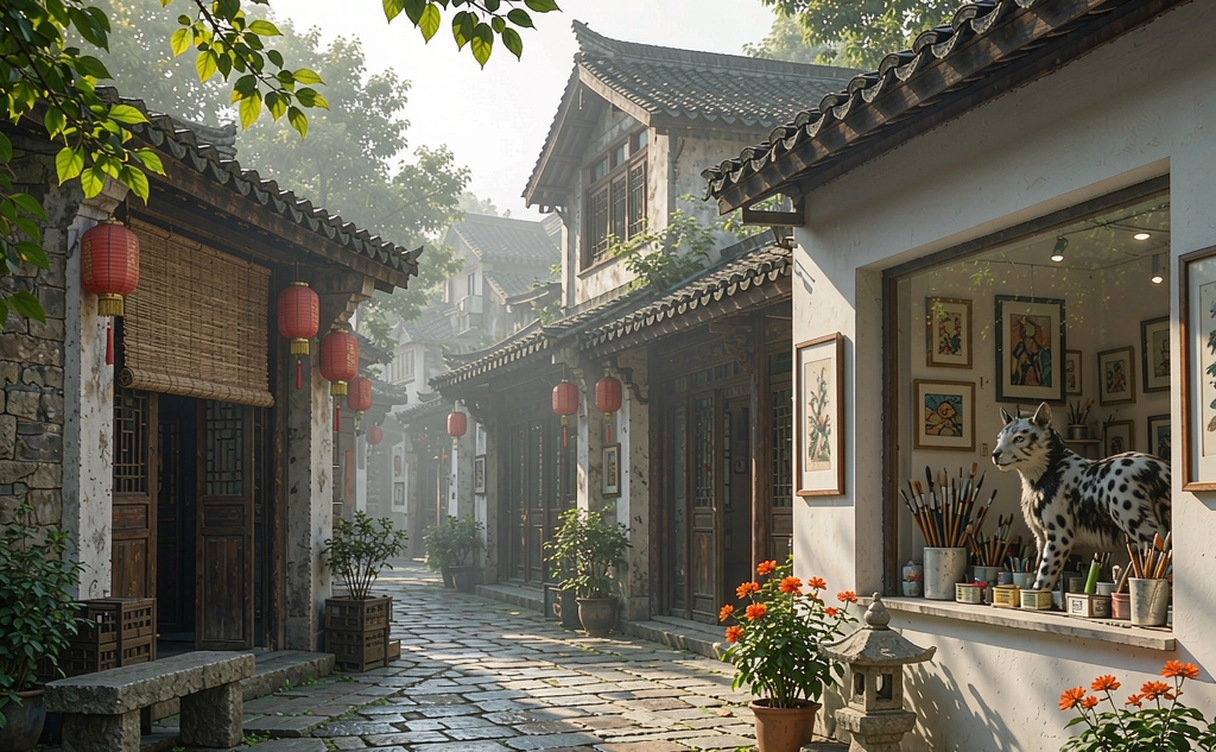
Unlike Xintiandi’s rebuilt facades, here the housing is original and still inhabited, so you will see laundry and hear televisions above the shops. That residue of real life is the draw. Go slow, take the unmarked turns, and you will find the quiet inner courtyards where the crowds thin. I spent a full hour just mapping the place in my head, which is the right pace for it.
Tianzifang shops and the galleries
The retail is small-batch and arty. Tianzifang shops run from printmaking studios and ceramics to hand-poured candles and indie fashion, with prices from RMB 30 for a postcard print to RMB 300 for a piece of studio pottery. I bought a linocut of a Shanghai lane for RMB 120 and a silk scrunchie for RMB 35, both souvenirs with a story. The galleries cluster in the upper alleys and the converted factory block, and browsing them is half the visit.
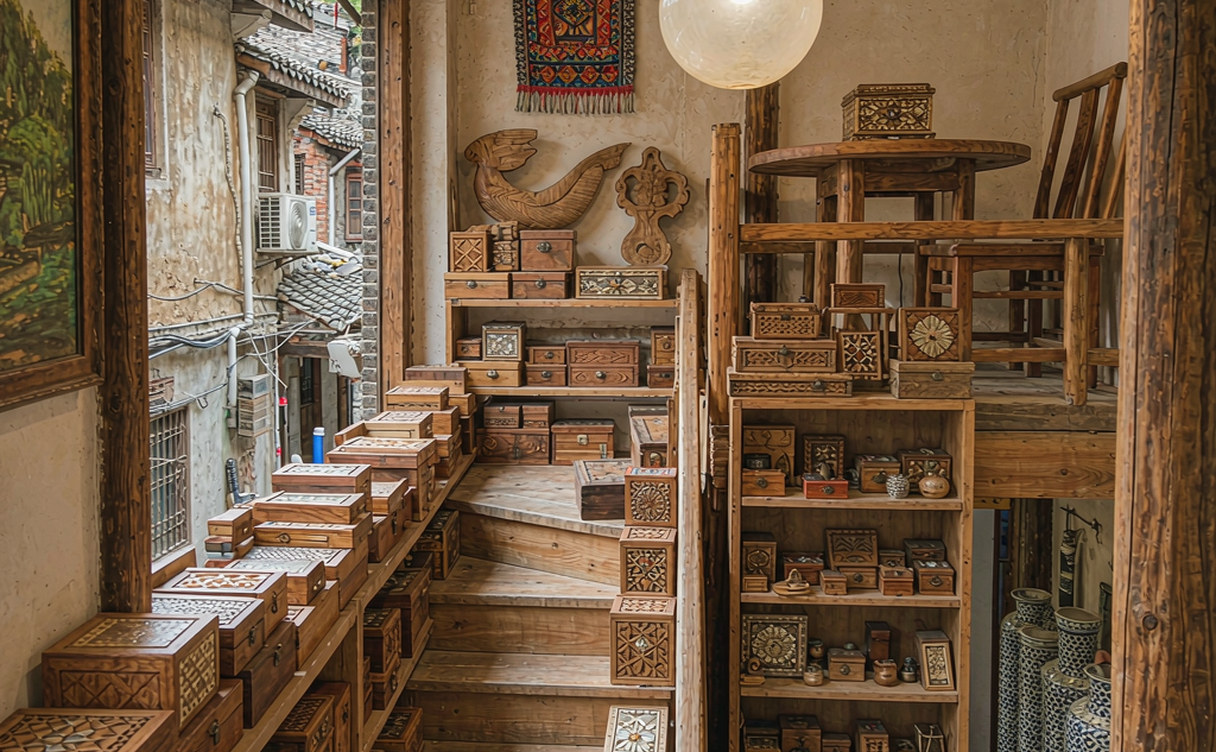
For the wider retail map, our China shopping and souvenirs guide explains what is worth carrying home from Shanghai and how to spot the handmade from the mass-made, which helped me skip the generic keychains. Our Shanghai French Concession guide covers the calmer boutique streets just north, and the two areas make a natural half-day of old-Shanghai wandering.
Tianzifang cafes and a slow drink
When the lanes tire you, sit. Tianzifang cafes spill onto the brick with espresso, matcha, and the occasional draft beer; I paid RMB 42 for a flat white and RMB 55 for a craft beer, both with a front-row seat to the foot traffic. A few spots have rooftop nooks where you can see the lane roofs and chimney pots, which is the best vantage in the district. I treated one cafe as my reset point, then pushed back into the alleys with fresh energy.
If you want the bigger food-and-crowd scene, our China night markets guide covers the city’s open-air eating streets, and Tianzifang pairs well as the crafty daytime counterpoint. Our Shanghai Nanjing Road guide is the bright, busy retail strip nearby if you want to follow the lanes with a classic shopping promenade. One detail I appreciated: the cafes here keep short, handwritten menus and the owners often chat if you sit long enough, so a slow drink easily becomes a conversation about which alley to try next. I left with two cafe recommendations scribbled on a napkin that turned out better than anything I had planned.
A practical Tianzifang itinerary
Here is the half-day plan I used. Late morning: metro to Dapuqiao, enter the lanes, wander without a map for an hour. Midday: browse the studios and buy one keepsake. Afternoon: a lane cafe break, then a second loop of the alleys you missed. If you have more time, add the French Concession lanes beforehand and Nanjing Road afterward for a full old-and-new Shanghai day. Two to three hours covers Tianzifang at a relaxed pace.
My spend was about RMB 200 to 350 including a coffee and a souvenir, not counting the RMB 3 metro. It is not a cheap stop if you shop, but as a walkable hit of authentic lane life it is efficient and far more textured than a mall. I found that the best photos came from the second loop, once I had stopped hunting for sights and simply watched the light move across the brick; the lanes look entirely different at 4 p.m. than at noon, and the late-day angle is worth waiting for.
Where to stay and book
I based myself near People’s Square and rode the metro in, which kept things simple, but staying in the French Concession puts Tianzifang within walking distance and puts you among the cafes at night. Mid-range hotels there ran RMB 400 to 700 a night in October, and booking on Ctrip with Alipay gave me no trouble with a foreign card. Pick the Concession side if you want to roll out of bed into the lanes; pick the center if you want a hub for the whole city.
Tianzifang is not pristine, and that is the point. It is a working lane neighborhood that artists and small shops have colonized, where the reward is a wrong turn, a handmade print, and a coffee above the rooftops. If you like your Shanghai with some grit and some residents still living upstairs, Tianzifang earns a morning on your route, and the labyrinth will happily swallow an hour you did not plan to spend.