

The first time I tried to buy silk in Shanghai, I paid roughly twice what the bolt was worth. The shopkeeper smiled, I smiled, and we both knew I was a beginner. That was ten years and a lot of haggling ago. China remains one of the best places on earth to shop for souvenirs — the craftsmanship is real, the variety is staggering, and the prices, once you learn the rhythm, are a fraction of what you would pay back home. But the learning curve is steep, and the gap between a great purchase and a regrettable one usually comes down to knowing what to buy, where to buy it, and how to haggle without offending anyone.
This is the guide I wish someone had handed me on day one.
What’s Actually Worth Buying
Let me cut through the tourist-trap clutter. These five categories are where China genuinely shines, both in quality and in value.
Silk — Real mulberry silk from Hangzhou and Suzhou is world-class and cheap by Western standards. Look for 100% silk scarves, ties, and fabric by the meter. The test I use: rub the fabric and press it to your cheek. Real silk is cool, smooth, and makes a soft rustle; synthetics feel warm and silent. A good silk scarf runs ¥80–300 (about $11–42) at a proper market, versus ¥600+ in a hotel gift shop.
Tea — China has six main tea families (green, white, yellow, oolong, black, and dark/fermented), and buying it where it’s grown changes everything. Longjing (Dragon Well) green from Hangzhou, Tieguanyin oolong from Fujian, Pu’er from Yunnan. A decent loose-leaf costs ¥100–400 per 100g at a tea market; tins in airports are overpriced and often stale.
Jade — This is the danger zone. “Jade” in China can mean genuine nephrite/jadeite (expensive, durable, valuable) or dyed glass (worthless). If you want real jade, buy from a recognized store with a certificate, not a street stall. Expect to pay ¥500+ for anything genuine and small.
Porcelain — From blue-and-white (qinghua) to celadon, Chinese ceramics are functional art. Jingdezhen is the historical capital, but you’ll find excellent, affordable pieces in Shanghai and Beijing markets too.
Calligraphy & Paper — Brushes, ink stones, rice paper (xuan zhi), and scroll paintings make wonderful, packable souvenirs. The Famous Tea and Writing Brush Street near Beijing’s Liulichang is the classic hunting ground.
Markets vs. Malls: Know the Difference
China gives you two completely different shopping worlds, and you should use both.
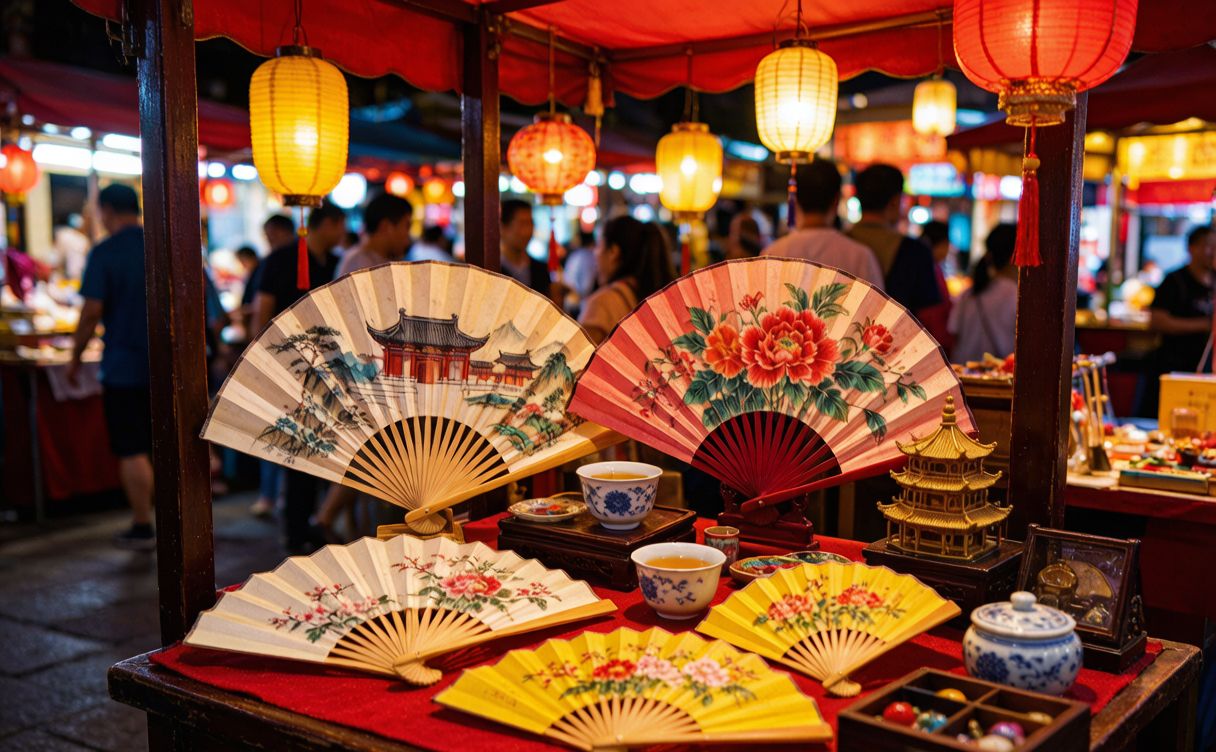
Markets (夜市, flea markets, wholesale districts) are where the deals and the fun live. You haggle, you wander, you discover. The downside: quality varies wildly and fakes are common. Examples: Shanghai’s Yuyuan Bazaar, Beijing’s Panjiayuan Antique Market (open weekends), the Pearl Market (Hongqiao) in Beijing.
Malls and department stores (购物中心, 百货) offer fixed prices, receipts, and authenticity guarantees — at a premium. For high-value items like jade or brand-name goods, the mall is the safer bet. Air-conditioned, English signage is more common, and you can often get a tax refund form at the counter.
My rule of thumb: markets for silk, tea, knock-off-free crafts, and clothing; malls (or certified specialty shops) for jade, electronics, and anything you need to be able to return.
The Art of Bargaining
Bargaining isn’t rude in Chinese markets — it’s expected, even enjoyed, as a social dance. Here’s how I do it without looking like a fool.
- Never show excitement. The moment a vendor sees you love an item, the price climbs. Stay neutral.
- Offer 30–40% of the first price for souvenirs at tourist markets. Silk and tea have thinner margins; knock-offs and “antiques” have huge ones.
- Walk away. This is the single most powerful move. Nine times out of ten, they call you back with a lower number.
- Pay with a Chinese app if possible. As I cover in my guide to using Alipay and WeChat Pay as a foreigner in China, linking your card to these apps often gets you small discounts and always avoids the worst currency-exchange rates at the counter.
A quick reality check: if a “Rolex” costs ¥150, it’s not a Rolex. Buy it because you like the look, not because you think you scored.
Where to Buy What: City by City
Shanghai — Polished and International
Start at Yuyuan Garden and its surrounding bazaar, where you’ll find silk, teapots, and trinkets in a gorgeous old-setting. For genuine silk, the shops on Nanjing Road and the Silk King (Tianshan) stores are reliable. For knock-off fashion and electronics bargains, the fake markets on Nanjing East Road side streets still exist but are quieter than a decade ago. Pair your shopping with an evening on the Bund’s night view — the lit skyline is free and unforgettable.
Beijing — Antiques and Tea
Panjiayuan is the legend: arrive early on a weekend for the best picks in jade, snuff bottles, and “cultural relics” (authenticity not guaranteed). For calligraphy supplies, Liulichang is unmatched. The Pearl Market (Hongqiao) is the place for freshwater pearls and silk at negotiable prices. Build your shopping days around a solid plan — my Beijing 3-day itinerary slots markets between the big sights so you’re not backtracking across the city.
Guangzhou — The Wholesale Capital
If you want quantity and the lowest prices, Guangzhou wins. The wholesale garment and accessories districts (Shahe, Zhanxi) are overwhelming but cheap, and the Tea Ware Street (Wenming Lu) is excellent for teapots and Pu’er. For a full orientation to the city, see the Guangzhou travel guide. Bring an empty suitcase — seriously.
Chengdu — Sichuan Flavor
Chengdu’s souvenirs lean edible: Sichuan peppercorns, chili flakes, and tea from nearby Mengding Mountain. Jinli and Kuanzhai Alley are touristy but atmospheric, good for Shu embroidery and lacquerware. Brocade (蜀锦) is the local textile specialty and far less common than silk elsewhere.
Taobao and Online Shopping for Visitors
Taobao is China’s eBay-Amazon hybrid, with impossibly low prices and an endless catalog. The catch: it’s in Chinese, sellers rarely ship internationally, and you need a Chinese payment method and address. Most short-term tourists can’t use it directly. The workaround is a “daigou” (personal shopper) or your hotel concierge, but fees eat the savings. For a typical one- or two-week trip, stick to physical markets — Taobao is more useful if you’re living in China. If you’re planning a longer stay, check the best time to visit China so your shopping season matches the weather and festivals.
Customs Limits and What to Declare
This part is boring but matters. When you fly home:
- Tea and dried food are generally fine in personal quantities, but check your home country’s agricultural rules — many ban seeds, fresh produce, and unprocessed items. Packaged, sealed tea is almost always OK.
- Jade and valuable antiques should have receipts and certificates. Genuine antiques over a certain age may be restricted from export by Chinese law; if a vendor claims an item is “Qing dynasty,” get paperwork or assume it’s a reproduction.
- Cash: most countries require you to declare if you carry more than $10,000 (or local equivalent) in or out. China limits undeclared export of RMB to ¥20,000.
- Alcohol and tobacco have strict duty-free allowances — keep receipts.
- When in doubt, declare it. Customs officers care far more about undeclared high-value goods than a few souvenir scarves.
For official, up-to-date rules on what you can bring home, the U.S. Customs and Border Protection traveler’s checklist is the authority I send readers to.
A Few Practical Warnings
- Fake receipts and certificates exist. A printed “jade certificate” means little unless it’s from a recognized lab. Buy high-value jade from established retailers.
- Weigh tea before paying. Some vendors “forget” to tare the scale. A small digital luggage scale is your friend.
- Shipping home is easy via SF Express (顺丰) or China Post, but fragile porcelain needs proper foam packing — pay for it.
- Keep your passport handy for tax-refund forms at participating malls (the refund is around 11% on eligible purchases over a threshold).
China rewards the curious shopper. Learn the five things worth buying, master the walk-away, and you’ll come home with a suitcase of genuine treasures and a few great stories. The worst mistake isn’t overpaying once — it’s never learning to play the game at all.
Planning a first trip? Start with the seasons so your markets and weather line up:
Want the full picture before you book flights? These planning guides pair perfectly with your shopping trip:
Still unsure where to start? I read every message.