

A reliable China metro guide for tourists is the single most useful thing you can carry into a Chinese city. Dozens of mainland cities run clean, cheap, punctual and English-friendly subway systems, and learning the basics before you arrive will save you both money and stress. This guide explains how to read signage, how to pay, what the security checks involve, and how to ride like a local even if you cannot read a word of Chinese.
Why the metro is your default transport
Taxis and ride-hailing are convenient, but in Shanghai, Beijing, Guangzhou or Chengdu the metro is almost always faster during rush hour, costs a fraction of a cab, and never gets stuck in traffic. Most lines open around 5:30 to 6:00 in the morning and stop running between 22:30 and 23:30. Trains arrive every two to five minutes at peak times, and stations are air-conditioned in summer and heated in winter. For first-time visitors the network can look intimidating, but every major system is designed with foreigners in mind.
If you want the broader picture before you fly, our China travel guide for first-timers covers how metro fits into the wider transport mix, while our Beijing things to do and Shanghai things to do pages show which stations drop you closest to the headline sights.
English signage is better than you expect
The good news is that Beijing and Shanghai metro English signage is genuinely excellent. Station names are printed in both Chinese characters and the Latin alphabet, and the pinyin is usually close enough to the English pronunciation that you can recognise your stop. Inside the train, a recorded announcement names each station in Chinese and English, and the electronic strip above the doors shows the next station in both scripts plus a running light that moves along the line diagram.
Transfer stations are the only genuinely confusing spots. Names such as “National Library” or “People’s Square” can span three or four lines that meet on different levels, so always check the line colour and the direction arrow on the platform. Colours are your friend: each line has a fixed colour, and following the coloured line on the wall signs will keep you on the right track even when the words are unfamiliar.
How to pay for the subway in China
There are three realistic ways to pay, and you should set up at least two before your first ride.
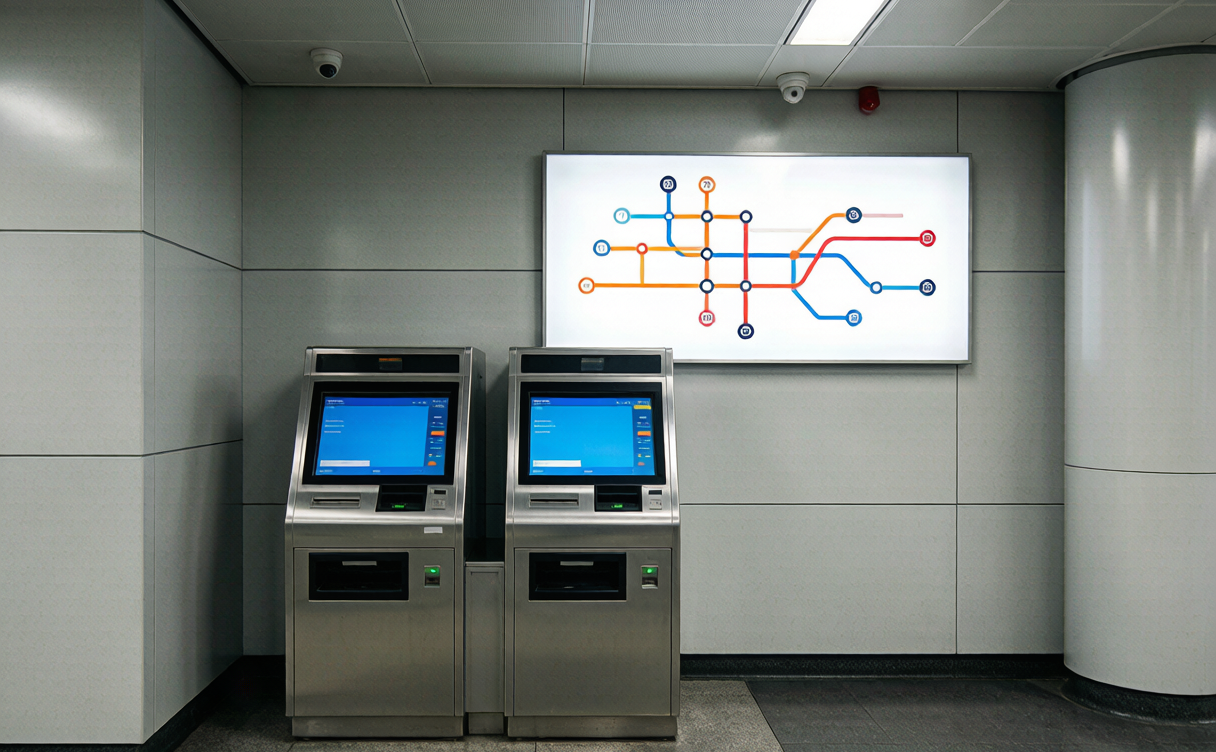
1. Single-journey tokens or paper tickets. Every station has ticket machines with an English button. You pick your destination, pay cash or sometimes a local card, and receive a plastic token or a one-time QR printout. This works, but the machines can be slow and occasionally reject foreign banknotes, so treat it as a backup.
2. Transport cards. Cities sell rechargeable cards such as the Beijing Yikatong or the Shanghai Public Transportation Card. You tap in and out, and rides are often a few cents cheaper than single tickets. The catch for tourists is the deposit and the refund step at the end of your trip. A China metro day pass and transport card combination used to be common, but most cities have quietly moved toward phone payment, so check locally whether day passes still exist before you rely on one.
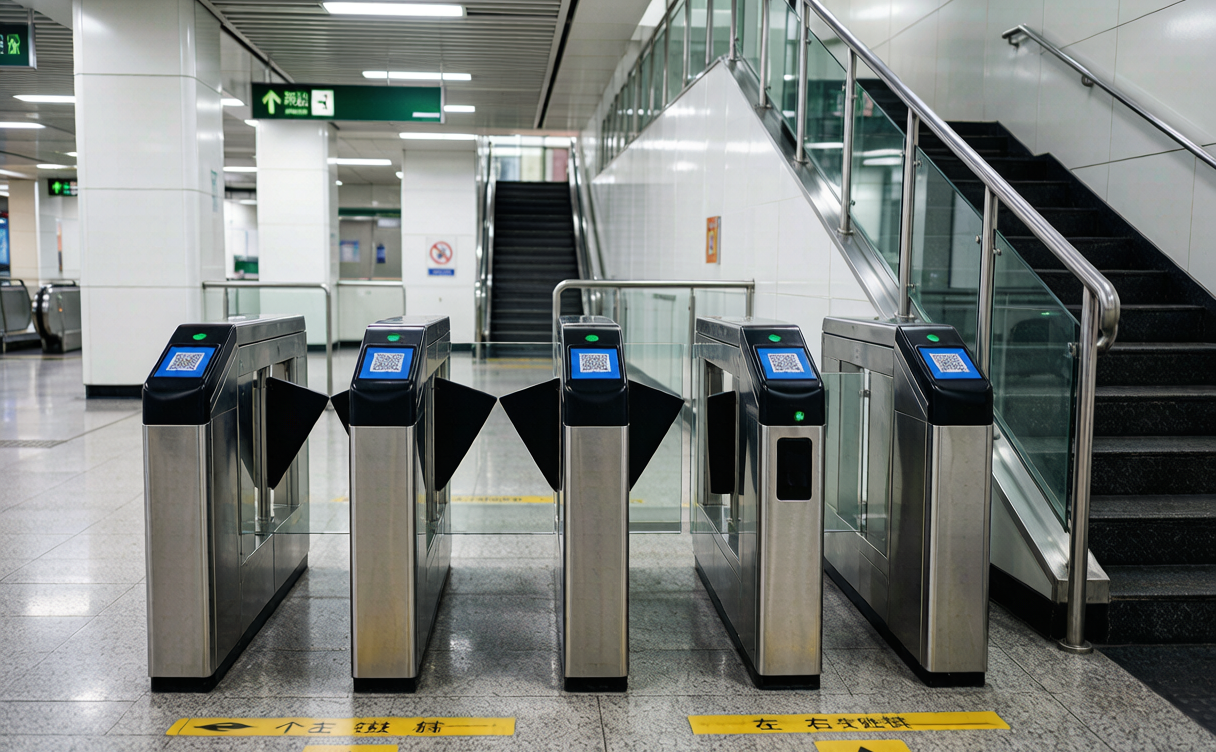
3. Phone QR codes — the easiest option. The modern standard is an Alipay metro QR code in China. Open Alipay, switch the app to English, and search for the “Metro” or “Transit” mini-program for the city you are in. After a one-time identity verification you get a QR code that you scan at the gate. WeChat Pay offers the same through its “Ride Code” feature in certain cities. You need a Chinese-style mobile wallet to make this work, so read our Alipay and WeChat Pay guide for foreigners before you travel and set up the wallet at home.
The security check you cannot skip
China subway security check rules apply to every passenger, every time. At the entrance you place your bag on a conveyor belt for an X-ray scan and walk through a metal detector while a staff member waves a handheld scanner near you. Liquids may be tested with a small sensor, and occasionally you are asked to drink from your bottle to prove it is harmless. Knives, sharp tools, flammable items and most large aerosols are confiscated, so keep your luggage travel-light.
The check is routine and rarely takes more than a minute, but during commute peaks the queue can be long. Build in extra time if you are heading to an airport-bound line or a major train station. Keep your passport handy too: in a few cities police run random document checks near transport hubs, and a copy on your phone is enough.
Finding your line and your exit
Metro apps such as MetroMan or the official city app show maps, fares, and the correct exit letter for each station. Exits are labelled A, B, C, D and so on, and the right one matters: choosing the wrong exit can mean a ten-minute walk back around a closed block. Look for the small map at the top of the stairs that shows which streets and landmarks each exit serves.
When you change lines, follow the “Transfer” (换乘) signs rather than leaving the paid area. Tapping out and back in again doubles your fare and wastes time. If you get lost, station staff behind the glass booth almost always speak enough English to point you at the right platform, and younger passengers are usually happy to help if you show them your destination on your phone.
Etiquette and practical tips
Chinese metro cars are busy but orderly. Let passengers off before you board, stand to one side on escalators, and give up priority seats to elderly, pregnant or disabled riders. Eating and drinking on trains is frowned upon and banned on some lines. Strollers and luggage are fine, but very large suitcases can be awkward at crowded peaks, so travel light or ride off-peak.
If you are planning a longer stay and a bigger budget, compare the metro with ride-hailing using our DiDi taxi guide, and factor typical fares into our China travel budget per day breakdown so you know what a week of city travel will actually cost.
Accessibility and late nights
Newer lines are step-free with lifts at most stations, but older central stations may only have stairs. If you use a wheelchair or push a heavy buggy, check the official station guide for lift locations. After midnight, when trains stop, your options shrink to licensed taxis, DiDi, or a walk — so plan your return before the last train, which is posted on every platform.
A note on official information
Schedules, fares and line extensions change, and the most trustworthy source is the operator itself. The official Beijing Subway site publishes English maps, opening hours and service alerts that are updated ahead of any change, and it is worth a quick look the day before you rely on an unfamiliar line.
The metro is the backbone of urban China, and with an Alipay code, a screenshot of your route, and a willingness to follow the coloured lines, you will move through any mainland city as easily as a local. Keep this China metro guide for tourists open on your phone during week one, and the underground will soon feel like the simplest part of your trip.