

At 5:40 a.m., the hutong outside my window was still dark, and then a single bicycle bell cut the silence — an old man wheeling his cart of steamed buns toward the corner. That’s the moment Beijing hooked me, years before I learned to spend a week here at a time. If you’re scrolling for the best things to do in Beijing, you’ve already seen the postcard list: the Great Wall, the red walls of the Forbidden City, a plate of Peking duck. This guide goes past the photos. It’s built for people landing in the city for the first time in 2026, with real ticket prices, subway tricks that save hours, and a plan that won’t leave you collapsed on a bench by day two.
Before you book flights, skim our complete China travel guide for first-timers for visas and payments. And check the best time to visit China so you can dodge the two Golden Weeks when every sight turns into a scrum.
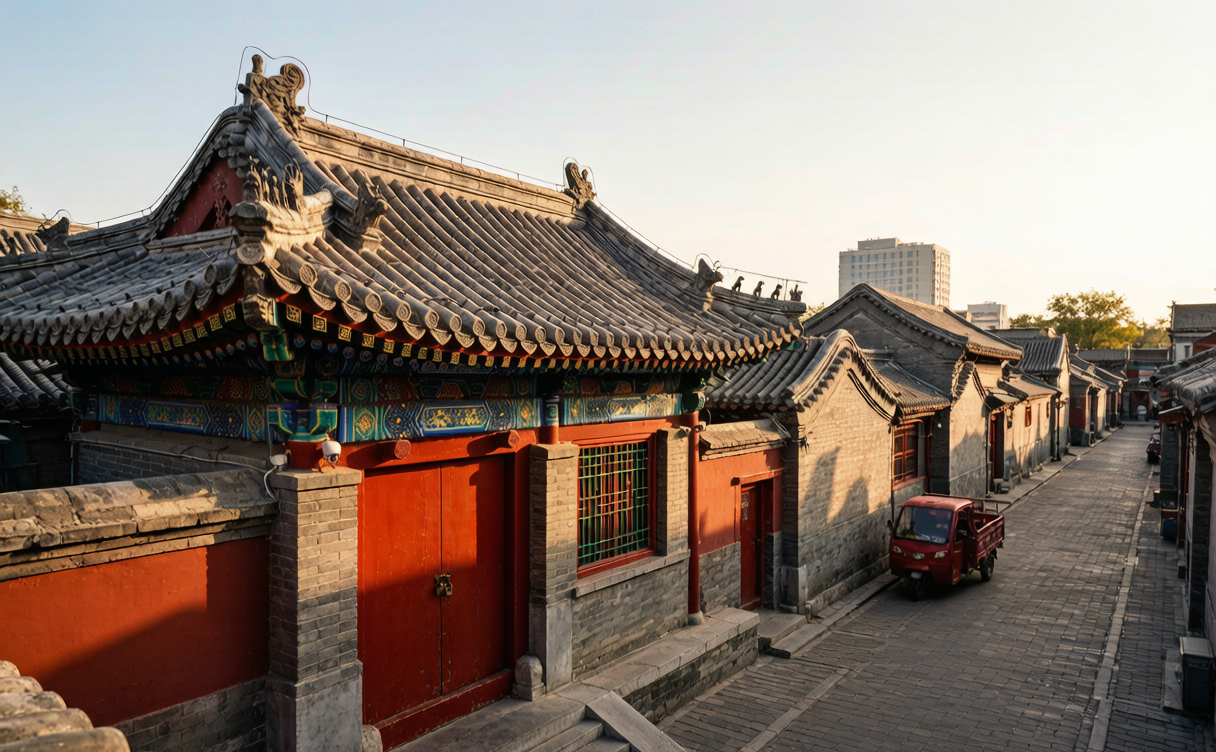
The Imperial Core: Forbidden City and Tiananmen Square
Start where Beijing started — at the square, then the palace behind it. Tiananmen Square is the world’s largest public square, and it sits directly south of the Forbidden City. Get there before 8 a.m. if you want the famous flag-raising, and bring your passport: security screening is strict and ID is checked at the gate. Entry to the square is free, but you’ll queue.
The Forbidden City (故宫, the Palace Museum) is the headliner. Home to 24 emperors across the Ming and Qing dynasties and built between 1406 and 1420, it’s the largest ancient wooden complex on Earth — more than 980 buildings across 72 hectares. UNESCO lists it as a World Heritage Site, and you can read the official inscription here: Forbidden City — UNESCO World Heritage Centre.
Inside, the path is a straight north–south axis. You enter at the Meridian Gate and walk through three great halls — the Hall of Supreme Harmony (where enthronements happened), the Hall of Central Harmony, and the Hall of Preserving Harmony — before reaching the inner court where the emperors actually lived. The detour worth making is the Imperial Garden at the far north end, then out the back and up Jingshan Park’s hill for the classic rooftop photo of those golden roofs.
Two traps first-timers fall into. First, the palace is closed on Mondays — plan around it. Second, tickets are online-only and capped daily (around 40,000 in peak season), so book through the official channel or a trusted platform days ahead. Entry runs about ¥60 in peak season (April–October) and ¥40 off-peak — roughly $8–9. Bring your passport; it’s matched to your booking at the gate. Budget 3–4 hours and you’ll see the highlights without rushing.
The Great Wall: Mutianyu or Badaling?
No list of things to do in Beijing is complete without the Wall, but “the Great Wall” near the capital is really several different sites an hour or two apart. For the full breakdown with train times and ticket prices, see our Great Wall day trip from Beijing guide. The short version:
- Mutianyu — My pick for first-timers. Restored but calm, wrapped in woodland, with a cable car up and a toboggan run down. Entry is about ¥45 peak / ¥35 off-peak, plus a ¥15 shuttle and a ¥140 cable-car or toboggan combo — around $20–25 all in.
- Badaling — The easiest to reach: a high-speed train from Beijing North or Qinghe station drops you there in 30–40 minutes for roughly ¥20–30. The trade-off is crowds — packed on weekends and holidays. Entry is about ¥40.
On my first trip in 2019 I aimed for the “most famous” section, Badaling, and arrived to a wall so packed it looked like a subway platform at rush hour. Years later I tried Mutianyu and had a watchtower nearly to myself by 9 a.m. The lesson stuck: go early (gates open around 7:30–8 a.m.), go on a weekday, and treat the Wall as a full-day commitment. The cable car saves a steep climb if you’d rather keep your legs for the ridge; the toboggan down at Mutianyu is the most fun you’ll have on any wall.
Temple of Heaven and Summer Palace: Beijing’s Imperial Gardens
After two dense imperial sights, slow down in the parks. The Temple of Heaven (天坛) is where Ming and Qing emperors prayed for good harvests. Its blue-tiled Hall of Prayer for Good Harvests is one of the most photographed buildings in China, and the surrounding park fills each morning with locals practicing tai chi, singing opera, and flying kites. Entry to the park is about ¥15, or ¥34 for the through-ticket to the inner temples — call it $2–5. Half a day is plenty, and go early to catch the locals.
The Summer Palace (颐和园) is the city’s escape valve: a vast Qing garden built around Kunming Lake, with the famous 700-meter Long Corridor and Longevity Hill. Rent a boat in warmer months, or just stroll the lakeside and watch the painted ceilings scroll past. Entry runs about ¥30 for the garden or ¥60 for the through-ticket ($4–8). It’s another UNESCO site — Beijing is loaded with them, and the lake view is a welcome change of pace after the palace crowds.
Hutongs, Qianmen, and Dashilan: Old Beijing on Foot
The hutongs — narrow alleyways gridding the old city — are where Beijing feels human. The Gulou (Drum Tower) and Houhai lake area is my favorite: courtyard homes, indie coffee shops, and waterside nightlife. Nanluoguxiang is more commercial but fun for snacks. Explore on foot or by pedicab; a pedicab tour with a local runs about ¥150 (around $20) for an hour and usually includes a stop at a courtyard home.
Just south of Tiananmen, Qianmen Street is a restored pedestrian thoroughfare mixing old-brand shops with modern eats, and Dashilan (Dashilar) beside it is one of the city’s oldest shopping streets, lined with 19th-century storefronts selling tea, silk, and medicines. My friend Sarah took a pedicab through Dashilan on her first night and ended up drinking baijiu with a shop owner who’d lived there his whole life — the kind of moment no itinerary can schedule.
Food: Peking Duck and Where to Eat
Food is a Beijing attraction in its own right. For the signature dish, book ahead at Quanjude (the classic, open since 1864) or Da Dong (leaner, more refined). A whole duck runs about ¥298 at Quanjude (around $40), and two people can eat well for ¥150–250 ($20–35) with sides and a cold beer. Watch the chef carve it tableside — the crispy skin with sugar is the bite locals fight over.
Off the tourist trail, hunt down zhajiangmian (fried-sauce noodles, ¥20–30 a bowl), jianbing (breakfast crepes from street carts for ¥10–15), and douzhi if you’re brave. For a slower afternoon, slip into a tea house in the hutongs — a pot of jasmine or pu-erh runs ¥30–60 and comes with floor seating and zero hurry. Wangfujing’s Snack Street sells everything from candied hawthorn to skewers of scorpion — yes, really.
798 Art Zone: Beijing’s Modern Side
Not everything in Beijing is 600 years old. The 798 Art Zone grew out of abandoned 1950s military factories — Soviet-style and Bauhaus buildings now packed with galleries, design shops, and cafes. Entry is free, it’s east of the center (Line 14 to Jiangtai, then a 10-minute walk), and it’s the best half-day for a modern contrast after the imperial sights. Come on a weekend when more galleries are open, and pause at the brick courtyards where old propaganda slogans still fade on the walls.
Getting Around: The Subway and Beyond
The subway is your best friend. Beijing runs 27+ lines, signage is bilingual, trains are clean, and a ride costs just ¥3–¥9 (about $0.50–1.25). Grab a Yikatong transit card, use a foreign card at some gates, or — simplest — pay with an Alipay or WeChat Pay transit QR code. Set those apps up before you land; our complete China travel guide for first-timers covers the payment setup in minutes.
For maps, use Apple Maps (it works in mainland China) or Baidu / Amap with a translation app — Google Maps is unreliable here. For point-to-point trips that aren’t near a line, DiDi (China’s Uber) is cheap and English-friendly in the app; a cross-city ride to the Wall runs roughly ¥200–400 ($30–55) and lets you beat the tour buses. From the airport, the Airport Express subway line reaches the center in about 30 minutes for ¥25. Stay near a Line 1 or Line 2 station (Wangfujing, Qianmen, or Gulou) and you’ll reach every major sight in under 40 minutes.
[CTA] Considering a longer stay? Pair this with our Beijing 3-day itinerary for a day-by-day plan that strings these sights together without backtracking.
Half-Day vs Full-Day: How to Plan Your Time
Beijing rewards grouping sights by geography. A few realistic building blocks:
- Half-day — Forbidden City (3–4 hrs) + Jingshan Park overlook.
- Half-day — Summer Palace or Temple of Heaven alone.
- Full-day — The Great Wall (leave by 7:30 a.m., back by early evening).
- Full-day — Hutongs + Qianmen + 798 if you want culture and food over monuments.
If Beijing is one stop on a bigger route, fold it into a loop with the Terracotta Warriors in Xi’an — the high-speed train between the two cities takes about 4–5 hours, and the contrast between Beijing’s imperial north and Xi’an’s buried army is worth the ride.
[CTA] Want the full Wall breakdown? Our Great Wall day trip from Beijing guide compares Mutianyu, Badaling, Jinshanling, and Simatai with exact ticket prices and train times.
Who This Guide Is For
This plan suits first-timers who want the icons without the overwhelm, history lovers, foodies, families (the Wall toboggan is a kid favorite), and photographers chasing light on old roofs. If you have three or four days, you’ll hit every highlight and still have room for a lazy hutong morning. With only 36 hours, pick the Forbidden City, one Wall day, and a hutong dinner — and skip the rest without regret. Travelers who want the deeper, neighborhood-by-neighborhood version with where to stay should read our Beijing first-time travel guide, which adds a 3–4 day mini-plan and hotel zones.
Your First-Timer Sample Plan
Day 1 — Imperial Core. Tiananmen Square at opening → Forbidden City (3–4 hrs) → Jingshan Park → dinner on Qianmen Street.
Day 2 — The Wall. Full-day Mutianyu trip, leaving by 7:30 a.m. Evening hutong stroll in Gulou.
Day 3 — Parks & Alleys. Temple of Heaven in the morning, Summer Palace in the afternoon, 798 or Houhai by night.
That’s it — the essential things to do in Beijing for a first visit, with prices, transport, and a plan you can actually follow. Lock in your Forbidden City tickets, set up your payment apps, and let the hutong bells wake you.
Written by Karl · Updated July 2026