

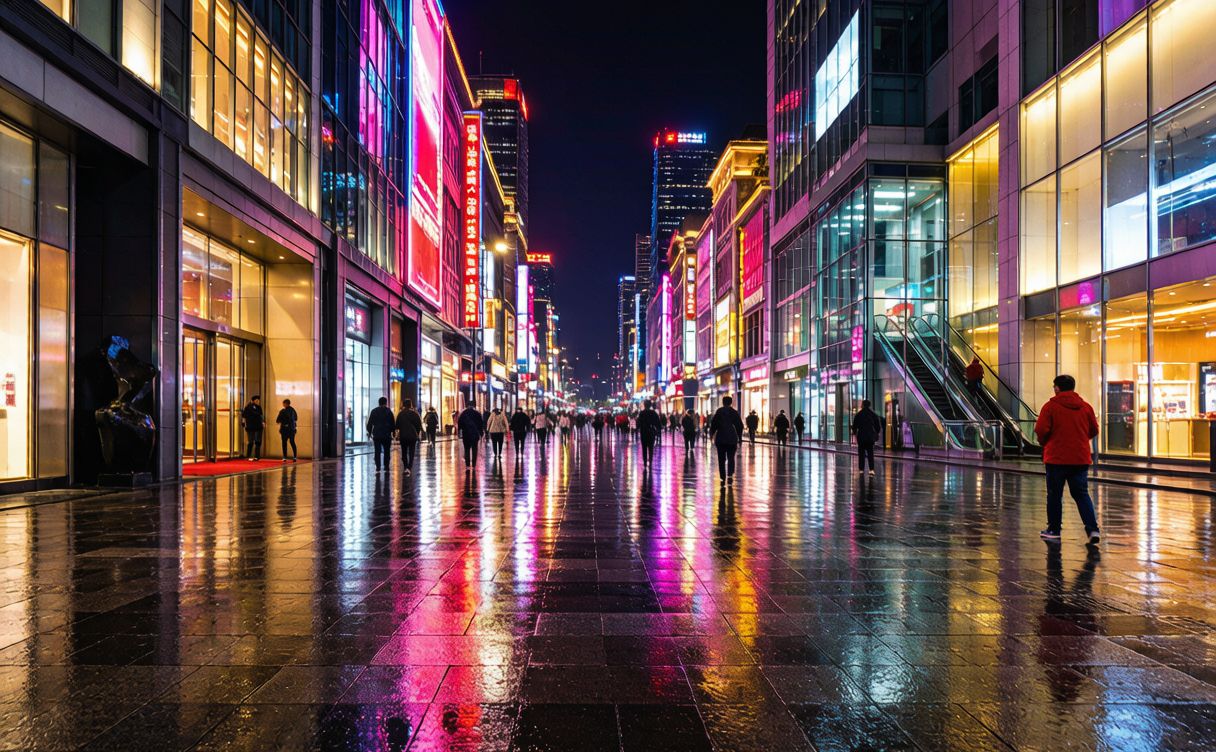
When I first arrived in Shanghai, everyone told me the same thing: “You have to walk Nanjing Road.” So one humid evening in May, I stepped out of People’s Square station and found myself swallowed by a river of people, neon, and the smell of roasted chestnuts. Nanjing Road — or Nanjing Lu, as locals call it — is often described as the busiest shopping street in the world, and after two full days wandering it I don’t think that’s an exaggeration.
This is not a quiet heritage lane. It is loud, crowded, unapologetically commercial, and completely addictive. In this guide I will walk you through exactly how to get there, what to see, what to eat, and how to enjoy it without losing your patience or your wallet.
Getting There
The easiest way to reach the pedestrian section is by metro. Take Line 1, Line 2, or Line 8 and get off at People’s Square station. From the exits signed for Nanjing Road East, you are only a two-minute walk from where the car-free promenade begins. I made the mistake of taking a taxi on my first attempt and sat in traffic for twenty minutes; the metro was faster, cheaper, and dropped me right at the action.
If you would rather arrive in style, the old-style sightseeing tram runs along the eastern promenade — a slow, open-sided carriage painted in cheerful red and cream that costs a few yuan and lets you sit back while the city slides past. I took it once at night and watched the rooftop signs flicker on one by one. It was worth every minute.
You can also approach on foot from the Bund. Walk inland from the waterfront along any of the side streets and you will hit the eastern end of the road within five minutes. Doing it this way gave me the best possible contrast: the quiet colonial grandeur of the Bund, then the sudden explosion of light and noise behind it.
For a broader plan of your stay, see my Shanghai first-time travel guide.
What to See
Nanjing Road is split into two very different halves, and knowing the difference saved me a lot of confusion on day one.
Nanjing Road East (the pedestrian street)
The eastern section, Nanjing Road East, is the famous car-free promenade. It runs roughly from People’s Square to the Bund, about 1.2 kilometers of polished stone, department stores, and street performers. This is where you will find the historic flagship shops: the century-old Sincere and Wing On department stores, now transformed into giant malls but still wearing their art-deco bones.
What I loved most here was the sheer theater of it. Giant LED screens hang over the street like floating billboards. Street musicians set up near the tram stops. Old men play cards on folding stools while teenagers chase bubble performers down the middle of the road. It is chaotic in the best possible way.
In the warmer months the eastern promenade sometimes hosts a projected light show after dark, with moving images mapped onto the building facades. I stumbled onto one by accident on a Saturday night and ended up watching for half an hour with a crowd of strangers. Even when there is no official show, the permanent rooftop screens and shopfront displays keep the street glowing well past ten.
Nanjing Road West (the elegant half)
West of People’s Square, Nanjing Road West feels calmer and more upscale. Here you will spot the Shanghai Museum of Contemporary Art, luxury boutiques, and the green expanse of People’s Park just off to the side. I actually preferred this end for a morning stroll before the crowds arrived, when the light hit the plane trees and the coffee shops were still quiet.
A little history helped me appreciate the street. Nanjing Road was first laid out by foreign settlers in the 1850s and grew into the commercial heart of treaty-port Shanghai. By the 1920s it was already “the road of a hundred shops.” Walking it today, you are tracing more than a century of the city’s ambition.
When you reach the eastern end, do not stop. The Bund is a five-minute walk away, and the contrast between the colonial waterfront and the shopping chaos behind you is one of my favorite views in the city. For more ideas beyond shopping, browse Things to do in Shanghai.
Shopping & Food
Let me be honest: the shopping on Nanjing Road ranges from genuine bargains to obvious tourist traps. The big malls — like the pedestrian-only Nanjing Road No. 1 Department Store — are reliable for cosmetics, electronics, and Chinese brands at fair prices. For souvenirs, I found the small side-street shops near the eastern end noticeably cheaper than the glitzy ground floors of the flagship stores.
Bargaining is part of the game at the smaller stalls, but don’t expect dramatic discounts in the branded malls. My rule was simple: if there is a price tag, it is fixed; if there isn’t, smile and offer sixty percent of the asking price.
Food is where Nanjing Road surprised me. Between the stores you will find:
- Xiaolongbao (soup dumplings) at basement food courts — fresh, cheap, and dangerously addictive.
- Roasted chestnuts from street carts, especially good in the winter months.
- Shanghai-style fried noodles at hole-in-the-wall eateries just off the main strip.
- Milk tea — every third storefront is a chain, but the local brands are fun to try.
- Jianbing (savory crepes) from breakfast carts if you come early enough.
My advice is to eat one proper sit-down meal at a long-standing Shanghai restaurant on the west section, then graze street food as you walk. The department-store basements are the secret weapon: clean, air-conditioned, and packed with regional snacks at local prices. If you want a calmer, more traditional food-and-garden experience, pair this trip with the Shanghai Yu Garden guide.
Tips
A few things I learned the hard way:
- Go after 6 p.m. The neon comes on and the whole street transforms. Daytime is fine, but the evening atmosphere is the real show.
- Watch your belongings. With this many people, pickpockets exist. Keep your phone in a front pocket, not a back one.
- Avoid the “tea ceremony” scam. If a friendly local invites you to a quiet tea house nearby for a “cultural experience,” politely decline. It is a well-known tourist trap with a painful bill at the end.
- Wear comfortable shoes. You will walk far more than you expect, and the stone promenade is unforgiving on sore feet.
- Use the metro to leave. Taxis near the pedestrian street are scarce and slow in the evening crush. The stations are clearly signed and easy to navigate.
- Carry small cash. Most stalls take mobile pay, but a few old-school vendors still prefer notes, and the food carts rarely split large bills.
- Bring a power bank. Between maps, translation apps, and photos, your phone battery will not last the evening. The metro stations have charging spots, but they are easy to miss in the crowds.
- Photograph the tram. The red sightseeing tram makes a great foreground for the neon behind it. I got my favorite shot by waiting near the People’s Square end just as the lights came on.
If you are building a longer China itinerary, you might enjoy balancing the Shanghai buzz with a calmer stop like the Suzhou Lingering Garden guide, reachable in under half an hour by train.
Best Time
Shanghai’s weather shapes the experience more than I expected. Spring, from March to May, and autumn, from September to November, are ideal — mild, clear, and comfortable for long walks. Summer is hot and sticky, and the crowd density makes it rougher; winter is cold but the chestnut carts and festive lights, especially around Chinese New Year, are magical.
I visited once in late May and again in December. The May trip was pleasant and breezy, with the plane trees in full leaf. The December trip had Christmas-style decorations mixed with Chinese New Year prep, and the whole street felt almost theatrical. If you can, time your visit to overlap with a festival — the lanterns and light installations alone are worth the trip.
One more note on timing: weekends and public holidays turn the promenade into a slow-moving human river. If your schedule allows, a weekday evening gives you the lights without quite as much shoulder-to-shoulder pressure.
Good to know: for official events, opening hours, and transit updates, check the Shanghai municipal tourism portal.