

North China rewards slow travel. A well-planned North China travel route links imperial capitals, Buddhist cliff art, cave dwellings, and the country’s mightiest river without the coastal crowds. This guide covers a practical Beijing Shanxi Hebei loop that you can drive or train through in ten to fourteen days. Whether you are chasing the Great Wall at dawn or steaming bowls of zhajiangmian after a long hike, the region delivers dense history and big northern landscapes. If you are weighing North China vs South China travel, think dry northern light, wheat over rice, and dramatic fortresses rather than misty southern water towns.
Best time to visit North China
The best time to visit North China is spring (April to May) and autumn (September to October), when daytime temperatures sit between 15 and 25°C and the skies stay clear. Summer brings heat, haze, and the occasional storm; winter is brutally cold but magical after snow on the Wall. This seasonal logic shapes the whole Beijing Shanxi Hebei loop, because several sites—especially open-air sections of the Wall and the Hukou Falls viewpoint—are weather dependent. If your priority is things to see in North China with comfortable walking conditions, book shoulder-season flights. Autumn also lines the Shanxi courtyards with golden locust trees, and the Yellow River runs full from summer rains, making the falls thunderous rather than a trickle.
Beijing: the northern hub
Begin in Beijing, the natural hub for any North China travel route. Spend three days on the essentials: the Forbidden City, Temple of Heaven, and Summer Palace, then escape southwest to Tanzhe Temple, Beijing for quiet courtyards said to be older than the capital itself. Tanzhe’s pagodas and pine shade make a calm counterpoint to the palace crowds. For hiking the Wall, choose Mutianyu or Jinshanling—both restore the watchtowers without the cable-car spectacle of Badaling. A half-day at the 798 Art Zone balances ancient and modern.
Food is half the fun here. Our Beijing Zhajiangmian Guide maps the best noodle bowls in the city, from hole-in-the-wall huts to refined courtyard kitchens. The dish—wheat noodles under a savory fermented soybean sauce—is the unofficial fuel of the north. Vegetarians need not panic; our Vegetarian Restaurants in Beijing points to temple-style kitchens and Buddhist buffets near the Lama Temple. For a broader bite, the Beijing Food Guide covers roast duck alternatives and morning breakfast stalls worth the early alarm.
Great Wall ridges
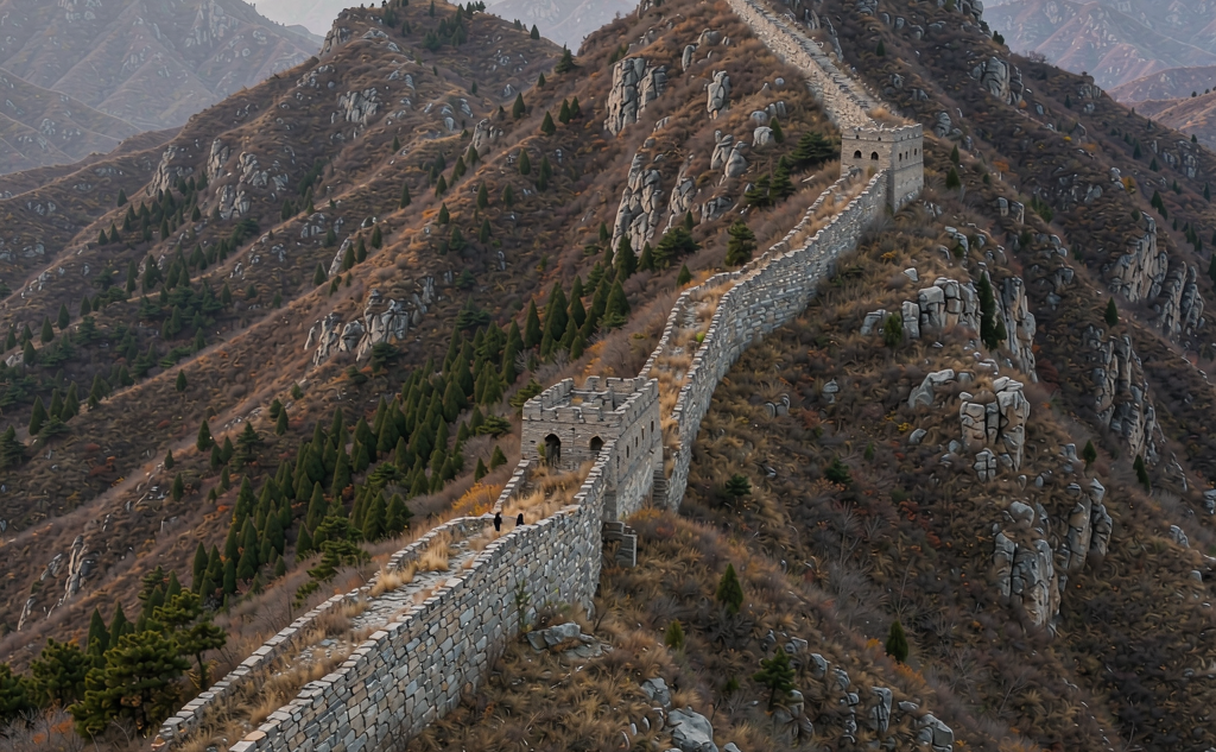
The Wall is the spine of the region. Ridge after ridge, it follows the mountain crests where Hebei meets Beijing, and a sunrise walk here ranks among the top things to see in North China. Jinshanling’s unrestored stretches let you clamber real stone; Simatai stays open at night for lantern-lit ramparts above the reservoir. Pack layers even in May—the wind on the ridges bites hard. Photographers should aim for the golden hour shown below, when the stone warms and the watchtowers throw long shadows across the valleys.
Shanxi: courtyards and cliff art
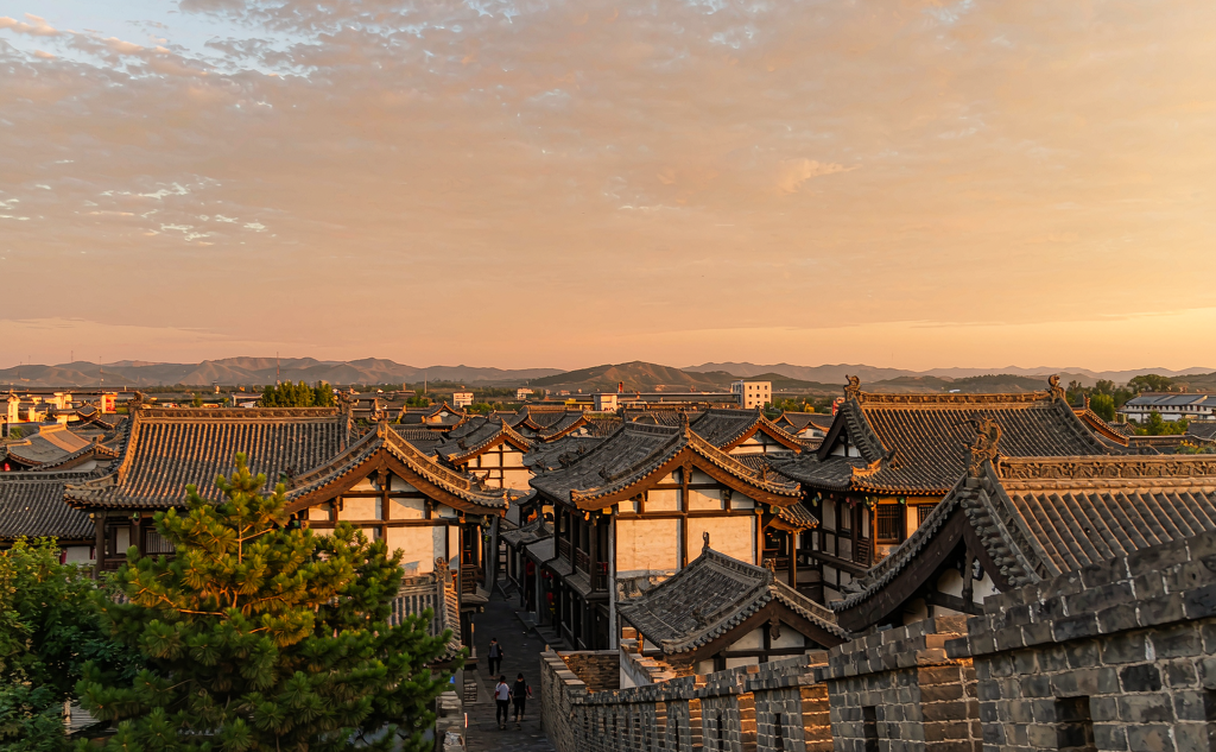
West of the capital, Shanxi is a museum you can walk through. The Wang Family Courtyard, near Lingshi, is a vast Qing-dynasty warren of 123 courtyards—often called the “Forbidden City of the commoner.” Our Wang Family Courtyard, Shanxi details the layout and the best gates to photograph. Continue to Pingyao, a walled trading town whose grey-brick lanes and old escort-agency museums preserve Ming–Qing merchant life almost intact.
Datong anchors the north of the province. The Yungang Grottoes, carved into a sandstone cliff, hold tens of thousands of Buddhist statues and were inscribed as a UNESCO World Heritage Site in 2001 (UNESCO). The nearby Hanging Temple, bolted to a canyon wall, is an engineering thrill you reach by a short bus ride. Shanxi’s ancient town walls at sunset are a highlight you should not rush—the light turns the brick the color of roasted sesame.
The province rewards a slow Beijing Shanxi Hebei loop: trade the train for a car once you leave the rail lines, and let the courtyard architecture unfold at village pace. Stop in smaller fortified homes around Qi County, where the famed Shawan and Qujia courtyards show how merchant wealth was locked behind high walls and carved lattices.
The Yellow River loop: Hukou Falls
No North China travel route is complete without the Yellow River. At Hukou, the river compresses into a narrow gorge and drops in a churning yellow cataract—the only large waterfall on the Yellow River and one of the great Yellow River attractions North China offers. Visit in late summer or autumn when flow peaks; in deep winter it can freeze into strange blue ice columns. The Shanxi–Shaanxi border setting means you can view it from either bank, and a short shuttle links the two sides. Pair Hukou with the cave dwellings and loess plateau scenery nearby for a stark, elemental landscape that contrasts the polished capital. This stretch is where North China vs South China travel feels most different: raw earth and water rather than terraced green hills.
Hebei and the logistics of the loop
Hebei wraps Beijing on three sides and fills the gaps in the loop. Chengde’s mountain resort and Eight Outer Temples were the Qing emperors’ summer retreat, and the circuit works well as a final leg before flying home. Trains connect Beijing–Datong–Pingyao efficiently, while a rental car unlocks the smaller Shanxi courtyards and Wall ridges that buses skip.
Logistically, base in Beijing for flights and high-speed rail, then move west. Most visitors need a Chinese visa in advance; download a translation app and an offline map before you leave wifi. Mobile pay dominates, but carry some cash for village stalls. The full Beijing Shanxi Hebei loop runs roughly 1,500 km by road—ten days is comfortable, fourteen is relaxed. Trains between the big hubs are fast and punctual; the slow part is the last miles into courtyard towns.
If you want to extend south afterward, our Beijing Xi’an Chengdu Itinerary bridges this northern loop into the heart of the Silk Road and Sichuan. That extension is ideal for travelers who began with a North China travel route and want to keep the momentum going westward.
Food notes: zhajiangmian and vegetarian Beijing
Northern cooking leans on wheat, vinegar, and preserved vegetables. Zhajiangmian is the everyday hero: chewy noodles, a dark sauce of fermented soybean and ground pork (or mushroom for a meat-free version), and a heap of shredded cucumber and radish on top. In Beijing, the best bowls hide in neighborhood canteens rather than tourist streets. Vegetarian travelers eat well thanks to the city’s Buddhist kitchens—our vegetarian guide lists temple-adjacent buffets where the mock meats are convincing and the greens are crisp. Between the noodles, the courtyard teas, and the market snacks, food becomes its own reason to slow down on this loop.
Wrapping up the northern loop
North China versus South China travel is a choice of temperament: the north gives you scale, stone, and wheat-noodle comfort. A single North China travel route can thread the Great Wall, Shanxi’s courtyard empires, and the Yellow River’s raw power into one unforgettable trip. Plan for autumn light, pack for wind, and leave room for unplanned noodle stops. The things to see in North China are dense but navigable—go slow, and the region repays you with quiet courtyards, roaring falls, and ridges that seem to run to the edge of the map.