

What Exactly Is a Zongzi? (More Than a Rice Dumpling)
The first zongzi I ever unwrapped was handed to me hot, dripping a little, on the stone steps of a riverside temple during a Dragon Boat Festival. I pulled the string loose, peeled back a green leaf still smelling of river and grass, and the rice came away in one neat, glistening triangle — sticky enough to cling to the leaf, sweet enough to need no sauce. That single bite is why I keep coming back to this humble packet, and why it deserves more than the lazy English label “Chinese dumpling.”
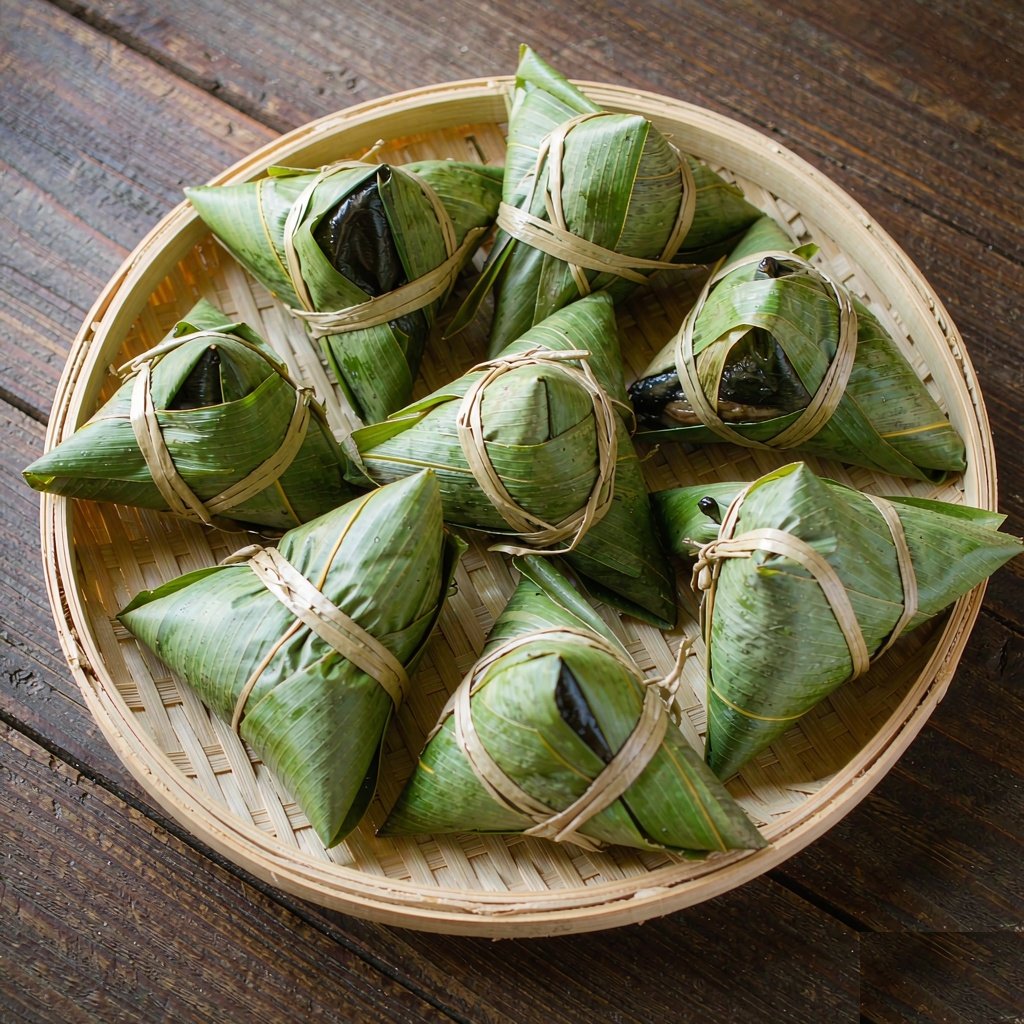
A zongzi (粽子) is glutinous rice wrapped in a broad leaf — usually bamboo, sometimes reed — tied with string, and steamed or boiled until the grain turns translucent and chewy. The leaf is never eaten; it is a cooking vessel and a flavour injector, lending a faint herbal, almost smoky aroma that plain rice never has. The character 粽 itself pairs the rice radical 米 with 宗, a word suggesting “ancestral” or “central,” a quiet hint at how old and how ritualised this food is.
What sets it apart from a jiaozi or wonton is the wrapper. Those use a dough skin you eat. A zongzi’s skin is stripped away and discarded, leaving only the perfumed rice and its filling. Get the difference straight before you travel, because the two are constantly confused by first-time visitors — we’ll come back to the Chinese dumpling family later.
The Dragon Boat Festival Connection
You will meet zongzi most often in early summer, around the fifth day of the fifth lunar month, when towns along rivers stage dragon boat races. The popular legend ties the food to Qu Yuan, a poet-official of the Warring States period who drowned himself in protest. Locals, the story goes, threw rice packets into the water to feed him and to keep fish from his body — and the leaf-wrapped bundle was born.
True or not, the festival cemented zongzi as the centrepiece of one of China’s oldest holidays, and the history of zongzi stretches back more than a thousand years along the Yangtze and Pearl river systems. Today the racing and the rice packets travel together, and you can read about the wider spread of holiday eating in our China festival foods guide. The useful part for travellers: although zongzi is the signature dragon boat festival food, it is now sold year-round in markets and train-station kiosks, so you are never tied to a single date to try one.
What Does Zongzi Taste Like?
Describing the taste is harder than it looks, because the filling swings the entire experience. The rice itself is mildly sweet, densely chewy, and faintly grassy from the leaf. Chew a mouthful and it sticks to your teeth the way mochi does, but with more structure and a savoury depth if it has been steamed alongside meat.
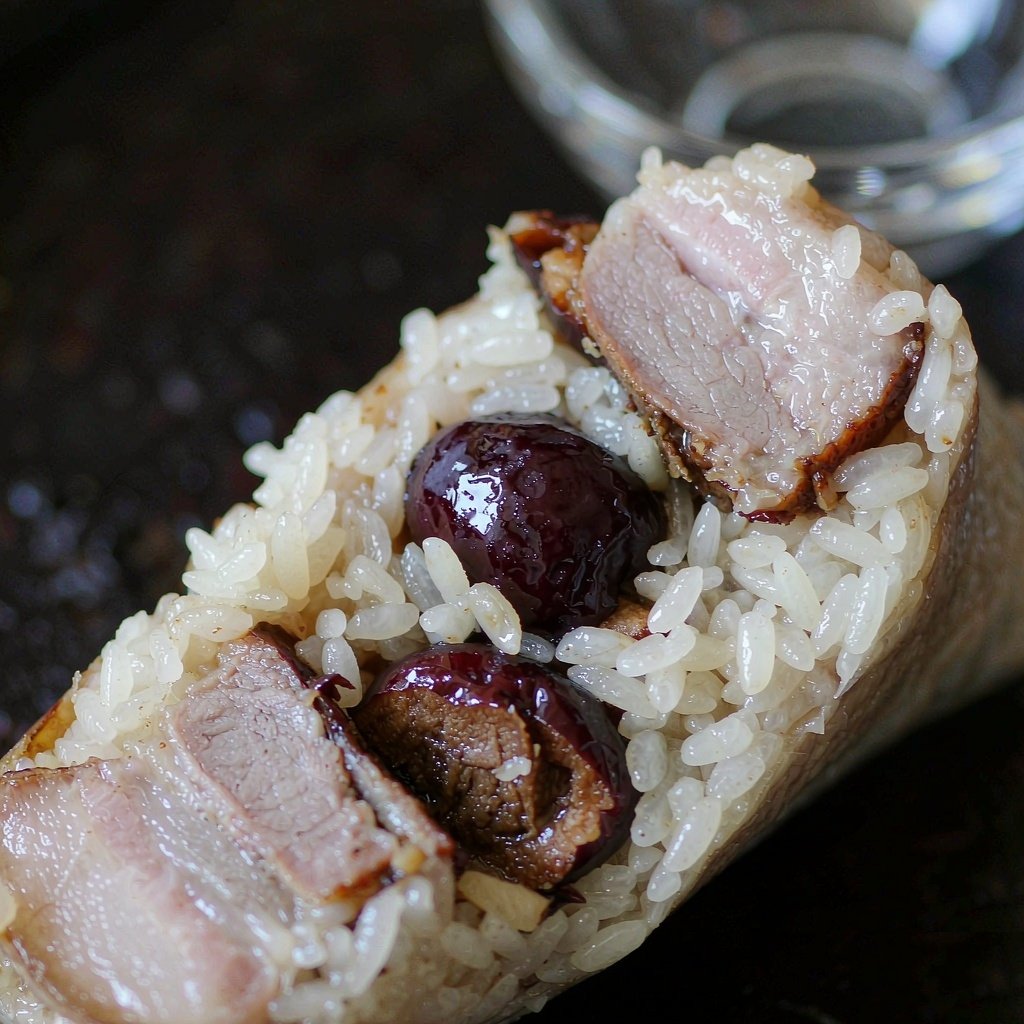
From there the sweet vs savory zongzi divide splits in two. A sweet zongzi leans on red bean paste, mashed date, or candied jujube, tasting like a softer, leaf-scented mochi. A savoury one — the kind you’ll find across the south — carries pork belly, salted duck egg yolk, shiitake, and sometimes chestnut, reading almost like a sticky risotto compressed into a triangle. Neither is better; they are simply different snacks, and most regions pledge loyalty to one camp.
Zongzi Ingredients — What Goes Inside
A basic home batch feeding four to six people starts with three non-negotiables, then a filling of your choice:
- Glutinous (sticky) rice — 500 g, rinsed and soaked at least 4 hours, ideally overnight. Note this is not “regular” rice; it is the same short-grain glutinous variety used for mochi and rice cakes.
- Bamboo leaves — about 20 to 24 leaves, briefly boiled then scrubbed clean. Fresh leaves smell sweeter; dried need a longer soak to become pliable.
- Cotton string — unflavoured kitchen twine, cut into 30 cm lengths. Never use synthetic ribbon that could melt.
For a savoury filling, add 300 g pork belly (cut into thumb-sized cubes, marinated in light soy, oyster sauce, five-spice and a little Shaoxing wine), 4 salted duck egg yolks, and a few rehydrated shiitake caps. For a sweet filling, use 200 g red bean paste or 12 pitted red dates. The rice-to-filling ratio matters: aim for roughly two-thirds rice to one-third centre, or the packet loses its shape when tied.
Who Should Eat Zongzi — and Who Should Pace Themselves
Zongzi earns a genuine health footnote that most festival snacks do not. Because the grain is glutinous rice, the packet is naturally wheat-free and gluten-free by ingredient — a relief for travellers with coeliac disease, provided the filling and any shared steamer are clean of contamination. Vegetarians should still ask, because many savoury versions are built on pork and seasoned with lard or animal stock.
On the other side of the ledger, glutinous rice is high on the glycaemic index and notoriously filling. If you track zongzi calories, remember that a single large meat packet can rival a full bowl of rice plus a slab of pork, so budget it as a meal. People managing blood sugar should treat one small zongzi as a meal, not a snack, and diabetics may want to pair it with vegetables and protein to blunt the spike. The dense, sticky texture is also a choking risk for very young children and uncomfortable for anyone with slow digestion, so go slow and chew thoroughly. If you simply dislike clingy, mochi-like mouths, this is one Chinese food you can happily skip.
How to Make Zongzi at Home: A Step-by-Step Method
The wrapping is the only real skill, and it is learnable in an afternoon. Here is a reliable home method for the classic triangular shape.
- 1. Prep the leaves. Boil bamboo leaves for 5 minutes, scrub both sides, and pat dry. Soak the rice until a grain between your fingers breaks cleanly.
- 2. Make the filling. Marinate pork at least 30 minutes. If using salted egg yolk, halve each yolk. For sweet, portion the bean paste or stuff whole dates.
- 3. Fold the leaf into a cone. Hold one leaf cupped in your palm, shiny (vein) side inward, and fold the base to form a tight triangle pocket with no holes at the tip. This is the heart of how to wrap zongzi with bamboo leaves, and the cone is exactly where most beginners spring a leak.
- 4. Fill and layer. Spoon in a little rice, press a filling piece into the centre, then cover with more rice until two-thirds full. Do not pack it solid — the grain expands as it cooks.
- 5. Seal and wrap. Fold the leaf’s top down over the rice and tuck the sides in, then wrap a second leaf around if needed for coverage. The packet should feel firm but not bulging.
- 6. Tie it. Bind with twine in a figure-eight, snug enough to hold shape but loose enough that the leaf doesn’t tear. A tight tie is the most common beginner mistake.
- 7. Steam. Stand the zongzi upright in a steamer, leaf-fold up, and steam over rolling water. How long to steam zongzi depends on size: small ones need about 90 minutes, large meat-packed ones up to 3 hours. Top up the water so the pot never runs dry.
- 8. Rest and cool. Let them sit 10 minutes off heat; the rice firms slightly and becomes easier to unwrap.
First-timer tips: keep a bowl of water nearby to wet your hands (sticky rice loves dry skin), and practice the cone with an empty leaf before committing rice. If a packet leaks during steaming, the filling is still edible — just less pretty.
Zongzi Across China — A Regional Map
Part of the fun is that “zongzi” means different things in different provinces, a pattern you’ll recognise if you’ve toured the eight great regional cuisines of China. The split below is the cleanest way to understand what you’ll be handed:
- Savory meat (咸肉粽), Guangdong & Guangxi: pork belly, salted duck egg, shiitake and chestnut — rich, salty, almost a full meal.
- Jiaxing big-meat (嘉兴肉粽), Zhejiang: a single large pork chunk heavily soy-braised — juicy, dark, and famous nationwide.
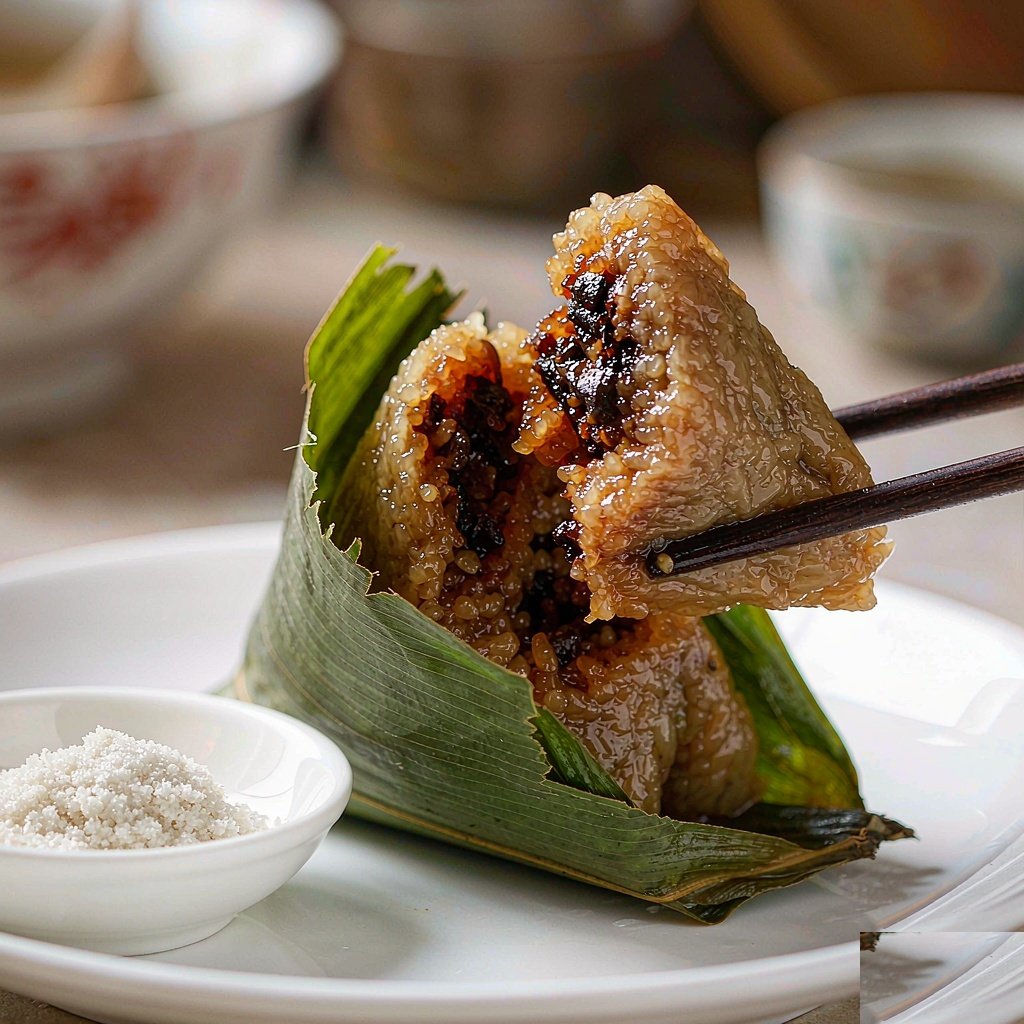
- Sweet (甜粽), North & Yangtze: red bean paste, red date or jujube — mild, dessert-like, often dipped in sugar.
- Hakka / alkaline (灰水粽), Fujian hills: plain rice set with plant-ash water — yellow, bouncy, eaten with syrup.
Cantonese and Jiaxing versions dominate the commercial market and travel well, which is why you’ll find them vacuum-packed in airports. Northern sweet zongzi show up more around the festival itself. There is no “correct” one — only the one your grandmother made.
Buying and Eating Zongzi on the Street
You don’t have to cook to enjoy one. Fresh zongzi appear at morning markets, temple fairs, and the vacuum-packed shelves of every supermarket from late spring onward. A single fresh packet runs a few yuan; branded Jiaxing meat zongzi cost a little more but travel for days unrefrigerated. For a traveller watching costs, this is one of the most satisfying bites in the eating-in-China-on-a-budget playbook.
To eat: untie the string, peel the leaf from the narrow tip downward, and discard it. Knowing how to eat zongzi properly matters more than it sounds, because the leaf oils make the rice slippery and a rushed unwrap flings grains everywhere. Sweet versions are often dipped in white sugar or drizzled with syrup; savoury ones need nothing. Reheat by steaming 15 to 20 minutes or microwaving wrapped in a damp paper towel. For storage, cooked zongzi keep 2 to 3 days at room temperature in cool weather and freeze for up to two months — thaw and steam before eating.
Frequently Asked Questions
Can I make sticky rice dumplings without bamboo leaves?
Yes, though the aroma changes. Reed leaves (luye), lotus leaves, and even large banana leaves work as wrappers. Avoid anything waxy or chemically treated. The key is a leaf wide enough to fold without tearing and neutral enough not to taste bitter after two hours of steaming.
How long do zongzi last, and can you freeze them?
Cooked and fully cooled, they sit at cool room temperature for two to three days, refrigerate for about a week, and freeze for up to two months. Always re-steam from frozen rather than thawing in the open, which keeps the rice from going chalky.
Are zongzi gluten-free?
The rice and leaf contain no wheat, so plain zongzi are gluten-free by ingredient. The risk is cross-contact: shared steamers, soy sauces with wheat, or meat fillings braised in wheat-based sauces. If you have coeliac disease, ask specifically about the marinade before eating a savoury one.
Zongzi vs jiaozi — what’s the difference?
A jiaozi is a wheat-dough dumpling with a filling, boiled or pan-fried, and you eat the wrapper. A zongzi is glutinous rice wrapped in an inedible leaf, steamed, and the leaf is stripped away. They share a “filled parcel” idea but differ completely in grain, wrapper, and cooking method — which is why lumping them together as “Chinese dumplings” misleads travellers.
How many calories are in one zongzi?
A small sweet zongzi runs roughly 200 to 250 kcal; a large savoury pork-and-egg version can reach 450 to 550 kcal because of the fat and yolk. Treat a big meat one as a meal replacement rather than a side snack if you’re counting.
When is the best time to eat zongzi in China?
The festival peak is the fifth day of the fifth lunar month (usually June), when fresh batches and regional specialties flood markets. But because production is now industrialised, you can buy decent zongzi in most cities year-round — the festival simply offers the widest variety.
Zongzi reward the curious traveller more than almost any other Chinese snack: cheap, portable, endlessly regional, and tied to one of the country’s oldest stories. Learn to tell the sweet from the savoury, master the simple act of unwrapping one still warm, and you’ll carry a small, fragrant piece of the Dragon Boat Festival with you long after the races end.