

Beijing is not obviously a vegetarian city — the famous dishes are Peking duck, lamb hotpot, and noodle bowls with pork. But the capital has a serious meat-free tradition rooted in Buddhist temple cuisine, and a newer crop of vegan cafés has landed in the hutongs. We’ve taken plant-based travelers, including strict vegans, to these spots for years, and the standouts below are places we’d happily eat at ourselves, whether or not we’re skipping meat that day.
The Buddhist Roots of Beijing Vegetarian Food
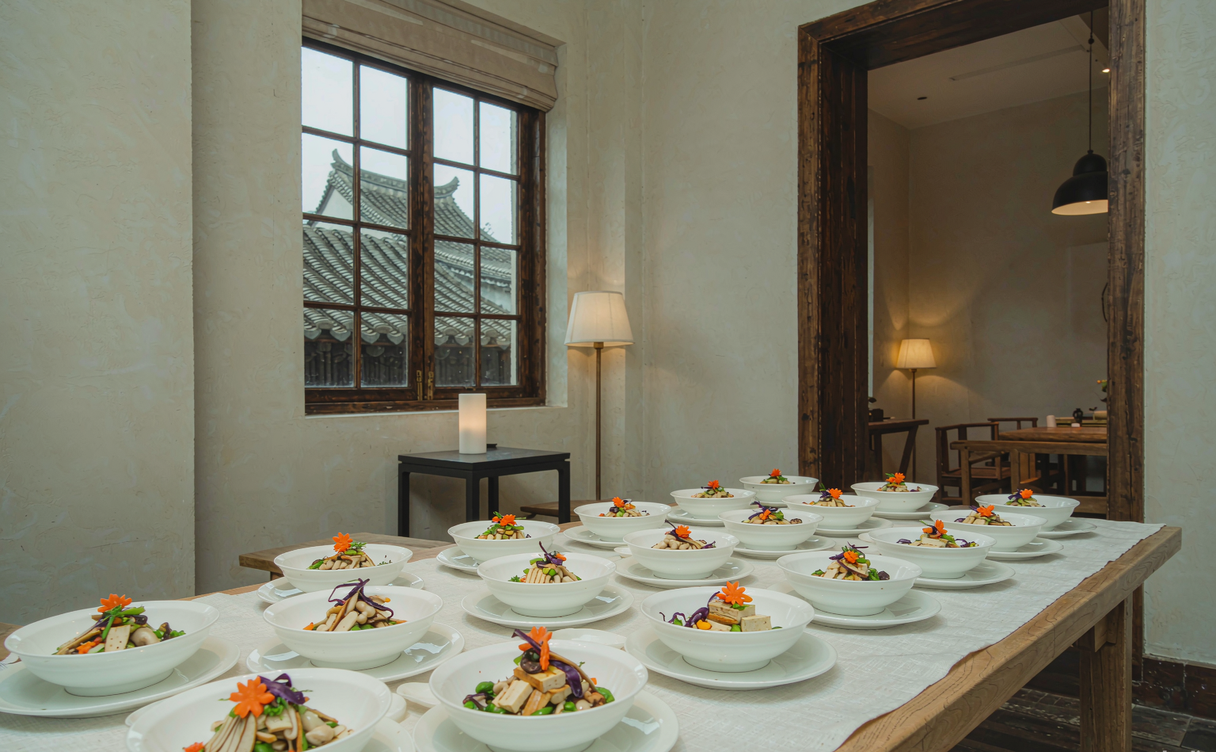
Vegetarian (斋素, zhaisu) cooking in Beijing grew out of temple kitchens, where monks avoided the five pungent vegetables and any animal product. The clever part is “mock meat”: tofu skin, wheat gluten (面筋), and mushrooms shaped and sauced to mimic duck, fish, or pork. The technique has deep roots in China’s temple-kitchen tradition, and you can read the wider background on Buddhist cuisine. In practice, the best versions taste like their own thing rather than a poor copy, and they’re a genuine part of Beijing’s food story rather than a tourist gimmick.
Best time to visit and eat
- Autumn (September–October) is peak Beijing: cool, clear, and the best season for a hutong walk to a courtyard teahouse-café.
- The lunar fourth and seventh months bring vegetarian festivals at temples, and more mock-meat specials appear on menus then.
- Lunch (11:30am–1:30pm) is the reliable service window; some vegetarian spots close by 9pm, so don’t count on a late dinner.
Restaurants We Recommend
King’s Joy (京兆尹) — fine-dining vegetarian
On Yonghegong Street (雍和宫大街) near the Lama Temple, King’s Joy is the upscale pick — it has held Michelin Green Stars and serves a set menu of refined Buddhist-inspired plates using organic produce. Expect ¥600–900 per person for the tasting menu, with tea or wine pairings extra. The space is a restored courtyard, quiet and polished, with gardeners tending bonsai between seatings. Book a day ahead via their site or phone; walk-ins at lunch sometimes work but dinner is tight.
Gongdelin (功德林) — the old temple standard
A Beijing institution on Wangfujing Daijie (王府井大街), Gongdelin has served mock-meat vegetarian since the 1940s and remains the easiest place to try the classics. Dishes like “fish” in sweet-and-sour sauce and gluten “roast duck” run ¥48–88; a full meal for two is ¥200–300. It’s tourist-friendly, English menus exist, and it’s open late. We send first-timers here for the classic experience without the fine-dining bill, and the dim-sum cart at lunch is a quiet joy.
Lily Vegetarian (百合素食) — courtyard calm
Tucked in a hutong near Gulou (鼓楼), Lily Vegetarian is a converted courtyard with a set lunch around ¥128–168 and à la carte plates ¥45–75. The lotus-root and chestnut braise is a regular order, and the cold sesame noodles make a light starter. Low-key and unhurried, it’s good for a slow afternoon after the Drum Tower. Reservations help at weekend lunch.
Pure Lotus (净心莲) — Buddhist-run, near the Olympic area
Out in Chaoyang, Pure Lotus is run by a Buddhist foundation, and proceeds support charity work. The menu is all mock meat and temple staples, ¥50–90 a dish, and the atmosphere is serene, with soft chanting in the background. It’s a bit far from the center, so combine it with a Chaoyang day — maybe the 798 art district beforehand. No alcohol is served, which suits the contemplative mood.
Vegan cafés in the hutongs
The Wudaokou and Gulou areas have small vegan cafés — try the lanes around Nanluoguxiang for soy lattes, vegan burgers (¥45–65), and dairy-free desserts. They’re casual, cheap, and good for a snack between sights, and a few run community boards for plant-based travelers. We point solo vegetarians here for the friendly, English-speaking crowd.
Prices, Booking, and Getting There
A realistic daily veg budget in Beijing is ¥150–400 per person: street and café food at the low end, King’s Joy at the top. Most places take walk-ins; King’s Joy and Lily need a call ahead for dinner, and Pure Lotus appreciates a heads-up for groups.
- Metro: Line 5 to Yonghegong Lama Temple for King’s Joy; Line 1 to Wangfujing for Gongdelin; Line 2 to Gulou Dajie for the hutong cafés and Lily.
- Language: Gongdelin and King’s Joy have English menus; smaller spots may not — have a translation app ready, and learn the characters 素 (vegetarian) and 荤 (meat).
- Dietary notes: “Vegetarian” in Beijing often still means egg and dairy are fine; strict vegans should ask about 蛋 (egg) and 奶 (milk), and confirm no hidden chicken stock in broths.
- Payment: All take Alipay and WeChat Pay; the big restaurants take international cards, the cafés often want a QR scan.
Dishes to Look For on the Menu
Knowing the names helps you order confidently even when the English menu is thin. Common ones we point people to:
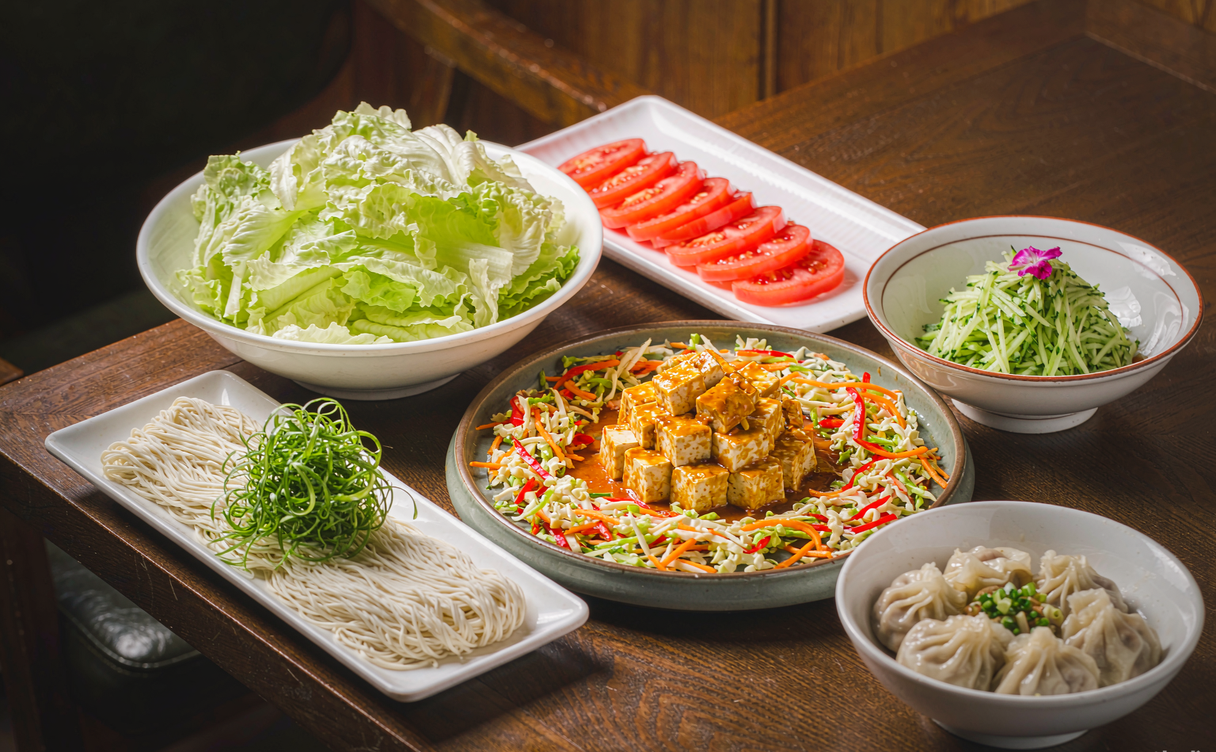
- 素鸭 (su ya) — “vegetarian duck,” actually tofu skin rolled and braised; ¥38–58.
- 素鱼 (su yu) — gluten or tofu “fish” in sweet-sour or brown sauce; ¥48–68.
- 香菇菜心 (xianggu caixin) — mushrooms with greens, a safe non-mock order; ¥32–48.
- 麻婆豆腐 (mapo doufu) — many vegetarian spots make a meat-free version with fermented bean; ¥28–45.
- 八宝粥 (babao zhou) — eight-treasure sweet rice porridge, a light dessert; ¥18–28.
A half-day vegetarian plan
Start with a 10:30am walk through the Lama Temple area, then lunch at King’s Joy or Gongdelin (book King’s Joy ahead). Spend the afternoon in the Gulou hutongs, ending at Lily Vegetarian for a late tea, or grab a vegan burger at a Wudaokou café. Dinner can be a light repeat or a different hutong spot — Beijing’s veg scene is dense enough to fill two days.
Vegan Survival Tips in Beijing
- Learn 無蛋無奶 (wu dan wu nai) — “no egg, no milk” — and show it on your phone; it saves more arguments than any translation app.
- Broths in “vegetarian” hotpot can still be chicken; ask for a 清汤 (qing tang) plain broth and add your own vegetables and tofu.
- Convenience stores (7-Eleven, FamilyMart) stock soy milk and instant oat cups if you’re stuck between meals.
Temple Meals and Festivals
During the lunar fourth and seventh months, temples around the Yonghegong area and some monastery kitchens offer ¥10–30 vegetarian set meals to visitors. These are the most authentic zhaisu you’ll find, are cash-only, and usually served at a long communal table — ask at the temple information desk rather than looking for a sign.
The Cheapest Veg Meal in Town
The hutong vegan cafés do a ¥28–45 grain-and-tofu lunch bowl that’s the best value for a quick plant-based bite between sights, and many offer a small cash discount before 11am if you ask. It won’t win awards, but it’s reliable, fast, and frees you from explaining dietary needs at a meat-heavy noodle shop.
What’s Bookable Right Now
If you want a comfortable base near these spots, our best hotels in Beijing lists central stays, and the Beijing courtyard hotels guide covers hutong guesthouses within walking distance of Lily and the cafés. For the city’s signature meat dish (if your group splits preferences), the Beijing duck guide maps the roast-duck houses so everyone eats well.