

When most foreign travelers picture Guangxi, they imagine the postcard karst of Guilin and the lazy rivers of Yangshuo. A proper Jingxi travel guide, however, points you to the far west of the region, where the limestone peaks grow even more dramatic, waterfalls plunge straight into hidden canyons, and the border with Vietnam is only a short drive away. Jingxi is a county-level city in Baise prefecture, and it has remained under the radar for international visitors even as domestic tourists flock to its gorges. We’ve sent travelers there who wanted the drama of Guilin without the crowds, and they came back raving about the Tongling Gorge Jingxi and the quiet Zhuang villages that dot the valleys.
Jingxi is not a place you stumble into by accident. It rewards the curious and the slightly intrepid, the traveler who is happy to trade perfect signage for genuine discovery. But the payoff is real: emerald pools fed by hundred-meter waterfalls, terraced rice fields stacked beneath towering cliffs, and a chance to see rural Guangxi the way it looked before mass tourism reshaped the eastern counties. This guide covers how to get there, what to do, when to go, and how to fit Jingxi into a wider Guangxi itinerary without wasting a single day.
How to Get to Jingxi
The practical gateway is Nanning, the regional capital, which has an international airport and fast rail links to the rest of China. From Nanning, the easiest way to reach Jingxi is by high-speed train to Jingxi station, with some services routing through Baise. We’ve sent travelers there on the Nanning-to-Jingxi rail hop, and the final stretch of the ride is genuinely scenic once you leave the plains behind and the karst begins to rise. Our Nanning travel guide explains how to use the city as your Guangxi hub, including where to stay near the station and how to book the western lines.
If you are coming from the classic karst heartland, our Guilin travel guide covers the eastern anchor of the region, and you can connect west by rail with one transfer, usually in Nanning or Liuzhou. The total journey from Guilin to Jingxi runs around five to six hours including the change, so most people make it an overnight stop rather than a day trip. For foreigners, the booking process is the main hurdle, so our China high-speed train guide for foreigners walks through app setup, ID requirements, and seat classes. First-time visitors to the country should also read our China travel guide for first-timers before the trip. Once in Jingxi, the station is a short taxi ride from the town center, and most scenic areas are reached by bus or a hired car for the day.
Things to Do in Jingxi
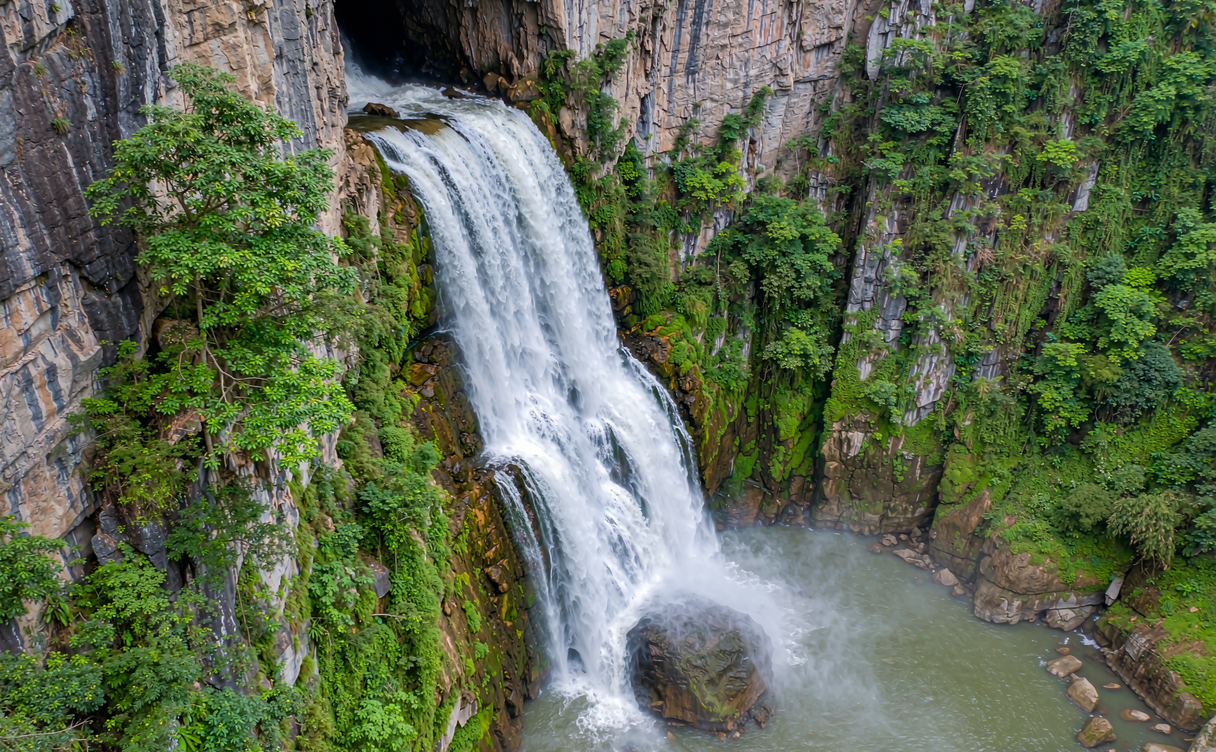
Tongling Gorge (Tongling Grand Canyon). This is the headline sight and the reason many travelers make the journey west. A fissure in the limestone opens into a cool, misty world where a waterfall drops roughly one hundred meters into a jade-green pool. Wooden walkways and long staircases let you descend into the gorge, and the walls are draped with vines, ferns, and the occasional shaft of sunlight that turns the spray into a rainbow. We’ve sent travelers there in the early morning to beat the domestic tour groups, and the light filtering down the canyon walls at that hour is unforgettable. The ticket runs around 115 RMB, and most visitors spend two to three hours inside before climbing back out to the heat.
Goose Spring (E’quan). A serene spring-fed lake ringed by karst hills and traditional Zhuang villages. The water is a startling clear blue, fed by an underground river that keeps it cool year-round, and you can walk the embankments or rent a small paddle boat. The entrance is modest, about 48 RMB, and it pairs well with a countryside lunch in the surrounding hamlets where the tables are set beside the rice fields. For travelers compiling a list of things to do in Jingxi, Goose Spring is the relaxed counterpoint to the vertical drama of Tongling.
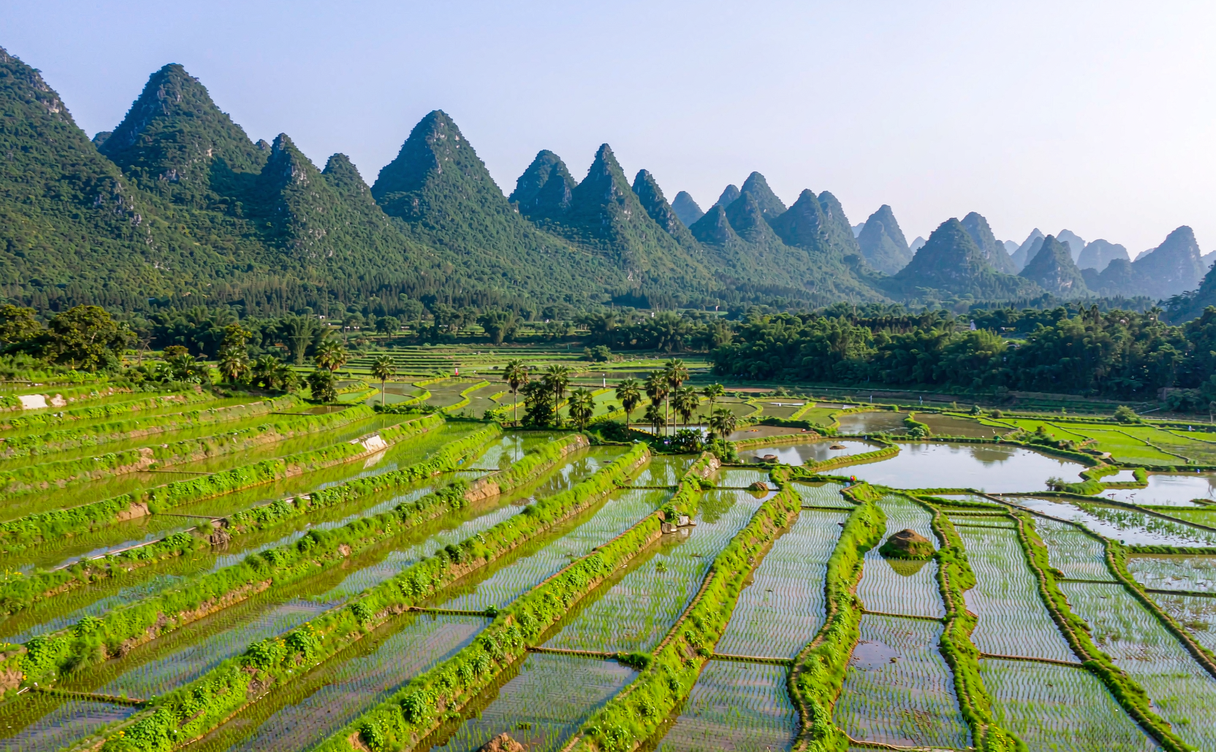
Rural Zhuang villages and rice terraces. The valleys around Jingxi are worked by the Zhuang, China’s largest ethnic minority, and the stilted wooden houses, embroidered dress, and harvest rhythms are still everyday life rather than a performance. Visiting respectfully — asking before you photograph people, buying crafts directly from makers, accepting a shared meal if offered — turns a scenic stop into a human one. The terraces change color with the seasons, from flooded silver in spring to gold at harvest, and a slow walk between the fields is among the most peaceful things to do in Jingxi.
The old town and border markets. Jingxi town has a low-key commercial center with noodle stalls, fruit markets, and the occasional Vietnamese coffee shop. The proximity to the border means you will see cross-border trade in the streets, from dragon fruit trucks to fabric rolls, and the evening market is a good place to sample snacks you will not find back east. It is a useful base rather than a destination in itself.
The karst landscape that defines everything here is explained clearly on the Karst Wikipedia page, which is worth a read before you go so the geology makes sense as you stand inside the gorge and watch water carve the rock in slow motion.
Best Time to Visit Jingxi
The best time to visit Jingxi is spring, from March to May, and autumn, from September to November. Spring brings lush green terraces and comfortable hiking weather, while autumn offers clear skies and the best light on the canyon walls, with the rice turning golden in late September. Summer is hot and humid with afternoon thunderstorms that can briefly close the gorge paths, though the interior stays cool and the waterfalls run fullest. Winter is mild compared with northern China but can be grey and damp, and some rural guesthouses close. For a national overview of climate windows, our best time to visit China guide helps you line up Jingxi with the rest of your route so you are not fighting the weather elsewhere.
Jingxi Guangxi Attractions: A Two-Day Shape
Jingxi works best as a two-night stop, which gives you one full day for the gorges and one for the countryside. Day one is devoted to Tongling Gorge in the morning and Goose Spring in the afternoon, with an evening stroll through the town market. Day two combines a Zhuang village walk with the short hop north toward the Detian Transnational Waterfall area if you have a car and a driver, since the cross-county roads are easier with someone who knows them. We’ve sent travelers there on this exact rhythm, and it keeps the long drives manageable while still feeling unhurried. For those who want to extend, the nearby Mingshi pastoral area offers more karst valley scenery, though it sits across the county line in Daxin and is best treated as a half-day add-on.
Where to Stay
Jingxi town has a range of mid-range hotels from 200 to 450 RMB a night, and the better ones cluster near the station and the main boulevard. Book ahead for holiday weekends, when domestic tourists from Nanning fill the rooms and prices creep up. There is little in the way of international-chain comfort here, but the local hotels are clean, the staff are friendly once you bridge the language gap with a translation app, and the locations put you within a short ride of both the bus station and the restaurants. If you want to be closer to the gorges, a few guesthouses operate in the surrounding counties, but we generally advise staying in town for the food and the transport options.
Food in Jingxi
Eating is one of the quiet highlights. The regional table leans on the staples of western Guangxi: sour bamboo-shoot hotpot, five-colored sticky rice, grilled river fish, and rice noodles served with crushed peanuts and pickled vegetables. A full meal at a local restaurant runs 30 to 60 RMB per person, and the night market stalls are where the real flavors live, with skewers, glutinous snacks, and fresh fruit smoothies for a few yuan each. We’ve sent travelers there who planned to eat lightly and ended up ordering one of everything. If you enjoy slower, rural Chinese food, our best ancient towns in China guide points to other places where the cooking is still made by grandmothers rather than commis.
Practical Tips
English is rare outside the better hotels, so load offline maps and a translation app before you leave Nanning. The gorge involves stair descents into a humid, cool interior, so wear sturdy shoes with grip and bring a light layer even in summer, because the spray and shade can feel cold after the heat outside. Mobile payment through Alipay or WeChat is standard in town, but some village stalls take only cash, so carry a mix of both. Buses to the scenic areas run on rural timetables that do not suit a tight plan, which is why hiring a car with a driver for the day, roughly 300 to 500 RMB, is the smoothest way to combine Tongling, Goose Spring, and a village without racing the clock.
Why Jingxi Over the Crowds
The appeal of Jingxi Guangxi attractions is precisely that they are not on the standard foreigner trail. You get the same limestone theater as Guilin but with a fraction of the visitors, plus a genuine borderland character where Vietnam feels close and the pace is set by the harvest rather than the itinerary.
Putting Jingxi on Your Map
Jingxi is the wild western anchor of a Guangxi circuit. Pair it with Nanning for logistics and Guilin for the classic scenery, and you have a route that shows two sides of the same karst landscape. We’ve sent travelers there who did exactly this and rated the week among their favorite in China, precisely because the west asked a little more and gave a little more back.
A Note on Border Curiosity
Jingxi sits close to the frontier, and while you cannot walk into Vietnam without the proper crossing, the borderland atmosphere is part of the appeal. Dragon fruit orchards, Vietnamese shop signs, and cross-border trucks signal you are at the edge of something larger. Keep your passport handy, respect the restricted zones near the line, and treat the town as a window rather than a doorway.