

The first Chinese New Year I spent in China, I made every mistake in the book: I arrived the day before the holiday, found the cities eerily empty, the trains sold out, and the restaurants shut. By the third day, though, the lanterns lit up, the fireworks started, and a neighbor pulled me into a family dinner I still remember a decade later. That is the paradox of China New Year travel — it is the most disruptive and the most magical time to be in the country, if you plan it right. This guide is the briefing I wish I’d had, with real dates, prices, and the logistics that separate a nightmare from a once-in-a-lifetime trip.
What the festival actually is
Chinese New Year, also called the Spring Festival, is the world’s largest annual human migration. Hundreds of millions of people travel home, and for about ten days the country operates on a different clock. A China Spring Festival travel guide has to start with one fact: the two days before and after New Year’s Eve are the worst possible times to move between cities. Trains and flights are not just full — they are gone. If you must travel then, buy tickets the instant they’re released (usually 15 days ahead via 12306).
The festival date moves with the lunar calendar, typically landing in late January or February. For 2026, plan around the official holiday window and the week of celebrations. Our best time to visit China page notes that this period is the one season we actively advise around rather than through.
Best places for Chinese New Year
Choosing the best places for Chinese New Year depends on whether you want the blowout or the breather. Big cities empty out as locals go home, while certain destinations explode with visitors.
Beijing is spectacular. The Temple of Heaven and Ditan Park host temple fairs with opera, snacks, and crafts; the Forbidden City closes for the holiday but reopens with thin crowds afterward. A temple-fair ticket runs 10–30 RMB. The best things to do in China list includes the hutong walks that feel especially alive with red lanterns.
Pingyao, Shanxi is my top pick for atmosphere. This walled ancient town turns into a living New Year diorama — lanterns on every beam, drum towers beating, and regional eats in the courtyard hotels. An ancient-town pass covering major sites costs about 125 RMB.
Harbin, Heilongjiang offers the Ice and Snow Festival, with colossal illuminated sculptures. Day tickets to the Ice World run 200–330 RMB; dress for -20°C.
Guangzhou throws the famous Flower Fairs (花市) in the days before New Year — streets of blossoming peach and orchid stalls. Free to wander.
Hongcun and Xidi in Anhui, and Lijiang in Yunnan, offer quieter, photogenic celebrations with fewer crowds than the megacities.
For a curated list of atmospheric old towns, our best ancient towns China guide flags the ones worth the winter chill.
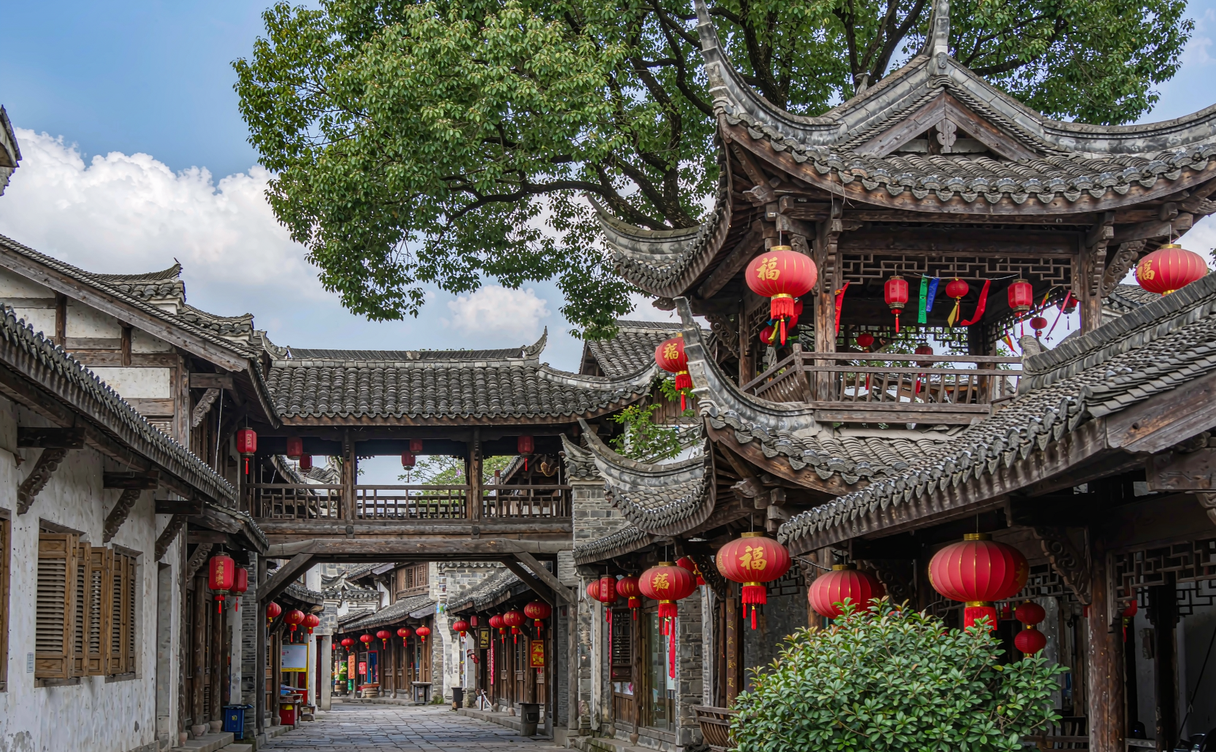
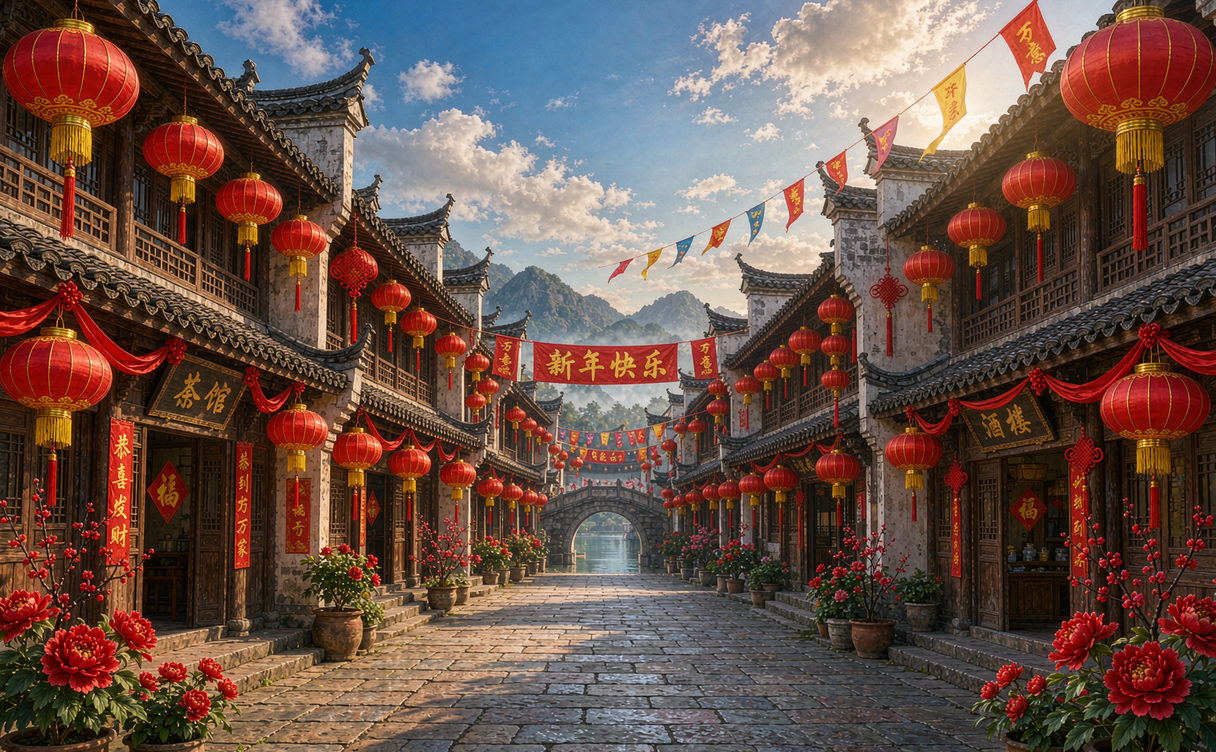
A China New Year itinerary
A workable China New Year itinerary accepts the lockdowns of the peak days and builds around them. Here is the shape I recommend.
Days 1–2 (pre-festival): Arrive in Beijing. See the Great Wall at Mutianyu (ticket 40 RMB plus cable car 100 RMB) while it is still open, and stock up on snacks.
Days 3–5 (festival core): Base in Pingyao or Lijiang for the actual celebrations. Do NOT try to change cities on New Year’s Eve or Day 1–2. Settle into a courtyard hotel (400–800 RMB/night in peak) and just soak it in.
Days 6–8 (post-festival): Xian for the city wall and the rebuilt Muslim Quarter buzz, or Chengdu for pandas and hotpot. Crowds thin after Day 5, and trains reopen.
Days 9–10: Fly home from a major hub.
First-timers should read the China travel guide for first-timers for visa and payment basics before committing to festival dates.
China New Year travel tips
My essential China New Year travel tips:
1. Arrive three days before the holiday and leave three days after. This single choice avoids the worst of the migration.
2. Book trains and the key hotel before you fly. The 12306 app releases seats 15 days out; our China high-speed train guide for foreigners walks you through it.
3. Carry cash and a Power Bank. Some small-town vendors go cash-only during the break, and cold weather drains phones fast.
4. Eat the festive food. Dumplings (饺子) on New Year’s Eve, sticky rice cake (年糕) for “rising year,” and endless sunflower seeds while chatting. A restaurant reunion dinner for two runs 200–500 RMB.
5. Expect closures on Day 1–3. Supermarkets and chains stay open; independent shops and some attractions pause. Plan low-key days.
Chinese New Year celebrations to seek out
The Chinese New Year celebrations vary by region, and chasing them is the fun. Beijing’s temple fairs mix acrobatics with calligraphy stalls. Pingyao’s county-yamen court performances recreate Qing-dynasty rituals. Guangzhou’s flower markets run until midnight on New Year’s Eve. And in rural Anhui or Jiangxi, you might catch a dragon dance or fireworks that go on for hours. The Lantern Festival, fifteen days after New Year’s Eve, is the graceful finale: rivers of lit lanterns, riddles written on them for passersby to guess, and sticky yuanxiao rice balls eaten for family unity. I timed one trip to end on the Lantern Festival in a small Jiangxi town and the whole main street was a slow, glowing procession — no tourists, just the town celebrating itself.
Our China festivals guide maps the full lunar calendar so you can pair New Year with the Lantern Festival fifteen days later, and even stack it with the later Qingming spring outings if your trip runs long.
My honest take
The fear around China New Year travel is overblown if you respect the rhythm. Yes, the peak is chaotic — but if you plant yourself in one atmospheric town for the core days, you get front-row seats to the culture at its warmest. The dinners, the red envelopes (红包) pressed into children’s hands, the collective countdown of fireworks — these are not performances for tourists; they are the real thing. I would take a quiet Pingyao New Year over a packed summer Forbidden City any day.
One footnote on the setting: Beijing’s Forbidden City, the ultimate New Year backdrop, is part of the UNESCO-listed Imperial Palaces of the Ming and Qing dynasties, and its vast courtyards feel especially grand against a winter sky.
Practical bookability
Visas: secure yours well ahead; some consulates close around the holiday. Flights: book international legs early, as the week before is pricey; the week after is cheaper. Domestic transport: trains within the “quiet window” (Days 4–8) are bookable, but always have a backup bus plan. Accommodation: book the festival-night stay first, then build outward. Budget roughly 400–1,000 RMB/night for a characterful ancient-town room in peak, and 150–300 RMB/day for food and fairs. Carry 500–1,000 RMB cash as insurance against closed card terminals.