

Ask most travelers what Cantonese food means and they will say “dim sum.” Guangzhou, the provincial capital and the birthplace of Cantonese cooking, will politely disagree. Dim sum is the city’s morning ritual, but the deeper story is a year-round kitchen of roast meats, slow broths, clay-pot specialties and a street-snack culture that never really stops. On a Guangzhou food guide recce we ran last winter, clients who came for the dumplings stayed for the midnight rice noodles and the noontime roast-goose rice. It remains the city we recommend first to newcomers in Guangdong. This article covers what to eat in Guangzhou, where to find it, what it costs, and how to plan around it as of 2026.
Why Guangzhou Is the Cantonese Benchmark
Guangzhou cuisine, the Cantonese canon at its source, is a discipline of restraint. The goal is to let the ingredient speak, with cooking methods — steaming, roasting, braising, quick stir-frying — chosen to preserve rather than mask. Guangzhou is where the canon was set, and the city takes that seriously. Locals will debate the crispness of a roast-duck skin or the clarity of a wonton broth like others debate sports.
For travelers, this means consistency: a random neighborhood canteen in Guangzhou is often better than a “fine dining” Cantonese room in a Western city. We tell clients to lower their guard and order widely. For the wider regional table, our Guangdong yum cha guide explains the dim sum ritual in full, but Guangzhou’s eating goes well past the cart.
Dim Sum and Yum Cha Done Right
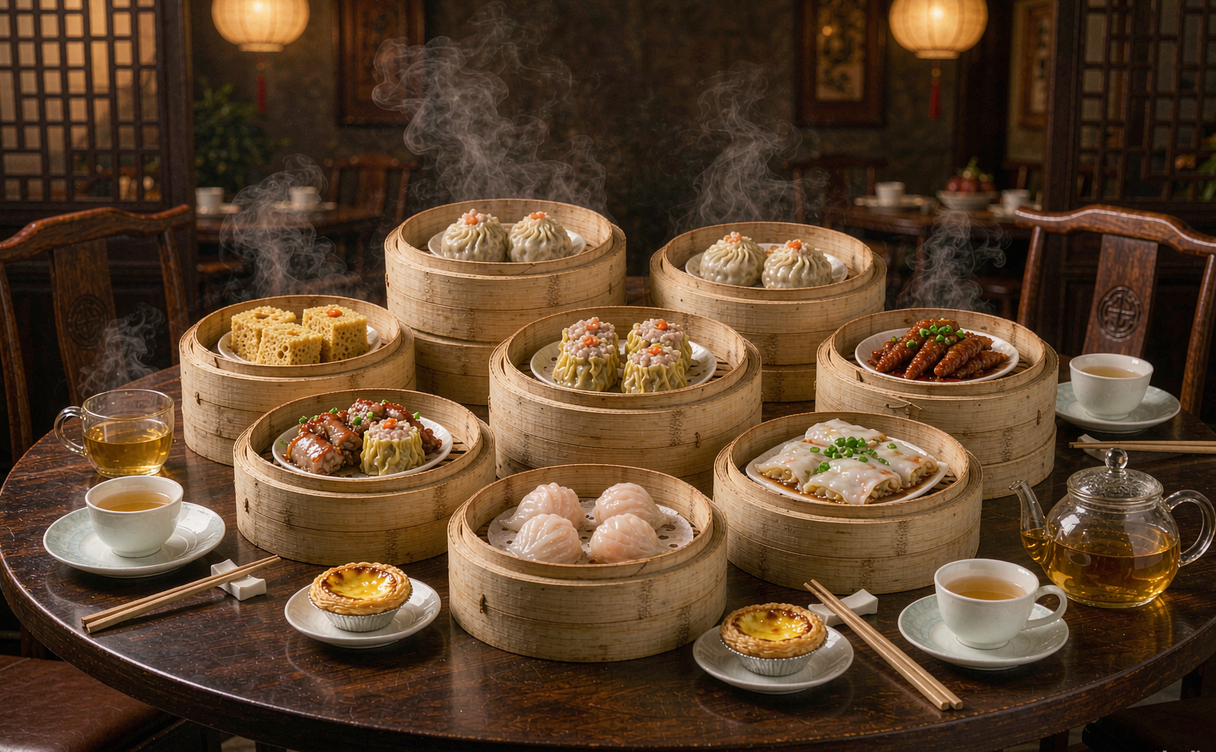
Start where the city starts: morning yum cha. A classic Guangzhou dim sum spread runs from har gow and siu mai to char siu bao, cheung fun (rice rolls) and the savory turnip cake. Neighborhood halls open as early as 6:30 a.m.; a satisfying breakfast for two sits around ¥50–90. The famous old brands near the old town draw queues by 9 a.m. on weekends, but the wait is part of the experience and the turnover is fast.
If you want to go deeper, our Guangzhou dim sum guide names the specific dishes worth hunting and the halls we trust. As of 2026, most of the heritage rooms take same-day queueing via their mini-programs — arrive before 9 or after 2 to skip the worst of it.
Roast Meats and the Noon Rice Plate
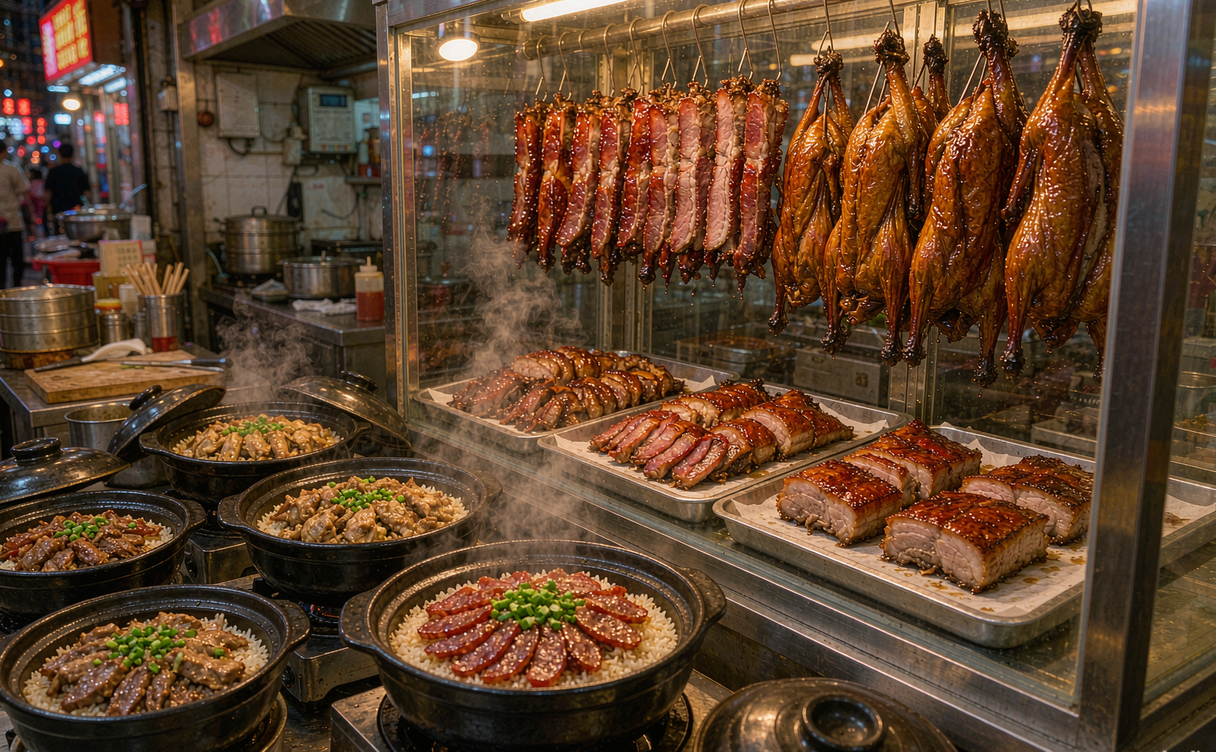
The dish that defines a Guangzhou lunch is siu mei — the roast-meat counter. Roast goose with its lacquered, fatty-crisp skin over a bowl of rice is the local grail, typically ¥35–60. Char siu (barbecue pork), roast duck and the soy-braised version round it out. A full plate with a side of gai lan (Chinese broccoli) and a bowl of soup lands around ¥40–70.
We send clients to the small storefronts where the ovens sit in the window and the goose turns on a hook in full view. The best ones sell out by early evening, so lunch is the move. This is Guangzhou Cantonese food at its most everyday and its most perfect.
Clay Pot, Wonton and the Night Shift
After dark, the city shifts to clay-pot rice (bo zai fan) — a single clay pot of rice, meat and leafy greens seared until a crust forms on the bottom, ¥28–45. Pair it with a bowl of wonton noodles, where the broth is clear pork-and-shrimp stock and the wontons are plump with shrimp, ¥18–30. These are the dishes that keep Guangzhou working late; the best noodle shops near the old town and the university district stay open past midnight.
The street-snack layer runs underneath all of it: the egg waffles, the sugar-roasted chestnuts, the stinky tofu for the brave, and the double-skin milk pudding (shuang pi nai) that is worth every calorie at ¥12–18. We build these into an evening walk we run with first-timers.
Best Food in Guangzhou by District
When clients ask for the best food in Guangzhou, we answer by neighborhood, because that is how Guangzhou restaurants naturally sort themselves:
- Yuexiu (old town): Heritage dim sum, roast-goose legends, and the densest snack streets. ¥30–90 per person.
- Liwan (Shamian / Shangxiajiu): Pedestrian food streets, clay-pot rice, and old-school wonton shops. ¥25–70 per person.
- Tianhe (CBD): Polished restaurants and hotel Cantonese withEnglish menus. ¥120–250 per person.
- Zhujiang New Town waterfront: Upscale dining with a view, good for a final-night banquet. ¥180–350 per person.
For the wider city picture — transport, districts and sightseeing — our Guangzhou travel guide pairs naturally with a food-focused stay.
How to Get There and When to Go
Guangzhou is a national rail hub. The high-speed network puts Shenzhen 30 minutes away and connects to most major cities; our China high-speed train guide for foreigners walks through booking. Baiyun International Airport (CAN) handles international and domestic flights.
Timing: October to April is ideal — cool, dry, and comfortable for street eating. The city gets hot and humid May through September, but that is also lychee and mango season, and the night noodle scene thrives. For month-by-month planning, our best time to visit China guide helps you slot Guangzhou into a southern route.
Want Guangzhou’s dim sum and roast-meat circuit mapped by a local? Our China food tour guide turns a layover into a proper Cantonese eating tour.
A Two-Day Eating Plan
Day 1 — The canon. Morning yum cha in Yuexiu. A roast-goose rice lunch. An evening clay-pot and wonton crawl through Liwan, ending with double-skin milk pudding.
Day 2 — The deeper cut. A dim sum hall you have not tried, a slow broth lunch (the herbal soups are a Guangzhou specialty), and a Tianhe dinner if you want one polished night out.
That pace covers the range without rushing, and leaves room for the snacks you did not plan.
Prefer a guide to lead the ordering and translate the menu? See our Guangzhou itineraries with a local food expert.
Where to Stay for Easy Eating
Stay in Yuexiu or Liwan if food is the priority — the heritage halls and snack streets are walkable. Tianhe suits travelers who want a modern hotel and easy metro access to everywhere. Mid-range rooms run ¥300–600 per night as of 2026, with heritage-leaning boutique options in the old town closer to ¥500–900.
Practical Notes for 2026
A few things we flag to every client. Mobile payment dominates; Alipay and WeChat Pay now accept foreign cards, but carry ¥200–300 cash for the smallest stalls. English menus appear in Tianhe and the hotels but rarely in the old-town gems — save the Chinese names of dishes to your phone. Booking matters only for the famous dim sum rooms; everything else is walk-in or queue.
Guangzhou rewards the curious eater more than almost any city in China. The best meal on our last trip was a ¥28 bowl of wonton noodles from a shop with no sign in English and a line of locals out the door. A pot of pu’er or oolong is poured throughout a Cantonese meal, usually for a modest tea charge of ¥2–6 per person. For the cultural backdrop, the Cantonese cuisine entry on Wikipedia is a solid reference on the techniques behind the food.
Planning a southern China food trip? Combine Guangzhou with Shenzhen and Shantou and we’ll sequence the trains and the tables for you.