

If Guangzhou is the loud, banquet-style capital of Cantonese eating, Shantou is its quieter, more obsessive cousin. This port city in eastern Guangdong is the heart of the Chaoshan region, and the food here is precise, light, and built on the belief that a ingredient’s true flavor should never be buried. On a Shantou food tour we ran last spring, clients who arrived expecting heavy sauces left converted by the clean taste of a fresh oyster omelet and the theatrical ritual of beef hotpot sliced to order. This guide explains what to eat in Shantou, where to find it, what it costs, and how to plan around it as of 2026.
Why Chaoshan Food Deserves Its Own Trip
Shantou Chaoshan cuisine — Teochew and Shantou styles together — is one of China’s most disciplined regional kitchens. The cooking leans on steaming, braising and clear broths rather than heavy oil, and it prizes texture: the bounce of hand-pulled beef balls, the silk of a congee, the snap of cold crab. UNESCO-listed neighbors aside, Shantou’s real claim is that you can eat at a very high level for very little money, often standing up.
For travelers coming from the provincial capital, the contrast is the point. Where the Shantou travel guide routes lean toward dim sum palaces, Shantou asks you to slow down at a street cart. We tell clients: treat this as a snack-and-walk city, not a sit-down city.
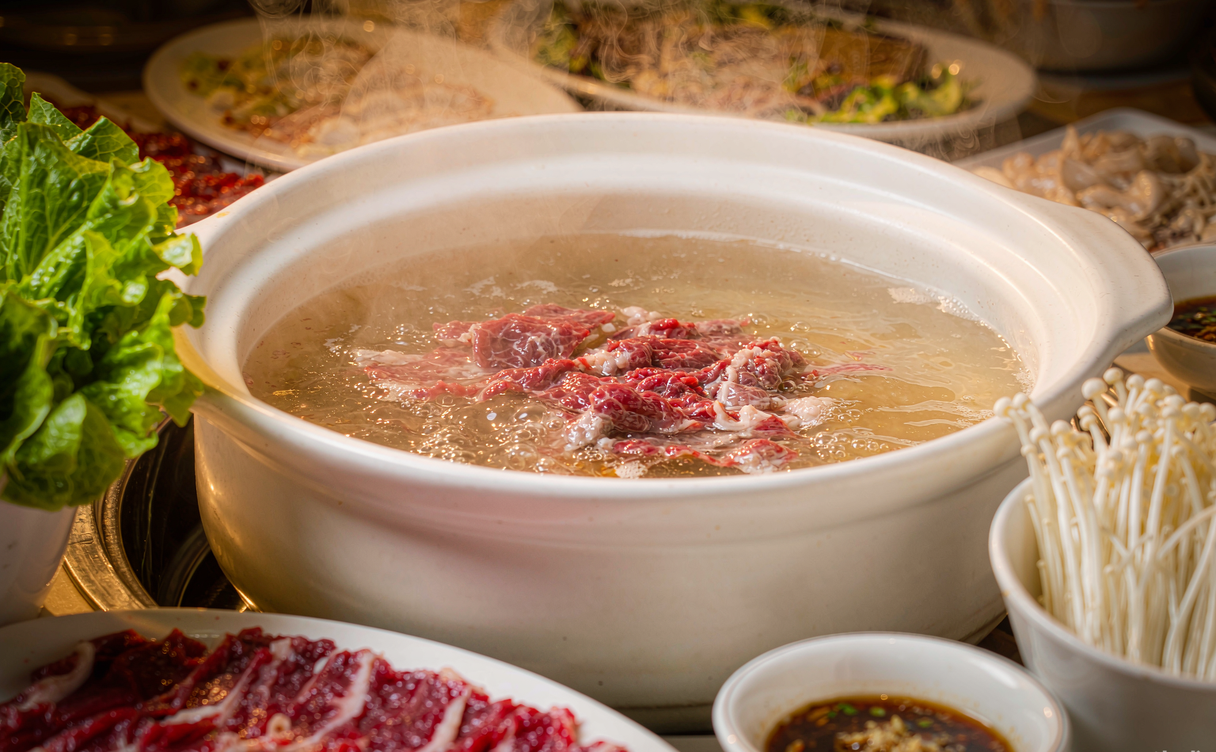
Shantou Beef Hotpot, Sliced to Order
The dish that pulls most visitors in is Shantou beef hotpot. Unlike the mala broth of Sichuan, Chaoshan hotpot uses a clear, faintly sweet beef bone broth. The beef is butchered locally and sliced thin — sometimes within hours of slaughter — into named cuts: the marbled “flower toe,” the tenderloin, the brisket, and the prized tendon. You cook each piece yourself for a few seconds and dip it in a satay-or-chili sauce.
A full hotpot for two, with several cuts, beef balls and greens, runs ¥120–200 as of 2026. The famous 24-hour chains (the ones with the red signs) are reliable and English-light but easy to navigate by pointing. We send clients to the small family spots near the old port, where the same meal costs ¥80–120 and the slicer works in full view.
The Street Snack Circuit
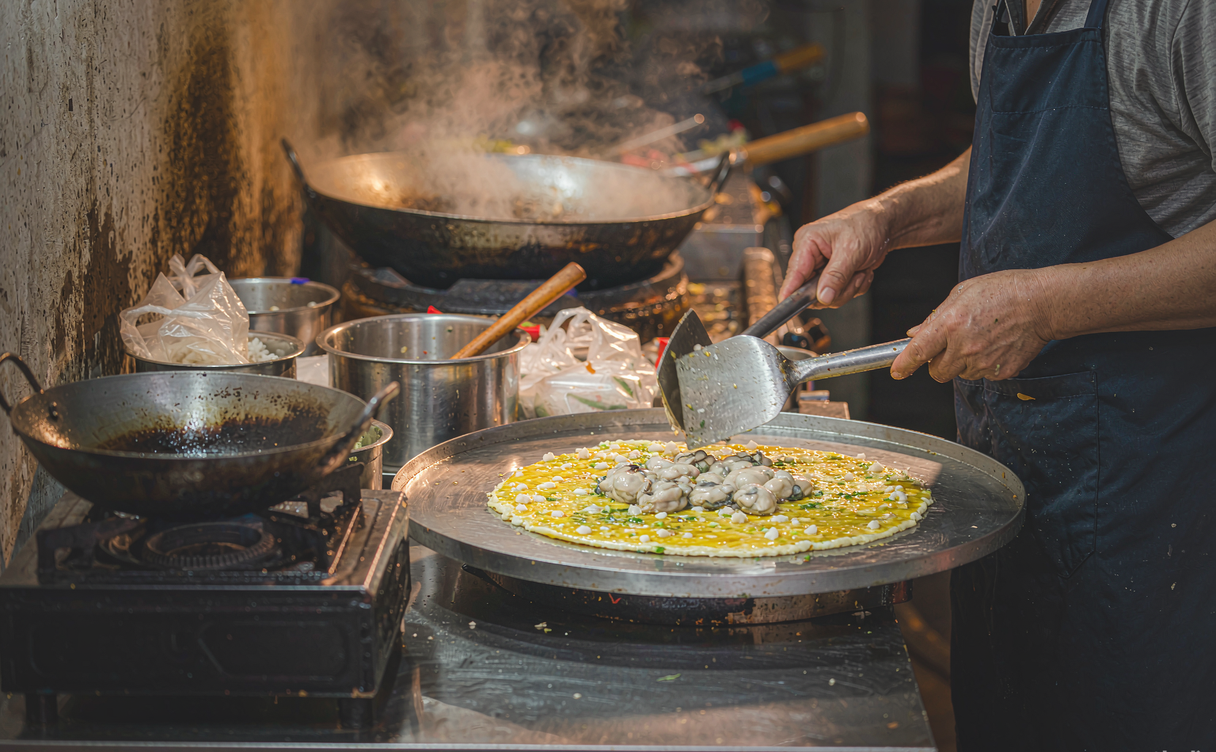
The soul of Shantou food tour planning is the evening walk. Start with an oyster omelet (hai luo bing) — egg, sweet potato starch and plump local oysters fried on a hot plate, ¥15–25. Move to beef balls on a stick, ¥5–10 each, with the springy texture that only fresh pounding delivers. Then a bowl of guo tie (Teochew-style pan-fried dumplings) or a plate of braised goose — the Shantou answer to Peking duck, lacquered, sliced and served with a tart plum dip for ¥40–70 per portion.
Teochew desserts round the night out: a warm bowl of sweetened mung-bean soup, or the cold, jellied grass jelly with citrus. None of these cost more than ¥10–18, and most are cash or local-payment only, so keep small RMB on hand.
Congee, Noodles and the Morning Shift
Mornings belong to congee (zhou). A Teochew congee is looser than the thick Cantonese version, almost a thin gruel, served with a spread of small sides — salted egg, fried peanuts, pickles, dried fish. A filling breakfast bowl with two sides is ¥10–18. Pair it with the regional rice noodle rolls (the wide, slippery kind brushed with sesame and soy) for ¥8–14.
For a deeper dive into the regional ritual of tea and small eats, our Guangdong yum cha guide covers the wider Cantonese table, though Shantou’s version is leaner and more savory than Guangzhou’s sweet-leaning carts. If you want the sister city next door, our Chaozhou food guide picks up where Shantou leaves off, with its own noodle and pastry traditions a short hop away.
Best Restaurants in Shantou
When clients ask for the best restaurants in Shantou, we split the answer into two tiers:
- The legendary old houses: Multi-room banquet restaurants in the city center serving braised goose, cold crab and shark-fin-free clear soups. Budget ¥100–180 per person for a proper sit-down.
- The street specialists: Single-dish stalls — one for beef balls, one for oyster omelets, one for congee — that out-cook the banquet houses at a fraction of the price. ¥30–70 per person across a grazing evening.
We almost always recommend the second tier for flavor-per-yuan. A Shantou food tour built around five or six stalls beats one fancy room, and the walking is part of the fun.
How to Get There and When to Go
Shantou sits about 300 km east of Guangzhou. The practical arrival is the high-speed train: Guangzhou to Shantou is roughly 2.5–3 hours, and there are direct services from Shenzhen in around 2 hours. Our China high-speed train guide for foreigners covers how to book these without a Chinese ID.
The best months are October through April, when the coastal humidity eases and the street-food scene is comfortable well past 10 p.m. Summer is hot and occasionally typhoon-prone, but it is also oyster and crab season. For the wider regional timing, our best time to visit China guide helps you slot Shantou into a southern itinerary.
Want Shantou and Chaozhou mapped into one seamless eating route? See our ready-made Chaoshan itineraries built by our local team.
A One-Day Eating Map
For a single day in the city, here is the loop we give clients:
Morning: Congee breakfast with sides near the old town, then a walk through the small lanes to watch beef-ball pounding.
Afternoon: Braised goose lunch at a respected old house, followed by Teochew tea tasting.
Evening: The full street circuit — oyster omelet, beef balls, noodle rolls, grass jelly — finished at a 24-hour beef hotpot if appetite remains.
That single day captures the range that makes Shantou distinct from anywhere else in Guangdong.
Prefer a guide to handle the ordering and the language? We can add a local food expert to your Shantou days.
Where to Stay
Shantou’s compact core means most good eating is within a short ride of the central districts. Mid-range hotels run ¥250–500 per night as of 2026; the waterfront strip near the old port puts you within walking distance of the evening snack circuit. Stay central rather than out by the new district if food is your priority.
Practical Notes for 2026
A few things we flag. Shantou is far less English-friendly than Guangzhou or Shenzhen, so a translation app and saved Chinese dish names are essential. Mobile payment works, but many stalls are cash-only — carry ¥200–300 in small bills. The best beef hotpot houses get busy from 6 p.m.; the 24-hour chains absorb the crowd but the family spots can sell out of premium cuts by 9 p.m., so go early.
Shantou rewards patience. The food is subtle, and the payoff is a city where a ¥15 snack can outshine a ¥150 banquet. Most stalls post prices in clear numerals, so you can budget as you graze. For the regional context, the Chaoshan entry on Wikipedia is a useful background read on the culture behind the cooking.
Planning a Chaoshan deep-dive? Combine Shantou with Chaozhou and Guangzhou and we’ll sequence the trains and the tables for you.