

I have stood in a lot of Chinese temples, and after a while the gold roofs start to blur together. Famen Temple, in the small county of Fufeng about 120 km west of Xi’an, stopped that blur instantly. Underneath an ordinary-looking pagoda is one of the most extraordinary archaeological finds in modern China: a Tang-dynasty underground palace holding what is revered as a true finger bone of the Buddha, surrounded by a fortune in gold, silver, and glazed ware. This Famen Temple guide is the practical on-the-ground notes I made so you can plan the visit without the guesswork I had.
The monastery sits in Fufeng county, part of Baoji prefecture in Shaanxi province, on the old road between Chang’an (today’s Xi’an) and the western Silk Road. Its fame rests on a single claim that has drawn pilgrims for 1,700 years: that it enshrines one of the Buddha’s finger relics. Whether or not you share that faith, the objects unearthed here in 1987 are staggering. The site pairs a restored older temple with a vast modern complex built around a soaring new pagoda, and the contrast between the two is part of the experience.
Famen Temple day trip from Xi’an
The classic Famen Temple day trip from Xi’an is an easy half-day outing. The most relaxed way is a direct tourist bus from Xi’an’s train-station tourism hub, which takes about two hours each way and costs ¥40–60 ($6–8) round trip, departing mid-morning. I preferred the train: high-speed services from Xi’an North to Baoji South run frequently (about 55 minutes, ¥51.5 / $7), and from Baoji a taxi to Famen takes another 50 minutes for roughly ¥120 ($17). If you want to explore the wider region, our Baoji travel guide covers the city’s own bronze-age museum and mountain parks.
A private car from Xi’an is the lazy option and, honestly, the most pleasant: about ¥500–700 ($70–100) for the day, door to door, with time left to loop through the nearby fields. I did this with my parents and it turned a logistical headache into a scenic drive past terraced wheat and persimmon orchards.
Famen Temple tickets and hours
Get the practicals sorted first. Famen Temple tickets and hours as of 2026: the combined ticket for the old temple, the underground palace exhibition, and the new culture park runs ¥100 ($14) in peak season and ¥60 in winter, with the site open 08:30–17:30 (last entry 16:30). Students with ID pay half; children under 1.2 m enter free. Buy at the window or the official mini-program; foreign cards are hit-or-miss at the gate, so carry Alipay or some cash. There is no need to pre-book except on the big holiday weeks, when the car parks fill by 11 a.m.
The underground palace and Famen Temple relic viewing
The heart of the visit is the Famen Temple relic viewing, and you should understand the layout before you go or you’ll miss it. In 1987 archaeologists found a sealed Tang underground palace beneath the old pagoda foundation — a sequence of stone chambers holding the finger relic inside a nested set of eight caskets, the outermost a gilded silver chest inlaid with pearls. The relic itself is shown only on special Buddhist festival days (the 1st and 15th of the lunar month, and major holidays), when it is carried in procession to the above-ground relic hall. On ordinary days you see the caskets, the chamber reconstruction, and a video of the relic; on festival days you may see the bone itself.
I timed my second visit to a lunar fifteenth and queued an hour with a few hundred pilgrims to glimpse the relic in its crystal case. Whether or not you believe, the devotion in that line is its own kind of sight. Check the lunar calendar and the temple’s notice board before committing to festival dates, because the schedule shifts.
Famen Temple museum Tang treasures
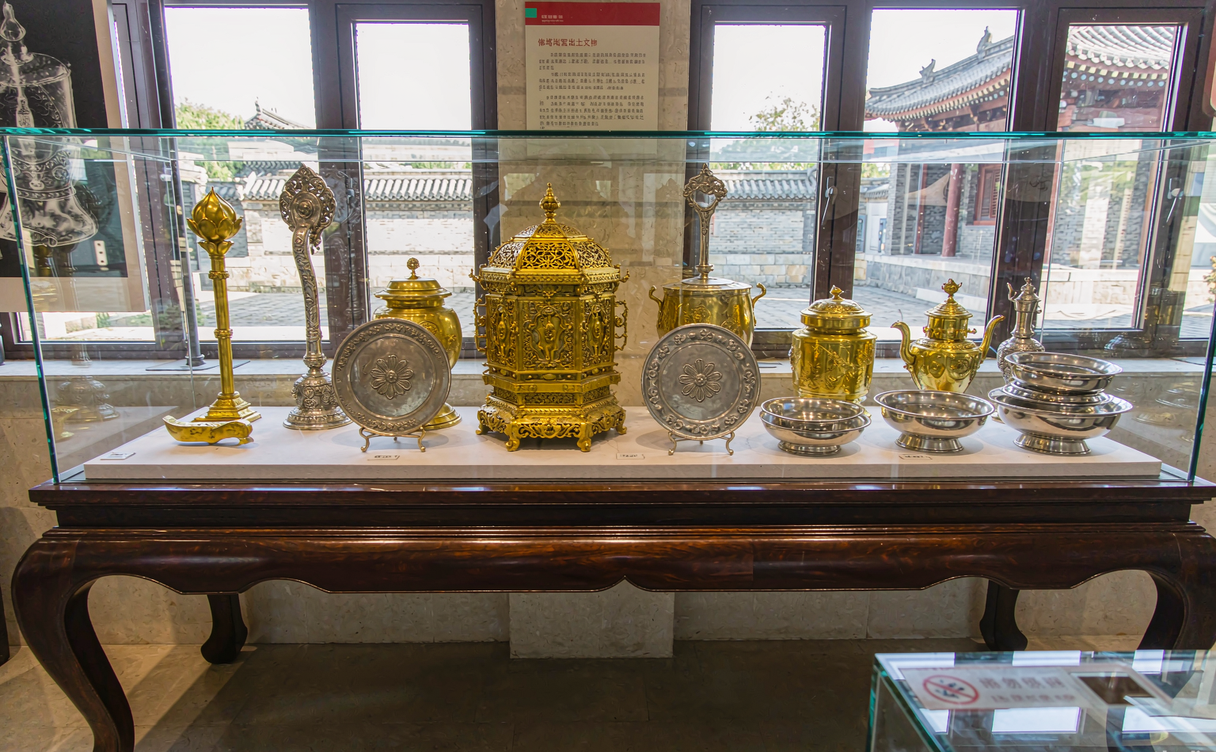
Even without the relic, the Famen Temple museum Tang treasures are worth the trip. The excavated hoard is displayed in a climate-controlled hall beside the old pagoda: gilded and silver Buddhist utensils, a set of exquisitely etched imperial tea service (proof that Tang court tea was a high ritual), glassware thought to be imported along the Silk Road, and walls of inscribed tablets. The craftsmanship is so fine that I found myself leaning close to the glass — the repoussé dragons on the silver burners look fresh-minted, not twelve centuries old.
For context on the road that brought those foreign glass vessels here, our China Silk Road itinerary traces the trade routes that made Tang China this cosmopolitan, and pairs well with a Famen stop if you are driving west toward Gansu.
The new pagoda and the old temple
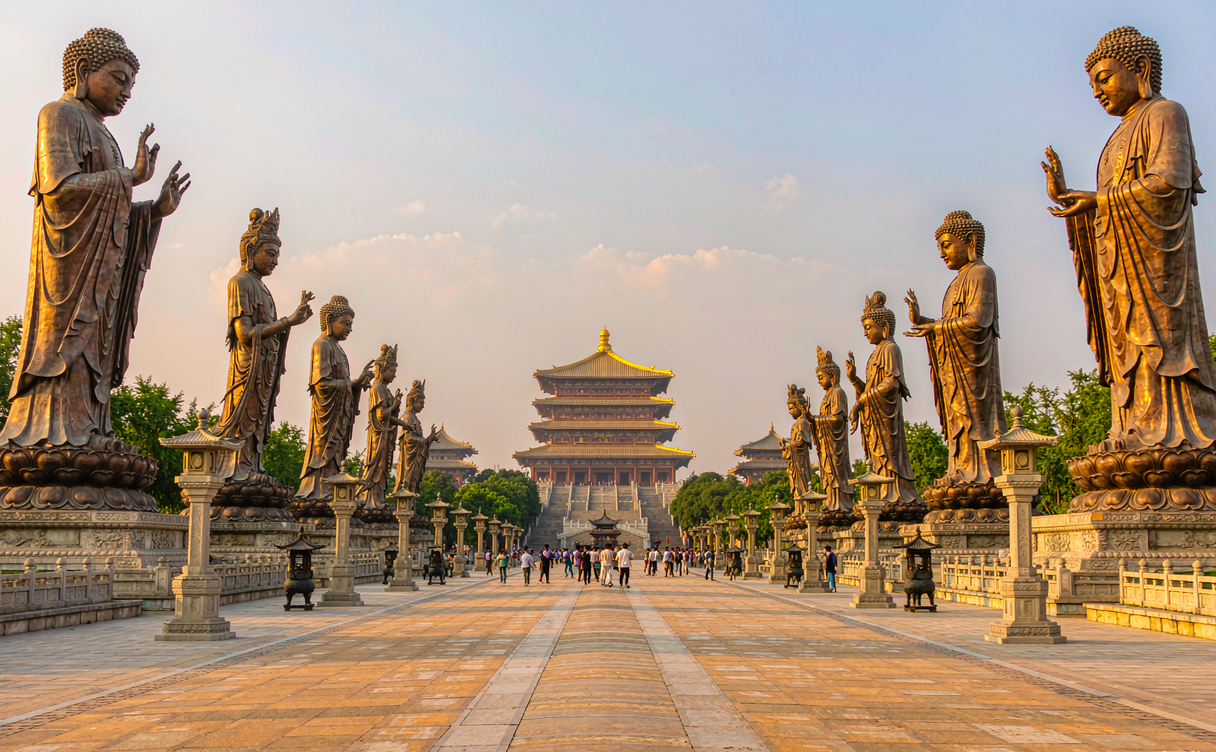
Spend equal time above ground. The new Famen culture park centres on a 148-metre hand-shaped pagoda sheathed in bronze and lit at night — love-it-or-hate-it architecture, but the processional avenue of giant golden Buddha statues leading to it is genuinely impressive at dusk. Then walk back to the quieter old temple: a Ming-era brick pagoda, a peaceful courtyard of cypresses, and the working monastic quarters where you can light incense and watch pilgrims prostrate themselves. The contrast — theme-park grandeur versus living devotion — is the real story of Famen.
If you want a slower, more contemplative temple experience, our China temple stay guide lists monasteries where you can actually sleep and sit morning chanting, which makes a thoughtful counterpoint to Famen’s museum energy.
Best time to visit Famen Temple
The best time to visit Famen Temple is spring (April–May) and autumn (September–October), when the drive through the Guanzhong plain is green or gold and the temple courtyards are comfortable. Summer is hot and the open plaza bakes; winter is cold but nearly empty, with the ¥60 ticket and a stillness that suits the place. If you specifically want the relic procession, aim for a lunar 1st or 15th in one of those mild seasons.
Where to eat and stay
Fufeng is a small county, so don’t expect a culinary scene — but do expect honest Shaanxi food. I ate well on guantang noodles (a sour, peppery soup noodle), hand-made steamed buns, and cold dressed kelp at a ¥30 ($4) lunch counter near the east gate. For a proper meal, the restaurants inside the culture park’s fringe serve decent banquet-style dishes at ¥80–120 ($11–17) per person.
Most visitors day-trip and sleep in Xi’an; our Xi’an travel guide and the Xianyang travel guide both cover nearby bases if you’d rather break the journey. If you stay local, a clean Fufeng business hotel runs ¥180–260 ($25–36) a night. The Xi’an Big Wild Goose Pagoda is the natural companion stop, since both sites sit on the same ancient Chang’an pilgrimage axis.
Insider tips
- Decide in advance whether you need the relic day; otherwise you’ll mainly see the caskets and museum, which are still superb.
- Wear sun protection for the open plaza; there is little shade between the car park and the new pagoda.
- Combine with a morning at the old pagoda first (cooler, fewer people) before the midday crowds hit the museum.
- Bring a jacket even in spring — the underground palace chamber is kept cold and damp.
Famen Temple is not a quick photo stop; it is a place where a single archaeological chamber rewrote what we thought we knew about Tang material culture. Go for the relic if faith moves you, but stay for the silver and gold that prove how luminous that distant court really was. For the historical background, the Famen Temple entry details the 1987 excavation that made the site world-famous.