

I went to Meizhou Island expecting a quiet fishing islet and left understanding why millions of overseas Chinese make the pilgrimage here every year. This small island off the coast of Putian, in Fujian province, is the legendary birthplace of Mazu, the sea goddess who protects fishermen and sailors, and the home of her ancestral temple. But it is also a genuine beach escape, with golden sand, granite headlands, and a slow coastal rhythm. This Meizhou Island guide is the on-the-ground account I wanted before I booked the ferry.
Meizhou sits in the strait just off the Fujian coast, a short hop from the mainland near Putian city. It is about 15 square kilometres of low hills, fishing villages, and two decent beaches, anchored by the Mazu ancestral temple on the southern headland. The island is fragrant with incense most of the year and electric with energy during festival weeks, yet on an ordinary Tuesday you can have a stretch of sand almost to yourself. If you are building a Fujian coastal route, our Putian travel guide explains how the city connects to the island and what else the region offers.
Meizhou Island ferry from Putian
The journey starts on the water, and getting the Meizhou Island ferry from Putian right saves a frustrating wait. Ferries depart from the Wenjia wharf on the mainland, reachable by bus or taxi from Putian railway station (about 40 minutes, ¥60–80 / $8–11 by car). The boat crossing takes roughly 20 minutes and runs from around 07:00 to 18:00, roughly every 40 minutes in peak season and hourly off-season. A round-trip ticket is ¥50 ($7) including the island entry fee bundled into the through-fare. I arrived mid-morning and caught the next sailing with no wait; in summer and on festival days, go early or risk a two-hour queue.
Buy tickets at the wharf or on the official mini-program. Bring your passport — the through-ticket is checked both ways. Once ashore, the island is compact enough to explore by rented e-bike (¥30 / $4 a day) or the hop-on shuttle that loops the temple, the beaches, and the statue.
The Mazu ancestral temple Meizhou Island
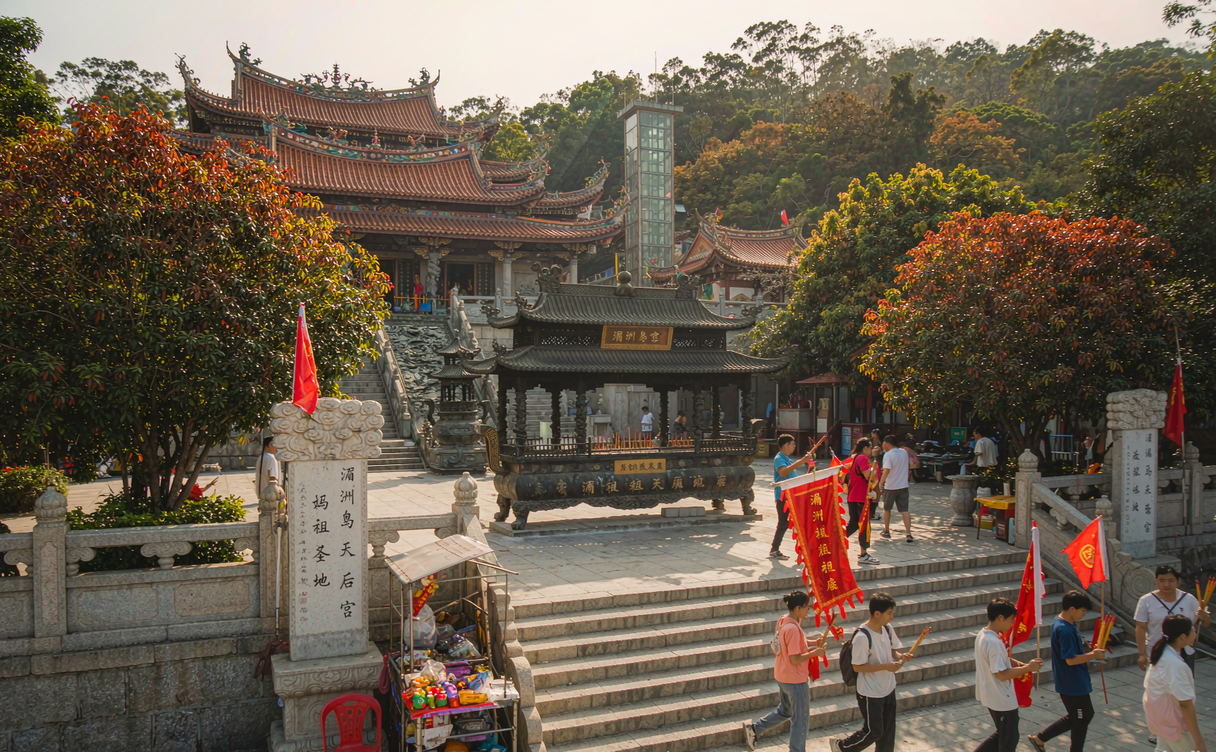
The spiritual core is the Mazu ancestral temple Meizhou Island, perched on the southern hill above the sea. The current complex dates from a Ming restoration on Tang foundations, with tiered stone halls climbing the slope and a towering golden Mazu statue (14 metres, plus a 99-metre hilltop monument version farther north) looking out over the strait she is said to guard. Pilgrims climb the broad stairway carrying incense and red banners, and the air is thick with sandalwood. Even as a non-believer I found the procession moving — families who have travelled from Malaysia, Singapore, and the wider Fujian diaspora all converge here as if to a family shrine.
The temple’s lower courtyard has a small museum of Mazu folklore and a hall of votive plaques donated by overseas communities. Dress modestly (cover shoulders and knees) out of respect; the monks are welcoming but the space is active worship, not a photo set.
Above the old temple stands the 99-metre Mazu monument on the northern hill, a modern granite colossus visible from the ferry approach. I hiked up one cool morning and found the viewing terrace empty, with the whole island laid out below like a green fan opening onto the strait. It is a twenty-minute walk from the ancestral temple and worth the effort for the perspective alone — you see exactly why the goddess was thought to watch over these waters.
Meizhou Island beaches
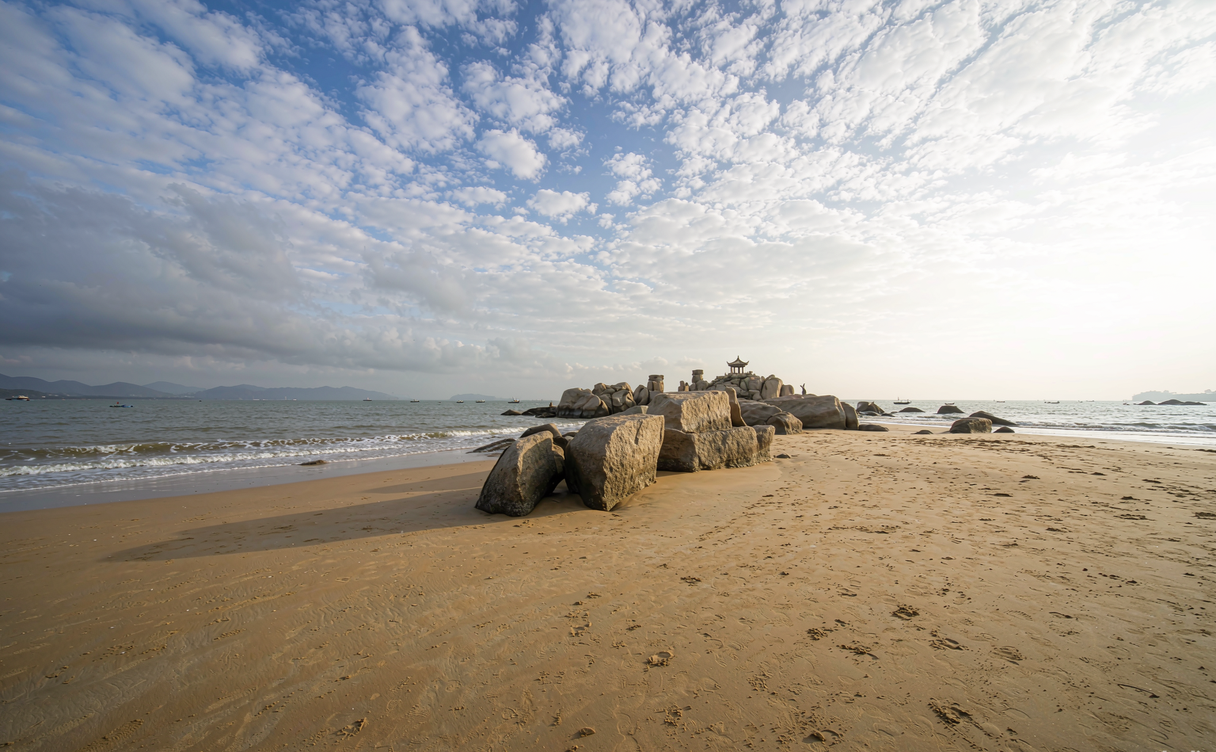
Beyond the incense, the island is a real beach destination. Meizhou Island beaches centre on two spots: Huangjinsha (Golden Sand) beach on the east coast, a wide sweep of pale gold sand backed by low granite rocks, and the smaller coves near the northern monument. Huangjinsha is the lively one, with breezy cafés, paddle boats, and shallow water safe for kids at mid-tide. I came here at 6 a.m. and had the wet sand to myself as the fishing boats came in — that early walk was the highlight of my stay.
The water is clean but bracing; this is the open strait, not a sheltered lagoon, so swim with care and heed the flags. For a broader survey of China’s shoreline, our China beaches guide ranks Meizhou among the more culturally interesting island beaches, and pairs it with quieter sands further south.
Mazu birthday festival Meizhou
If you can time it, the Mazu birthday festival Meizhou is the island at full volume. Celebrated on the 23rd day of the third lunar month (usually April), it draws hundreds of thousands of pilgrims for dawn ceremonies, processions of the goddess’s sedan chair, folk opera on open-air stages, and fireworks over the harbour. The atmosphere is joyful rather than solemn, with food stalls and lion dances running late into the night. Hotels sell out weeks ahead and ferry queues stretch for hours, so book both early and arrive a day before the climax.
A smaller but equally heartfelt event is the ascent festival in the ninth lunar month. Either way, festival timing transforms a pretty island into a once-in-a-lifetime cultural immersion — just budget patience for the crowds.
Best time to visit Meizhou Island
The best time to visit Meizhou Island is April to June and September to November, when the strait weather is mild, the sea is swimmable, and the skies are clear. July and August are hot and humid with the occasional typhoon warning — dramatic but disruptive to ferry schedules. Winter is cold and quiet, with some guesthouses closed, but the temple is serene and the off-season ferry is a breeze. Avoid the National Day week in early October unless you like crowds.
Where to eat and stay
Island food leans on the sea. I ate memorably on steamed grouper, stir-fried razor clams with ginger, and a local seaweed and tofu soup, washed down with the faintly sweet Putian litchi liquor. A seafood dinner for two runs ¥120–180 ($17–25) at a harbour-front restaurant. For regional context, our Fujian Min cuisine guide explains the lighter, umami-forward cooking style you’ll taste here, distinct from the richer fare of neighbouring provinces.
Accommodation ranges from basic temple-area guesthouses (¥150–250 / $21–35 a night) to newer seaside hotels near Huangjinsha (¥400–700 / $55–97). I stayed at a family-run place a five-minute walk from the temple; simple, spotless, and with the best congee breakfast of my trip. Book through the Chinese platforms, as few list internationally. If you want island-hopping context, our China ferry island hopping guide compares the Meizhou crossing with others along the Fujian and Guangdong coasts.
Insider tips
- Take the first ferry out and the last one back if you’re day-tripping; midday is when the heat and crowds peak.
- Rent the e-bike — the temple, beaches, and statue are spread out and walking the whole loop is tiring in the sun.
- Carry cash for small temple offerings and the bicycle lockers; rural Fujian payment apps can be flaky for foreigners.
- Pair Meizhou with nearby cities: the Xiamen travel guide and the Pingtan Island guide make a logical coastal sequence, with ferries and fast trains linking them.
Meizhou is the rare place that works as both pilgrimage and holiday. One morning you are breathing incense on a thousand-year-old stairway; that afternoon you are barefoot on gold sand watching the fishing boats. For the goddess behind it all, the Mazu (goddess)) entry traces how a Putian girl became the patron of seas from Fujian to Southeast Asia.