

There is a saying in Fuzhou that a meal without soup is not a meal. It is not a figure of speech. Sit down in an ordinary restaurant in coastal Fujian and soup will arrive first, arrive again in the middle, and quite possibly close the meal — clear, deep, faintly sweet, tasting of things pulled out of the water that morning. This Fujian Min cuisine guide covers the eighth and least understood of China’s great regional traditions: what makes it different, which dishes to order in Fuzhou, Xiamen and Quanzhou, and how to eat well for under ¥100 a day.
Content Preview
- What Min cuisine is and where the name comes from
- The two schools: Fuzhou north, Minnan south
- Buddha Jumps Over the Wall and the soup obsession
- Dishes to order, with Chinese names and pinyin
- Where to eat it in Fuzhou, Xiamen and Quanzhou
- Practical tips on prices, street stalls and tea
- FAQ
What Is Min Cuisine?
Min (闽) is the single-character abbreviation for Fujian province, the mountainous, deeply indented coastline of southeast China. Ask a chef what is Min cuisine and you will get three answers: soup, umami, and restraint.
The province has almost no flat land. What it has is 3,700 kilometres of coast, warm water full of oysters, clams, razor shells, small squid and eel, and a mountain interior producing bamboo, mushrooms and some of the best tea in the country. Fujianese cooking is built from those two larders. Flavours lean sweet-sour and savoury rather than hot; knife work is fine; and stock is treated as a dish rather than a base.
Two ingredients mark it out immediately. The first is hongzao (红糟), the red lees left over from brewing rice wine, used as a marinade and cooking medium that turns chicken, pork and fish a deep rose colour and adds a winey tang you will not meet anywhere else in China. The second is shacha (沙茶), a nutty, mildly spicy sauce of dried shrimp, peanuts, garlic and chilli that arrived with Fujianese traders returning from Southeast Asia. Between them they explain about half the menu.
The Two Schools: Fuzhou and Minnan
Fujian is really two food cultures that happen to share a province.
Fuzhou (northern Min) is the refined half — the school that produced the province’s banquet dishes. It leans heavily on clear stocks, red wine lees, sweet-sour combinations and springy textures made by pounding fish or pork into paste. Fuzhou fish balls have a pork filling inside a bouncy white shell; taiping yan wraps a wonton in a skin made from pounded pork rather than flour.
Minnan (southern Min), covering Xiamen, Quanzhou and Zhangzhou, is the street-food half. Saltier, snackier, heavier on peanuts and shacha, closer to the cooking of the overseas Fujianese communities across Southeast Asia. This is where the oyster omelette, satay noodles and ginger duck live, and where the best eating happens standing up.
Do not treat them as interchangeable. A traveller who eats only in Xiamen will conclude Fujian food is street snacks; one who eats only in Fuzhou will conclude it is soup. You want both.
Buddha Jumps Over the Wall and the Soup Obsession
The most famous of all Fujian seafood soup dishes is Fotiaoqiang (佛跳墙), Buddha Jumps Over the Wall. The name comes from a poem about a monk abandoning his vows when he smelled it cooking next door.
It is less a soup than an archive. Sea cucumber, abalone, scallop, fish maw, quail egg, pork tendon, mushroom, bamboo shoot and Shaoxing wine are layered into a sealed clay jar and steamed for hours, sometimes overnight, so that nothing tastes of itself and everything tastes of the whole. A serious version at a Fuzhou banquet restaurant costs ¥300–900 per person. Single-portion jars at mid-range places run ¥80–180, and honestly, that is where most travellers should start.
Around it sits the rest of the soup repertoire: clam and ginger broth, eel soup, mianxian hu (a Quanzhou breakfast of vermicelli cooked to a savoury slurry with oyster and duck), and the peanut soup of Xiamen, which is sweet and served for breakfast. If soup at 7am sounds strange, give it three days.
Dishes to Order: A Fujian Min Cuisine Guide to the Table
These are the best Fujian dishes to try, split roughly north and south. Show the Chinese characters — English menus thin out fast once you leave hotel districts.
| Dish | Chinese / pinyin | What you get |
|—|—|—|
| Buddha Jumps Over the Wall | 佛跳墙 / fótiàoqiáng | Sealed jar of seafood and pork steamed for hours; the province’s banquet dish |
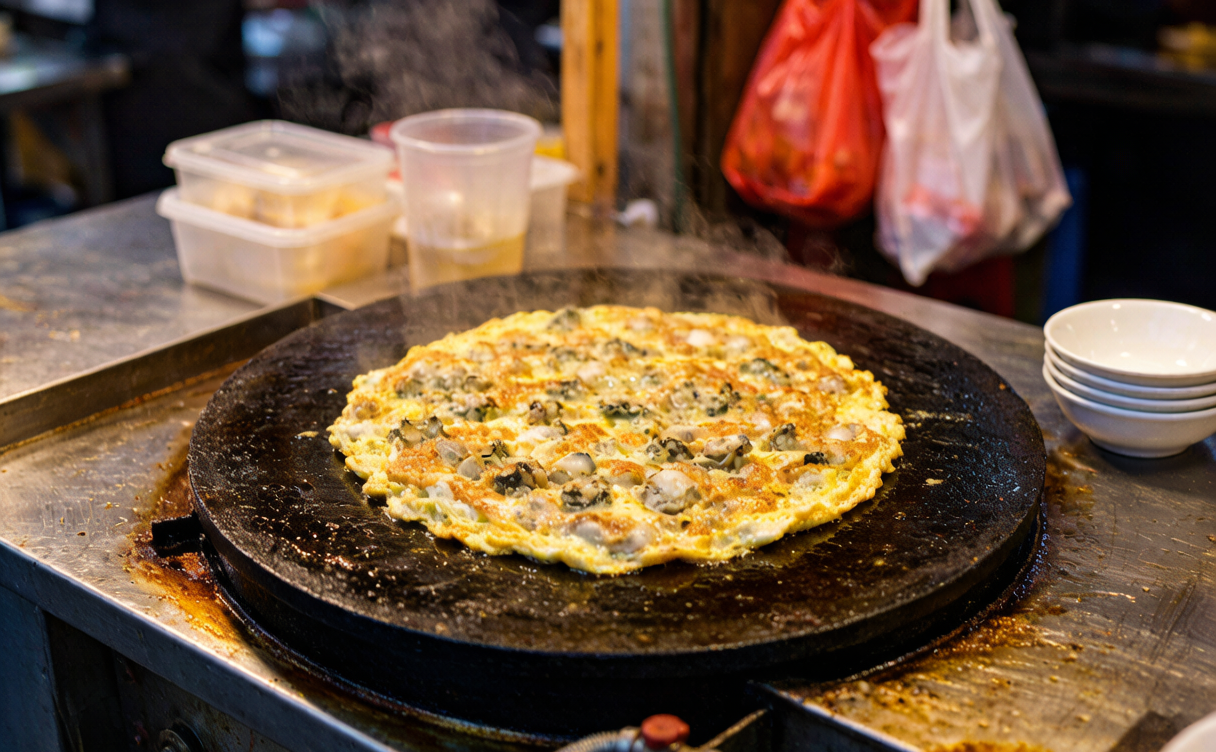
| Oyster omelette | 海蛎煎 / hǎilìjiān | Small oysters and egg bound with sweet potato starch, fried chewy-crisp, sweet chilli sauce |
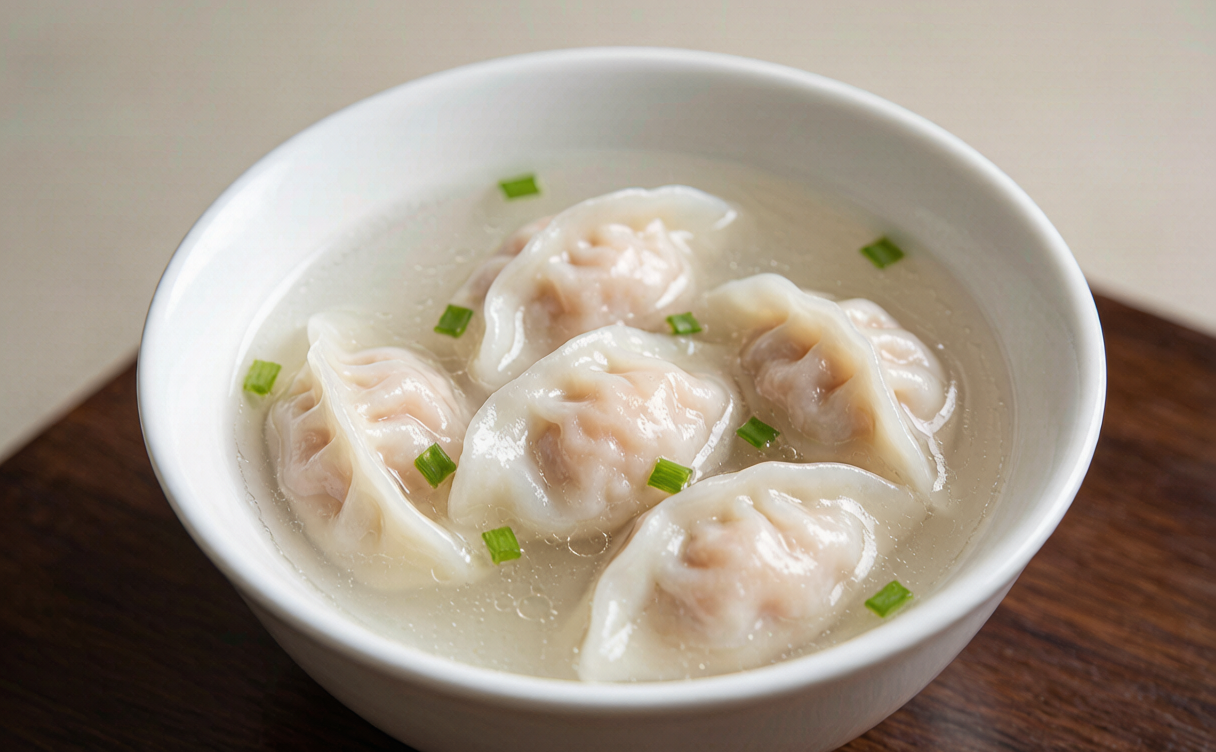
| Fuzhou fish balls | 福州鱼丸 / fúzhōu yúwán | Bouncy fish-paste spheres with a savoury pork filling, in clear broth |
| Meat-skin wontons | 太平燕 / tàipíng yàn | Wontons wrapped in a skin pounded from pork, not flour; a celebration dish |
| Shacha noodles | 沙茶面 / shāchá miàn | Noodles in peanut-satay broth; pick your own toppings at the counter |
| Red lees chicken | 红糟鸡 / hóngzāo jī | Chicken braised in rose-coloured fermented rice wine lees |
| Lychee pork | 荔枝肉 / lìzhīròu | Pork scored so it curls into lychee shapes when fried, sweet-sour and crisp |
| Ginger duck | 姜母鸭 / jiāngmǔ yā | Duck stewed with old ginger and sesame oil in a clay pot; winter food |
| Vermicelli paste | 面线糊 / miànxiàn hú | Quanzhou breakfast slurry of fine noodles with oyster, duck or intestine |
| Sandworm jelly | 土笋冻 / tǔsǔndòng | Cold savoury jelly set from coastal sandworms; the local dare |
A word on the oyster omelette Fujian makes, since versions of this dish appear all around the region. The Minnan original uses a high proportion of sweet potato starch, which gives it a chewy, almost gluey interior rather than a fluffy one, plus garlic chives or sweet potato leaf and small local oysters. It is meant to be soft in the middle and lacy at the edges. If yours is crisp all the way through, you got a compromise version.
Where to Eat It
Fuzhou. The provincial capital is where to eat Fuzhou food properly and it is barely on the tourist trail. Head to the Sanfang Qixiang (Three Lanes and Seven Alleys) quarter for restaurants around a restored Ming and Qing street grid, then walk five minutes out of it for half the price. Fish ball and taiping yan shops open from 06:30. Budget ¥30–60 for a filling breakfast, ¥90–160 per head for dinner with a shared jar of Fotiaoqiang. Our Fuzhou travel guide covers where to base yourself.
Xiamen. The easiest city in the province for first-timers: clean, walkable, English signage in places, and an outstanding snack scene around Bashi Market and the lanes behind Zhongshan Road. Come for shacha noodles, oyster omelette, peanut soup and satay. Prices are the highest in Fujian and still low — ¥15–35 per snack. See our Xiamen travel guide for neighbourhoods.
Quanzhou. The best eating in the province, and the most historically interesting. This was the greatest port in medieval China, its harbour listed by UNESCO as Quanzhou: Emporium of the World in Song-Yuan China, and the food still shows the trade routes — sandworm jelly, popiah wraps, mianxian hu, beef soup shops run by Hui Muslim families for centuries.
Practical Tips
Eat breakfast out. Fujian’s best cheap food is served before 09:00 — fish balls, mianxian hu, peanut soup, popiah. Hotel buffets are a waste of a morning here.
Prices. Street snacks ¥8–25, a bowl of shacha noodles ¥18–30, sit-down dinner ¥60–120 per person, banquet with real Fotiaoqiang ¥300 and up. Alipay and WeChat Pay work everywhere, including at market stalls.
Order soup deliberately. Restaurants assume you want one. If you do not, say so early, or you will be paying for it.
Seafood pricing. At tank-and-tray restaurants you choose live seafood by weight before cooking. Ask for the per-jin price (1 jin = 500g) and confirm the total before you nod. This is normal practice, not suspicion.
Heat is not the issue. Almost nothing here is chilli-hot. Textures are — bouncy, jellied, slippery. That is the real adjustment for most visitors.
Tea is part of the meal. Fujian produces oolong, white tea and Fuzhou’s jasmine, and a small brewing tray will appear on your table constantly.
FAQ
Is Fujian food spicy?
Rarely. The dominant flavours are savoury, sweet-sour and wine-scented. Shacha sauce carries mild warmth from chilli, but nothing in the tradition approaches Sichuan or Hunan heat.
Which city should I go to for the best Fujian food?
Quanzhou for street food and history, Fuzhou for the classic banquet dishes and fish balls, Xiamen for convenience and variety. If you only have two days, Quanzhou and Xiamen sit 90 minutes apart by train and make an easy pair.
How much does Buddha Jumps Over the Wall cost?
A single-portion jar at a mid-range Fuzhou restaurant costs ¥80–180 (US$11–25). Full banquet versions with abalone and sea cucumber run ¥300–900 per person and need booking a day ahead, since the dish steams for hours.
Is the oyster omelette here the same as elsewhere?
The Minnan version uses more sweet potato starch, so it is chewier and softer in the centre, with small local oysters and garlic chives, finished with sweet chilli sauce. Neighbouring regions fry theirs crisper and drier.
Can vegetarians eat well in Fujian?
It is harder than in most provinces, because stock, dried shrimp and lard turn up everywhere. Buddhist restaurants near the big temples in Fuzhou, Xiamen and Putian are the reliable option and cook genuinely well.
Written by Karl · Updated August 6, 2026