

Most foreign travelers blow through Shandong chasing the headline names — Confucius in Qufu, the springs of Jinan, the beer and beaches of Qingdao. Dezhou rarely makes that first list, and that is exactly why it rewards the curious. Sitting on the northern plain where the Grand Canal once carried the empire’s grain, this modest city has two claims to international fame: it is a living waypoint on the Beijing–Hangzhou waterway, and it gave the world Dezhou braised chicken, a fragrant, five-spice delicacy sold from Hainan to Harbin. A Dezhou travel guide is really a story about slow transport, slower cooking, and the quiet pride of a place that fed a nation by rail and by canal.
How to Get to Dezhou
Dezhou sits on the Beijing–Shanghai high-speed rail line, which makes it one of the easiest small cities in the north to reach without a car. Trains from Beijing South take roughly one hour, and services from Jinan run even more frequently at around 30 to 45 minutes. If you are building a Shandong loop, pair it with the provincial capital using our Jinan travel guide as a base, then hop north. For first-time visitors trying to decode the ticketing system, our China high-speed train guide for foreigners walks through booking, seat classes, and the ID requirements at the gate. Qingdao, on the coast, is also reachable in under three hours, so a Qingdao travel guide detour is realistic on the same trip.
The city’s station, Dezhou East, is modern and signposted in English, with taxi ranks and ride-hailing pickup zones clearly marked. From there, the central districts are a short, inexpensive ride. Buses connect to neighboring counties, but for the canal sights and the food streets you will mostly walk or take a short cab.
Getting Around Dezhou
Once you arrive, Dezhou is easy to navigate on foot in the core. For the canal belt and the museum district, ride-hailing apps such as DiDi work smoothly and cost only a few yuan for most trips. City buses are cheaper still but rarely show English routes, so they suit confident travelers. If you plan to visit nearby counties or combine Dezhou with a Tai’an day trip, a regional train is faster than any bus. Keep your hotel’s name in Chinese on your phone to show drivers, and you will rarely go wrong.
Things to Do in Dezhou
The single biggest mistake is treating Dezhou as a drive-through. Give it a full day and the texture appears.
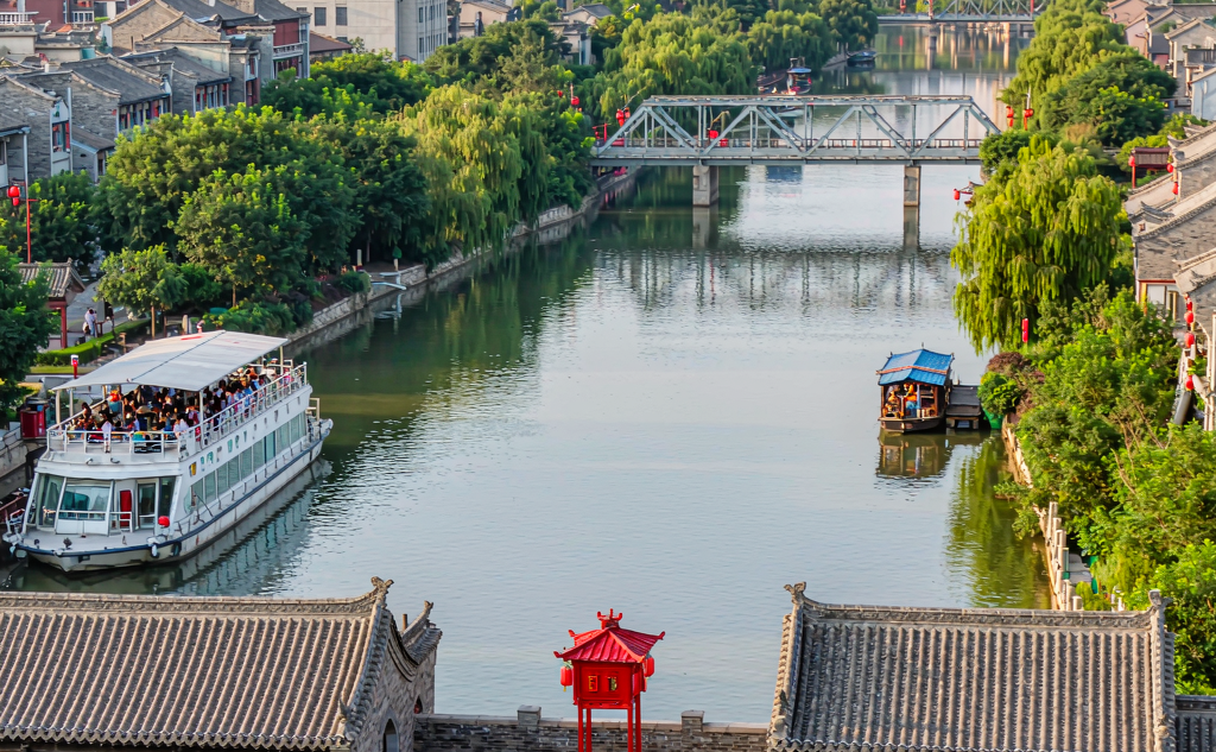
The Grand Canal heritage belt. Dezhou’s fortune was the canal, and although the waterway no longer hums with barges, the embankments, old wharves, and restored bridge arches remain. A riverside stroll here is calm and local — elderly residents practice tai chi, vendors sell roasted seeds, and the brickwork tells a 600-year story. The Dezhou Grand Canal section is part of the larger Beijing–Hangzhou system inscribed by UNESCO; you can read the broader context on the Grand Canal (China) on Wikipedia). For a deeper dive into the route itself, our China Grand Canal travel guide maps the towns worth visiting end to end.
Mt. Tai nearby. Dezhou is a sensible launch pad for the sacred peak to the south. The Tai’an travel guide covers the climb and the cable-car options for those who would rather not summit on foot.
The Chicken Culture Museum. Yes, there is a museum devoted to the city’s signature dish. It is small, a little kitschy, and genuinely interesting — you learn how a humble poultry recipe became a national brand and a railway-station staple.
Parks and pagodas. The city keeps several green belts and a few restored temples where you can watch ordinary life unfold. None are world-famous, but together they make Dezhou feel like a real place rather than a transit stop.
Dezhou Braised Chicken and What Else to Eat
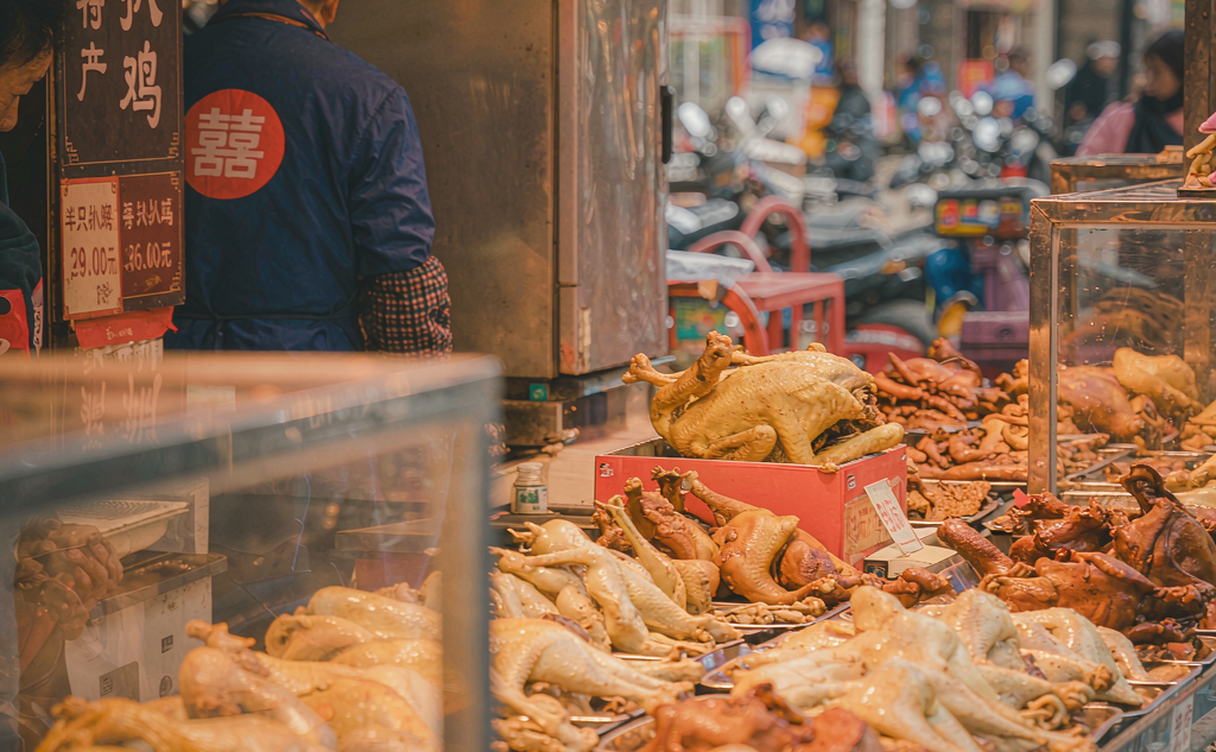
You cannot write a Dezhou travel guide without bowing to the chicken. Dezhou braised chicken (德州扒鸡) is simmered slowly with star anise, cinnamon, fennel, and a proprietary blend of aromatics until the meat slides off the bone. Theauthentic shops near the old station have queued for it since the Qing dynasty, and the vacuum-packed versions sold citywide make an easy souvenir that survives the trip home.
Beyond the bird, Dezhou eats like the northern plain it sits on: wheat noodles, stuffed buns, savory pancakes, and lamb stews in winter. The night market scene is friendly and cheap, with skewers, fried cakes, and soy-milk breakfasts that reward early risers. If you want to frame Dezhou’s table within the province’s culinary identity, our Shandong Lu cuisine guide explains the subtle, umami-forward style that defines the region.
A practical note for visitors with dietary limits: spice levels here are mild compared with Sichuan or Hunan, and most stalls are happy to point out vegetarian options. Language is the only barrier, so a translation app and a screenshot of your hotel address go a long way.
Best Time to Visit Dezhou
Northern China has four sharply defined seasons, and timing shapes the trip. The best time to visit Dezhou is spring (April to May) and autumn (September to October), when temperatures sit in a comfortable range and the canal embankments turn green or golden. Summers are hot and humid, sometimes topping 35°C, while winters are dry, grey, and cold enough that the braised-chicken stalls feel like salvation. The autumn harvest period also brings the liveliest markets.
If you are coordinating a wider Shandong–Hebei route, build the calendar around the same windows — the high-speed network means you can chase good weather across cities in a single day.
Where to Stay and How Long
Dezhou is not a resort town, so lodging is practical rather than scenic: clean business hotels near Dezhou East and the old city center, plus the occasional international chain. Budget travelers will find comfortable mid-range options under RMB 300 a night. Two nights is plenty to eat well, walk the canal, and use the city as a rail hub for Tai’an or Jinan.
Getting around. The core sights are walkable. For the museum and outer parks, ride-hailing apps work fine and fares are low. Keep some cash for tiny stalls that still prefer it.
A Practical Day Plan
Arrive by morning train, drop bags at the hotel, and head straight to the canal embankment before the heat builds. Lunch on braised chicken and noodles near the old station, then spend the afternoon at the Chicken Culture Museum and a riverside park. Evening belongs to the night market. If energy allows, reserve day two for a rail hop to Tai’an and the sacred mountain.
Why Dezhou Belongs on Your List
Dezhou will not seduce you with postcard peaks or ancient walls. What it offers is authenticity on a human scale — a working Chinese city where the headline attraction is lunch, the waterways whisper imperial history, and the welcome is unpretentious. For travelers who have already ticked Beijing and Shanghai, places like this are where the country starts to feel understood rather than observed.