

Most travelers arrive in Tai’an for one reason: the mountain that rises straight out of the city’s northern edge. Mount Tai (Taishan) is the foremost of China’s Five Great Mountains, a UNESCO World Heritage site, and the peak that emperors climbed for two thousand years to announce their legitimacy to heaven. This Tai’an travel guide covers the 6,660 stone steps of the classic pilgrim route, the summit sunrise that people stay awake all night for, and the magnificent Dai Temple down in the old town — plus the trains, prices, and timings you need to make it work. Tai’an itself is a friendly, unpretentious Shandong city, and it deserves more than a rushed dawn dash.
Why Mount Tai Matters
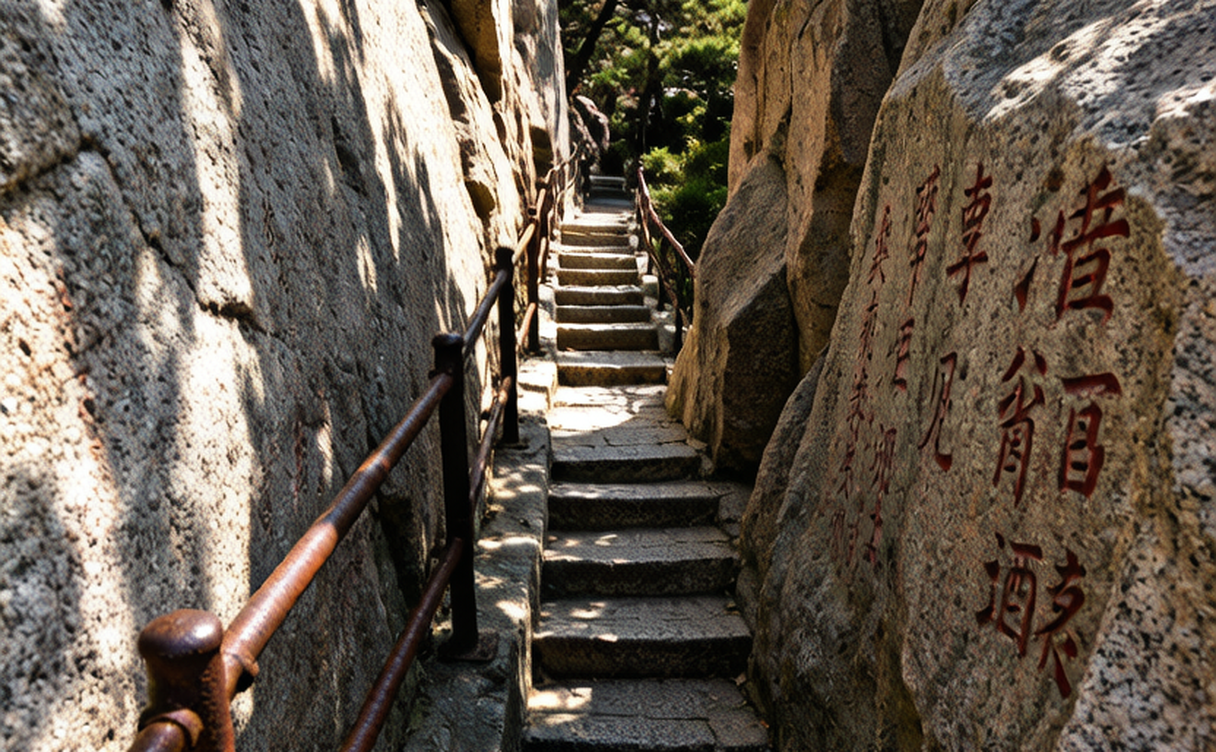
Taishan is not tall — roughly 1,545 metres, modest by Chinese standards. Its stature is cultural. Standing alone above the flat Shandong plain, it was seen as the point where earth met sky, and at least twelve emperors performed the fengshan sacrifices on its summit. Confucius climbed it; so did Du Fu. The result is an open-air museum of more than 1,800 rock inscriptions and twenty-odd temples linked by a hand-carved stairway. UNESCO listed it in 1987 as a mixed cultural and natural site — see the official UNESCO World Heritage listing for Mount Taishan.
Best Time to Visit Tai’an
The best time to visit Tai’an is late April to early June or mid-September to late October. Spring brings city temperatures of 15–24°C with blossom along the lower trail; autumn is drier and clearer, 14–22°C in town, and gives the highest odds of an unobstructed sunrise.
Summer (July–August) averages 26–28°C with highs near 33°C and heavy humidity, though the summit sits 8–10°C cooler. The catch is cloud: these are the wettest months, and mist swallows the sunrise more often than not. Summit rooms also triple in price.
Winter (December–February) drops to −5 to 4°C in the city and well below freezing on the ridge, with ice on the Eighteen Bends. Crowds vanish and hotel rates halve, but you need boot spikes. Avoid the first week of October, when the steps become a slow-moving queue. Our guide to the best time to visit China compares regions month by month.
How to Get There
Tai’an sits on the Beijing–Shanghai high-speed line, which makes it one of the easiest heritage sites in China to reach. Note the two stations: Tai’an Station (泰安站) is the high-speed station about 10 km west of the centre, while the older Taishan Station sits downtown and handles slower trains.
| From | Option | Time | Approx. Cost |
|—|—|—|—|
| Jinan | High-speed train to Tai’an | 20–25 min | ¥40 (US$6) |
| Beijing South | High-speed train | 2–2.5 hr | ¥185 (US$26) |
| Shanghai Hongqiao | High-speed train | 3.5–4 hr | ¥450 (US$63) |
| Qingdao | High-speed train | 2.5–3 hr | ¥190 (US$27) |
| Nanjing South | High-speed train | 2.5 hr | ¥310 (US$44) |
| Jinan Yaoqiang Airport (TNA) | Airport shuttle bus | ~1.5 hr | ¥50 (US$7) |
| Tai’an Station | Bus 37 to Red Gate trailhead | 40 min | ¥2 (US$0.30) |
Once in town, city buses 3, 4 and 37 link the stations, Dai Temple and the trailheads for ¥2, and Didi rides across Tai’an rarely exceed ¥20. If this is your first bullet-train booking, our China high-speed train guide for foreigners explains passport ticketing and station procedures.
Climbing Mount Tai: The Routes
The Red Gate Route (the classic)
The pilgrim route starts at Red Gate (Hongmen) on the city’s northern edge and climbs roughly 6,660 stone steps over about 9 km to the summit. Allow 4–6 hours up at a steady pace. The trail passes the Doumu Palace, the Sutra Rock Valley where a Buddhist text is carved into a streambed, and dozens of inscriptions before reaching Midway Gate to Heaven (Zhongtianmen) — the halfway point, with noodle shops and toilets.
From Zhongtianmen the trail flattens briefly, then hits the Eighteen Bends (Shibapan), a brutal near-vertical staircase of about 1,600 steps that gains 400 metres. It ends at the stone arch of South Gate to Heaven (Nantianmen), the mountain’s signature image. Beyond it runs Heavenly Street, a ridge-top lane of guesthouses and shops leading to Bixia Temple and, at the top, Jade Emperor Peak.
Shortcuts
You do not have to walk it all. A bus from Tianwaicun runs to Zhongtianmen (about 40 minutes, ¥30/US$4), and a cable car covers Zhongtianmen to Nantianmen in 8 minutes (about ¥100/US$14 one way). Together they put you on the summit in roughly 90 minutes — ideal for families or anyone short on time.
Sunrise on the summit
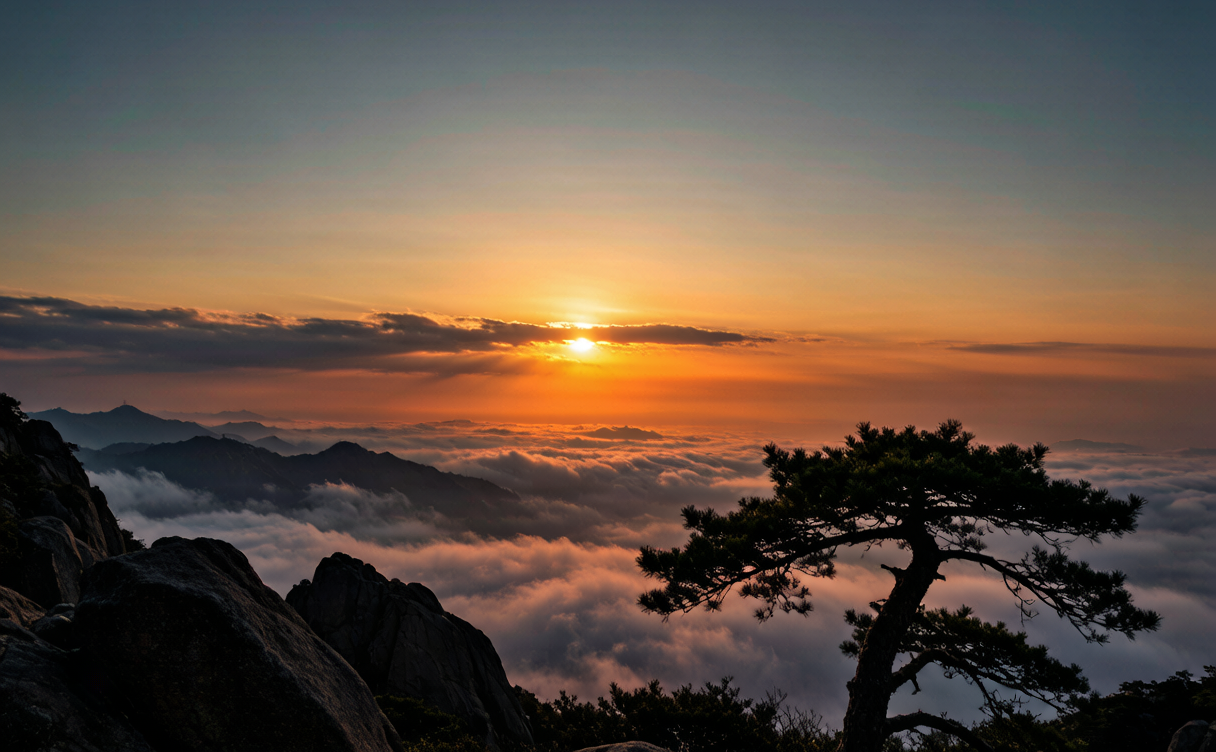
The sunrise is the point for most Chinese visitors. Two strategies work: the traditional night climb, starting at Red Gate around 10pm–midnight with a headtorch alongside a surprising number of others, or a summit guesthouse and a fifteen-minute walk to Riguan Peak. Sunrise falls around 04:50 in June and 07:00 in December, and it is cold up there year-round — vendors rent thick army coats for ¥30–50.
Dai Temple and the Old Town
Do not skip Dai Temple (Daimiao) in the centre of Tai’an, where emperors purified themselves before ascending. Its Song-dynasty Hall of Heavenly Blessing ranks among the three great palatial halls in China, alongside those in Beijing and Qufu, and holds an enormous eleventh-century mural of the mountain god’s procession. Entry around ¥50 (US$7), typically 08:00–17:30; give it two hours. North of the temple, Tongtian Street is a restored pedestrian lane running toward the trailhead — touristy but atmospheric after dark.
Where to Stay
Around Dai Temple / city centre — the best base for most travellers. Comfortable three- to four-star business hotels run ¥250–450 (US$35–63) per night, and clean budget chains sit at ¥140–200 (US$20–28). You are walking distance from restaurants and a short bus ride from Red Gate.
Near Hongmen trailhead — small guesthouses and mid-range hotels at ¥180–350 (US$25–49), handy if you plan a pre-dawn start.
On the summit (Heavenly Street) — basic guesthouses with shared or small private bathrooms, ¥400–900 (US$56–127) in peak season, dropping to ¥200–300 midweek in winter. Rooms are spartan and heating is inconsistent, but waking up ten minutes from the sunrise viewpoint is worth it. Book several days ahead in summer.
What to Eat in Tai’an
Shandong food is hearty, garlicky and under-appreciated abroad. Local specialities among the things to do in Tai’an that involve a table:
- Taishan Three Beauties (泰山三美) — a deceptively simple soup of white tofu, napa cabbage and mountain spring water. Order it once; the tofu really is different.
- Taishan chestnuts — small, sweet, roasted in woks of black sand from autumn onward.
- Shandong jianbing — thin grain crêpes wrapped around scallion, sauce and crisp fritter, ¥6–12 from morning stalls.
- Braised mountain vegetables and wild mushrooms — served in trailside restaurants around Hongmen.
- Feicheng peaches — a nearby county’s famous crop, in season late June to August.
For dinner, head to the night-market lanes east of Dai Temple, where skewers, cumin lamb and cold beer cost a fraction of big-city prices.
Sample Itinerary: Two Days in Tai’an
Day 1
- 09:00 — Arrive by high-speed train; drop bags at a city-centre hotel.
- 10:00 — Dai Temple (2 hours), then lunch on Tongtian Street.
- 14:00 — Walk the lower Red Gate section to Doumu Palace and back, or visit the Taishan Museum.
- 18:00 — Dinner: Taishan tofu soup and skewers near the temple.
- 22:30 — Optional night climb from Red Gate.
Day 2 (day-climb version)
- 06:00 — Bus 3 or Didi to Tianwaicun; bus to Zhongtianmen.
- 07:00 — Climb Zhongtianmen to Nantianmen via the Eighteen Bends (2–2.5 hours).
- 10:00 — Heavenly Street, Bixia Temple, Jade Emperor Peak, and the inscription cliff.
- 12:30 — Noodles on Heavenly Street.
- 13:30 — Cable car down, bus to town.
- 16:00 — Late-afternoon train onward to Jinan, Qufu or Beijing.
Practical Tips
- Tickets: Mount Tai entry is about ¥115 (US$16) in peak season (February–November) and ¥100 off-peak; students and over-60s get discounts. Buy via the official scenic-area WeChat mini-programme or at the gate with your passport.
- Hours: the mountain is open 24 hours — the reason night climbs are possible. Cable cars typically run 08:00–17:00, extended in summer.
- Payment: Alipay and WeChat Pay dominate, and both now accept foreign cards. Still carry ¥200–300 in cash for trail vendors and coat rentals.
- Language: English is limited outside major hotels. Use an offline translation app — signal is patchy on the upper trail.
- Gear: proper shoes, a windproof layer even in July, 1.5 litres of water, and a knee brace if you plan to walk down.
- Luggage: both stations have lockers, and most hotels store bags free on climb day.
FAQ
How hard is the climb up Mount Tai?
Physically demanding but technically easy — it is all stairs, with handrails on the steep sections. A reasonably fit adult can climb Red Gate to the summit in 4–6 hours; the Eighteen Bends is the crux. If in doubt, bus to Zhongtianmen and climb only the final section.
Can I do Mount Tai as a day trip from Beijing?
Yes, but it is a long day: 2 hours each way by train plus a bus-and-cable-car ascent, leaving around 06:30 and returning near midnight. One night in Tai’an is far more enjoyable.
Is it worth staying overnight on the summit?
If sunrise matters to you, yes. Summit rooms are basic and overpriced, but the alternative is a midnight climb. Check the forecast — in cloudy weather you may pay peak rates for grey mist.
Do I need a guide?
No. Signage on the main route includes English and the path is impossible to lose. A guide adds value mainly for the inscriptions and imperial history at Dai Temple.
What are the best things to do in Tai’an besides the mountain?
Dai Temple, the Taishan Museum, Tongtian Street, and a half-day trip to Qufu’s Confucius Temple, 40 minutes away by high-speed rail. For broader route planning, see our China travel guide for first-timers.
Written by Karl, last updated August 4, 2026.