

The first thing you notice is the width of the roads. Baotou was laid out in the 1950s around a new steelworks by planners who assumed the city would grow forever, and the result is boulevards eight lanes across with a horizon you can actually see. The second is the grassland inside the city — 600 hectares with deer, ten minutes from a mall. This Baotou travel guide is for travellers using the largest city in the Inner Mongolia Autonomous Region of China as a base: a heavy-industry town within an hour or two of steppe, a fortress monastery, the Yellow River and one of the country’s great sand dunes.
Content Preview
- What Baotou is, and why it looks nothing like Hohhot
- Best time to visit
- How to get there, with a fare table
- Wudangzhao monastery, the Xilamuren steppe and the Yellow River wetlands
- Day trips to the Resonant Sand Gorge
- Where to stay, including yurt camps
- A two-day itinerary
- Mongolian food
- Practical tips
- FAQ
A Steel City on the Steppe
Baotou’s name comes from the Mongolian Bugat, “the place with deer” — hence the nickname Deer City and the statues on almost every roundabout. For most of its history it was a Yellow River trade-route caravan stop; the 1954 steelworks multiplied the population. The city also sits beside Bayan Obo, a vast rare-earth deposit.
The effect for a traveller is a useful contrast: a big, orderly, cheap Chinese city with good hotels — and thirty minutes out of town the buildings stop and the steppe begins. Compared with the regional capital in our Hohhot travel guide, Baotou has less old-town charm and better access to open country. The districts are far apart — Kundulun (昆都仑) west around the steelworks, Qingshan (青山) in the middle, Donghe (东河) east with the old caravan quarter and airport — so get this straight before booking.
Best Time to Visit Baotou
Mid-June to early September. The only period when the grassland is genuinely green. Days run 22–30°C and nights drop sharply — 10°C is normal in August on the steppe. Nadam festivals, with wrestling and horse racing, usually fall in July or August; dates shift, so ask locally.
May and late September. Cheap, clear and mostly empty, but the grass is either not up yet or already yellowing. September is the better of the two, with the wetlands full of migrating birds.
October to April. Cold, with January averaging around −10 to −15°C and grassland camps closed. March to May brings the dust-storm window, when Gobi winds can brown the sky for a day.
Baotou sits at roughly 1,000 metres and the grassland at around 1,500 — high enough that the sun burns and the nights bite, nowhere near high enough for altitude problems.
How to Get There
Two main stations: Baotou Station (包头站) in Kundulun handles most services, while Baotou East (包头东站) in Donghe is closer to the airport and old quarter. Fast D and G trains run frequently along the Hohhot–Baotou corridor.
| From | Mode | Typical duration | Approx. cost |
|—|—|—|—|
| Hohhot East → Baotou | High-speed / D train | 1 hr – 1 hr 20 min | ¥60–90 (US$8–13) |
| Beijing → Baotou | High-speed rail via Hohhot | around 4 hr | ¥320–420 (US$45–59) |
| Yinchuan → Baotou | High-speed rail | around 3 hr | ¥230 (US$32) |
| Baotou Donghe Airport (BAV) → city centre | Taxi | 30–40 min | ¥60 (US$8.50) |
| Baotou → Xilamuren Grassland | Car / chartered van | around 2 hr | ¥600–900 per day (US$84–126) |
| Baotou → Wudangzhao Monastery | Car or bus from Donghe | 1 hr 15 min | ¥50 bus / ¥300 return taxi |
| Baotou → Resonant Sand Gorge (Xiangshawan) | Car | around 1 hr | ¥400–500 return (US$56–70) |
City buses cost ¥1–2 and Didi is cheap, but distances are long enough that most visitors hire a car with driver for at least one day. If Chinese rail booking is new to you, read our China high-speed train guide for foreign travellers — every ticket is tied to your passport number.
Things to Do: A Baotou Travel Guide to the Sights
Wudangzhao Monastery (五当召)
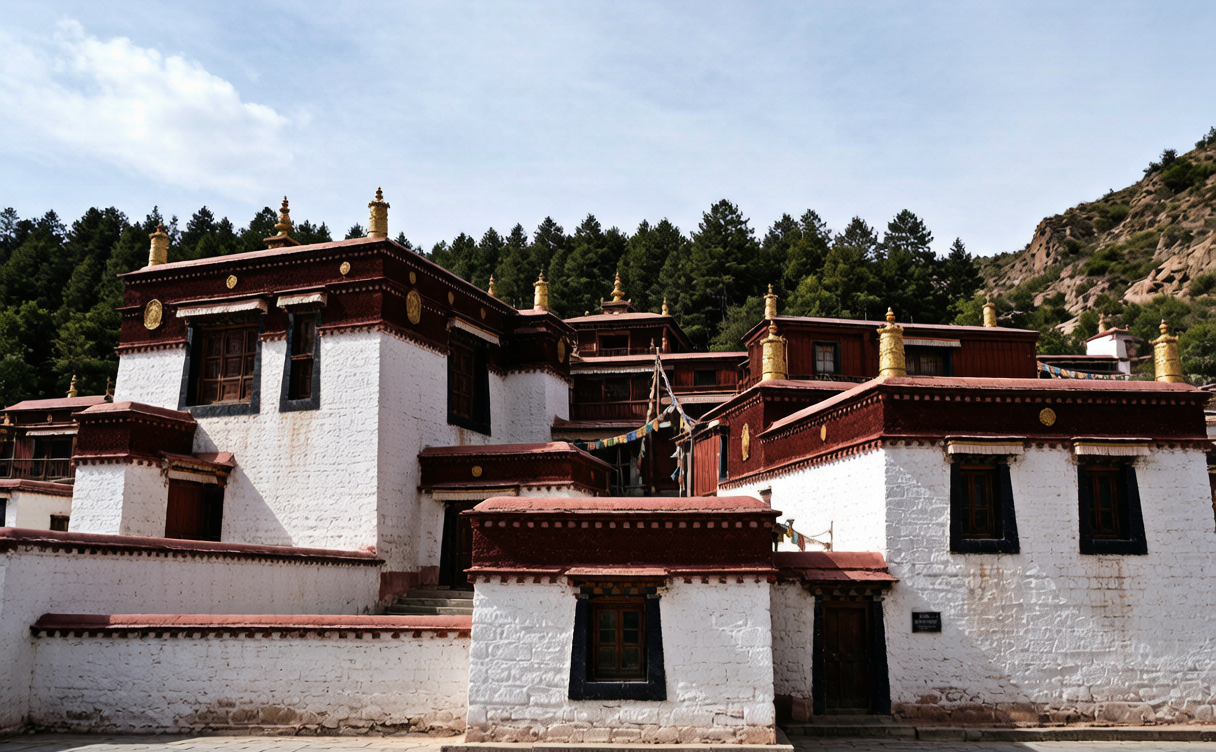
The single best reason to come. About 70 kilometres northeast of the city, up a dry valley in the Yinshan mountains, Wudangzhao is the largest Tibetan Buddhist monastery in Inner Mongolia and the only one here built entirely in Tibetan style — flat-roofed white blocks stacked up a hillside, red bands under the parapets, no Chinese curved eaves anywhere. Founded around 1749, it once housed over a thousand monks.
Climb the stone paths between halls; the main assembly hall has carpet-wrapped columns, smoke-darkened thangkas and rows of cushions, and a few monks still live here. Tickets around ¥60, open roughly 08:00–18:00 in summer, allow two hours. Little shade, no English signage.
Xilamuren Grassland (希拉穆仁)
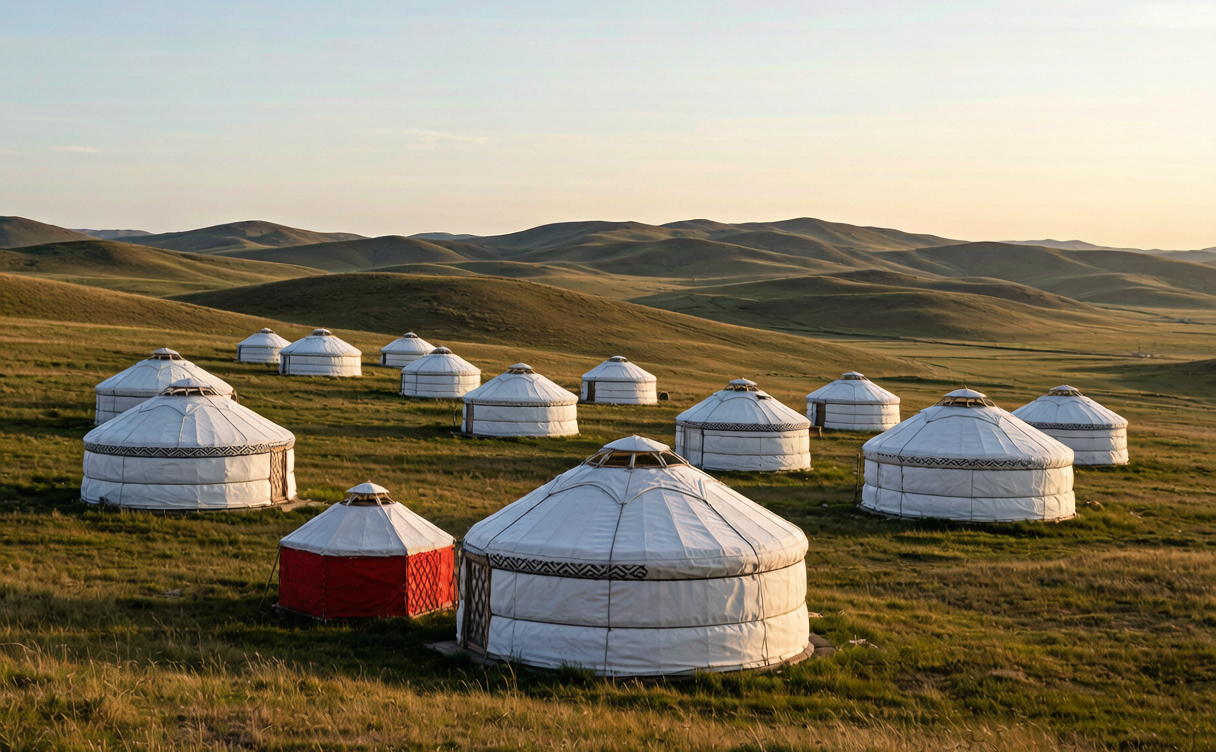
Xilamuren, in Damao Banner north of the city, is the closest true steppe to Baotou and the classic overnight trip. Be honest about what it is: commercial camps with concrete yurts, a silk-scarf welcome and a shot of baijiu, horse rides by the hour and an evening barbecue. Great fun with kids, and the night sky is spectacular — but not wilderness.
For untouched grass to the horizon you need the far northeast of the region, which our Hulunbuir grassland guide covers. Expect ¥300–600 per person at Xilamuren for a yurt bed, dinner and a horse ride, and agree the horse price before you mount.
Saihantala Urban Grassland (赛罕塔拉)
Baotou’s oddest asset: around 600 hectares of genuine steppe left inside the ring road, with sika deer, walking loops and grazing horses. Free. Not dramatic, but an hour at dusk tells you how this city sees itself.
The Yellow River and Nanhaizi Wetland (南海子湿地)
The Yellow River runs along Baotou’s southern edge, and Nanhaizi Wetland Park in Donghe protects lakes and reed beds on a major migratory flyway. Spring and autumn bring swans, cranes and waterfowl; summer is reeds and mosquitoes. Around ¥30, and go early.
Meidaizhao (美岱召) and Baotou Museum
West of the city, Meidaizhao is a walled Ming-dynasty fortress that served as both lama temple and residence for the Tumed Mongol leadership; the original wall paintings are remarkable, entry around ¥40. In town, the free Baotou Museum has a strong hall of Yinshan cliff rock art plus Mongolian ethnographic collections. Bring your passport.
Day Trip: The Resonant Sand Gorge
An hour south, across the Yellow River in Ordos, Xiangshawan (响沙湾) is a 100-metre dune face on the edge of the Kubuqi Desert that hums when the sand slides in dry weather. Thoroughly commercialised — cable car in, then sand boards, dune buggies, camel rides and a resort at the bottom, typically ¥150–240 with the cable car. Go anyway: standing on that dune with steppe behind and desert ahead is the geography lesson of the trip. Our Ordos travel guide covers the wider area.
Where to Stay
Budget — ¥120–220 (US$17–31). Chain hotels near Baotou Station in Kundulun and around Donghe’s old quarter. Clean; ¥150 goes a long way.
Mid-range — ¥300–550 (US$42–78). Qingshan and Kundulun business hotels. Kundulun is where I would base myself: good restaurants, walkable blocks, reasonable taxi times to both stations.
Splurge — ¥700–1,400 (US$99–197). Full-service hotels in Qingshan aimed at the mining and steel trade, often discounted midweek.
Yurt camps — ¥300–600 per person including meals. At Xilamuren, roughly June to September only. Concrete “yurts” with en-suite bathrooms are the norm; genuine felt gers cost more.
Confirm the property registers foreign guests — outside the main city hotels, many do not.
Food and Local Specialties
This is lamb country, and the cooking is direct.
- Shouba rou (手把肉). “Hand-grabbed meat”: mutton on the bone boiled in salted water and nothing else, eaten with a knife and chive sauce. The definitive steppe dish, and better than it sounds.
- Roast leg of lamb (烤羊腿). The showpiece, carved at the table. ¥180–300 for a leg that feeds three.
- Shaomai (稍麦). The local breakfast: open-topped mutton dumplings with paper-thin wrappers, ordered by weight. One liang is eight dumplings, more food than it sounds — start with half.
- Milk tea (奶茶). Salted, not sweet, brewed with brick tea and milk, sometimes with millet stirred in. Confusing on day one, addictive by day three.
- Youmian (莜面). Naked-oat dough steamed into little rolled tubes, served with mutton and potato broth.
- Milk curd (奶豆腐). Dried dairy snacks sold everywhere. An acquired taste; buy one piece first.
For more on how mutton is cooked across the region, see our Inner Mongolia lamb guide.
Sample Itinerary: Two Days
Day 1 — monastery and river
- 08:00 hire a car, drive northeast to Wudangzhao
- 09:15 two hours climbing between the monastery halls
- 12:30 lunch in the village below, then back via Meidaizhao
- 16:30 Nanhaizi Wetland or Saihantala at golden hour
- 19:00 roast lamb and milk tea in Kundulun
Day 2 — steppe or sand
- Option A: 08:30 to Xilamuren; horse riding and lunch on the grassland, back by 18:00, or stay the night in a yurt
- Option B: 09:00 to the Resonant Sand Gorge; cable car, dunes and a camel, back by 17:00
- 19:30 evening train or flight to Hohhot, Yinchuan or Beijing
Three days lets you do both, the version I would recommend.
Practical Tips
- Terminology. Inner Mongolia is an autonomous region of China, distinct from the neighbouring country of Mongolia. Everything here is in China.
- Distances. The thing people most underestimate: districts are 20–40 minutes apart and sights 1–2 hours out. A car with driver at ¥600–900 a day is sensible, not a luxury.
- Payment. Alipay and WeChat Pay accept foreign Visa and Mastercard and cover almost everything. Grassland camps and rural drivers sometimes want cash — carry ¥500–1,000 when you leave the city.
- Language. Signage is bilingual Chinese and Mongolian, almost never English. Book drivers through your hotel and have destinations in Chinese.
- Sun and temperature swing. Expect a 15°C drop between afternoon and night; pack a fleece even in July.
- Reservations. Wudangzhao and the larger parks increasingly want a free WeChat mini-program booking at weekends; hotel staff will do it.
- Alcohol. Grassland hospitality involves ceremonial baijiu. Touching the glass to your lips and flicking a drop skyward honours the ritual without drinking much.
FAQ
Is Baotou worth visiting?
As a destination in itself, only mildly — the city is functional rather than beautiful. As a base, yes: Wudangzhao is the best Tibetan-style monastery in the region, and no other city puts steppe, desert and the Yellow River within a two-hour radius. For background on the region, see Wikipedia’s overview of Inner Mongolia.
How many days should I spend?
Two full days covers the monastery plus either the grassland or the desert. Three lets you do both.
How do I get to Baotou from Hohhot?
Frequent D and G trains from Hohhot East take an hour to an hour and twenty minutes, around ¥60–90. Buy on the 12306 app with your passport number or at any station counter.
Is the grassland experience authentic?
The camps near Baotou are commercial and staged. Treat them as a comfortable introduction rather than a cultural encounter.
Do I need to worry about altitude?
No. At roughly 1,000 metres in the city and 1,500 on the steppe, altitude sickness is not a realistic concern. The dryness and temperature swing will affect you more, and grassland camps close in winter, when temperatures regularly sit below −10°C.
Written by Karl · Updated August 6, 2026