

Most travelers have heard of Ordos for the wrong reason: a “ghost city” headline about empty skyscrapers in the Kangbashi district. On the ground it is the opposite of deserted — a prosperous hub in Inner Mongolia, China where the Kubuqi Desert meets grassland, where the Mausoleum of Genghis Khan draws Mongolian pilgrims, and where you can ride a camel at dawn and tour a Tibetan-style lamasery by noon. This Ordos travel guide covers the desert resorts, the steppe, the genuine (and overstated) urban story, and how to reach it. For a different slice of the region’s grasslands, our Inner Mongolia Hulunbuir guide covers the far northeast plains.
Best Time to Visit Ordos
The best time to visit Ordos is late May through September, when the steppe is green and the desert is warm but not savage. Within that window, the rhythm matters. June brings the first green and the quietest resort prices — rooms in Kangbashi from RMB 300 (US$42) — while mid-July to August is when the Naadam-style events, wrestling, horse racing, and archery staged at the Genghis Khan Mausoleum, draw domestic tour groups and push resort packages to RMB 600–900 (US$84–126) a night. July and August are peak: grasslands at their lush best, the Naadam-style summer festivals around the Genghis Khan Mausoleum, and daytime highs around 24–30°C. The trade-off is crowds at Xiangshawan (Whistling Sand Bay) resort and full hotels in Kangbashi. September is the sweet spot — golden grassland, cooler desert, thin crowds. Avoid November through March: temperatures routinely fall to −15°C, the grassland turns to frozen dirt, and several desert attractions run reduced hours. For how Ordos fits a wider seasonal plan, our best time to visit China breaks down the northern-China window.
How to Get There
| From | Option | Time | Approx. Cost |
|—|—|—|—|
| Beijing → Ordos (Ejin Horo Airport, DSN) | Flight | ~2h + transfers | RMB 800–1,500 (US$110–210) |
| Hohhot → Ordos | High-speed train | ~1.5h | RMB 75–120 (US$11–17) |
| Baotou → Ordos | High-speed train / drive | ~1h | RMB 30–60 (US$4–9) |
| Xi’an → Ordos | Flight or train + bus | 3–4h | RMB 500–900 (US$70–125) |
| Ordos city transport | Taxi / DiDi | — | RMB 10–40 per ride |
The practical base is Hohhot, the Inner Mongolia regional capital: frequent high-speed trains put Ordos within 90 minutes, and Hohhot itself has an international airport with Beijing and Shanghai connections. Inside Ordos, the two centers are Dongsheng (the old town, where the train station sits) and Kangbashi (the new district, 25 km south, where most hotels and the museum are). Budget a DiDi ride or the inter-district bus between them. Train ticketing mirrors the rest of China — our high-speed train guide for foreign travelers has the passport-and-app steps.
Where to Stay
Kangbashi is the better base: it is walkable, modern, and close to the Ordos Museum and the grassland tours. International-standard options include the Wyndham Ordos and several Chinese business hotels (Ordos Hotel, Jinjiang) at RMB 350–800 (US$49–112) per night. For a splurge, the Wyndham’s lake-view rooms run RMB 700–900 (US$98–126) and put the museum and the evening fountain show within a 10-minute walk; budget travelers do better at the Jinjiang or Atour-style chains, where clean doubles start around RMB 320 (US$45) and include breakfast. Dongsheng has cheaper, older lodgings around RMB 200–400 (US$28–56) if you arrive by train late. Either way, book ahead for July–August, when desert-resort packages absorb the city’s rooms. Staying in Kangbashi also means you are 30–40 minutes from the Xiangshawan resort gate, versus an hour-plus from Dongsheng.
What to Eat
Ordos cooking is Mongolian with a northern-Chinese accent. The signature is hand-grabbed lamb (手把肉, shǒubǎròu) — boiled mutton eaten with your fingers and dipped in salt, famously sweet from the local pastures. Mongolian hotpot, milk tea (suutei tsai, salty and filling), thick yogurt, and air-dried beef jerky are staples. For a sit-down, the Kazakh- and Mongol-influenced shaomai (steamed dumplings) and lamb skewers at Kangbashi’s night market run RMB 30–80 (US$4–11) per person for a generous spread. Vegetarians will struggle outside the big hotels, so flag it early.
Sample Itinerary
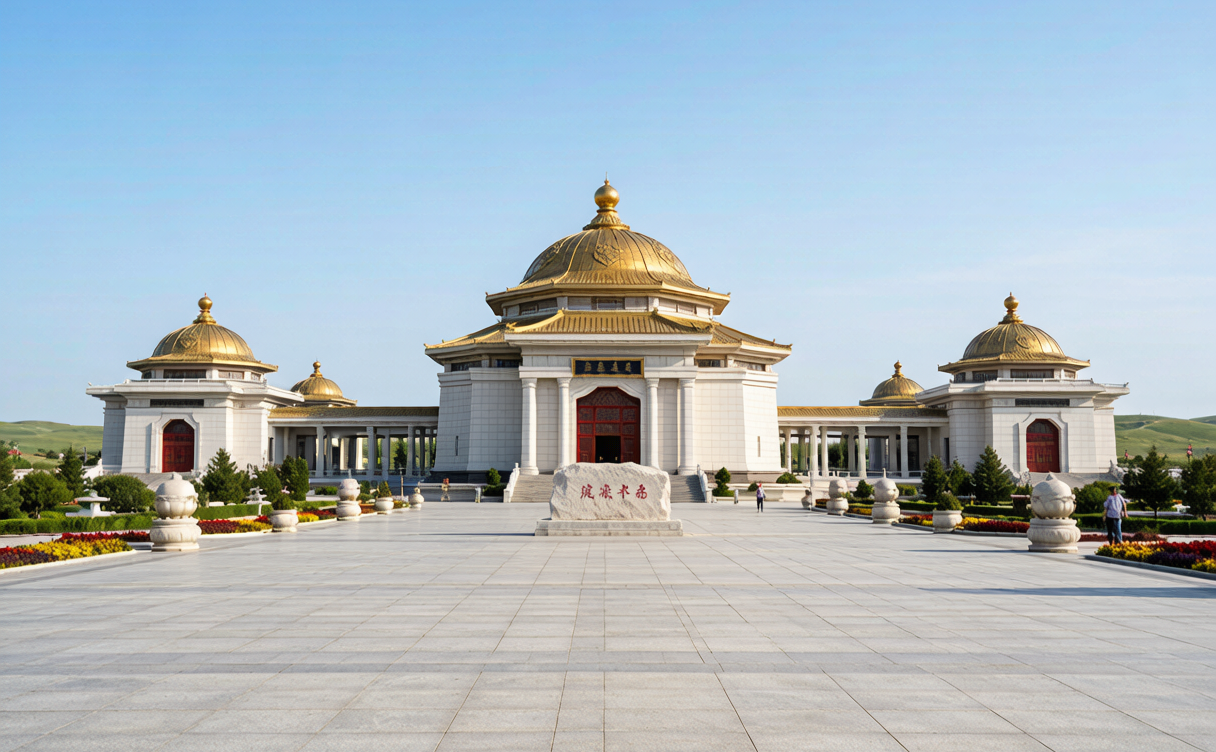
Day 1 — Kangbashi and the Mausoleum: morning at the Ordos Museum (free, strong on Mongolian history), afternoon at the Genghis Khan Mausoleum (Chengling) 40 km south — a ceremonial, reverent site with seasonal naadam wrestling and horse displays; entry around RMB 90 (US$13). Evening back in Kangbashi.
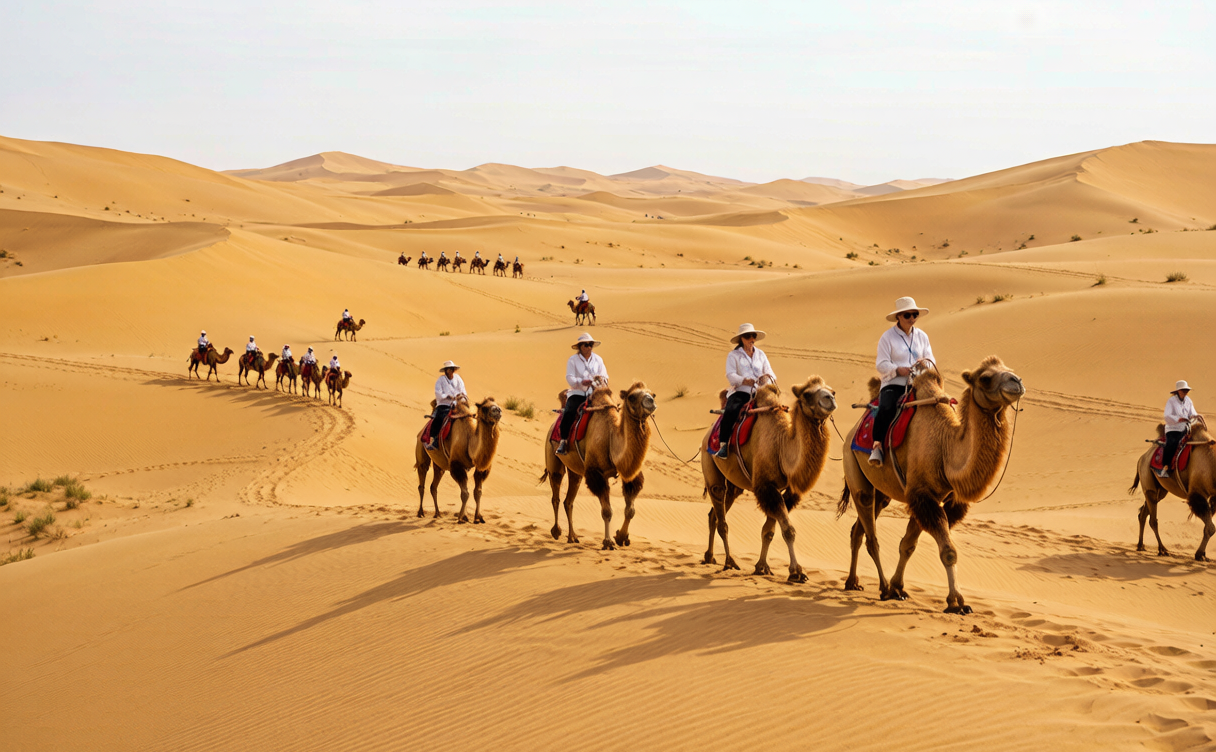
Day 2 — Kubuqi Desert: full day at Xiangshawan (Whistling Sand Bay) resort, about 1.5h drive northeast. Ride the cable car over the dunes, sand-sled, camel trek, and watch the sunset from a camp. Package entry plus rides runs RMB 300–500 (US$42–70). Overnight in a desert yurt if you want the stars.
Day 3 — Grassland and the Yellow River bend: head north to the Ordos grassland (about 40 minutes from Kangbashi) for horseback riding — guided rides run RMB 80–150 (US$11–21) per hour — and a herder lunch of milk tea and hand-grabbed lamb, then detour to the Huanghe (Yellow River) northern bend for the wide-river scenery and the odd sight of the river doubling back on itself. Allow 6–7 hours round trip before returning to Hohhot or the airport for an evening flight.
Practical Tips
- Ordos is dry and sunny; bring lip balm, moisturizer, and a hat even in mild months.
- Desert attractions close early in low season (November–March) — confirm hours before a winter visit.
- Carry some cash; smaller grassland herder stops and market stalls may not take foreign cards, though Alipay/WeChat work with a linked international card.
- The “ghost city” story is overstated: Kangbashi is busy on weekends and festivals, quiet on weekday mornings — go at dusk for the lit fountains and empty plazas.
- Mongolian and Chinese are both spoken; a translation app covers menus and directions well.
- For the geography and population of the wider region, background on Inner Mongolia helps frame what you are seeing.
FAQ
Is Ordos safe and tourist-friendly?
Yes. It is a stable, well-policed Chinese city; the desert resorts and Mausoleum are built for domestic tourism and handle foreign visitors without fuss.
Do I need a guide for the desert?
Not for Xiangshawan, which is a self-contained resort with signage and shuttles. For off-resort dune or grassland experiences, a local driver or tour makes logistics smoother.
How many days do I need?
Three full days covers the Mausoleum, the desert, and the grassland comfortably; two days lets you do the desert plus Kangbashi only.
What should I wear for the desert?
Light long sleeves, closed shoes for hot sand, and a wind layer — afternoons can gust. Sunscreen is essential.
Can I visit Ordos as a day trip from Hohhot?
Technically yes by high-speed train (90 min each way), but you would only see Kangbashi and the Mausoleum. Stay at least one night to reach the desert.
Is the Genghis Khan Mausoleum a burial site?
No — it is a ceremonial mausoleum and place of worship, not the actual tomb; the atmosphere is reverent and the architecture distinctive.
Can I pair Ordos with Hohhot or Baotou easily?
Very easily. High-speed trains link the three cities in a triangle (Ordos–Hohhot ~1.5h, Ordos–Baotou ~1h), so you can base in one and day-trip the others, or use Hohhot as your flight hub and Ordos as your desert base.
What is the “ghost city” I read about?
Kangbashi was built ahead of demand a decade ago and earned that label, but today it is a functioning district with museums, parks, and busy weekends; the empty-skyscraper photos are dated. Visit at dusk to see the fountains and lit plazas full of locals.
Written by Karl Huang, updated August 2026.