

China’s airport map is being redrawn faster than its rail one. Across 2025 and 2026, new terminals and a wave of fresh international routes are opening secondary cities that foreign visitors used to reach only by a long domestic hop. This China new airports 2026 roundup focuses on the projects that actually change how you fly in and around the country — not every provincial facelift, but the terminals, runways, and routes that shorten a China itinerary. Pair these openings with the rail network using our high-speed train guide for foreign travelers to combine flying and riding efficiently.
Newly Opened & Expanded Airports
The biggest 2026 build-outs are concentrated in the south and southwest, precisely where tourist demand has outrun capacity:
| Airport / project | City | Status (2026) | Why it matters for travelers |
|—|—|—|—|
| Guangzhou Baiyun T3 | Guangzhou | Opening 2026 | Third terminal; more international slots to Europe & Middle East |
| Kunming Changshui T2 | Kunming, Yunnan | 2026 | Stronger gateway to Yunnan and ASEAN; more SE Asia flights |
| Xishuangbanna new terminal | Xishuangbanna, Yunnan | 2026 | Direct tropical-Yunnan access without a Kunming transfer |
| Zhangjiajie Hehua expansion | Zhangjiajie | 2026 | Extra capacity for the peak tourism surge |
| Haikou Meilan 2nd runway | Haikou, Hainan | 2026 | More flights onto the island resort |
| Ezhou Huahu feeder | Ezhou, Hubei | 2026 | Asia’s first dedicated cargo hub; cheap feeder fares near Wuhan |
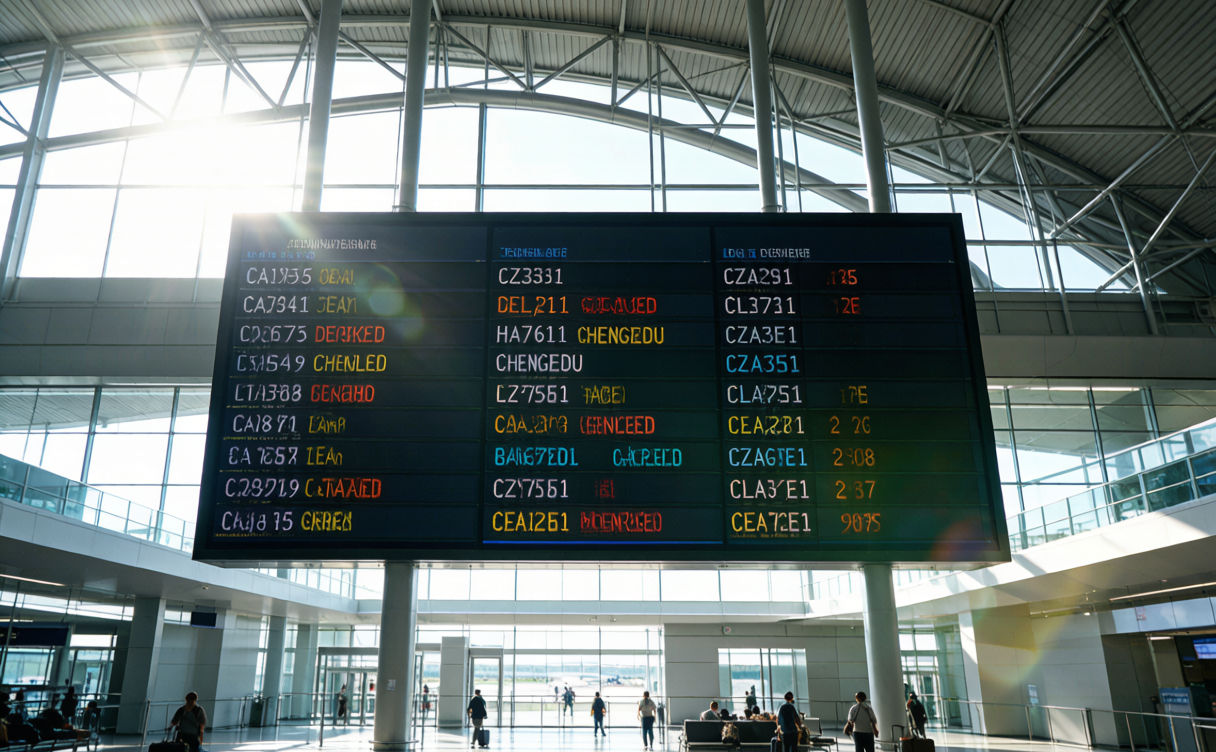
The Xishuangbanna and Zhangjiajie projects are the most useful for leisure travelers: both cut a previously mandatory Kunming or Changsha connection, turning a full-day transfer into a direct arrival. Guangzhou Baiyun T3 matters most for long-haul, because added terminal capacity is what lets the airport add the early-morning departure banks that connect cleanly to European arrivals. To put the scale in perspective: Guangzhou Baiyun handled well over 60 million passengers before T3, and the new terminal alone adds roughly 30 million in annual capacity plus a dedicated international concourse, so the Europe–Guangzhou–ASEAN connection tightens noticeably. Kunming Changshui T2 similarly adds a second runway’s worth of gates, targeting the Yunnan–Southeast Asia corridor where demand has outstripped the old terminal. For travelers, the practical win is spare capacity: new terminals mean shorter security lines and more empty seats on the early bank of flights. You can review the official framework that governs these expansions via the Civil Aviation Administration of China.
New International Routes
Alongside concrete, 2026 brings a notable spread of direct long-haul and regional routes from inland hubs — a real change from the old pattern where almost every intercontinental flight touched Beijing, Shanghai, or Guangzhou:
- Chengdu Tianfu (TFU) added direct services to Istanbul and Cairo, with fares from around RMB 3,200 (US$450) return, undercutting the classic Beijing/Europe routing.
- Xi’an opened direct to London and increased Moscow frequency, putting the Silk Road gateway on a single long-haul hop from about RMB 4,000 (US$560) return.
- Shenzhen expanded to Mexico City and several new Southeast Asian cities, strengthening the Pearl River Delta’s alternative to Hong Kong.
- Qingdao launched direct Frankfurt service, handy for Shandong itineraries.
- Regional density is the quieter story: Shanghai–Singapore and Beijing–Bangkok frequencies rose sharply, so last-minute Southeast Asia add-ons are easier than ever.
The Chengdu Tianfu long-haul build-out is the headline: alongside Istanbul and Cairo, the airport added direct services to Dubai and a second daily to Singapore, with economy returns from about RMB 2,800 (US$390). Xi’an’s London service runs three times weekly through the summer peak at roughly RMB 4,200 (US$590) return, while Shenzhen’s new Mexico City flight — roughly RMB 6,500 (US$910) return, often priced for connections onward to Latin America — is the most surprising addition. Regionally, the Shanghai–Singapore corridor now has upward of ten daily flights, and Beijing–Bangkok six, so last-minute Southeast Asia add-ons are easier than ever. These routes matter because they let you enter and exit through different cities without backtracking — a Beijing-in, Chengdu-out loop is now plausible on a single ticket.
Regional Airports That Unlock New Destinations
The under-reported win is small-airport capacity. With Xishuangbanna, Zhangjiajie, and expanded Yunnan hubs, places that were once multi-leg slogs become half-day arrivals. A good example is Xishuangbanna: a direct flight from Chengdu or Kunming now lands you 30 minutes from the Jinghong water town and the Dai temple festivals, where before you needed a Kunming connection and a three-hour drive. Zhangjiajie Hehua’s extra gates similarly absorb the summer surge that used to mean sold-out flights and ¥200 surge pricing on the shuttle bus. The same logic applies to the growing number of visa-free transit ports: more cities qualify as your entry point for a 240-hour stay, so you can land in, say, Qingdao or Xiamen and still roam inland by train. Our things to know before visiting China lists which entry cities currently qualify for transit visa-free entry.
Practical Tips for Flying the New Map
- Book new long-haul routes (Chengdu, Xi’an, Shenzhen) 6–10 weeks ahead; they sell out faster than the legacy Beijing/Shanghai flights because capacity is still thin.
- Use the airport’s English site or your airline app for the expanded terminals — Baiyun T3 and Kunming T2 have different ride-hail pickup points than the older concourses.
- If your route lands you at a secondary hub, pre-book the high-speed connection to your real destination; the train is almost always faster door-to-door than a domestic flight for distances under 1,000 km.
- Transit visa-free now spans 60+ ports — but confirm your specific entry airport is on the list before booking an open-jaw ticket.
- Domestic fares on the new feeder routes (Ezhou, Xishuangbanna) are often RMB 300–600 (US$42–85) if booked early, cheaper than the equivalent train plus transfer.
- Shoulder season (April–May, September–October) keeps both fares and terminals calm; our best time to visit China maps the trade-offs.
- If connecting internationally through a new terminal, pad at least three hours; some T3 and T2 concourses sit a long inter-terminal train ride from the international gates.
- Download your airline’s app before departure — several Chinese carriers now push e-boarding passes and gate changes there first, ahead of the airport screens.
FAQ
Which new airport is most worth planning around?
Xishuangbanna’s new terminal. It removes a Kunming connection for one of Yunnan’s most distinctive destinations — tropical forests, Dai culture, and the Mekong — making a southern Yunnan loop realistic in four days.
Are the new long-haul routes from Chengdu and Xi’an reliable?
Yes. Both use wide-body aircraft on established carriers, and frequencies are growing; the main risk is thin capacity selling out, not reliability.
Do the expanded terminals change how I get into the city?
Sometimes. Baiyun T3 and Kunming T2 have separate ride-hail and metro points from older concourses, so check your terminal letter before ordering a car.
Can I use a secondary airport for transit visa-free entry?
If it is on the 60+ port list (Qingdao, Xiamen, and others now qualify), yes — but verify the specific city before booking.
Are feeder flights cheaper than trains for short hops?
Often. Routes under ~800 km like Ezhou–regional hubs can be RMB 300–600 (US$42–85) early, occasionally beating the train once you add city-center transfers.
Will more routes open later in 2026?
Almost certainly — Chinese carriers announce seasonal long-haul in spring and autumn, so check again close to your travel dates.
Should I fly into a new hub or the legacy Beijing and Shanghai gates?
It depends on your route. If your destination is Yunnan, Sichuan, or the northwest, the new hubs (Kunming, Chengdu, Xi’an) save a transfer and a day. If you are doing the classic Beijing–Shanghai–Xi’an triangle, the legacy hubs still have the densest connections and the cheapest fares.
Are the expanded terminals easier for first-time visitors?
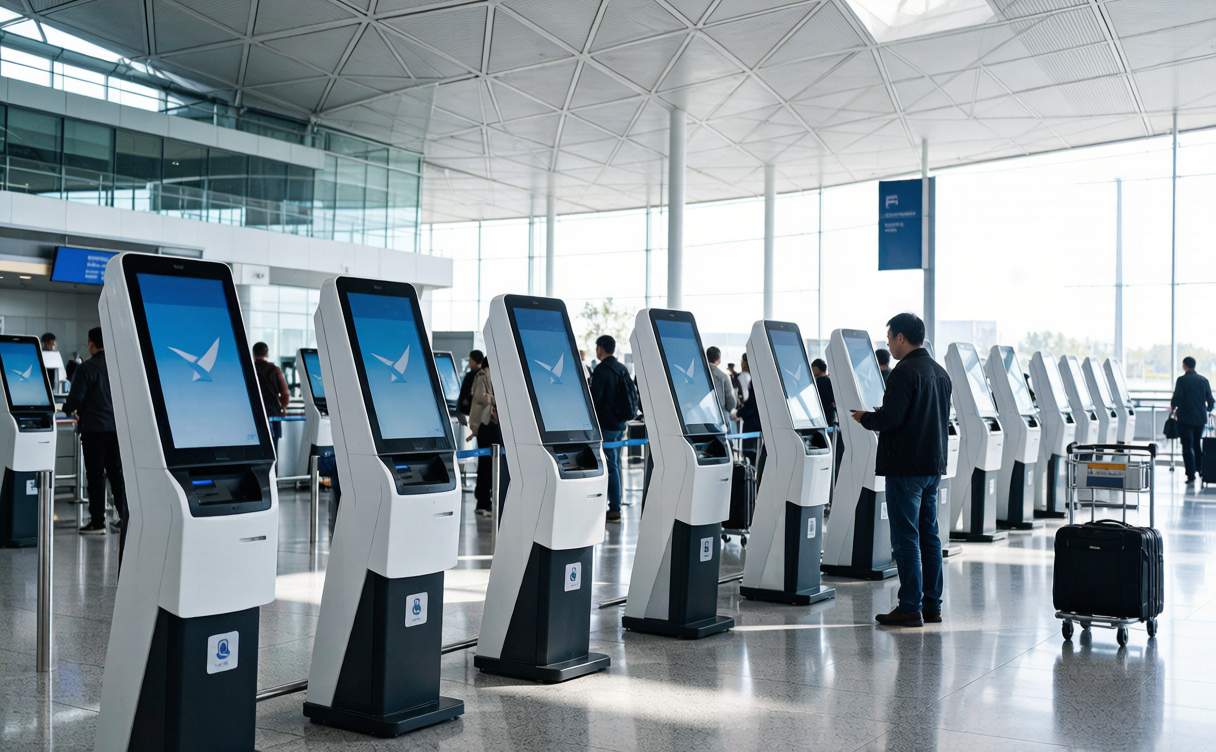
Yes — new concourses have clearer English signage, more self-service kiosks, and dedicated foreign-passport lanes at immigration, which is why they pair well with a calm arrival plan.
Written by Karl Huang, updated August 2026.