

Here is a fact that reorganises most people’s mental map of eastern China: Wuzhen and Xitang, the two water towns half of Shanghai’s visitors day-trip to, are both administratively part of Jiaxing. So is Yanguan, where the Qiantang River tidal bore comes up the channel each autumn. The city sits almost exactly halfway between Shanghai and Hangzhou — thirty minutes from either by high-speed rail — and nearly everyone racing between the two skips it. This Jiaxing travel guide argues for stopping: a canal city with a genuinely good old street, a famous lake, the best sticky-rice dumplings in China, and hotel prices roughly half of what you pay an hour away in either direction.
Content Preview
- Where Jiaxing sits, and why the location is the point
- Best time to visit, including the autumn tidal bore
- How to get there, with a fare table
- South Lake, Yuehe Historic Street and the city centre
- Using Jiaxing as a base for Wuzhen, Xitang and Yanguan
- Where to stay
- A two-day itinerary
- Zongzi and the local table
- Practical tips
- FAQ
A City Built by Water
Jiaxing grew up on the Grand Canal, the thousand-year-old waterway that carried grain north to the capitals and is now inscribed on the UNESCO World Heritage list. Barges still work the channel through the middle of town — long, low, heavily loaded, moving all night.
The prefecture covers about 4.4 million people across the city proper plus the counties of Jiashan, Haining, Haiyan, Pinghu and Tongxiang. Everything is flat and close, and nothing is more than an hour from the centre. If you have read our guide to the best water towns near Shanghai, you have effectively read about Jiaxing’s suburbs.
Best Time to Visit Jiaxing
March to May. Peak Jiangnan. 12–25°C, canal-side willows in leaf, magnolia then rapeseed. April is the best month, though it rains often enough to carry an umbrella daily.
Mid-June to early July. The meiyu plum rains: three or four weeks of grey drizzle and high humidity. Old streets photograph beautifully; anything outdoors is a slog.
July and August. Hot and sticky, 30–37°C. Water towns are still doable if you start at 07:00 and hide indoors at noon.
Mid-September to November — the best of the year. Dry, 15–27°C, clear light. Also tidal bore season: the Qiantang bore at Yanguan peaks around the 18th day of the eighth lunar month, usually mid-September to early October, and the biggest days draw enormous crowds; skip the 1–7 October holiday.
December to February. 3–10°C, damp, and no central heating south of the Yangtze — rooms can feel colder than the street. Quiet, cheap, with water towns close to empty on weekday mornings.
How to Get There
Two stations, and the distinction matters. Jiaxing South (嘉兴南站) sits on the Shanghai–Hangzhou high-speed line and takes the fast G trains, but is around 12 kilometres from the centre. Jiaxing Station (嘉兴站), rebuilt as a striking part-underground station beside a park, is downtown and served by intercity services — check which one your ticket names.
| From | Mode | Typical duration | Approx. cost |
|—|—|—|—|
| Shanghai Hongqiao → Jiaxing South | High-speed rail | 25–35 min | ¥55 (US$8) |
| Hangzhou East → Jiaxing South | High-speed rail | 25–30 min | ¥45 (US$6.30) |
| Nanjing South → Jiaxing South | High-speed rail | 1 hr 30 min | ¥180 (US$25) |
| Shanghai Pudong Airport → Jiaxing | Airport coach | around 2 hr | ¥100 (US$14) |
| Jiaxing → Xitang | Bus or taxi | 40–50 min | ¥15 bus / ¥120 taxi |
| Jiaxing → Wuzhen | Bus from the south bus station | around 1 hr | ¥20 (US$3) |
| Jiaxing → Yanguan (tidal bore) | Bus via Haining | around 1 hr 15 min | ¥25 (US$3.50) |
City buses cost ¥2 and a Didi across town rarely exceeds ¥20. There is no commercial airport; Shanghai Hongqiao and Hangzhou Xiaoshan are the gateways. First time buying Chinese rail tickets? Our China high-speed train guide for foreign travellers walks through passport booking and station procedure.
Things to Do: A Jiaxing Travel Guide to the City Centre
South Lake (南湖)
The city’s signature sight is a modest, willow-fringed lake southeast of the centre, reached by a short ferry to a wooded islet. On it stands Yanyu Lou (烟雨楼), the Misty Rain Tower — the current buildings date from a 1548 Ming reconstruction of a much older pavilion, and the terrace looking back over the water is one of the more graceful things in this part of Zhejiang.
South Lake is also a major domestic destination because of a meeting held on a boat here in 1921; a replica vessel is moored offshore and coach groups arrive in numbers; visit early on a weekday while mist still sits on the water. Park entry is free, the island ferry around ¥30, and ninety minutes is enough.
Yuehe Historic Street (月河历史街区)
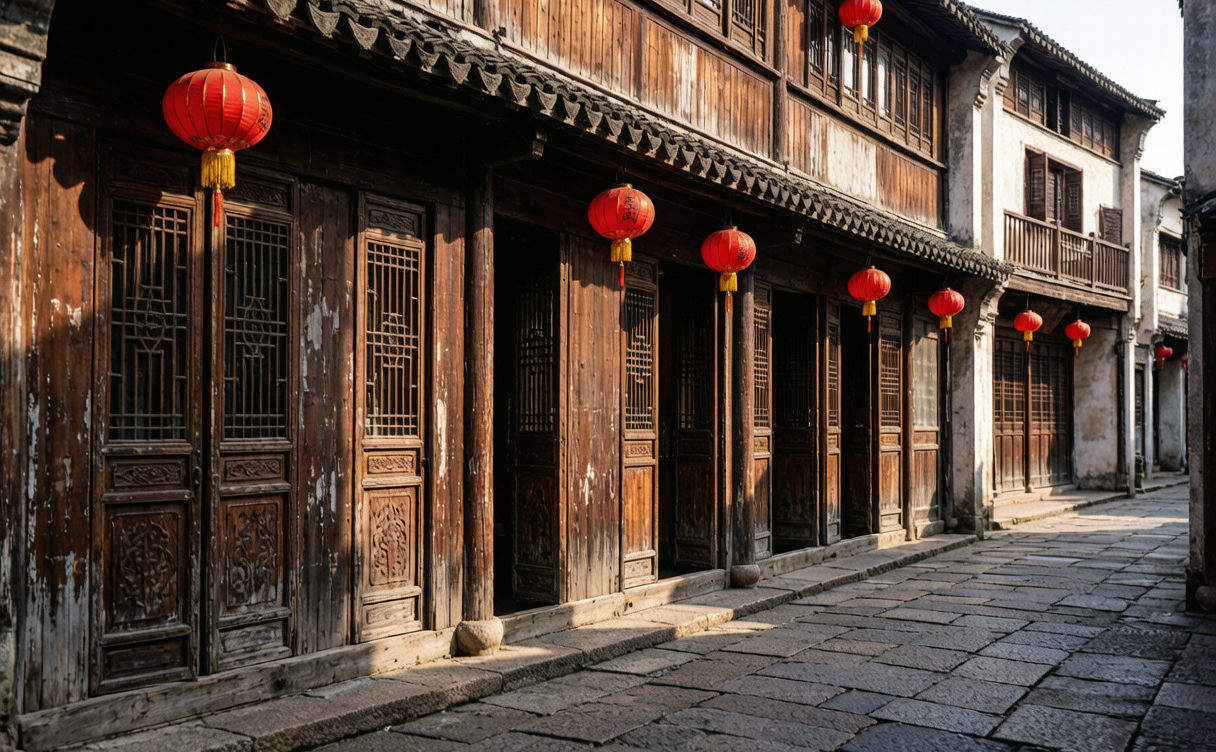
Two blocks of restored Ming and Qing shophouses along a canal spur north of the centre, and my favourite place in the city. Yuehe is a working street rather than a ticketed attraction — free, open all hours, with teahouses, a zongzi museum, small guesthouses, calligraphy shops and a night market of grilled skewers. Smaller than Wuzhen and far less staged. Go twice: once in daylight for the architecture, once after 19:00 when the lanterns come on.
Meiwan Street and the pagodas
Meiwan Street (梅湾街) is a second, quieter restored quarter on the west bank, with a small mosque, early twentieth-century villas and much lighter foot traffic — twenty minutes’ walk along the canal, free. Nearby, the climbable Blazing Pearl Pagoda (壕股塔) gives the best overview of the old canal grid for around ¥10 and is usually deserted.
Using Jiaxing as a Base
This is the strongest argument for the city. Three headline sights sit inside Jiaxing prefecture, and staying here rather than in Shanghai or Hangzhou means reaching them before the tour buses.
Xitang (西塘) — 40 minutes east in Jiashan county. Covered arcades running a kilometre along the water, nine rivers, more than a hundred lanes. Best between 07:00 and 09:00 before the Shanghai day-trippers arrive, and again after 21:00 when they leave. Entry around ¥95, and our Xitang water town guide covers which lanes to walk.
Wuzhen (乌镇) — an hour west in Tongxiang. Split into Dongzha (a couple of hours) and Xizha (larger, ticketed separately at around ¥150, best overnight). Immaculately managed, thoroughly commercial, still beautiful.
Yanguan (盐官) — in Haining, on the Qiantang’s north bank. A small walled town with a Ming platform built specifically to watch the tidal bore surge upriver on the biggest autumn tides. Outside bore season the old town, the Chen family garden and the sea wall still make a half-day.
Where to Stay
Budget — ¥120–240 (US$17–34). Chain hotels around Jiaxing Station and Zhongshan Road. ¥160 gets a clean modern double, roughly half the Hangzhou equivalent.
Mid-range — ¥300–550 (US$42–78). Business hotels near South Lake and small courtyard guesthouses on Yuehe Street. The Yuehe options are the ones to book: canal views, ten minutes to dinner, quiet after the night market packs up.
Splurge — ¥700–1,600 (US$99–225). Resort properties on the South Lake shore, plus the designer hotels inside Wuzhen Xizha if you would rather sleep in the water town.
Check that your hotel registers foreign guests before booking — smaller Yuehe guesthouses sometimes cannot.
Sample Itinerary: Two Days
Day 1 — the city
- 09:00 South Lake and the ferry to Yanyu Lou, before the coaches
- 11:00 walk the canal path north into town
- 12:30 zongzi and noodles for lunch
- 14:30 Meiwan Street and the Blazing Pearl Pagoda
- 17:30 Yuehe Historic Street; tea, then the night market
Day 2 — a water town
- 07:00 first bus or taxi to Xitang; the covered arcades in the quiet
- 10:30 breakfast in a lane café
- 12:30 back to Jiaxing, or on to Wuzhen for the afternoon
- 17:00 half-hour train to Hangzhou East, and continue with our Hangzhou travel guide
In late September, swap Day 2 for Yanguan and the tidal bore, checking the tide timetable before you fix a date.
Food and Local Specialties
Jiaxing food is Jiangnan cooking with a heavier hand: a little sweeter, a little richer, built around rice and freshwater fish.
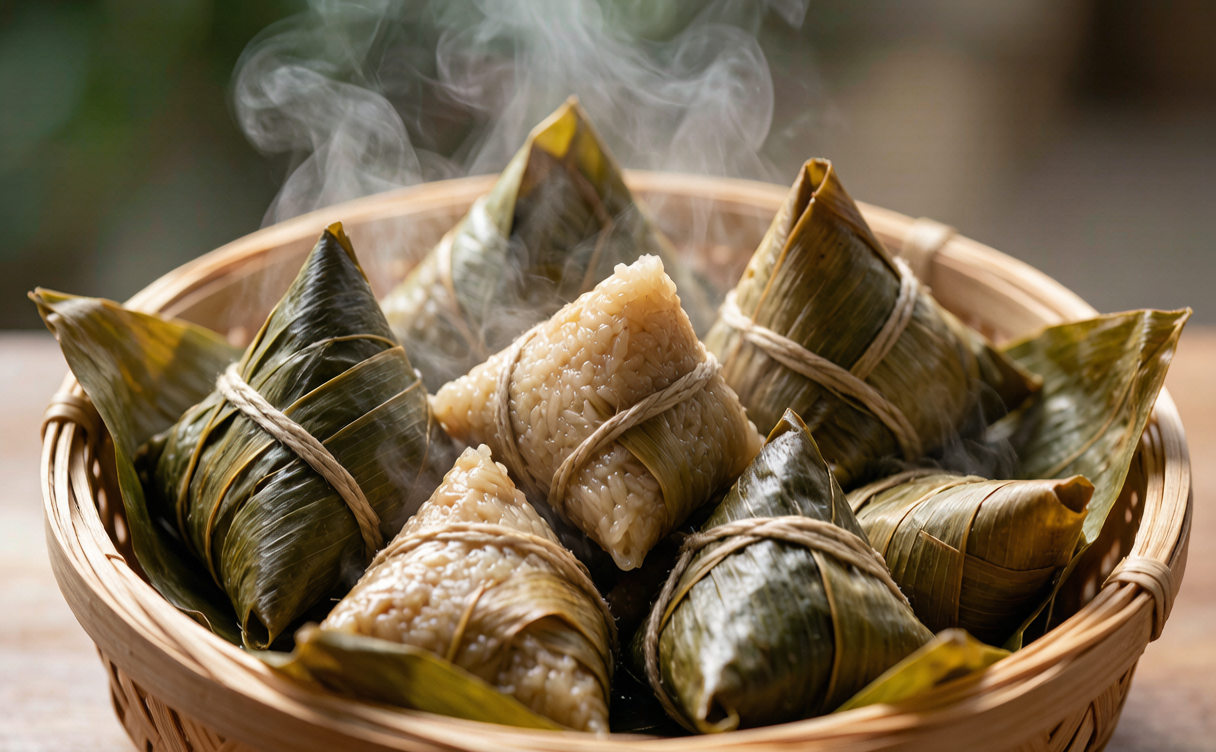
- Jiaxing zongzi (嘉兴粽子). The city’s national claim to fame: glutinous rice wrapped in bamboo leaves around fatty pork belly and, in the deluxe version, a salted duck egg yolk, boiled for hours until the fat renders into the rice. Wufangzhai has made them since 1921 and sells them at every station, but a hot one from a Yuehe Street steamer for ¥10 is a different food entirely.
- South Lake water caltrop (南湖菱). A hornless variety of ling, harvested in autumn, eaten raw or boiled. Crunchy and faintly sweet.
- Wenhu sauce duck (文虎酱鸭). Soy-braised duck, cold-sliced, sold by weight. Standard train food.
- Pinghu wine-cured eggs (平湖糟蛋). Duck eggs cured in rice wine lees until the shell softens. Pungent, excellent with congee, not a beginner dish.
- Hairy crab. Autumn, from the surrounding lakes, well below Shanghai prices.
Breakfast here is a zongzi, a bowl of xiaohuntun (tiny wontons) and soy milk, under ¥20 total.
Practical Tips
- Payment. Alipay and WeChat Pay now accept foreign Visa and Mastercard — link a card before you land, because stalls and buses are effectively cashless. Keep ¥200 in small notes as backup.
- Tickets and reservations. Rail tickets are bought against your passport number and you scan the passport at the gate. Water towns increasingly want a WeChat mini-program reservation at weekends; hotel staff will do it in thirty seconds.
- Two stations. Confirm whether your ticket says Jiaxing South (嘉兴南) or Jiaxing (嘉兴). The wrong one costs forty minutes and a taxi.
- English. Limited. Station signage and South Lake are bilingual; menus, buses and taxis are not. Save addresses in Chinese characters.
- Timing water towns. The biggest quality-of-life decision on this trip. Xitang and Wuzhen between 10:00 and 17:00 are a crush; the same lanes at 07:30 are close to magical.
- Rain and bikes. One of the wetter parts of China, so keep a folding umbrella in your bag from March to July. The city is flat and shared bikes unlock through Alipay — the fastest way between the lake, the station and Yuehe.
FAQ
Is Jiaxing worth visiting?
As a base, absolutely — it puts Xitang, Wuzhen and Yanguan within an hour at half Hangzhou’s prices. As a standalone city it is pleasant rather than essential: one day for South Lake and Yuehe, and let the surroundings carry the rest.
How many days should I spend?
Two: one for the city, one for a water town. Three if you want both Xitang and Wuzhen, or the tidal bore.
How do I get to Jiaxing from Shanghai?
High-speed trains from Shanghai Hongqiao reach Jiaxing South in 25 to 35 minutes for around ¥55, several times an hour. From Pudong Airport, direct coaches take roughly two hours and beat backtracking across the city.
When can I see the Qiantang River tidal bore?
Around the 18th day of the eighth lunar month, generally mid-September to early October, viewed at Yanguan in Haining. Smaller bores occur monthly. Check the tide timetable, arrive early, and stay behind the barriers — people are injured most years by ignoring them.
Do people speak English in Jiaxing?
Not much. Plan on translation apps, written Chinese addresses and pointing. Larger hotels usually manage some.
Written by Karl · Updated August 6, 2026