

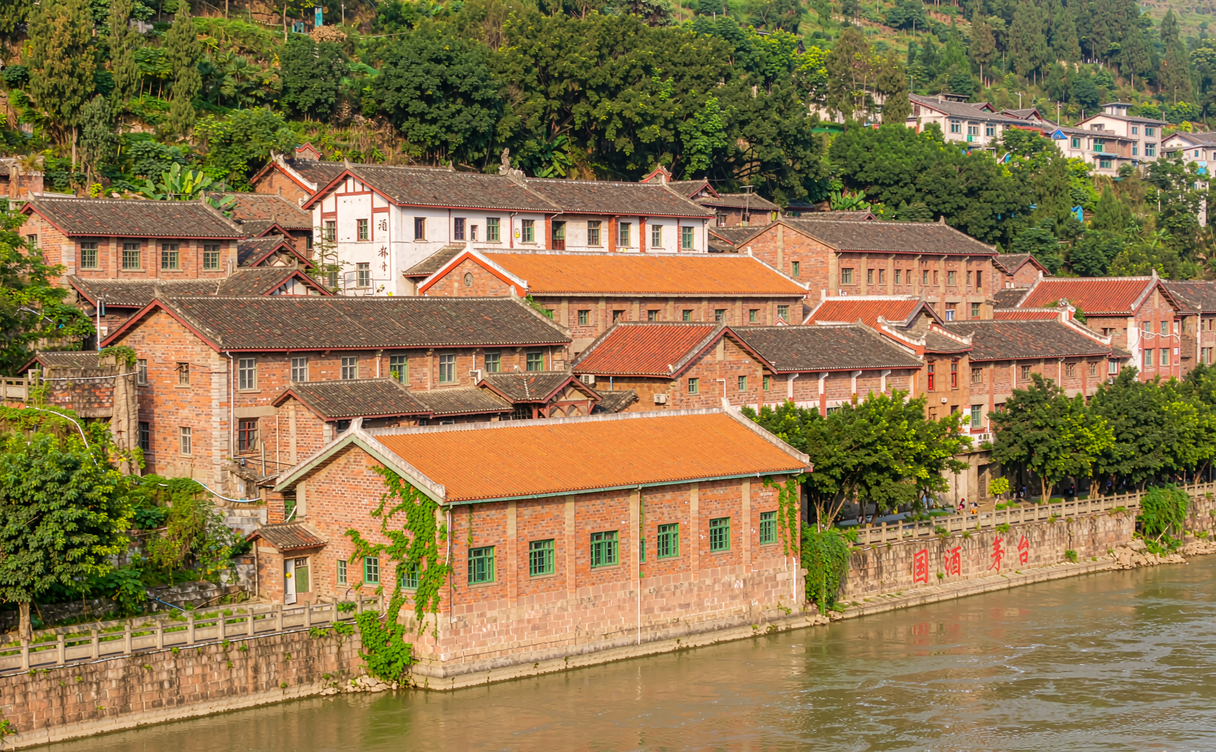
In the hills of northern Guizhou, along a slow red river, sits a small city that produces the most famous spirit in China. A Renhuai Maotai town guide is a guide to the homeland of baijiu, the clear grain liquor that anchors every Chinese banquet, toast, and business deal. Renhuai is the county-level city where the town of Maotai sits on the banks of the Chishui River, and it is the birthplace of Kweichow Moutai, the premium label that can cost more than a good bottle of Bordeaux. We’ve sent travelers there who love food and drink culture, and they returned with a new respect for the craft behind a spirit most foreigners only taste once and never forget.
Renhuai is not a conventional tourist stop. It is an industrial town with a single defining product, and the experience is about understanding that product rather than ticking off temples. But for anyone curious about Chinese culture, the story of Maotai, its river, its qu (fermentation starter), and its century-old distillery is genuinely absorbing. This guide covers how to get there, what to do, when to go, and how to fit Renhuai into a Guizhou trip.
How to Get to Renhuai
The usual gateway is Guiyang, the Guizhou provincial capital, which has an international airport and fast rail links. From Guiyang, the Chengdu-Guiyang high-speed line puts you at Maotai or Renhuai station in roughly one to one and a half hours, and from there it is a short taxi or hired car into the liquor town itself. We’ve sent travelers there on this exact route, and the ride north leaves the city behind for terraced hills and the first signs of the Chishui valley. Our Guiyang travel guide explains how to use the capital as your base and where to stay before heading out.
For foreigners, the rail booking is the only real hurdle, so our China high-speed train guide for foreigners walks through the apps, ID rules, and seat classes. First-time visitors should also read our China travel guide for first-timers before the trip. Once in Renhuai, the town center and the riverside distillery district are close together, and most sights are reached on foot or by a short ride.
Maotai Distillery Tour and the Liquor Culture City
The headline experience is the Chinese Liquor Culture City, a large museum complex on the edge of the Maotai distillery grounds that tells the story of baijiu from grain to glass. Exhibits cover the history of fermentation in China, the specific qu used in Maotai production, the role of the Chishui River’s unique microclimate, and the rise of the modern brand. The entrance is around 60 RMB, and most visitors spend two to three hours. We’ve sent travelers there who expected a quick look and stayed for half a day, drawn in by the scale-model distilleries and the tasting hall.
A Maotai distillery tour of the working production areas is more restricted. The company runs guided visits through parts of the sprawling facility, but access to active fermentation and distillation halls depends on the day and on group bookings, and independent foreign travelers may find the working core off-limits. The practical move is to treat the Liquor Culture City as your main window, then walk the riverside lanes where the stacked courtyards and the smell of fermenting sorghum fill the air. The spirit itself is described in depth on the Maotai Wikipedia page, which is worth reading before you go so the terminology makes sense.
Things to Do in Renhuai
Walk the riverside distillery district. The heart of Maotai town is a cluster of old and new distillery buildings climbing the hills above the Chishui River. Even without entering a working hall, the lanes between them, the steam, and the scent of grain make the industry tangible. Early morning is the best time, when the light is soft and the town is quiet.
The Chinese Liquor Culture City. Beyond the museum, the complex includes landscaped gardens and pavilions built in traditional style, good for a slow hour after the exhibits. For travelers listing things to do in Renhuai, this is the anchor stop.
The Chishui River scenery. The red-tinted river that gives the region its character is calm and pretty, especially at dusk when the town lights reflect on the water. A riverside stroll costs nothing and is one of the most pleasant things to do in Renhuai after a day of museums.
Local Guizhou food. The table here is the sour, spicy, and smoked cooking of northern Guizhou: sour fish hotpot, cured pork, pickled vegetables, and the lamb dishes the region is known for. A meal runs 40 to 80 RMB per person, and the baijiu flows freely if you are with locals.
Maotai Liquor Town Guizhou: Buying the Real Thing
A visit raises the obvious question: where do you buy genuine Maotai without paying for a fake? The brand is heavily counterfeited, and the town is the safest place to buy. The official distillery shop and the larger licensed retailers sell sealed bottles with verification codes you can check on your phone. Expect to pay from around 1,500 RMB upward for a standard 500ml bottle of the flagship label, with aged and limited editions far higher. We’ve sent travelers there who budgeted for a single bottle as a gift and were glad they bought it at the source. Buy from the official channels only, keep the receipt, and pack it in checked luggage with cushioning, checking your home rules on alcohol before you fly.
Best Time to Visit Renhuai
The best time to visit Renhuai is spring, from March to May, and autumn, from September to November. These months bring mild weather for walking the riverside and the hills, and the surrounding countryside is at its greenest or its most golden. Summer is hot and humid with sudden storms, while winter is cool and damp but rarely freezing. Because Renhuai is an indoor-and-riverside kind of place, weather matters less than in the mountains, but clear days make the river and the town photogenic. For a national climate overview, our best time to visit China guide helps you slot Renhuai into a longer route.
Where to Stay
Renhuai town has mid-range hotels from 250 to 500 RMB a night, and the better ones sit near the river or the main boulevard. Do not expect international chains; expect clean, comfortable rooms and front desks accustomed to business travelers from the liquor trade. Book ahead during major holidays and the autumn festival season, when domestic visitors and trade guests fill the city. Staying in town puts you within walking distance of the distillery district and the restaurants.
A Guizhou Itinerary With Renhuai
Renhuai fits naturally into a northern Guizhou loop. Our Guizhou 7-day itinerary shows how to combine it with the waterfalls, the minority villages, and the karst of the province, and Renhuai makes a satisfying final stop for travelers who want a taste, literally, of what the region is famous for. The city of Zunyi, with its revolutionary history sites, is a short hop east and pairs well if you want a dose of modern Chinese history alongside the liquor.
Practical Tips
English is scarce, so load a translation app and offline maps before you leave Guiyang. Mobile payment is standard, but carry some cash for small stalls. The Liquor Culture City involves a fair amount of walking between pavilions, so wear comfortable shoes and bring water. If you plan to buy Maotai, bring your passport for the verification and keep the sealed packaging intact. Tasting is offered at the museum, but pace yourself; baijiu is strong, typically around 53 percent alcohol, and the samples add up faster than you expect.
Why Renhuai Is Worth the Detour
The appeal of a Maotai liquor town Guizhou visit is that it opens a door most travelers never notice. Baijiu is the spirit of Chinese social life, and seeing where the finest version is made, by a river and a method unchanged for generations, turns a drink into a story. For more ideas on what to pair with it, our best things to do in China guide points to other food-and-drink and craft experiences worth seeking out.
Planning the Rail Hop
The fastest way in is the high-speed line from Guiyang, and our China high-speed train guide for foreigners makes booking the Maotai-bound train straightforward. We always remind travelers to match the station name carefully, since both Renhuai and Maotai appear on ticketing apps for nearby stops.
A Toast to the River
Renhuai will not charm you with scenery alone, but it will teach you something real about China. Standing by the Chishui River, glass in hand, watching the town that liquor built, is a small and unexpectedly memorable moment. We’ve sent travelers there who knew nothing of baijiu and left as quiet fans of the craft.