

Far south in Zhejiang, where the province bumps against Fujian, lies a mountainous county that most foreign travelers have never heard of and that Chinese architecture lovers revere. A Taishun covered bridge guide is a guide to the langqiao, the wooden covered bridges that span the clear streams of this green, terraced corner of China. Taishun County, under the city of Wenzhou, holds dozens of these structures, including the rarest kind: the timber arch bridge, built without nails or glue, its curved wooden ribs locked by nothing but friction and master craft. We’ve sent travelers there who wanted to escape the eastern seaboard crowds, and they came back talking about bridges they had all to themselves.
Taishun is rural, slow, and deeply scenic. It rewards travelers who like to wander villages, photograph old wood, and walk beside water. This guide covers how to get there, what to see, when to go, and how to fit Taishun into a Zhejiang trip built around the famous cities nearby.
How to Get to Taishun
The natural gateway is Wenzhou, a major city on the Zhejiang coast with an airport and high-speed rail. From Wenzhou, Taishun is roughly two and a half to three hours by bus or hired car into the mountains, because the county has no high-speed station of its own and the final approach is all curves and valleys. We’ve sent travelers there who broke the journey with a night in Wenzhou and then a relaxed morning drive, and the transition from coastal city to forested hills is half the pleasure. Our Wenzhou travel guide explains the city and how to use it as your southern Zhejiang base.
An alternative is to take the high-speed train to Cangnan or Fuding, the stations flanking Taishun on the coastal line, and then a shorter bus up into the county. For foreigners, the rail booking is the only real friction, so our China high-speed train guide for foreigners walks through the apps, ID rules, and seat classes. First-time visitors should read our China travel guide for first-timers before the trip. Once in Taishun, a hired car for the day is the most efficient way to reach the scattered bridges, since rural buses are infrequent and the sights are spread across several towns.
Taishun Timber Arch Bridges
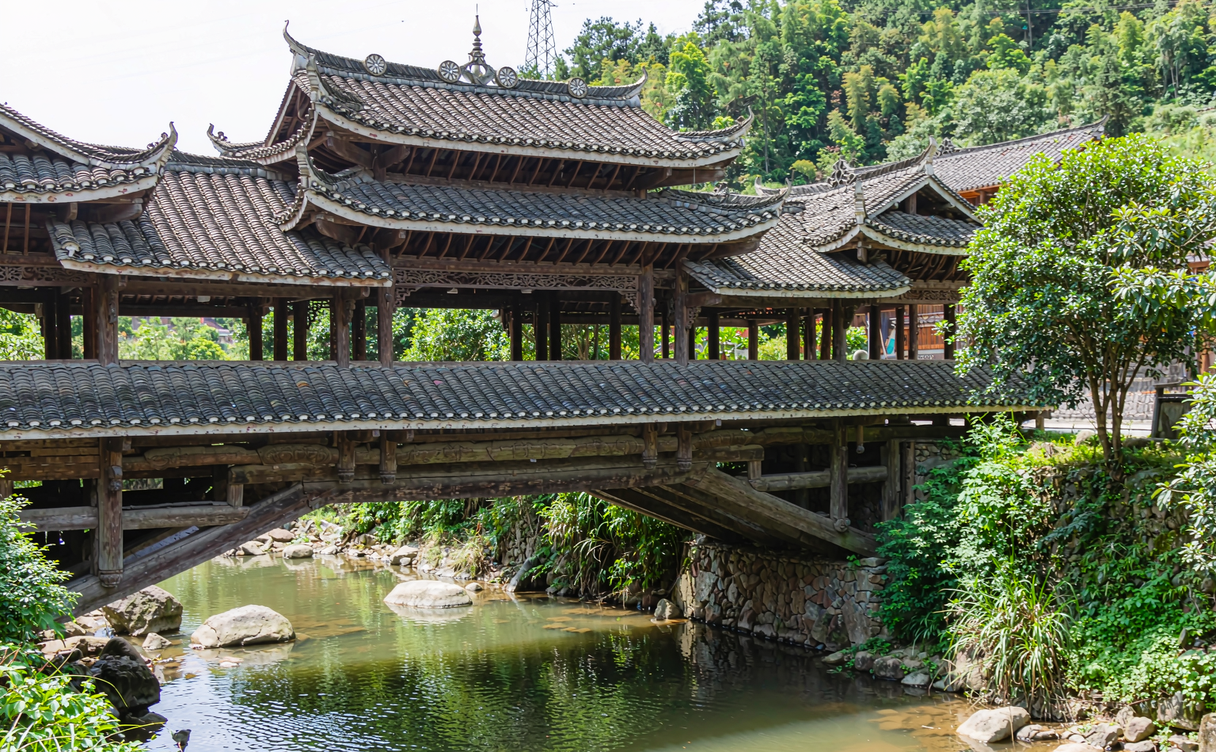
The stars of the county are the timber arch covered bridges, and the finest pair stands in the town of Sixi: the Beijian Bridge and the Xidong Bridge, built in the Ming and Qing styles and still carrying villagers and visitors across the stream. The technique behind them, the woven wooden arch, is a piece of intangible cultural heritage, and standing underneath one, looking up at the lattice of beams, is the closest you get to understanding the genius of the builders. We’ve sent travelers there at sunrise, when the mist sits on the water and the red-painted wood glows.
The broader story of such structures is told well on the Covered bridge Wikipedia page, which places Taishun’s langqiao in the global tradition of roofed crossings built to protect the timber from rain. What makes Taishun special is the density and the survival: where similar bridges vanished elsewhere, here they remain working parts of village life, not museum pieces.
Things to Do in Taishun
The Sixi bridges. Beijian and Xidong are the headline sights, both free to walk and photogenic from every angle. Budget two to three hours to cross, circle, and sit by the stream. For travelers listing things to do in Taishun, this is the essential stop.
Shimen stepping stones. A short drive away, the Shimen Bu, or stone stepping path, is a remarkable river crossing: a broad band of stone plinths set across a shallow river, used for centuries instead of a bridge. Walking it is a small adventure, best in dry weather, and it pairs beautifully with a nearby covered bridge for contrast.
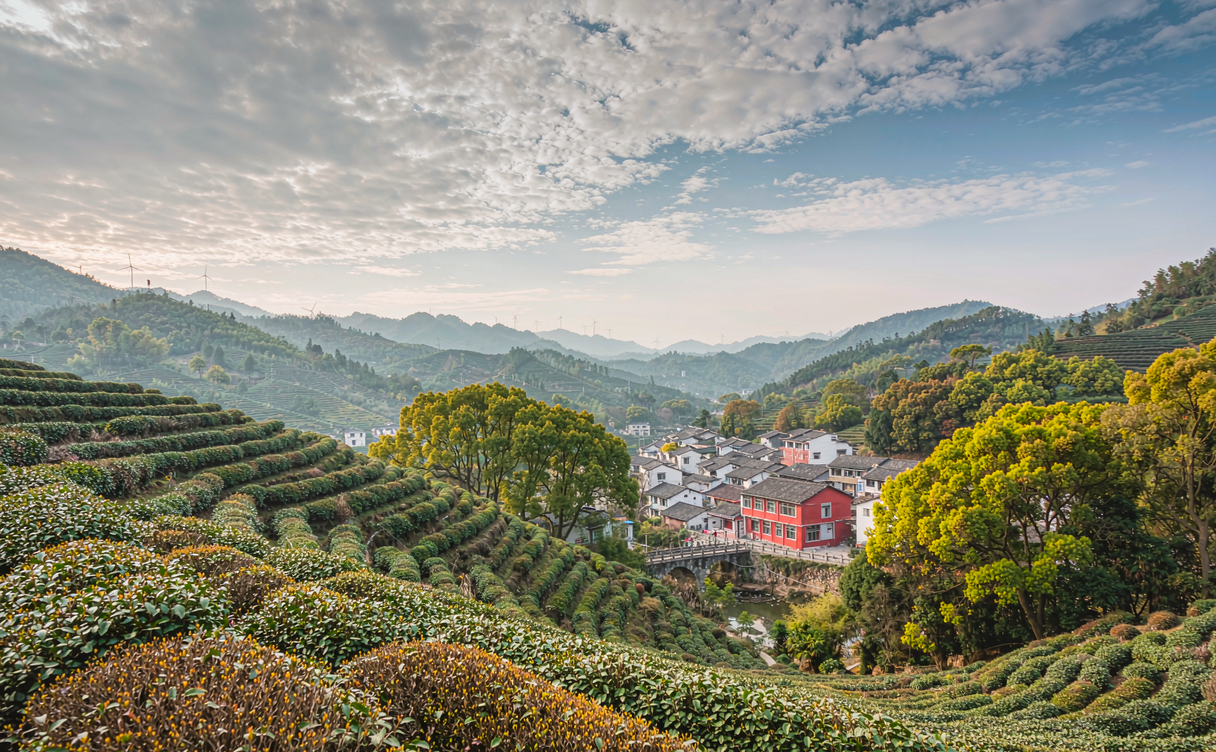
Rural villages and tea terraces. The hills around the bridges are terraced with tea and rice, and the old villages keep their stone lanes and ancestral halls. A slow walk between hamlets, buying tea from a hillside maker, is among the most peaceful things to do in Taishun.
The corridor bridges beyond Sixi. Taishun has more than thirty covered bridges in total, scattered from town to town. With a car and a day, you can string together three or four, each a little different in span, paint, and setting. We’ve sent travelers there who made a bridge-hunting loop and rated it the highlight of their Zhejiang trip.
Taishun Zhejiang Attractions: A Two-Day Shape
Taishun works best as a two-night stay, which gives you one full day for the Sixi bridges and Shimen, and one for a wider bridge-hunting loop into the smaller towns. Day one is Sixi in the morning and the stepping stones in the afternoon, with an evening in the county town. Day two loops out to two or three more remote bridges with a driver, returning before dark because the mountain roads are not for night driving. The county seat has the hotels and the restaurants; the bridges are reached by road.
Best Time to Visit Taishun
The best time to visit Taishun is spring, from March to May, and autumn, from September to November. Spring brings green terraces and comfortable walking, while autumn offers clear skies, harvest color, and the best light on the red bridge wood. Summer is hot and humid with typhoon-season rain that can swell the streams and make the stepping stones unsafe, and winter is cool and damp with occasional frost in the hills. Because the sights are outdoor and riverside, weather matters, so check the forecast and aim for a dry day. For a national overview, our guide to the best time to visit China helps you time the wider trip.
Where to Stay
The Taishun county town has mid-range hotels from 200 to 400 RMB a night, clean and functional rather than luxurious. Book ahead for holiday weekends, when domestic travelers from Wenzhou and Fuzhou fill the rooms. Staying in town keeps you close to the bus station and the restaurants, and the bridges are all within an hour or so by car. If you want to be nearer a specific bridge, a few village guesthouses operate, but we generally advise the county town for comfort and food.
Food in Taishun
Eating here is southern Zhejiang rural: river fish, free-range chicken, bamboo shoots in season, and the salty-sweet snacks of the Wenzhou hinterland. A meal at a local restaurant runs 40 to 70 RMB per person, and the night market in the county town is good for small plates and fresh soy milk breakfasts. The mountain air builds an appetite, and the simple cooking hits the spot after a day of walking bridges and terraces. If you enjoy slower, village-style Chinese food, our best ancient towns in China guide points to other places where the old ways of building and eating survive side by side.
Practical Tips
English is rare, so load offline maps and a translation app before you leave Wenzhou. Mobile payment is standard, but carry some cash for village stalls and small bridge-town teahouses. Wear sturdy shoes for the stepping stones and the village lanes, which can be slippery after rain. A hired car for the day, roughly 400 to 600 RMB, is the smoothest way to reach the scattered bridges, because rural buses do not suit a tight plan. Respect the bridges as working structures: do not climb the beams, and ask before photographing villagers who may be using the span as a shady sitting room.
Why Taishun Over the Famous Cities
The appeal of Taishun Zhejiang attractions is that they are unhurried and uncrowded, a counterpoint to the polished tourism of the nearby lake cities. You get craft, nature, and village life in one green package, and the bridges are the kind of sight that makes you slow down. For more ideas on what to pair with it, our best things to do in China guide points to other off-the-beaten-path experiences worth the detour. And if your route includes the provincial capital, our Hangzhou travel guide shows how to balance the famous West Lake with quieter corners like this one.
Planning the Mountain Drive
Because Taishun has no train station, the hired car or bus from Wenzhou is the key link, and our China high-speed train guide for foreigners makes the coastal rail leg simple. We always tell travelers to build in buffer time for the mountain roads, which are beautiful but slow.
A County of Quiet Bridges
Taishun will not compete with the headline cities for grandeur, but it offers something rarer: a place where an ancient craft still spans the water every day. Standing on a timber arch bridge with the stream below and the hills above, you feel the continuity of rural China in a way no museum can convey. We’ve sent travelers there who planned a quick stop and stayed an extra day just to walk one more bridge.