

The first time I walked into the Sanqing Hall of Yongle Palace, I stopped talking. Stretching across every wall was a wall of color so dense and alive that it felt less like a painting and more like a crowd of hundreds of beings pressing quietly toward me. This is one of the greatest surviving sets of Yuan dynasty murals Shanxi has preserved, and for a foreign traveler it is one of the most rewarding, least crowded art encounters in northern China. If you are building a Yongle Palace guide for your own trip, this article lays out exactly what you will see, what it costs, when to go, and how to fit it into a wider Shanxi route.
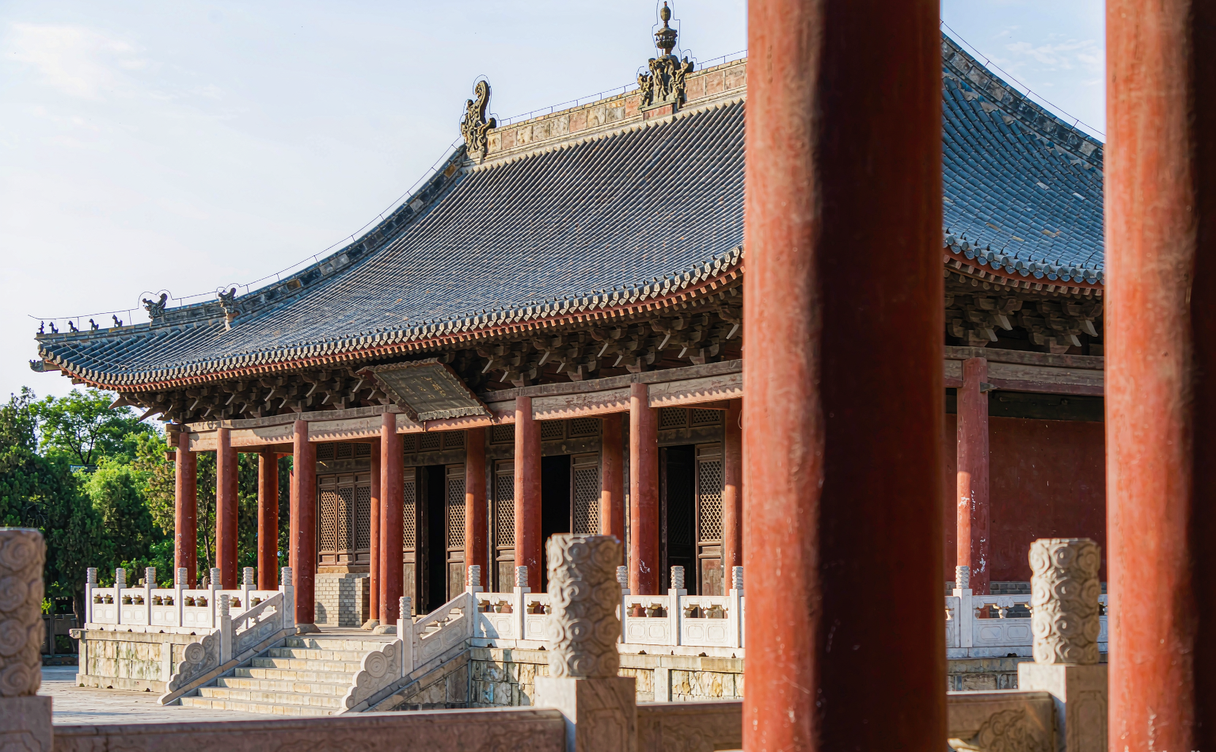
Yongle Palace sits on the western edge of Ruicheng County, in Yuncheng Prefecture, Shanxi Province. It was originally built in the mid-13th century during the Yuan dynasty to honor Lu Dongbin, a Tang-dynasty Taoist sage who is counted among the Eight Immortals and who, according to legend, was born on this very ground. What makes the place extraordinary is not its architecture alone but the murals: more than 1,000 square meters of wall painting, the largest and best-preserved body of Yuan-dynasty Taoist mural art anywhere in the world. The centerpiece is the Chaoyuan Tu (“Painting of the Assembly of Primordials”) in the Sanqing Hall, a single composition covering roughly 403 square meters and depicting 286 celestial officials, attendants, and deities in flowing robes, each face individualized, each gesture deliberate.
A palace that moved mountains (and itself)
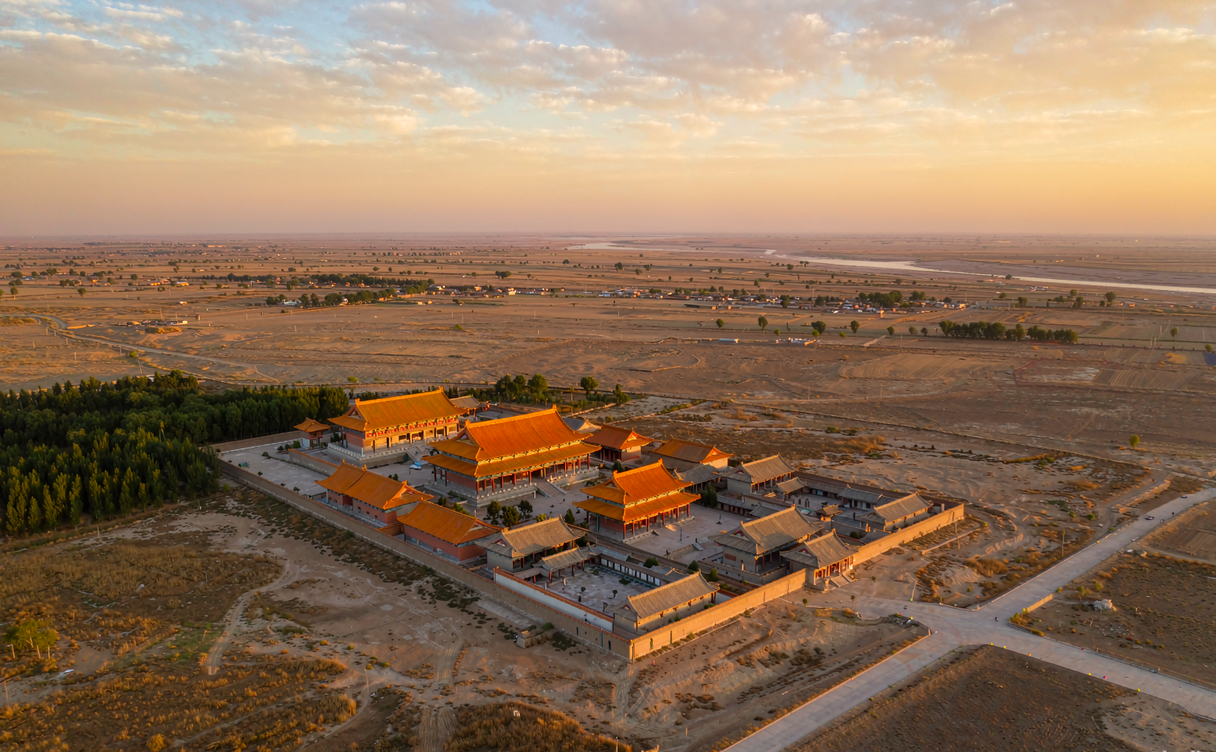
The single strangest fact about Yongle Palace is that you are not standing where it was built. In the 1950s, the construction of the Sanmenxia Dam on the Yellow River threatened to flood the original site near the town of Yongle. Rather than lose it, Chinese conservators did something that still sounds impossible: they cut the murals and buildings into numbered sections, moved the entire complex about 20 kilometers (12 miles) to higher ground at Ruicheng, and rebuilt it stone by stone and brushstroke by brushstroke. The relocation took nearly a decade and is considered a landmark achievement in 20th-century heritage conservation. When you stand inside the halls today, the seams are nearly invisible. That backstory alone makes a visit here feel like stepping into a rescue mission that succeeded.
What to see: the four great halls
A practical Yongle Palace guide should start with the layout. The compound follows a traditional south-to-north axis with four main halls, and each has its own mural program:
- The Gate Hall (Wuji Men) opens the complex with smaller guardian murals and sets the tone.
- The Sanqing Hall (Sanqing Dian) is the heart of the visit and holds the Chaoyuan Tu. Allow at least 40 minutes here alone.
- The Chunyang Hall (Chunyang Dian) depicts the life stories of Lu Dongbin in a continuous narrative band — think of it as a comic strip of a saint’s life, with daily scenes of markets, boats, and homes from 13th-century China.
- The Chongyang Hall (Chongyang Dian) carries murals about Wang Chongyang, the founder of the Quanzhen school of Taoism.
The linework in the Chunyang and Chongyang halls is a treasure trove for anyone curious about medieval Chinese costume, architecture, and street life, because the painters embedded ordinary people among the divine.
Things to do at Yongle Palace
Beyond simply looking, there are a few things to do at Yongle Palace that make the visit memorable. Arrive when the doors open so the halls are empty and the light is soft; the murals are lit indirectly to protect the pigments, so a calm early visit lets you actually study faces rather than fight reflections. Hire the English audio guide or a local guide at the ticket office — the symbolism (who holds what, why a deity faces a certain direction) is almost impossible to decode alone. I spent a happy hour just tracing the pattern of the clouds that weave every figure together; the painters used a single rolling cloud band to unify hundreds of characters into one composition. Bring a notebook and sketch, or simply sit on the bench outside the Sanqing Hall and let the scale sink in.
Planning your visit: tickets, hours, and money
Entry is inexpensive for a site of this caliber. As of the latest season, a standard ticket runs about CNY 60 (roughly USD 8–9), with occasional combined tickets during local festivals. The palace is open roughly 8:00 to 17:30 in summer and closes a little earlier in winter; last entry is usually an hour before closing. Photography of the murals is forbidden inside the halls to protect the paint, but the courtyards, the glazed-tile roofs, and the exterior are fair game. Budget two to three hours for a relaxed visit, or half a day if you are a serious art lover. There is a small café and souvenir counter near the exit selling rubbing prints and books — prices for a quality mural art book run CNY 80–180.
Best time to visit Yongle Palace
The best time to visit Yongle Palace is spring (April to May) and autumn (September to October). Shanxi winters are cold and grey, and the open courtyards between halls become biting; summer is hot but the halls stay cool and shaded. I visited in late September and the light through the courtyard was golden, the tourist groups thin, and the walk between halls comfortable. If you want the compound to yourself, aim for a weekday and arrive at opening. You can read more about seasonal patterns across the province in our guide to the best time to visit China, which maps climate and crowds month by month.
How to get to Yongle Palace
Figuring out how to get to Yongle Palace is the main logistical challenge, because Ruicheng is small and not on a major high-speed line. The realistic approach:
1. Fly or take a train to Yuncheng (Yuncheng Guanque Tower Airport has domestic flights; Yuncheng North Station is on the high-speed network).
2. From Yuncheng, take a long-distance bus or a hired car to Ruicheng County — about 1.5 to 2 hours by road.
3. Within Ruicheng, a taxi to the palace gate is 10–15 minutes and costs a few dozen RMB.
If you are coming from the provincial capital, our Taiyuan travel guide explains how to board a high-speed train south to Yuncheng in roughly 2.5–3 hours. Trains are the comfortable choice for foreigners; our China high-speed train guide for foreigners walks through booking, real-name ticketing, and what to expect at the station. For a broader base, the Yuncheng travel guide covers where to sleep and what else to pair with the palace.
Where Yongle Palace fits in a Shanxi trip
Shanxi is the densest concentration of ancient wood architecture on the planet, and Yongle Palace pairs beautifully with other sites. Many travelers combine it with the Guandi Temple in Xiezhou, the Salt Lake of Yuncheng, and the nearby Pagoda of Fogong Temple further north. If your interest is art and heritage rather than hiking, it also complements a visit to the Datong murals and the Pingyao old town. For ideas on sequencing, see our roundup of the best things to do in China, which flags the country’s top heritage stops.
Why the murals matter historically
Scholars date the palace’s main murals to the 13th and 14th centuries, painted by teams of anonymous artisans under the patronage of the Yuan court’s Quanzhen Taoist establishment. The style blends the monumental figure tradition of Tang and Song painting with the decorative energy of the Yuan period. The Chaoyuan Tu alone is sometimes compared in ambition to the great Buddhist cave paintings of Dunhuang, but here the figures stand at human scale and meet your eye directly. For a neutral, well-sourced overview of the site’s history and significance, the Yongle Palace entry on Wikipedia is a reliable starting point before or after your visit.
A few practical tips
- Dress in layers. The halls are cool even in summer; the courtyards are exposed.
- Go slow. This is not a tick-box attraction. The reward scales with attention.
- Combine with a local meal. Ruicheng and Yuncheng are known for Shanxi noodles, braised pork, and sour-soup dishes; a bowl of youtiao dipped in soy milk or a plate of hand-pulled noodles costs CNY 15–35.
- Cash and apps. Carry some cash; Alipay and WeChat Pay work but can be tricky for short-term visitors without a Chinese bank card.
Yongle Palace is the kind of place that changes how you see Chinese art. Most foreign itineraries rush to the famous walls and peaks; this quiet compound in western Shanxi offers something rarer — a chance to stand inside a 700-year-old painting and feel the crowd of immortals looking back. If you are assembling your own route, our China travel guide for first-timers ties together transport, etiquette, and must-see regions so the logistics never overshadow the wonder.