

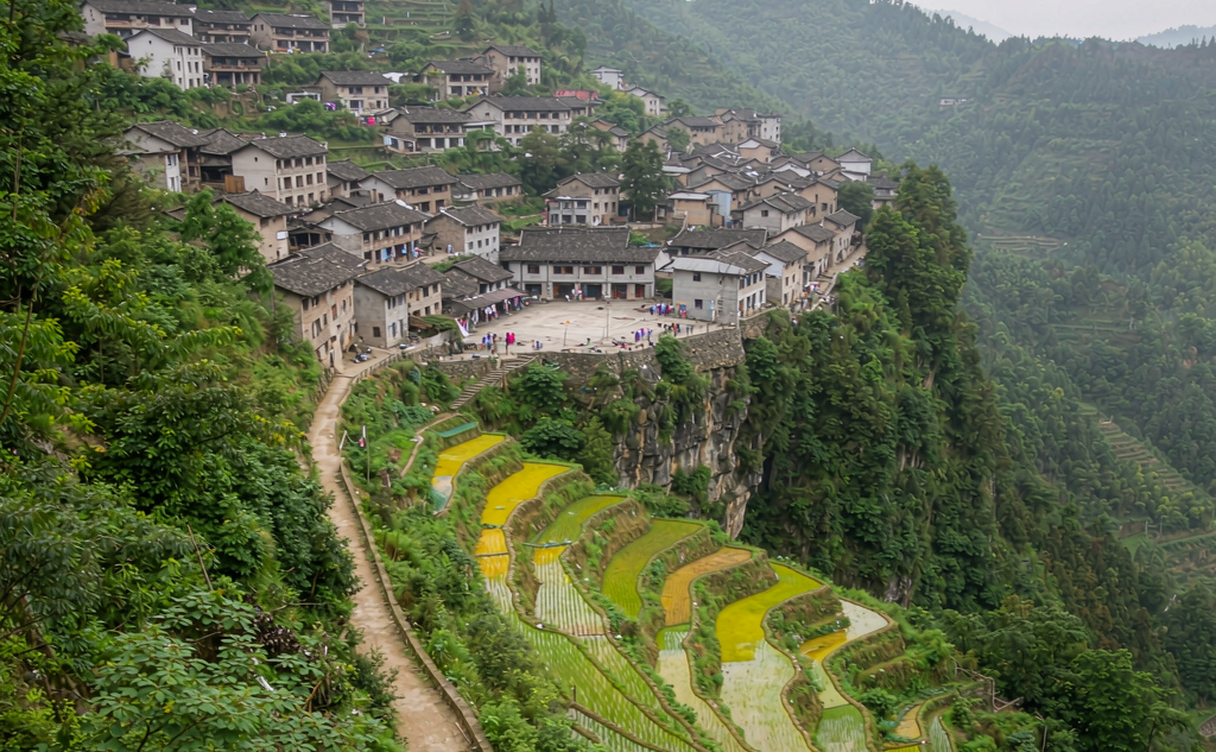
Pingshun (平顺) is a county in southeastern Shanxi Province, wedged against the Taihang Mountains where the loess plateau drops abruptly into deep red-rock gorges. It is one of those places Chinese drivers know for the jaw-dropping cliff roads but foreign travelers almost never reach. On our last visit in September, we followed the old Hongti Pass route and stood at a viewpoint where the canyon fell away a thousand meters beneath us, with terraced villages clinging to the rim. This guide collects the practical, first-hand details we give clients—real prices, the best months, transport, and the honest caveats.
Why Pingshun is worth the mountain drive
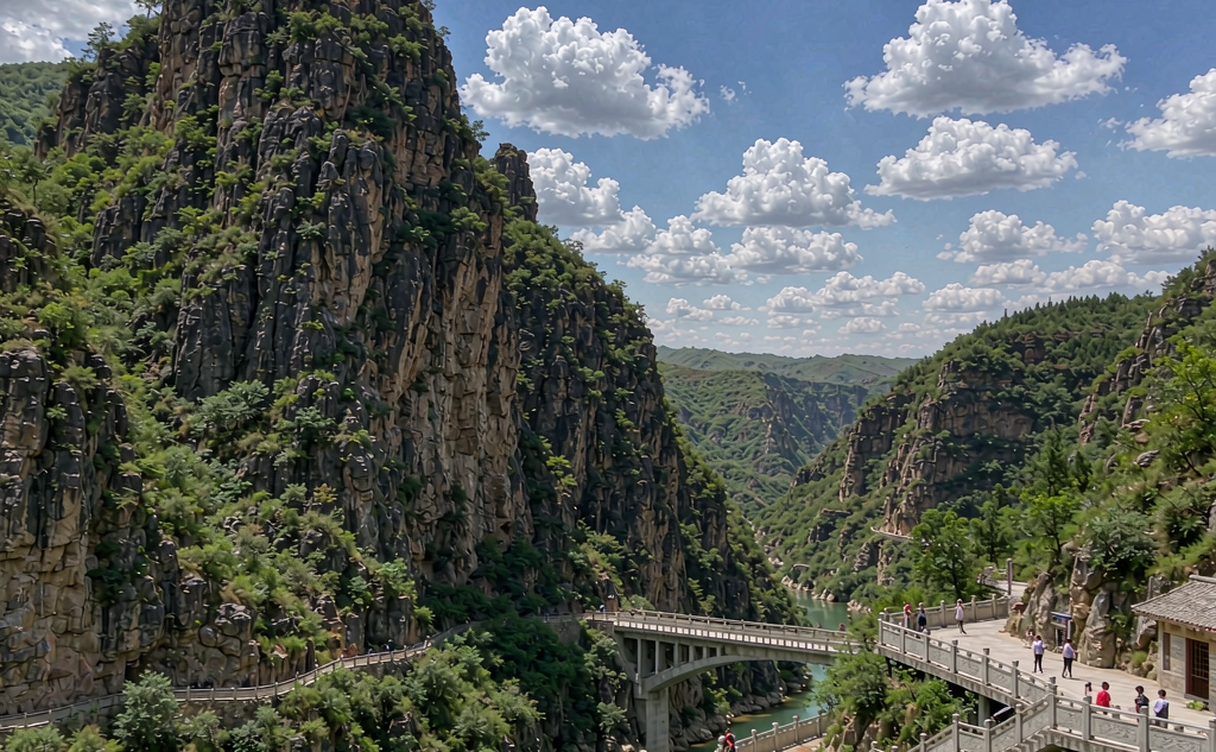
Shanxi is famous for Datong’s grottoes, Pingyao’s walls, and Taiyuan’s temples, but Pingshun offers the province’s wild side. The Taihang Grand Canyon here is a dramatic ribbon of cliffs, waterfalls, and hanging villages that feels closer to Zhangjiajie than to the wheat plains people imagine. We have sent hikers, drivers, and photographers here and the reaction is always “why have I never heard of this?” The Hongti Pass, an ancient stone-paved trade route over the ridge, adds history to the scenery. If you want nature with your Shanxi culture, this is the stop.
Best time to visit Pingshun
Autumn (September–October) is the standout: the gorge cools to 15–24°C by day, the sky is clear, and the terraces turn amber. Spring (April–May) is the second choice, with green valleys and fewer tourists, though occasional sand-laden winds from the north can dull the views. We avoid July and August, when summer rain turns the canyon streams violent and the roads slick; landslides occasionally close the pass after heavy storms. Winter is cold and some scenic facilities shorten hours, but the frozen waterfalls draw a small hardy crowd. Daytime temperatures in the gorge run 10–25°C by season, and nights are cool—pack a layer even in September.
How to get to Pingshun
The practical gateway is Changzhi, the nearest city with an airport and rail link, or Taiyuan if you are coming from the north. From Changzhi, county buses to Pingshun town take about 1.5–2 hours and cost ¥25–40 ($4–6); from Taiyuan it is a 3–4 hour drive or bus (¥60–90). Once in the county, the canyon and Hongti Pass are another 40–70 minutes by road, and public transport is thin, so most of our clients hire a car (¥300–500 / $43–72 for a day) or join a driver from Changzhi. Self-driving is rewarding if you have read our China road trip guide, but the cliff roads demand respect—we do not recommend them for nervous drivers or after dark. Our Changzhi travel guide explains the city base and onward connections.
Things to do in Pingshun
The Taihang Grand Canyon is the headline: a scenic area with walkways, waterfalls, and a cable section (combined entry and shuttle around ¥100–140 / $15–20) that carries you over the void for the big views. We have found that the side trails to the smaller falls are quieter and better than the main deck. The Hongti Pass itself is a stone-paved ancient road with a restored gate tower and sweeping ridge panoramas—free to walk and far less crowded. For a wider Shanxi plan, the Pingyao ancient town guide and the Datong travel guide are the classic culture add-ons, while the Taiyuan travel guide is the northern base. Hikers should also see our China hiking treks guide for nearby ridge routes.
A practical Pingshun travel itinerary
A relaxed two-day version works best. Day one: travel from Changzhi or Taiyuan to Pingshun town, afternoon at the canyon’s lower section, overnight in the county (guesthouses ¥160–300 / $23–43; a few gorge-side lodges run ¥400–600). Day two: sunrise at a canyon viewpoint, hike the Hongti Pass, then return. If you want a fuller Shanxi loop, pair Pingshun with Pingyao’s old town and Datong’s Yungang Grottoes over five to seven days, using Taiyuan as the hub. We usually tell first-timers to give the canyon a full morning—the light is best before 10 a.m. and the tour buses arrive later.
Practical tips and honest caveats
The canyon rim is high (viewpoints around 1,000–1,500 m) with real drop-offs and few barriers in places—keep a close eye on children and don’t lean over for photos. Weather shifts fast; we have been caught in a September downpour that swelled the streams within minutes, so check the forecast and avoid the gorge during heavy rain. Mobile coverage is spotty on the ridge, so download offline maps and tell your driver your plan. Food and lodging are basic in the county; book the better gorge-side rooms ahead for October, the peak month. And a frank note: some “canyon” tickets bundle optional shuttles you may not need—buy only what you’ll use to avoid padded costs.
The mountains and the old pass
Pingshun lies on the Taihang range, the great east-facing escarpment documented by Wikipedia’s Taihang Mountains entry, which explains why the terrain here is so abruptly vertical. The Hongti Pass was once a key trade artery carrying goods and travelers over the ridge, and walking its worn stones connects you to centuries of mountain commerce. We like to tell clients that the pass and the canyon together show two sides of the Taihang: the wild geology and the human persistence that built a road across it. Local elders in the rim villages still recount the old mule trains, a living memory worth seeking out.
Where to eat and sleep
Pingshun town eats simply: hand-made noodles (¥12–20), Shanxi vinegar-braised dishes (¥25–40), and hearty millet porridge for breakfast. The province’s famous aged vinegar shows up on nearly every table—try it on the noodles. For lodging, the family guesthouses are clean and cheap but basic; the newer gorge-side lodges cost more and offer better dawn access. Our Huashan mountain guide is worth reading if you extend south into Shaanxi, since Huashan’s precipitous trails share the same Taihang-linked cliff culture and make a thrilling next step.
Extending through Shanxi and beyond
Pingshun sits at Shanxi’s southeast corner, close to the Henan and Hebei borders, so it pairs naturally with the province’s heritage trail: Taiyuan’s temples, Pingyao’s walls, and Datong’s grottoes to the north. Southward, the cliff culture continues toward Huashan in Shaanxi. We usually advise giving Shanxi at least five days if you want both the canyon air and the ancient towns, and to drive the Taihang routes in daylight only. The scenic contrast—misted gorges one day, lantern-lit old streets the next—is what makes the region so rewarding.
Responsible travel on the cliff roads
The Taihang rim is spectacular but unforgiving, and we take safety seriously. We tell every client to hire an experienced local driver rather than risk the gorge at dusk, to stay behind barriers at viewpoints, and to check the weather before any ridge walk after rain. The hanging villages welcome visitors but have limited medical help, so travel insurance and a charged phone matter. Buying a meal or a handicraft from a rim household supports families who keep these remote settlements alive through hard winters.
Final thoughts
Pingshun is the Shanxi that guidebooks skip: red cliffs, hanging villages, and an old stone pass where the plateau meets the sky. Go in autumn, drive the rim in daylight, and let the canyon’s scale reset your sense of scale. Plan transport and a room ahead, respect the drop-offs, and you will leave with a wilder, deeper picture of China’s loess heartland.