

Huashan has a reputation problem — in the best possible way. Search for it online and you’ll find the infamous plank walk: wooden boards bolted to a sheer granite face, hikers clipped to a chain, two thousand meters of air below their heels. But the plank walk is optional, and reducing Huashan to a single adrenaline stunt sells the mountain short. This is one of China’s five sacred Taoist peaks, a fist of pale granite rising 2,154 meters above the Wei River plain, laced with chain-assisted staircases, cliff-carved temples, and ridgeline paths that feel closer to via ferrata than hiking trail. This Huashan Mountain guide covers how to get there from Xi’an, which cable cars to take, route difficulty, and how to survive (and love) the steepest staircase network in the country.
Best Time to Visit Huashan
The best time to visit Huashan is April–May and September–October, when skies are clearest and temperatures on the exposed granite are comfortable. Summer works too, but afternoon thunderstorms roll in fast and the rock offers zero shade; start early. Winter transforms the peaks into a white-granite dreamscape, and the trails stay open, but ice makes the steep sections genuinely serious — crampon-style shoe chains are sold at the base and are not a gimmick.
Avoid Chinese public holidays (early May, first week of October) when queues for the cable cars can exceed two hours. If a sunrise from East Peak is on your list, weekdays in autumn give you the best odds of clear horizons. Cross-check dates with our best time to visit China overview when building your Shaanxi leg.
How to Get There
Huashan sits 120 km east of Xi’an, making it the classic big-mountain day trip from the Terracotta Warriors city. The high-speed rail option is so fast that many travelers go out on the first train and return after sunset.
| From | Option | Time | Approx. Cost |
|—|—|—|—|
| Xi’an North Station | High-speed train to Huashan North | 30–40 min | RMB 55 (USD 8) |
| Xi’an city | Tourist bus from Xi’an Railway Station | ~2 hours | RMB 40 (USD 6) |
| Huashan North Station | Shuttle/taxi to visitor center | 10–15 min | RMB 10–30 |
| Xianyang Airport | Direct train via Xi’an North | ~1.5 hours total | RMB 80–100 |
Buy train tickets a day or two ahead in peak season; our China high-speed train guide for foreigners walks through passport-based booking. Park entry costs around RMB 160, valid for two days — handy if you overnight on the summit.
Cable Cars, Routes, and Difficulty
Cable Car Options
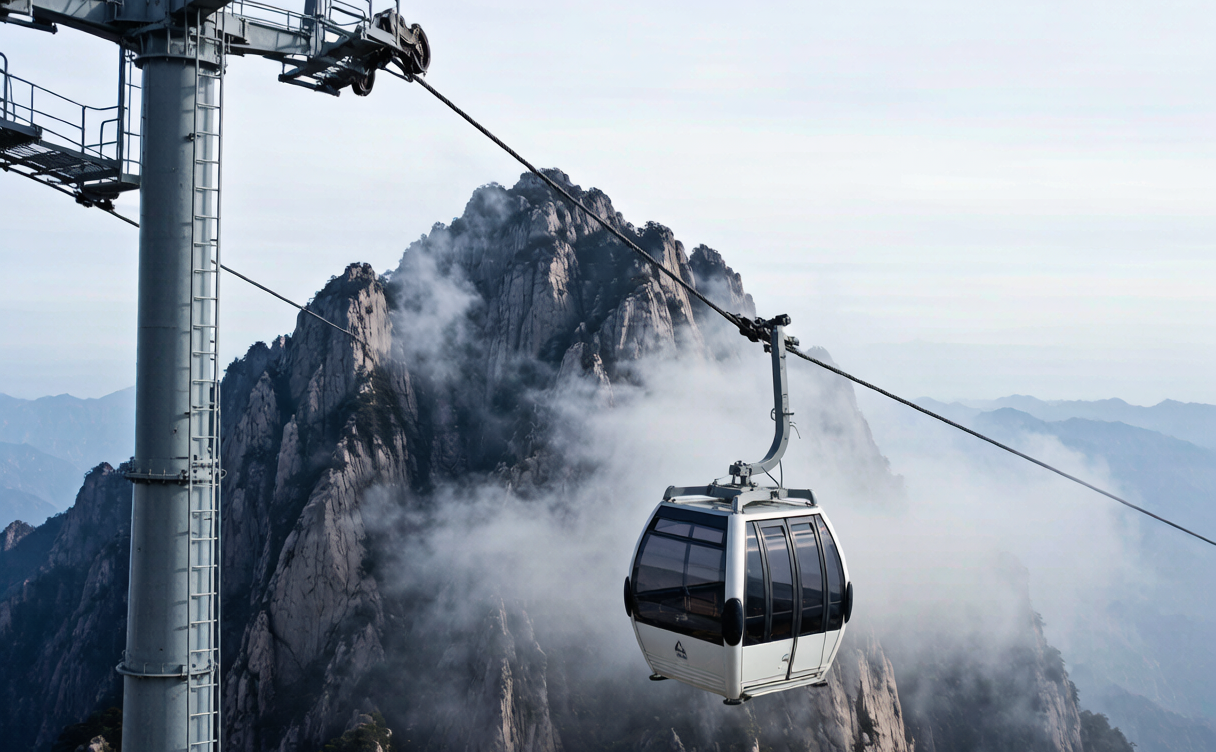
Two cablecars serve the mountain, and choosing between them shapes your whole day:
- North Peak Cable Car (Yuntai): the original line, RMB 80 one way, reaching North Peak (1,614m) in about 8 minutes. From there you still climb 700+ vertical meters along the knife-edge Canglong Ridge to reach the higher peaks.
- West Peak Cable Car (Taihua): a 20-minute engineering marvel, around RMB 140 one way plus a RMB 40 shuttle. It deposits you near West Peak (2,082m), putting all the summits within relatively easy reach.
The most popular strategy: ride the West Peak cable car up, traverse the summit circuit, descend via North Peak cable car. It typically starts running around 7am–8am depending on season.
Hiking Routes and Difficulty
- The Soldiers’ Path (Huashan Yu): the traditional 6-km ascent from the base to North Peak, 3–5 hours of relentless stairs including the near-vertical Thousand-Foot Precipice, where you haul yourself up chains. Strenuous but spectacular; many hikers do it overnight to catch sunrise.
- Summit circuit: linking North, Central, East, South (2,154m, the highest), and West peaks takes 4–6 hours with constant ups and downs on stone stairs. Moderate to hard, with chains on the steep bits.
- Plank Walk in the Sky: a short out-and-back detour near South Peak, about RMB 30 for the harness rental. You clip onto a safety cable the whole way. Terrifying, optional, and weather-dependent — queues can add an hour in peak season.
Huashan is a stair mountain, not a scramble: no technical skill is needed, but knees and nerves get a workout. Gloves (sold everywhere on the mountain for a few RMB) save your palms on the chains. For more multi-day trekking ideas across the country, see our China hiking and treks guide.
Altitude and Safety
At 2,154m, altitude sickness is not a concern for most visitors — the challenge is exposure and fatigue. Stay behind railings, keep three points of contact on chain sections, and don’t attempt icy descents without shoe chains in winter. The mountain closes sections during thunderstorms and high wind. Solo night hiking is popular but only sensible with a headlamp, warm layers, and a charged phone; general precautions are covered in our China travel safety tips.
Where to Stay
Huashan town (base): plenty of budget and mid-range hotels within a taxi ride of the visitor center, doubles RMB 150–400. Convenient for early cable car starts.
On the mountain: simple guesthouses sit near North, East, and West peaks, charging RMB 300–800 for basic rooms or dorm beds — you’re paying for location, not luxury. Book ahead for weekends. Sleeping at East Peak puts you steps from the sunrise platform.
Xi’an: with the 30-minute bullet train, many travelers skip Huashan lodging entirely and keep their Xi’an hotel.
What to Eat
Food on the mountain is carried up by porters, so prices double or triple with altitude — instant noodles hit RMB 15–25 and bottled water RMB 10 on the summits. Carry snacks and at least 1.5 liters of water per person. In Huashan town, look for Shaanxi classics: biangbiang noodles with chili oil, roujiamo (crispy pork “burger”), cold liangpi noodles, and hulutou soup for the adventurous. A hearty noodle dinner runs RMB 20–40. Xi’an’s Muslim Quarter remains the region’s food headquarters if you return the same evening.
Sample Itinerary
1 day (most popular): Early train from Xi’an, West Peak cable car up by 9am, circuit South Peak → plank walk (optional) → East Peak → Central Peak, descend Canglong Ridge to North Peak, cable car down, evening train back.
2 days: Day one, ascend on foot via the Soldiers’ Path in the afternoon, overnight near East Peak. Day two, sunrise at East Peak, full summit circuit at leisure, West Peak cable car down.
Practical Tips
- Wear grippy shoes; the polished stone steps are slick even when dry.
- Buy gloves at the base for the chain sections.
- Cash in small notes helps at summit stalls, though mobile payment works nearly everywhere.
- The park typically opens around 7am; last cable cars descend around 6pm–7pm in high season — confirm times on the day.
- Luggage storage is available at Huashan North station and the visitor center.
- Check the official listing on the Shaanxi provincial tourism pages via China’s national tourism portal for current notices before travel.
FAQ
Is the plank walk mandatory?
No — it’s a paid, optional detour near South Peak. The main circuit never requires it, and plenty of visitors skip it entirely.
How hard is Huashan for an average hiker?
The cable-car-assisted circuit is moderate: 4–6 hours of stone stairs with railings and chains. The full foot ascent is strenuous. Reasonable fitness and no fear of heights are the real prerequisites.
Can I do Huashan as a day trip from Xi’an?
Easily — the 30-minute high-speed train makes it one of China’s best big-mountain day trips. Start on the earliest train you can manage.
Which cable car should I take?
Up on the West Peak line, down on the North Peak line gives maximum scenery for minimum climbing. Doing it in reverse means a long uphill grind on Canglong Ridge.
Is Huashan safe?
Yes, with common sense. Modern railings and mandatory harnesses on the plank walk have made the mountain far safer than its reputation suggests. Winter ice is the main genuine hazard.
Is it suitable for first-time visitors to China?
Absolutely — signage is bilingual and logistics are simple. Our first-timer’s China guide covers the visa, payment, and app setup you’ll want beforehand.
Written by Karl Huang, updated July 2026.