

Shenzhen was a string of fishing villages in 1979 and is now a megacity of roughly 17 million people. That backstory matters for anyone writing a Shenzhen food guide, because unlike neighboring Guangzhou or Shantou, Shenzhen has no single “local” cuisine you can point to on a map. Instead, it is China’s largest tasting menu of everywhere else. On a recent scouting trip for our southern-China routes, we sent clients through Shekou, Laojie and the coastal stretch toward Dameisha, and the daily rhythm was clear: Cantonese at breakfast, Sichuan by lunch, and grilled squid off a folding-stall at midnight. This article breaks down what to eat in Shenzhen, where to find it, what it costs, and how to plan a short eating-focused trip as of 2026.
How a Migrant City Built Its Table
Most travelers assume Shenzhen food means Cantonese food, and they are half right. The city sits inside Guangdong, so the Cantonese base is real — but the people cooking and eating here came from every province. Each wave of migrants opened the restaurants they missed from home. Walk one block in Luohu and you can pass a Teochew congee shop, a Dongbei dumpling counter, a Chongqing noodle stall and a Hakka braised-pork canteen without crossing a main road.
That density is the city’s real culinary identity. Shenzhen cuisine, if the phrase means anything, is the skill of pulling a nationwide menu into a single dense grid of storefronts. We often tell first-time visitors: don’t hunt for one “Shenzhen dish.” Hunt for the best version of whatever region you are standing near.
Dim Sum and the Cantonese Base
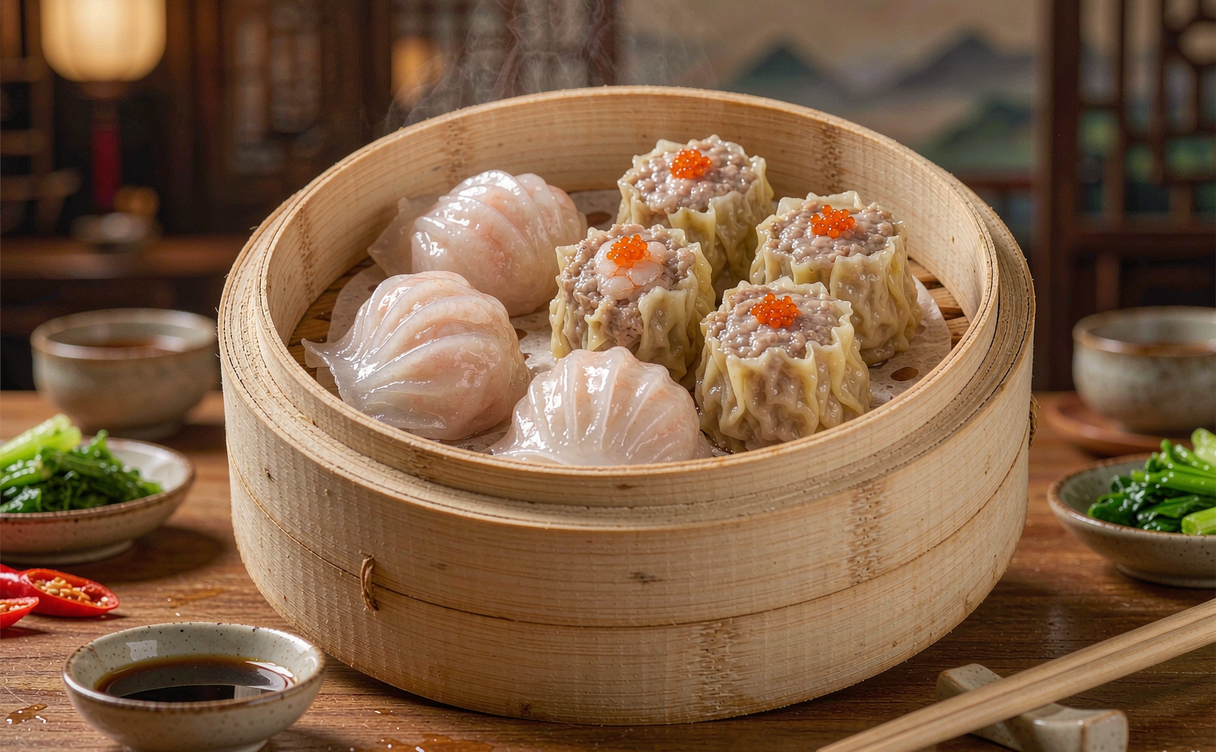
The Cantonese thread runs through everything, and the cleanest place to start is morning yum cha. Shenzhen dim sum ranges from bleary 6 a.m. neighborhood halls where a basket of har gow costs ¥8–12, to hotel restaurants in Futian where the same basket runs ¥28–38 and the waiters push carts of tripe, rice rolls and custard buns. A solid weekday breakfast for two at a middle-tier place lands around ¥60–90. On weekends, expect queues at the popular chains by 9:30 a.m.
If you want to understand the ritual before you go, our Guangdong yum cha guide walks through the etiquette, the dishes worth ordering, and how to read a push-cart menu. In Shenzhen specifically, we steer clients toward the older halls in Luohu and the waterfront spots in Shekou, where the seafood dim sum — steamed scallop with vermicelli, squid rolls — is noticeably fresher than the inland branches.
Dai Pai Dong and Street Food After Dark
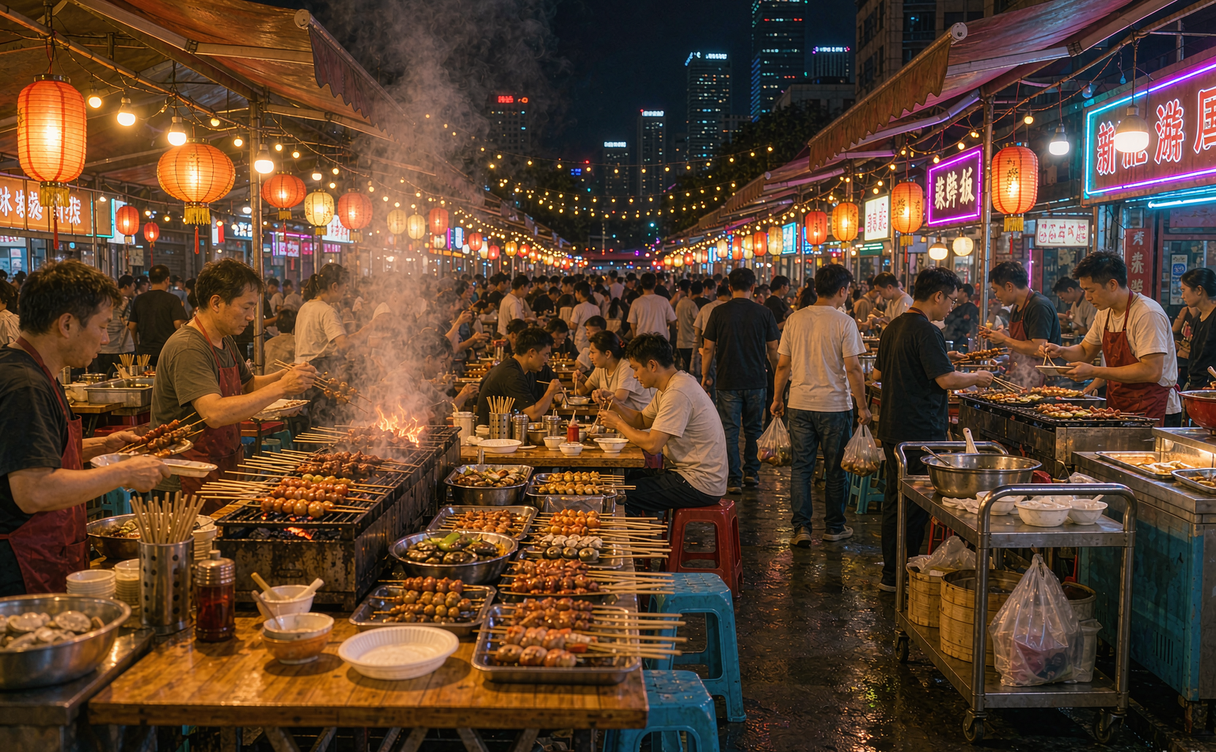
After dark the city shifts to dai pai dong — the open-air, wok-fired casual eateries that Guangdong is famous for. Shenzhen street food centers on a few reliable formats: clay-pot rice (bo zai fan) finished with a crackling crust for ¥22–35, late-night congee with fish slices or offal for ¥12–18, and skewer grills outside the metro exits near Huaqiangbei and Xiangmi.
The best cheap eats we found on the last trip were in the old Luohu lanes behind the train station, where a full plate of clams in black-bean sauce and a Tsingtao cost under ¥50. For a livelier scene, the coastal promenade at Dameisha and the night stalls around OCT Loft draw a younger crowd and stay busy until 1–2 a.m. on weekends.
When the Rest of China Arrives
Shenzhen’s migrant majority means the “regional” food is not a novelty — it is the default. The Sichuan and Hunan counters are where office workers actually eat lunch, so the chili oil is authentic, not watered down for tourists. A bowl of Chongqing-style noodles or a Hunan cumin lamb rice runs ¥18–28 and comes fast. Dongbei (Northeastern) restaurants cluster around the universities and serve dumplings by the steamer and cold noodles in summer.
We send clients chasing heat to the Sichuan lanes in Nanshan; a hotpot for two with beers sits around ¥120–180, and the broth is the real mala numbing pepper, not a mild export version. This is also where Shenzhen rewards the curious: the best meal on our March recce was a ¥15 bowl of Guizhou sour-trotter noodles from a stall with no English sign, found by following the queue.
Best Restaurants in Shenzhen by Neighborhood
When clients ask us for the best restaurants in Shenzhen, we answer by district, because location decides both price and style:
- Futian (CBD): Hotel dim sum and polished Cantonese banquet houses. Budget ¥120–250 per person for dinner.
- Luohu (old core): Cheapest authentic eats, dai pai dong, and the classic Luo Hu commercial city food court. ¥25–60 per person.
- Nanshan / Shekou: Expat-friendly, strong seafood and international options near the sea. ¥80–180 per person.
- OCT Loft & Window of the World area: Cafe culture, craft beer, and younger chef-driven small plates. ¥70–150 per person.
For a deeper city overview — transport, districts and sightseeing — see our Shenzhen travel guide, which pairs well with a food-focused day or two. If you want the older sister city’s scene too, our Guangzhou travel guide covers the one-hour-high-speed hop north.
How to Get There and When to Go
Shenzhen is built around two hubs: Shenzhen Bao’an International Airport (SZX) for flights, and a web of high-speed stations — Shenzhen North being the main one — linking to Guangzhou in about 30 minutes and to Hong Kong, China’s border in under 20 minutes by metro. Train travel is the move for most visitors; our China high-speed train guide for foreigners explains ticketing and seat classes in plain terms.
Timing matters. The best window for eating your way through the city is October to April, when the humidity drops and the outdoor dai pai dong scene is comfortable. Summer (May–September) is hot and wet, though it is also when the coastal seafood and cold noodles shine. For a month-by-month read on the wider region, our best time to visit China guide is the place to start.
Ready to eat across southern China without the guesswork? Plan a custom route with our China food tour guide and we’ll build Shenzhen, Guangzhou and Shantou into one seamless trip.
A Two-Day Eating Plan
For a short stop, here is the itinerary we hand clients:
Day 1 — Cantonese foundation. Morning yum cha in Luohu. Afternoon snack of clay-pot rice and milk tea. Evening dai pai dong crawl near Huaqiangbei, ending with late congee.
Day 2 — China in one city. Brunch at a Shekou seafood dim sum house. Lunch of Sichuan noodles in Nanshan. Evening at OCT Loft for small plates and craft beer, then a walk along the bay.
That pace leaves room to breathe and still covers the spread that makes Shenzhen distinct.
Want this plan pre-booked with restaurant picks and a local food guide? Browse our ready-made southern itineraries and we’ll handle the reservations for you.
Where to Stay for Easy Eating
Location decides your food access. Stay in Luohu if you want the cheapest, most authentic holes-in-the-wall within walking distance; stay in Futian for upscale Cantonese and easy metro rides; stay in Shekou if seafood and a calmer waterfront evening appeal. Mid-range hotels across these districts run ¥350–700 per night as of 2026, with four-star waterfront options in Shekou closer to ¥800–1,200.
Practical Notes for 2026
A few things we flag to every client. Mobile payment dominates: Alipay and WeChat Pay both now accept foreign cards, but carry ¥200–300 in cash for the smallest dai pai dong stalls that are still cash-only. English menus are rare outside Futian and Shekou hotels, so a translation app and the Chinese dish names saved to your phone go a long way. Booking is easy for hotel restaurants (same-day or the day before on their mini-programs); the best hole-in-the-wall places take no bookings at all — go early or queue.
Shenzhen rewards appetite over itinerary. The city’s whole story is people arriving hungry and opening a kitchen, and four decades later the result is a food scene with no center and no end. Come expecting to graze, not to dine in one sitting.
For background on the city’s growth and layout, the Shenzhen entry on Wikipedia is a useful reference.
Planning a longer southern China trip? Pair Shenzhen with Guangzhou and Shantou and turn a layover into a proper eating tour.