

I have sent dozens of travelers to Guilin, and almost none of them arrived hungry for the right thing. They expect the postcard karst and the Li River, then act surprised that the bowl of noodles at their hotel corner costs ¥7 RMB and ruins every later breakfast. This Guilin food guide is the talk I give on the drive in: what to eat in Guilin, where the locals actually queue, and why the city’s cooking tastes different from the Cantonese food two provinces east.
Guilin sits in northern Guangxi, where Han, Zhuang, and Yao tables meet, and the result is a cuisine that is sour, pickled, and pork-forward rather than the light steam you find in coastal Guangdong. The rice is local, the river gives up fat carp, and the hills grow the taro and osmanthus that show up in almost every festive dish. You can eat very well here for little money if you know the few plates that matter.
Guilin Rice Noodles: The Breakfast That Runs the City
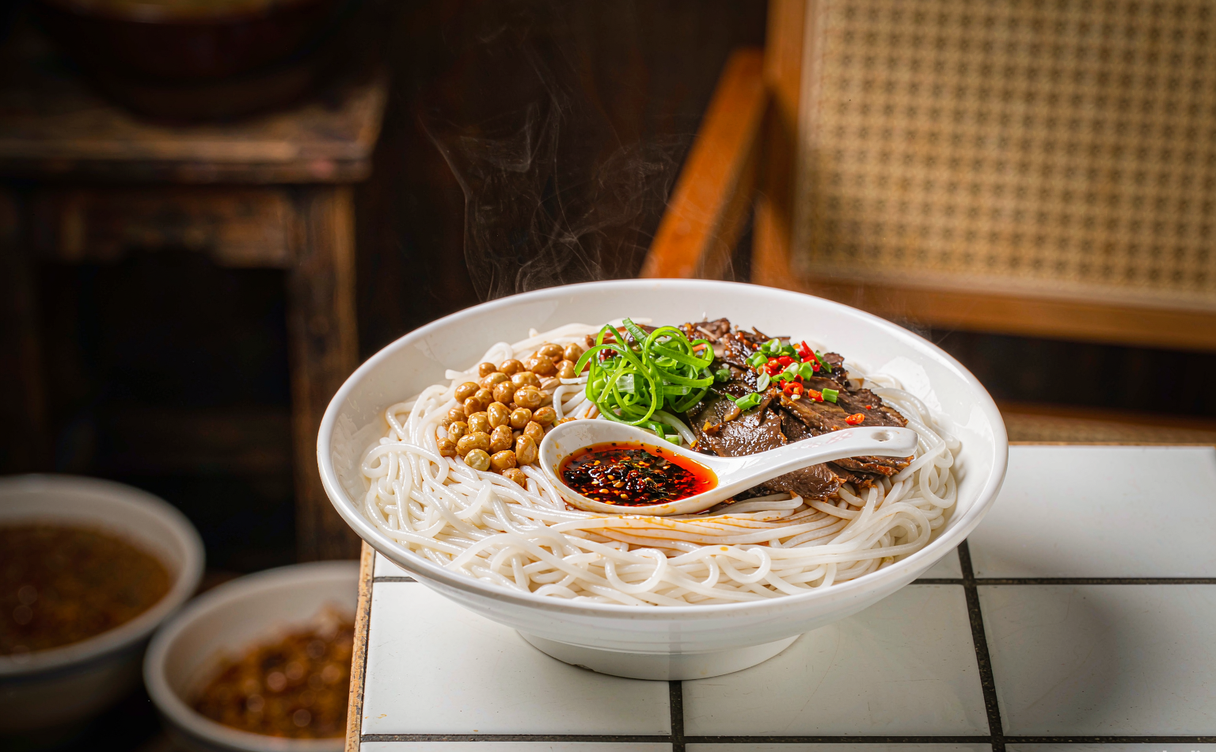
Start with the dish the whole city eats before 9 a.m. Guilin rice noodles (guilin mifen) are thin, springy rice threads served two ways: dry-tossed (gan bian) with fried peanuts, scallion, crushed soybeans, a spoon of chili oil, and slices of braised meat, or in a clear broth (tang mian). The move is to toss the dry version first, eat half, then pour the small bowl of hot stock over the rest and drink it down. A street bowl is ¥6–12 RMB; a sit-down version with extra meat runs ¥15–30 RMB.
The famous name is Lao Dongjiang (老东江米粉), a no-frills shop where the line moves fast and nobody speaks English, which is the point. I send clients there on a first morning and tell them to point at the pot. The noodles are made from Guilin-region rice, and if you want to see where that rice grows, the terraces in our Guilin Longji rice terraces guide are an hour and a half north and supply a good chunk of the local grain.
Guilin Beer Fish and the River Plates
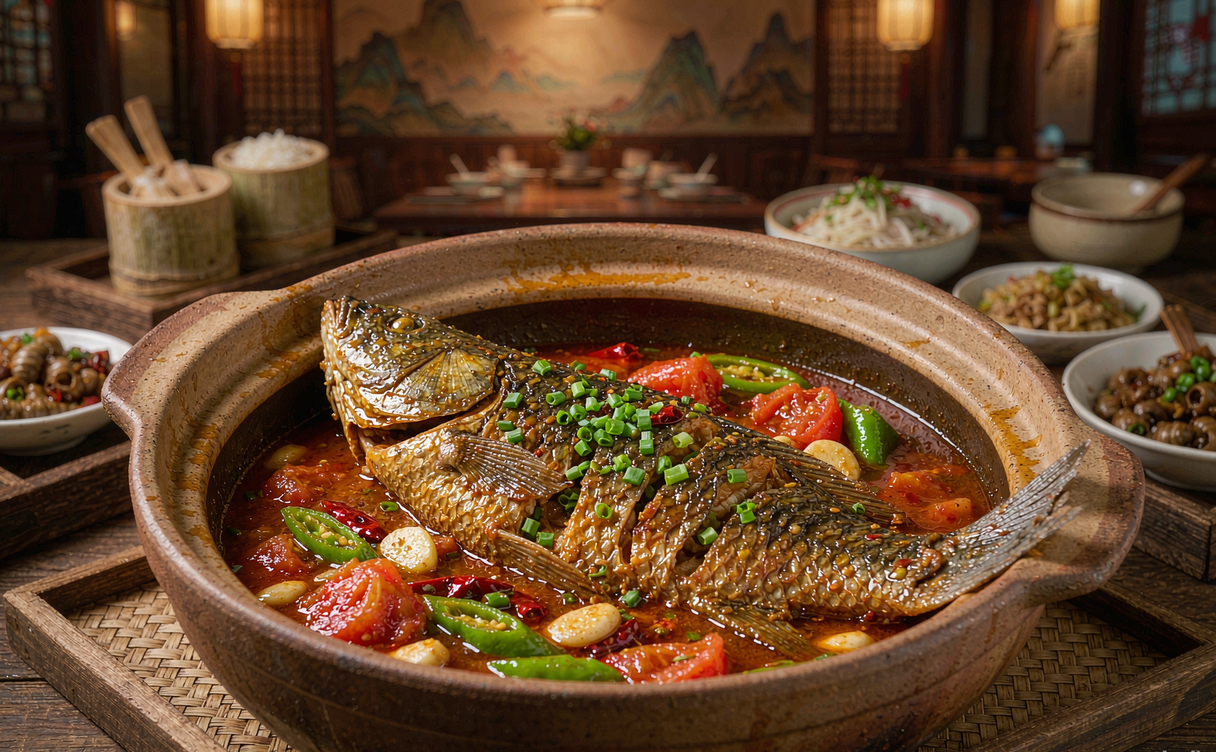
The headline dinner is Guilin beer fish (pijiu yu). It comes from Yangshuo, downriver on the Li, where cooks take a fresh carp or mandarin fish, fry it, then braise it in local beer with tomato and green pepper so the sauce turns sweet-sour and the bones soften. In Yangshuo a whole fish dish is ¥68–128 RMB depending on size; inside Guilin city you pay ¥58–98 RMB at a proper restaurant. The beer is there to tenderize, not to make you tipsy — kids eat it fine.
Around the beer fish sit the quieter Guilin cuisine classics. Lipu taro braised pork (Lipu yu kou rou) is the banquet dish: layers of fat pork and taro steamed until the fat turns to silk, ¥38–58 RMB. “Stuffed” vegetables (niang) — tofu, eggplant, chili, even bitter melon — packed with pork paste and steamed or pan-fried, run ¥28–45 RMB a plate. And osmanthus (guihua) turns up everywhere in autumn: osmanthus candy, osmanthus cake, and the sweet osmanthus wine that locals pour for guests. None of it is hot by Sichuan standards; the heat is a background hum, not a punch.
What to Eat in Guilin Beyond the Famous Two
Beyond noodles and fish, Guilin snacks are the real joy if you walk. Guilin-style stuffed snails (niang luosi) pack minced pork into river snails, a ¥15–25 RMB plate at night markets. The “three generals” fried rice and the paper-wrapped chicken (zhi bao ji) are old-school banquet holdovers worth one try. For a sweet close, osmanthus jelly and the local sanhua liquor (a clear rice spirit) are the souvenirs people actually finish.
The karst valleys that grow this food are part of the same limestone landscape UNESCO protects across southern China, and the UNESCO South China Karst listing covers the Guilin–Yangshuo peaks you will be eating beside. Reading it on the cruise makes the scenery feel less like a backlot and more like geology with a menu.
Best Restaurants in Guilin
Picking the best restaurants in Guilin is less about stars and more about which room fills with locals at 7 p.m. Chunji Roast Goose (椿记烧鹅) is the reliable chain for Cantonese-leaning banquet food and roast goose done right, ¥60–90 RMB a half bird, with branches across the city and English menus that work. Xiaonan Guo (小南国) does clean, mid-price Guilin home cooking — beer fish, taro pork, stuffed tofu — and is my default for first-timers who want everything in one safe order, around ¥80–120 RMB per person.
For noodles, skip the mall branches and use the corner shops: Minggui (明桂米粉) and Lao Dongjiang are the two I trust. For street energy, Zhengyang Pedestrian Street and the Shangshui food lane behind it pack stalls selling snails, barbecue, and osmanthus cakes late into the night; plan ¥30–60 RMB a head to graze. If you want the river view with the beer fish, take the Li River Guilin cruise guide down to Yangshuo and eat dockside where the fish is pulled that morning.
Pairing Meals With the Sights
Guilin’s attractions sit close enough that you can eat between them. The Guilin Elephant Trunk Hill is a 20-minute downtown walk from the best noodle shops, so I route clients there before a late breakfast. The Guilin Reed Flute Cave is north of the city and pairs with a lunch stop in the nearby villages for taro pork. None of these need a full day, which leaves the evening free for beer fish and a walk along the Two Rivers and Four Lakes lit waterfront.
Best Time to Eat in Guilin
The best time to visit China for food here is autumn (September–November), when the osmanthus is in bloom, the river fish are fat, and the weather is cool enough for broth noodles. Spring is good too; summer is hot and the beer fish tastes heavier, and the Spring Festival period closes many small shops for a week. Our best time to visit China page flags the holiday closures so you do not land during the quiet week.
A One-Day Guilin Eating Plan
7:30 a.m. — dry-tossed rice noodles at Lao Dongjiang. 9:30 a.m. — Elephant Trunk Hill, then a taro-pork lunch near the river. Afternoon — Reed Flute Cave, snack on osmanthus cake. 6:30 p.m. — beer fish and stuffed tofu at Xiaonan Guo, walk the lit lakes, end with osmanthus wine.
Frequently Asked Questions
Is Guilin food spicy? Mildly. Chili oil is on the side; ask for “bu la” (not spicy) and you will be fine.
Can I eat cheaply? Easily. Noodles ¥7 RMB, street snacks ¥15 RMB, a full dinner ¥60–100 RMB per person.
Vegetarian options? Yes — stuffed tofu, taro dishes, and green vegetable plates; tell the waiter “chi su.”
Worth a food tour? If you want the market backstory, our China food tour guide links Guilin into a wider eating route.
Build Guilin into a wider eating route with our China food tour guide, from noodles here to dumplings up north.
Time your trip for osmanthus and fat river fish using our best time to visit China calendar before you book.
Cruise the Li to Yangshuo for dockside beer fish with our Li River Guilin cruise guide and we will flag the best lunch stops.