

Most travelers blow through Wenzhou on the train and never taste it, which is a mistake I keep trying to fix. This Wenzhou food guide comes from stops where I have sent clients off the Beijing–Fuzhou line specifically to eat: the city sits on the coast of southern Zhejiang, where the Ou River meets the East China Sea, and its cooking is saltier, funkier, and more snack-driven than the famous Hangzhou and Ningbo tables up the coast. If you like seafood and small plates, Wenzhou rewards a curious appetite more than almost any city its size.
The local style is called Ou cuisine (Ou cai), one of Zhejiang’s smaller branches, and it leans on the day’s catch, a love of textured fish pastes, and a snack culture so deep that locals eat four or five small things between meals. You can eat brilliantly here for modest money, and the best bites are the ones sold from a cart at 7 a.m. rather than plated in a hotel. The city’s coastal story is worth a read before you go — the Wikipedia entry on Wenzhou sketches how the port and its trade built this snack-driven table.
Wenzhou Seafood: The Morning Catch Defines the Day
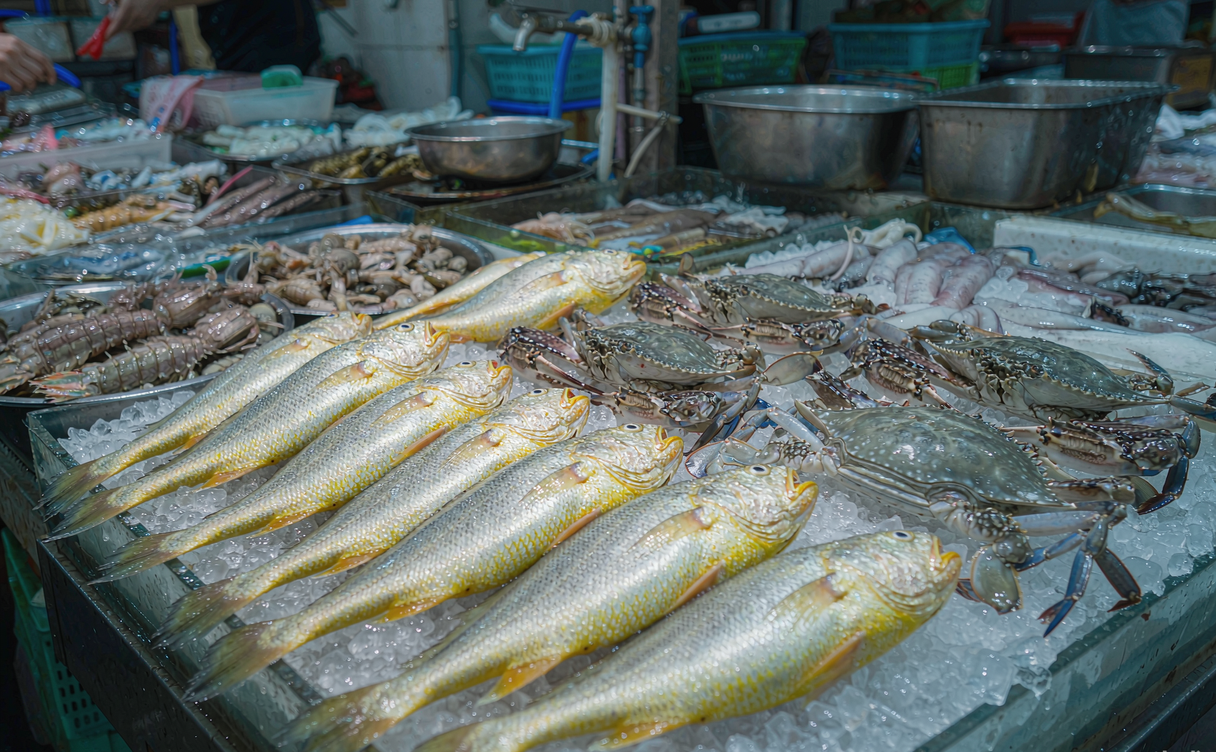
The heart of Wenzhou seafood is freshness measured in hours. The city’s fishermen land yellow croaker (da huang yu), razor clams, pomfret, and swimming crab, and the good restaurants buy at the dawn auction and write the menu on a whiteboard. A steamed yellow croaker, the prized local fish, runs ¥120–260 RMB depending on size and season; a plate of stir-fried razor clams with garlic is ¥38–58 RMB. I tell clients to pick the crab and fish from the tank and agree the price before cooking — that is how the city eats, and it avoids the tourist markup.
The cold dish to try first is jiang xie sheng, raw river or sea crab cured in liquor, soy, and ginger. It is Wenzhou’s answer to crudo: sweet, clean, and a little bracing. A small portion is ¥48–78 RMB. If raw crab worries you, the cooked version (steamed with egg) is the safe pivot and tastes of the sea without the edge. For context on the wider regional table, our Zhejiang cuisine guide places Wenzhou’s coastal style next to the lake-and-river cooking of the north.
Wenzhou Snacks: The Real Reason to Slow Down
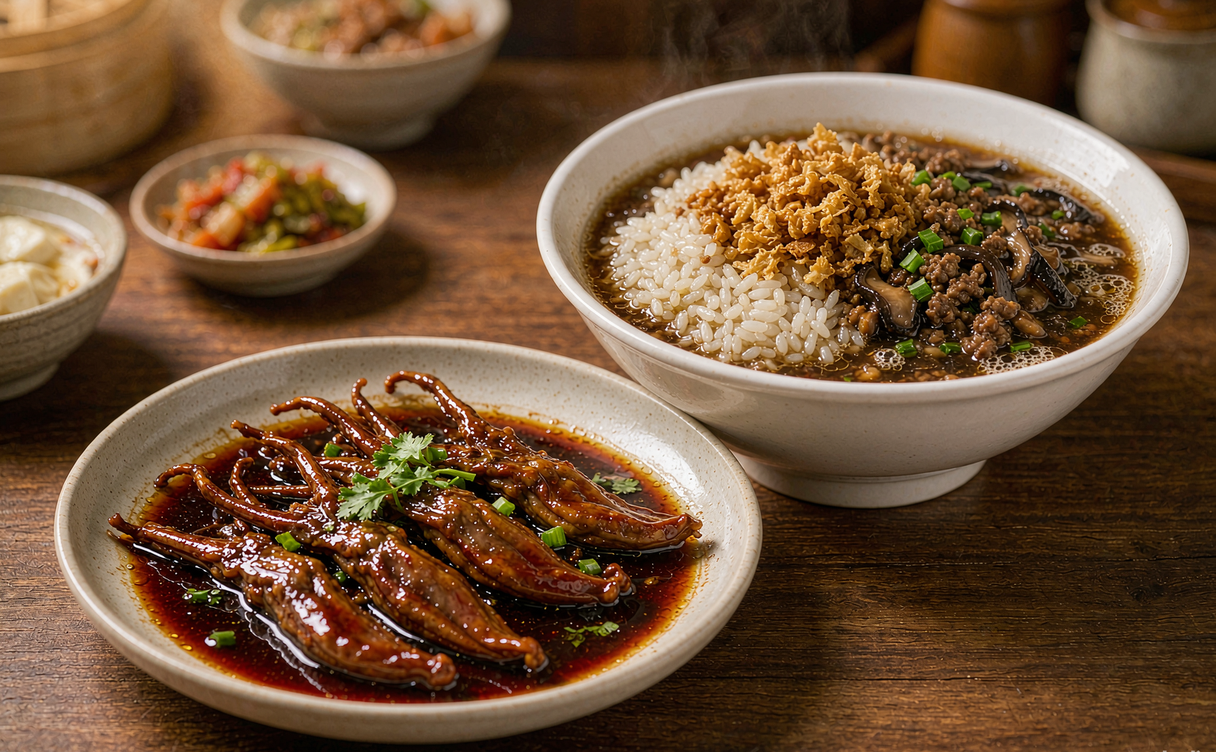
If there is one thing the city does better than its neighbors, it is Wenzhou snacks. Start at breakfast with nuo mi fan, sticky rice in a bowl topped with crispy fried dough (you tiao) bits and a ladle of pork-and-mushroom gravy poured over the top — ¥6–12 RMB and the most comforting bite in town. Next is shou rou wan, “lean pork balls”: pork is pounded into an elastic paste, dropped into broth, and served with black vinegar and pepper, ¥10–18 RMB a bowl. The texture is the point; it bounces.
Duck tongues (ya she) are the snack visitors either love or photograph and pass. Braised in a dark soy–wine sauce until glossy, they are a chewy, savory bar snack, ¥35–55 RMB for a plate, and I always order them with beer. Deng zhan gao are fried stuffed cakes — a batter shell around a vegetable and meat filling, ¥4–8 RMB each — sold hot from roadside woks near Wuma Street. And the big Wenzhou wonton (da hun tun) is pork-and-shrimp filled and served in a clear broth with seaweed, ¥12–20 RMB, a lighter close to a snack crawl.
What to Eat in Wenzhou Beyond the Icons
Beyond seafood and snacks, a few plates define a proper Wenzhou cuisine meal. Qiao yu, “pounded fish,” is mandarin fish beaten into a thin sheet, sliced, and dropped into a light soup — silky and mild, ¥30–50 RMB. Yu wan, the local “fish balls,” are not round but torn ribbons of marinated fish in a sour-touched broth with starch; the tang is distinctive, and a bowl is ¥10–20 RMB. Zhu zang fen, rice noodles with braised pig intestine in a rich broth, is the late-night recovery food locals swear by, ¥15–25 RMB.
None of this is heavy chili food; Wenzhou flavors are salty, wine-bright, and textured. The funk of cured crab and the chew of duck tongues are the adventurous end, and the fish pastes are the gentle entry. I usually build a first-timer’s table as two seafood plates, one pounded-fish soup, duck tongues to share, and a stack of snacks — about ¥120–180 RMB per person with beer.
Best Restaurants in Wenzhou
Choosing the best restaurants in Wenzhou means deciding between the old banquet houses and the snack lanes. Wenzhou Jiujia (温州酒家) is the heritage name for Ou cuisine done properly — steamed croaker, pounded fish, braised duck tongues — about ¥100–160 RMB per person, and it is where I take clients who want the full style explained. For seafood straight from the tank, the restaurants along the Ou River embankment and around Xiangyu Road price by the catch; arrive before 6 p.m. for the best pick and ask for the English-friendly menus at the larger ones.
For snacks, Wuma Street (五马街) and the Shamaohe lane behind it are the grazing ground — wonton, deng zhan gao, sticky rice, and pork balls all within a two-block walk, ¥30–60 RMB a head to try six things. The Wenzhou travel guide maps these lanes and the riverfront restaurants so you are not guessing which stall is the local one. As of 2026 most mid-range places take Chinese payment apps readily; foreign cards work at the hotel-linked restaurants but not the carts, so carry some cash.
Getting to Wenzhou and Timing the Catch
Wenzhou is easy to reach. The high-speed line from Hangzhou takes about 2 to 2.5 hours and from Shanghai about 3 to 3.5 hours, landing at Wenzhou South or Wenzhou North; the airport (WNZ) has domestic flights from most big cities. Our China high-speed train guide for foreigners covers booking those legs with a foreign card. Once in the city, the seafood streets and snack lanes are a short taxi from either station.
The best time to visit China for Wenzhou eating is autumn (September–November), when the crab are fat and the yellow croaker is at its best, and the weather is cool for street grazing. Spring is pleasant; summer is hot and the raw crab dishes carry more risk in the heat, so I steer first-timers to cooked seafood then. Our best time to visit China page marks the holiday closures that can shut small snack stalls for a week.
A One-Day Wenzhou Eating Plan
7:30 a.m. — sticky rice and pork balls on Wuma Street. 11:30 a.m. — pounded-fish soup and a steamed croaker at a riverfront restaurant. 3:00 p.m. — duck tongues and deng zhan gao snack crawl. 6:30 p.m. — tank-picked seafood dinner with razor clams and raw crab, walk the lit Ou River after.
Frequently Asked Questions
Is Wenzhou food safe for weak stomachs? Mostly. Skip the raw crab in summer; everything else is cooked and gentle.
How cheap is a good meal? Snacks ¥10–20 RMB; a seafood dinner ¥120–180 RMB per person.
English menus? At hotel-linked and larger restaurants, yes; snack carts, no — point and pay cash.
Worth a guided food trip? If you want the market tour, our China food tour guide links Wenzhou into a coastal eating route, and the China travel guide for first-timers handles the payment and transport basics.
Ride the high-speed line down from Hangzhou and eat Wenzhou with our China high-speed train guide for foreigners handling the booking.
Stack Wenzhou into a coastal eating route with our China food tour guide, then read the Zhejiang cuisine guide for the north’s lake dishes.
First time in China? Our China travel guide for first-timers covers the apps and cash you need to pay the snack carts.