

I still remember the moment I stepped out of the humid Guilin afternoon and into the cool, glowing dark of Reed Flute Cave. The temperature dropped, the air turned mineral and still, and a whole underground city of stone opened up in front of me. Locals call it Ludi Yan (芦笛岩), and the name comes from the reeds growing near the entrance that people once used to make flutes. For a first-time visitor to Guilin, this is the easiest, most reliable “wow” attraction in the city — no hiking, no weather risk, and a spectacle that photographs beautifully.
If you are planning a trip around the karst landscape of southern China, Reed Flute Cave pairs perfectly with the Guilin Yangshuo travel guide and the famous Li River Guilin cruise guide. I’ll walk you through everything I learned on my own visit so you can spend less time guessing and more time looking up.
Getting There
Reed Flute Cave sits about 5 kilometers northwest of central Guilin, roughly a 30-minute drive from the city. That short distance is exactly why I recommend it as a half-day anchor on any Guilin itinerary. You have three realistic ways to get there:
- Taxi or ride-hail (Didi): The simplest option. Show the driver “芦笛岩” and you’ll arrive in 30–40 minutes from the train station area, depending on traffic.
- Public bus: Several city buses run toward the northwest suburbs; the ride is cheap but slower and requires a short walk at the end.
- Tour group or private driver: Most one-day Guilin tours include the cave along with Elephant Trunk Hill or the Seven Star Park.
I went by taxi in the morning and had the cave entrance almost to myself. On my return, the afternoon tour buses had arrived, and the difference was night and day. If you want photos without crowds, go before 11 a.m.
The ticket office, parking, and a small plaza with souvenir stalls sit at the surface. From there you walk down a ramp into the mountain. Comfortable shoes are fine — there are railings and even a smooth paved loop inside, so it is accessible for most fitness levels.
What to See
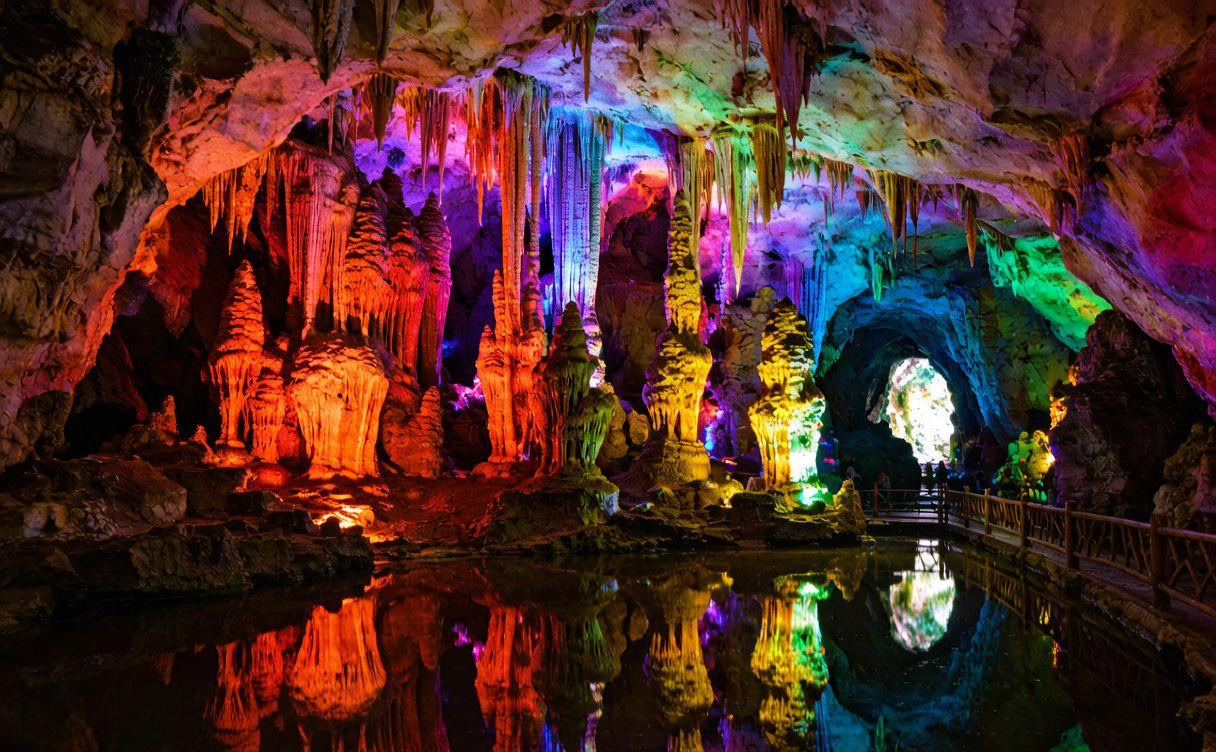
The cave is a single large limestone grotto with a winding walkway that loops past named formations. The rock here is karst limestone, dissolved and redeposited by water over millions of years, and the result is a forest of stalactites, stalagmites, stone curtains, and pillars. A few set pieces stopped me in my tracks:
- The Crystal Palace: The largest chamber, with a ceiling that looks like a frozen wave and a pool that mirrors the lights. This is the postcard shot everyone comes for.
- The “Dragon and Phoenix” and “Pine in Snow”: Named rock shapes that guides love to point out. They’re fanciful, but fun, and the storytelling gives you a sense of how locals read the stone.
- Stone pillars and curtains: Tall columns where floor and ceiling have joined, plus thin, rippled “curtains” that look like frozen fabric.
What surprised me most was the scale. I expected a small cavern; instead the walk is about 500 meters and takes most people 40–60 minutes at a relaxed pace. The path is one-way, so you can’t easily double back — pace yourself and look up often.
The named formations are signs of a living cave system. Water still drips, and you can sometimes hear it. That’s also why touching the formations is discouraged: the oils on your hands interrupt the slow mineral growth.
The Light Shows
Here’s the honest part I want to share, because some travelers are put off by it. Reed Flute Cave is heavily lit with colored lights, and there are scripted light-and-sound shows at intervals. If you came expecting a raw, natural cavern, this will feel theatrical. If you come expecting a designed spectacle — like a walk-through art installation made of rock — you’ll love it.
I fall into the second camp. The colored lighting turns ordinary grey stone into something that looks lit from within: reds, blues, greens, and golds wash across the formations and reflect in the still pools. During the scheduled shows, the lights dim and sweep in sequence while a recorded narration plays (usually in Chinese, sometimes with English). It lasts a few minutes and adds drama without being exhausting.
My tip: don’t fight the lighting. The cave is famous precisely because of these illuminated displays, and they make the place accessible and photogenic for everyone, including kids and older travelers. Bring a phone with a steady hand or a small tripod if you want clean shots — the low light and colored gels make long exposures tricky.
Tips
After visiting, here’s what I’d tell a friend before they go:
- Go early. Mornings are calmer and the air feels fresher. Aim to arrive when it opens.
- Wear shoes with grip. The path is paved but can be damp in spots near the pools.
- Bring a light layer. The cave stays around 18–20°C year-round, which feels great in summer but cool if you arrive sweaty.
- Manage expectations on the lights. If you dislike artificial lighting in nature, this may not be your favorite stop. If you enjoy it, you’ll be thrilled.
- Budget time for the surroundings. The cave sits in a pleasant hillside area; a short walk nearby gives you city-view photo spots over Guilin’s karst peaks.
- Combine smartly. Pair the cave with a river cruise or the terraces rather than stacking two indoor stops.
If you want to extend your Guilin trip beyond the city, the Guilin Longji rice terraces guide is an easy next step, and it balances the underground cave with open mountain scenery.
Best Time
Reed Flute Cave is an all-weather attraction, which is a big part of its appeal. Because it’s underground, rain, summer heat, and winter chill barely matter once you’re inside. That makes it one of my top rainy-day backups in Guilin.
- Spring (March–May): Pleasant outside, occasional rain — good cave weather, and the surrounding hills are green.
- Summer (June–August): Hot and humid in the city; the cool cave is a relief. Go early to beat the tour-bus crowds.
- Autumn (September–November): My favorite season. Clear skies, comfortable temperatures, and the best light for combining the cave with outdoor sightseeing.
- Winter (December–February): Quiet and uncrowded. The constant cave temperature feels mild compared with chilly Guilin days.
If your schedule is flexible, aim for a weekday in the shoulder seasons. You’ll get shorter lines and a calmer experience on the walkway.
Good to Know
Reed Flute Cave is one of Guilin’s officially promoted scenic areas, and the city’s tourism authority maintains visitor information, opening hours, and seasonal notices on its site. For current tickets and official updates, check the Guilin tourism board before you travel, since hours can shift around public holidays.
I’d also suggest buying tickets at the official counter rather than from street touts near the entrance — the price is fixed, and you avoid the upsell routines that sometimes circle popular sites. Plan about two hours total including transport, and you’ll leave with some of the most surreal photos of your whole China trip.
For me, Reed Flute Cave wasn’t just a cave — it was proof that Guilin’s magic isn’t only above ground. Between the river, the peaks, and this glowing limestone world, the city earns its reputation many times over.
Want a full plan for the region? Read our [Guilin Yangshuo travel guide](https://www.chinatravelplaces.com/guilin-yangshuo-travel-guide/) for where to stay, what to eat, and how to string the sights together.
Planning the classic river day-trip? Our [Li River Guilin cruise guide](https://www.chinatravelplaces.com/li-river-guilin-cruise-guide/) covers departure piers, ticket tiers, and the best seats for those famous karst views.
Looking to escape the city for mountain scenery? The [Guilin Longji rice terraces guide](https://www.chinatravelplaces.com/guilin-longji-rice-terraces-guide/) shows you how to reach the terraces and time your visit for the brightest water-filled fields.