

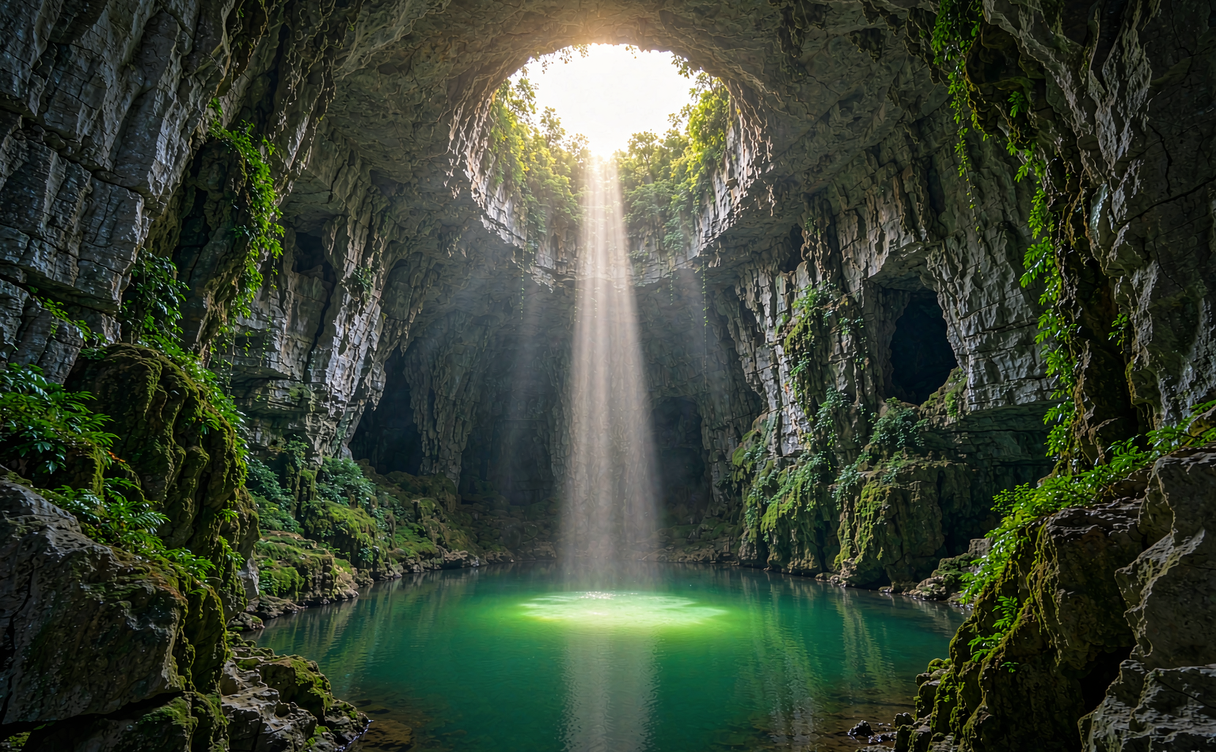
The first time I took a client down to the Getu River in Guizhou, we stood on a handrail-less wooden platform and watched a column of sunlight drop straight through a 300-meter natural arch into a green pool below. Nobody said much for a minute. This Getu River guide is built from trips like that — the practical stuff I wish I had known before driving three hours out of Guiyang, and the small mistakes that cost us half a day. Getu is not a headline name like Huangguoshu, and that is exactly why experienced travelers love it.
The river runs through Ziyun Miao and Bouyei Autonomous County, in the southwest of Guizhou province. What makes the Getu River Guizhou landscape special is the concentration of karst in one compact valley: a sinking river that vanishes into limestone, a skylight you can stand under, vertical cliffs that draw climbers from across the world, and a Miao village built inside a cave. It is the kind of place that rewards slow travel, and it fits neatly into a wider Guizhou loop if you plan the drive right.
How to Get to Getu River
Most foreign visitors arrive via Guiyang Longdongbao International Airport (KWE). From Guiyang the Getu scenic area is about 161 km southwest, a 2.5 to 3 hour drive in good conditions. I usually book a private sedan for two to three people at ¥400–600 RMB for the one-way transfer, or a van for a small group at ¥700–900 RMB. The Expressway gets you to Ziyun county town in under two hours; the final 25 km to the Getu gate is a winding county road that climbs through rice terraces and is slow in wet weather.
If you prefer public transport, long-distance buses leave Guiyang Jinyang Coach Station for Ziyun roughly every 40 minutes, cost ¥60–80 RMB, and take about 2.5 hours. From Ziyun bus station a local minibus runs to the Getu gate for ¥12–18 RMB, about 40 minutes, but the last one leaves mid-afternoon, so I tell clients to leave Guiyang before noon. There is no train station at Getu itself; the nearest high-speed rail stops are Anshun West and Guiyang North. Our China high-speed train guide for foreigners explains how to combine rail with a private transfer for exactly this kind of remote valley.
Things to Do at Getu River
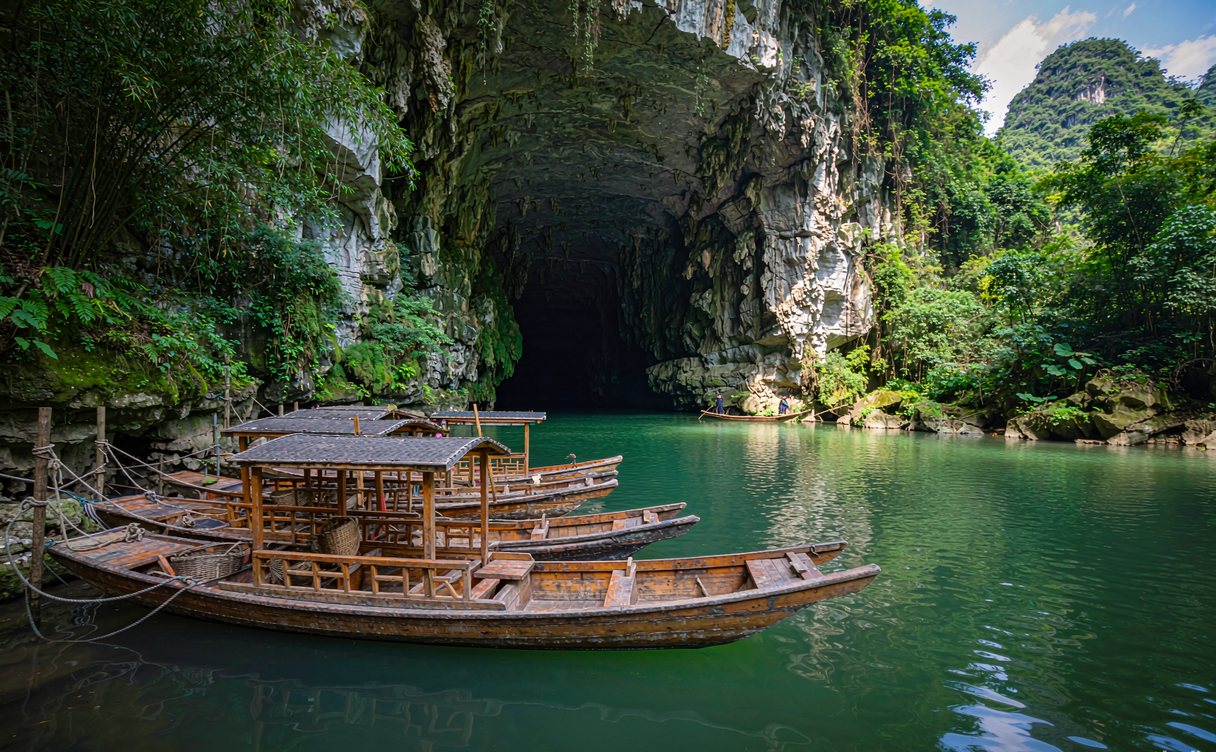
The core things to do at Getu River split into three experiences, and a relaxed visitor can cover all three in one full day from a Ziyun base. First is the boat-and-walk cave circuit. A short electric cart drops you at the river mouth, then a small boat punts you into the Shenbing (God Soldier) cave system, where stalactites hang like a frozen curtain and the water turns from jade to black. The boatman kills the motor inside the dark chamber so you hear only dripping — it is genuinely theatrical and not at all staged.
Second is the skylight. The Getu River caves include a collapsed doline where the roof opened centuries ago, leaving a circular hole in the cliff. At around 11:30 a.m. to 1:00 p.m. on clear days, a shaft of light falls straight onto the river. Local Miao boatmen time a short paddle into the beam for photos. I have seen it washed out by cloud in July, so timing and season matter more than the brochure implies.
Third is climbing. Getu became a quiet legend among rock climbers because of the white limestone faces above the valley — clean, steep, and up to 100 meters. The annual international climbing festival brings rope teams every autumn, and fixed routes now run from beginner slabs to serious overhangs. You do not need to climb to enjoy it; watching the teams from the riverside path is part of the fun, and gear rental plus a half-day intro with a licensed guide runs about ¥200–350 RMB.
The cave village is the quiet bonus. A short hike up the western slope reaches Zhongdong, a Miao settlement built under a massive rock ceiling, with a small school and homes that have no front wall because the cave is the wall. Visitors are welcome but should keep distance, ask before photographing people, and bring a small purchase from the village stall rather than handing cash to children.
Best Time to Visit Getu River
The best time to visit Getu River is late April through early November. October and November are my favorites: the rice terraces around Ziyun turn gold, the air is dry and clear, and the skylight beam is most reliable. Spring (April–May) is green and pleasant but muddy on the cave trails. I steer clients away from July and August for two reasons — the valley gets hot and humid, and afternoon storms can flood the lower cave circuit for hours.
If you are building a longer Guizhou trip around weather, our best time to visit China overview breaks the province month by month and helps you dodge the worst of the summer rain. For Getu specifically, aim for a dry window and arrive at the gate by 9:30 a.m. so the boat, skylight, and climb all fit before the afternoon cloud builds.
Tickets, Hours and Where to Stay
As of 2026 the combined entrance and scenic shuttle at Getu is ¥80–120 RMB depending on season, with the cave boat included in peak months and sold separately (¥40–60 RMB) in the low season when water levels shift the route. The gate opens around 8:00 a.m. and the last boat leaves by 4:30 p.m. Buy at the visitor center; foreign card readers are unreliable, so carry some cash or a Chinese payment app as backup.
Lodging is simple. Clean business hotels in Ziyun town run ¥150–350 RMB a night and put you 25 minutes from the gate — that is where I base most clients. A handful of basic guesthouses right at the Getu entrance charge ¥120–200 RMB and suit climbers who want first light on the wall, but rooms are thin-walled and hot-water hours are loose. There is no international hotel here, and that is fine; you are here for the valley, not the linen.
Food follows the Guizhou script: sour, fermented, and chili-hot. The Ziyun sour-soup fish (suan tang yu) is the local hero, a silver carp simmered in a pink fermented-tomato broth, ¥68–98 RMB for a small pot. Street stalls sell rice cakes and Miao smoked pork by the string. If you want the full regional picture before you go, our Guizhou food guide lists the dishes worth chasing across the province.
Planning a Getu River Guide Into a Wider Guizhou Loop
Getu sits awkwardly between Guiyang and the far southwest, which makes it an easy add-on rather than a destination on its own. A common mistake is treating it as a day trip from Huangguoshu — the drive is 2 hours each way and you will feel rushed. Better is to sleep in Ziyun and use Getu as the eastern anchor of a southwest Guizhou swing that ends in Xingyi, home to the Wanfenglin rice-country and the Malinghe gorge. Our Xingyi travel guide maps that extension in detail, and the Guizhou 7-day itinerary shows where Getu slots between the waterfalls and the rice terraces.
The karst you are standing in is part of the same limestone province that UNESCO recognizes across southern China, and reading the UNESCO South China Karst listing before you go makes the geology click into place — Getu is a smaller, wilder cousin of the famous shielded peaks. For travelers who like places most coaches skip, our China off the beaten path guide pairs Getu with other low-crowd valleys worth the extra drive.
Sample One-Day Getu Plan
Arrive Ziyun the evening before. Day one: leave the hotel at 8:30 a.m., reach the gate by 9:00, take the cart to the boat, run the Shenbing cave circuit (90 min), walk the riverside path to the skylight for the midday beam, eat lunch at the gate stalls, then either climb or hike to Zhongdong village in the afternoon. Back to Ziyun for the sour-soup fish by 6:30 p.m.
Frequently Asked Questions
Is Getu River worth it if I have already seen Huangguoshu? Yes. Huangguoshu is a waterfall spectacle; Getu is a cave-and-cliff valley with almost no crowds. They feel like different countries.
Do I need a guide? For the boat and skylight, no. For climbing or the Zhongdong hike, hire a licensed local at the gate (¥150–250 RMB half day).
Can I swim in the river? No. The current is strong and the cave water is cold; swimming is not permitted.
Is it family-friendly? The boat and skylight are fine for steady kids over six. Skip the climbing and the steep Zhongdong trail with toddlers.
Build Getu into a southwest Guizhou loop with our Guizhou 7-day itinerary and let us suggest the driest travel window.
Want the regional dishes mapped before you arrive? Read our Guizhou food guide for the sour-soup and Miao plates to chase.
Planning to ride rail most of the way? Our China high-speed train guide for foreigners shows how to reach Guiyang and transfer to the valley.