

About 130 km west of Chengdu, where the Sichuan basin gives way to the folded peaks of the Qionglai mountains, the Wolong panda reserve protects one of the densest wild giant panda populations on earth. Established in 1963 and today part of the UNESCO-listed Sichuan Giant Panda Sanctuaries, Wolong is the closest thing China has to a panda wilderness you can actually visit: deep temperate forest, bamboo slopes above 2,000 m, and a research base where you can stand a meter from a captive-bred animal. For travelers who find the Chengdu city panda center too busy, Wolong is the quieter, wilder answer.
The reserve covers roughly 200,000 hectares and spans several climate zones, which is exactly why pandas thrive here — the mix of elevation grows the arrow bamboo they eat across every season. The main visitor facility is the Shenshuping Panda Base near Gengda township, rebuilt after the 2008 Wenchuan earthquake and reopened in 2016 as the China Conservation and Research Center for the Giant Panda’s Wolong campus. It holds several dozen pandas in large, planted enclosures that imitate wild habitat far better than the concrete runs of older zoos. Our China panda tour guide explains how Wolong compares with the other panda centers across Sichuan.
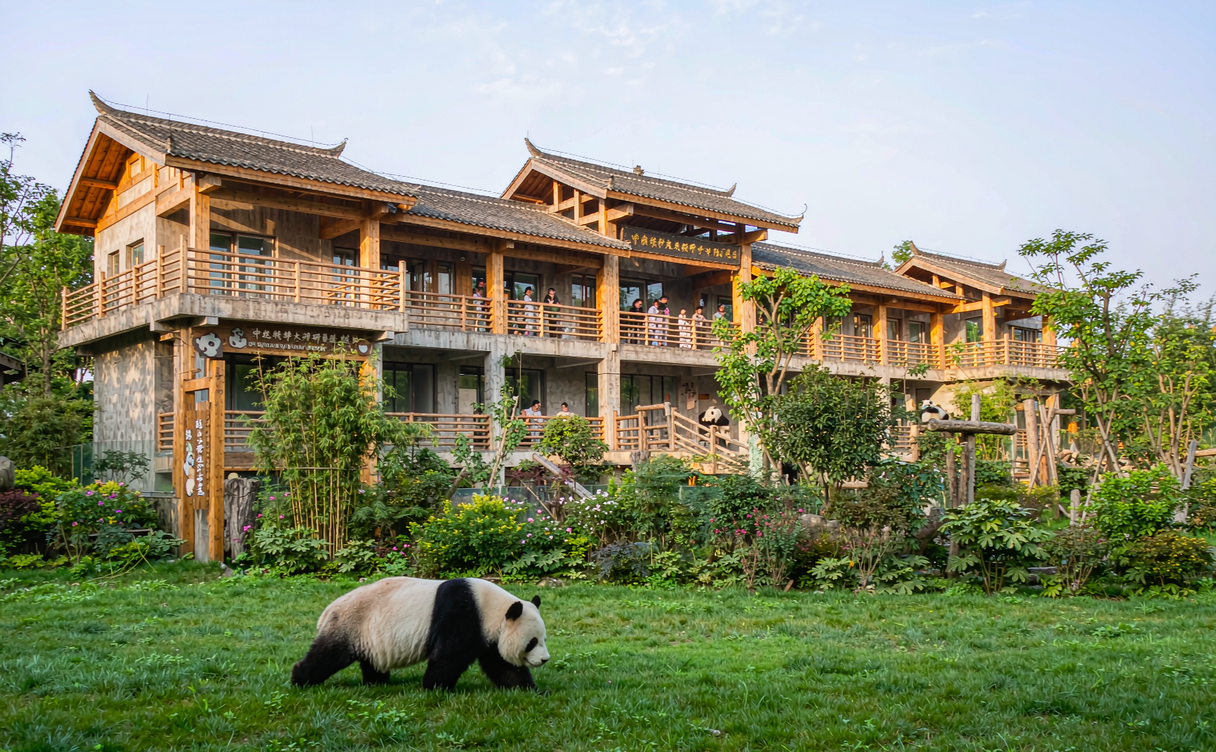
How to get to Wolong from Chengdu
There is no train to Wolong; you go by road. The standard route leaves Chengdu on the expressway to Dujiangyan, then follows the G350 through Yingxiu and up the valley to Gengda — about 2.5 to 3 hours in good weather. A private car or driver costs roughly ¥600 to ¥900 round trip and is the comfortable choice, since it lets you stop at the Yingxiu earthquake memorial and the Balang Mountain overlook. Long-distance buses run from Chengdu’s Chadianzi bus station to Wolong town (¥45 to ¥70, about 3.5 hours), but they drop you in the reserve town, a further 20 minutes by local van from the panda base, so a driver is simpler. If you are still mapping your Sichuan arrival, our high-speed train guide for foreigners covers reaching Chengdu first; everything past Dujiangyan is road.
Best time to visit Wolong
Spring (April to May) and autumn (September to October) are clearly best. In spring the valley greens up, the pandas are active after winter, and the Balang Mountain pass still holds late snow for photos. Autumn brings cool, dry days around 15 to 22°C and the best visibility for the high ridges. July and August are the monsoon months — heavy afternoon rain, leeches on the forest trails, and frequent road washouts on the G350 — so skip them if you can. Winter is cold (valley lows near freezing, base enclosures sometimes closed in hard snow) but crowd-free. The best time to visit China’s southwest lines up the same way, and Wolong follows the pattern exactly.
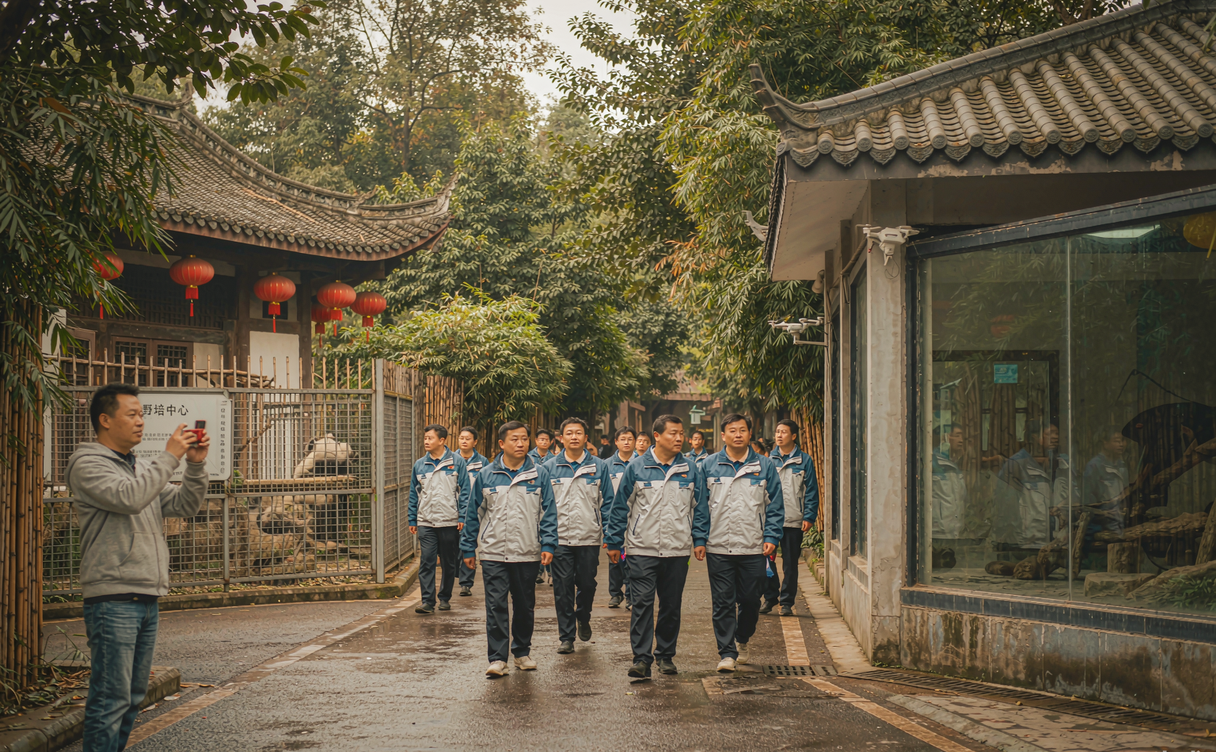
Things to do in Wolong
The base itself takes two to three hours: a loop walk past the breeding enclosures, a nursery if cubs are present (usually August to October), and a small museum on panda biology and the 2008 rebuild. The standout experience is the keeper-for-a-day volunteer program — you clean an enclosure, prepare bamboo and “panda cake,” and watch a feeding up close. It costs about ¥800 to ¥1,000 per person and must be booked weeks ahead through the base or a licensed agency; places are limited to keep stress off the animals. Beyond the pandas, Wolong rewards walkers: the Gengda riverside trail and the climb toward the Balang Mountain pass (4,500 m) pass through fir forest and alpine meadow with excellent birding. There are also hot spring guesthouses at Huoshaogou, about 40 minutes up the valley, where a ¥60 to ¥120 soak resets tired legs.
Wolong is also one of the few panda reserves where you might see other flagship species in the wild. The same forest holds red pandas — easier to spot at dusk on the Gengda trail — the shaggy Sichuan takin, a goat-antelope that looks like a musk-ox experiment, and, with luck, snub-nosed monkeys higher up the ridge. Birders come for the blood pheasant and the blue-eared pheasant along the Balang road. The Balang Mountain pass itself, at 4,500 m, is worth the slow drive even if you are not hiking: on a clear morning the eastern face shows layered ridgelines and, in late spring, snow patches against new grass. Stop at the pullouts rather than racing to the top — the light is better 200 m below the summit, and the thin air at the crest surprises people who felt fine in the valley below.
Wolong giant panda conservation in context
A little background makes the visit matter more. Wolong was China’s first major panda reserve and remains the scientific heart of captive-breeding: many of the animals you see are part of a program that has moved cubs back toward wild release sites elsewhere in Sichuan. The 2008 earthquake damaged the original Hetaoping base and killed several pandas, which is why the newer Shenshuping campus sits on safer ground. The broader landscape — Wolong plus the nearby reserves — forms the core of the UNESCO Sichuan Giant Panda Sanctuaries, a World Heritage property protecting more than 30% of all wild giant pandas. Knowing that turns a cute-animal stop into a real conservation story, and the on-site guides are good at explaining it if you ask.
Pairing Wolong with Dujiangyan and Chengdu
Most visitors fold Wolong into a wider panda loop rather than treating it as a day trip from scratch. The Chengdu Dujiangyan panda base sits on the same road, about an hour closer to the city, and is the better choice if you want the keeper program without the longer drive; Wolong is the better choice for scenery and a sense of wilderness. Either way, base yourself in Chengdu for the pandas and the city — the capital has the airport, the trains, and the food — and make Wolong a long day or an overnight in Gengda. The Sichuan cuisine guide is essential reading, because the meals in the Wolong valley are hearty, peppery, and nothing like the toned-down Sichuan food abroad.
Want to meet a panda in the wildest setting Sichuan offers? Book the Wolong keeper program now — places are capped and sell out weeks ahead.
Practical tips and what to book in advance
Reserve the volunteer program first; it is the one thing that genuinely sells out, especially in October. For ordinary entry, buy the base ticket (¥90 to ¥110 in 2025) online to skip the gate queue, but no advance date is required. Carry cash and a Chinese payment app, because the valley ATMs are unreliable and the base reader sometimes rejects foreign cards. Dress in layers: the base sits around 1,900 m, so even a warm Chengdu day turns cool by mid-afternoon, and the Balang pass can be 15°C colder with sudden wind. Bring binoculars for wild birding and a rain shell even in spring. If you stay overnight in Gengda, guesthouses run ¥200 to ¥400; the food is local Qiang and ethnic-minority home cooking — buckwheat noodles, smoked pork, and butter tea if you are curious.
Plan the full panda loop today: Chengdu as your base, Dujiangyan for the easy keeper day, and Wolong for the wilderness — and reserve the volunteer slot before it’s gone.
A note on the experience
Wolong will not give you the Instagram crush of the city panda center, and that is the point. The enclosures are bigger, the crowds thinner, and the forest genuinely wild — on a quiet morning you can hear the valley before you see a panda. Give it a full day, take the keeper program if you can afford the time and money, and let the drive over Balang Mountain be part of the trip rather than a commute. Photographers should aim for the 09:00 to 11:00 window, when the enclosures catch flat light and the pandas are feeding. Leave the reserve by mid-afternoon to stay ahead of any G350 weather, and you will reach Chengdu in time for a hotpot that tastes all the better for the mountain air.
Make Wolong the wild heart of your Sichuan panda trip — book the base, grab the keeper slot, and let the Qionglai mountains do the rest.