

Shouxian is a county in the Huainan area of Anhui Province that guards one of the most complete ancient city walls still standing in China. The current walls were rebuilt in the Ming dynasty (1371) on Song foundations, and unlike most county seats, Shouxian never tore its ramparts down — they still wrap the old town in a rectangular circuit you can walk on top of. I came for the walls and stayed for the layered history: this was the capital of the State of Cai in the Spring and Autumn period, a battlefield of the Three Kingdoms, and the place where, by local legend, tofu was first made. This Shouxian ancient city guide covers the walls, the history, the timing, and the practical route in.
How to get to Shouxian
There is no airport in Shouxian; fly or take the high-speed train to Hefei (about 90 km south), then a bus or car north. Hefei Xinqiao Airport has national and some international flights; from Hefei you can also reach Huainan by high-speed train (about 40 minutes, 30–50 yuan) and then a local bus or DiDi the last 30 km to Shouxian (40–70 yuan, 45–60 minutes). A direct Hefei–Shouxian bus runs roughly hourly and costs 35–50 yuan. Our China high-speed train guide for foreigners explains the ticketing if you need it. Inside Shouxian the walled town is compact and walkable; DiDi covers the train and bus stations, and a short ride from the station to the south gate is 10–15 yuan.
Best time to visit Shouxian
Spring (April–May) and autumn (September–October) are best: 17–25°C and good for walking the wall circuit, which is exposed and baking in summer (often 35°C+) and slippery after winter ice. The Shouxian county sits on the flat Huai River plain, so wind on the wall can be sharp — bring a layer even in mild months. If you are touring several Anhui stops, align with our best time to visit China planner, and note that the Huai plain’s plum-rain weeks in June–July turn the moat murky and the lanes muddy.
Things to do in Shouxian
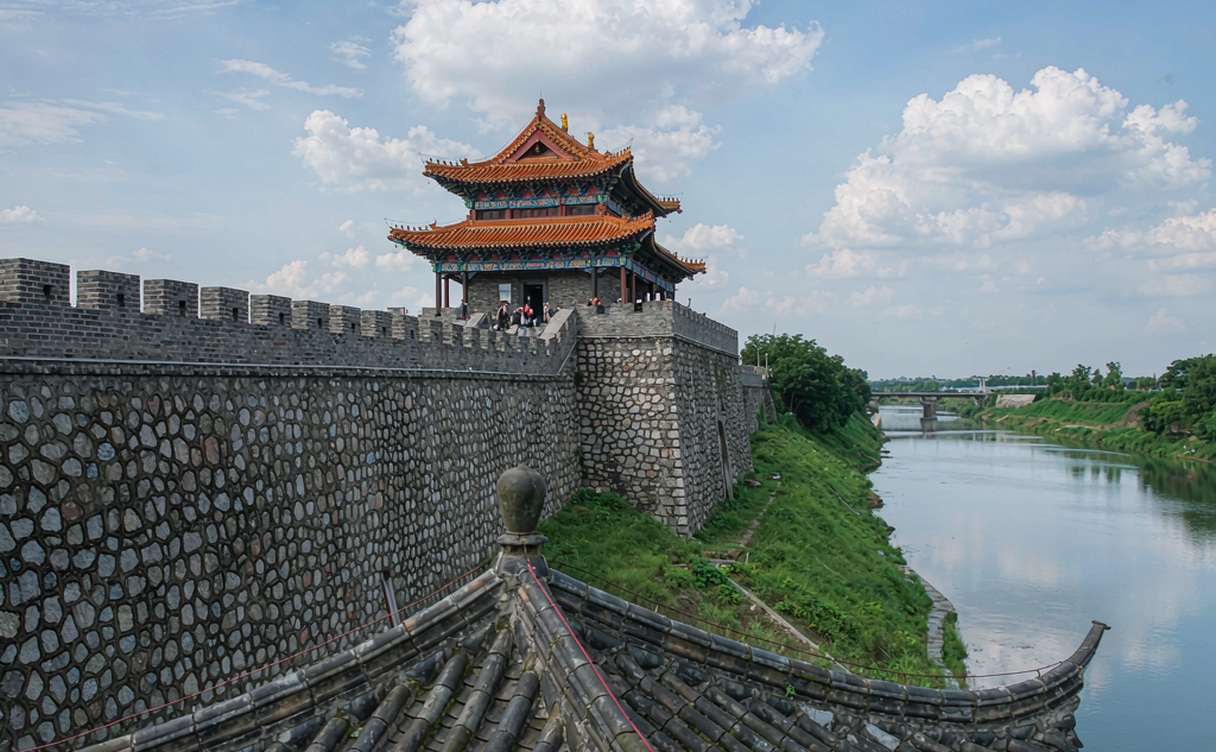
- The city walls: the headline. Walk the full rectangular circuit on top (about 7 km, 2–3 hours at a stroll) or just the south and east gates; the brick is original Ming, the towers restored. Free to walk; some gate towers charge 10–20 yuan. The wall path is paved but uneven, so wear real shoes.
- The moat and gates: the wide water ring is still there, unusual for a county seat, and the best photos are from the south bridge at sunrise before the tour buses arrive.
- Shouxian Confucian Temple (Wenmiao): a Song-founded, Ming-rebuilt temple with a quiet courtyard; free or small donation, and the rear hall holds stone steles worth a look.
- The Tomb of Lord Chunshen and Cai state relics: for history buffs, the county museum (free, closed Mondays) holds bronze and jade from the Cai capital era, with labels in Chinese only.
- Bagong Mountain (Baogong Shan) to the west: the hill tied to the tofu origin legend and the “one is worth ten” idiom; trails and a small park, 30–60 yuan, and the summit viewpoint spans the plain.
For the region, our Hefei travel guide is the gateway, and the Anqing travel guide adds the Yangtze city to the south for a longer Anhui sweep.
Shouxian Anhui history in brief
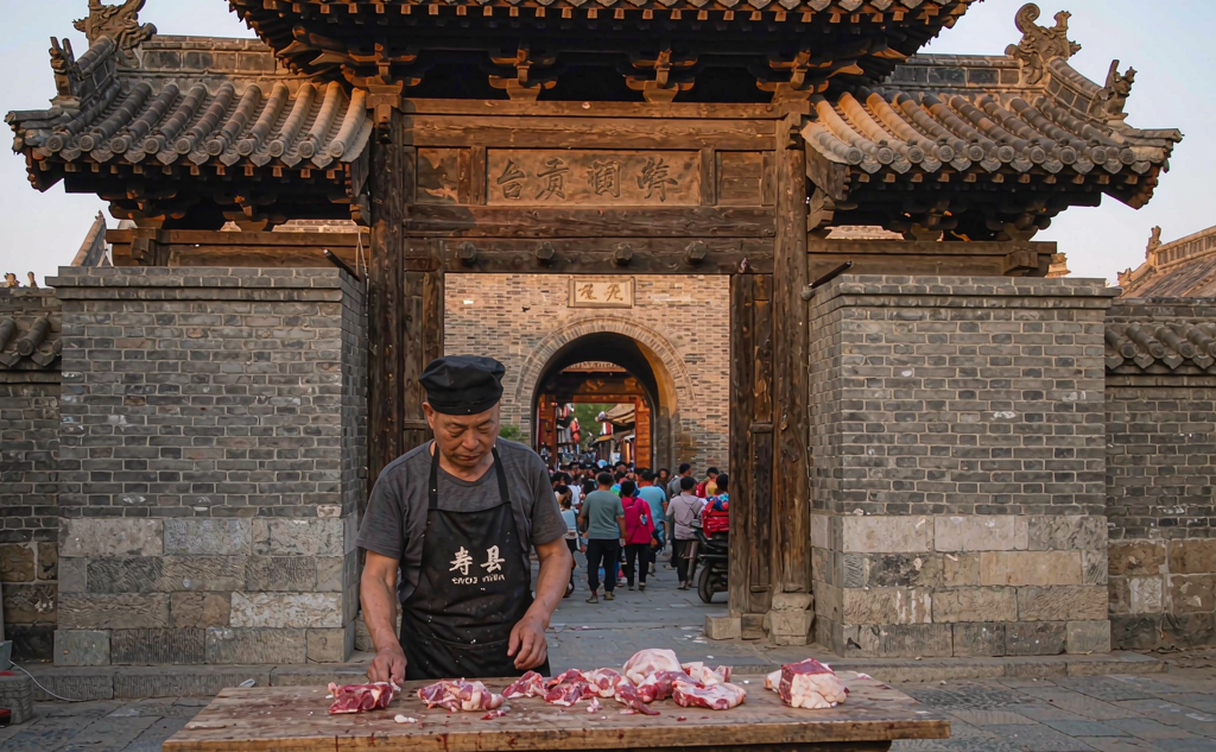
Shouxian’s deeper story is why the walls matter. As the capital of the State of Cai (蔡), it was a power center more than 2,500 years ago; later it sat on the contested Huai River frontier where the Southern and Northern dynasties fought. The Ming walls you walk today were a response to that same flood-and-war pressure — they were engineered to survive both siege and the Huai’s floods, with a slightly trapezoidal profile and sluice gates still visible at the corners. That double purpose is what makes this Shouxian Anhui history stop different from a pretty-old-town photo op: you are walking defensive architecture that worked for six centuries. The local museum’s map of the Cai-era capital overlays almost exactly on the wall circuit, a rare chance to see an ancient plan still legible on the ground.
Reach Shouxian via Hefei and walk the walls at dawn — open our Hefei travel guide for the airport, train, and bus timing.
Food in Shouxian
Huainan–Shouxian food leans on the Huai plain: tofu in every form (this is claimed birthplace territory, 8–15 yuan a dish), huizhou-style braises, and river fish. The morning market inside the walls is the move — sesame cakes (2–4 yuan), tofu pudding (5–8 yuan), and steamed buns. A restaurant dinner for two runs 60–100 yuan. Our Anhui Hui cuisine guide maps the regional flavors so you order well, and explains why the plain’s tofu tastes different from the factory version.
First time in Anhui by rail? Read our China travel guide for first-timers before you go, and keep your passport ready for checks.
Walking the wall: a suggested route
Start at the south gate at first light, walk the east wall to the corner tower (about 1.5 km, 30 minutes), then the north wall to the west gate. The path is broad enough to walk two abreast but the brick is uneven, so allow 2–3 hours for the full 7 km if you stop for photos. The corner sluice gates are the best engineering detail, and the moat reflection at the south bridge is the classic shot. Carry water — there are no vendors on top, and the sun on the open rampart is stronger than it looks from the lanes below.
A 1–2 day Shouxian plan
Day 1: walk the wall circuit, Confucian Temple, and the museum. Day 2 (if you stay): Bagong Mountain and the tofu workshops, then the bus south. The town is small, so one full day covers the walls and the essentials; two days lets the history land and gives you a calm morning on the rampart before the coaches arrive.
Side trips from Shouxian
Huainan city, 30 km south, has the Huainan Museum and the Bagong Mountain park entrance if you want more; Hefei, 90 km south, is the transport hub for everywhere else in Anhui. Both are easy bus or train runs, and either works as the next leg if you are sweeping the province rather than making a single stop.
Costs at a glance
Shouxian is cheap: 180–300 yuan covers a room, two meals, and local transit. Walking the wall is free; the museum is free; only the occasional gate tower (10–20 yuan) and Bagong Mountain (30–60 yuan) cost anything. The tofu breakfast at the morning market keeps food under 30 yuan a day, and a riverside dinner for two rarely tops 100 yuan. Stay inside the walls and you also save the DiDi fare to the south gate each morning, which adds up over a two-day visit.
Where to stay and notes
Shouxian has simple hotels (150–260 yuan/night) just outside the walls and a couple of courtyard options inside (220–360 yuan). Stay inside the walls if you want to walk the ramparts at first light, when the light is flat and the lanes are empty. The town is safe and quiet at night; English is minimal, so a translation app and your hotel WeChat are your help desk. Carry cash for the museum donation and market stalls, and download offline maps because the lane names are all Chinese. Give yourself a full morning on the wall — it is the one thing here you cannot see anywhere else in Anhui.
Add Shouxian to a Hefei–Anqing loop and walk real Ming walls — start with our Anhui Hui cuisine guide so the tofu tastes like history.