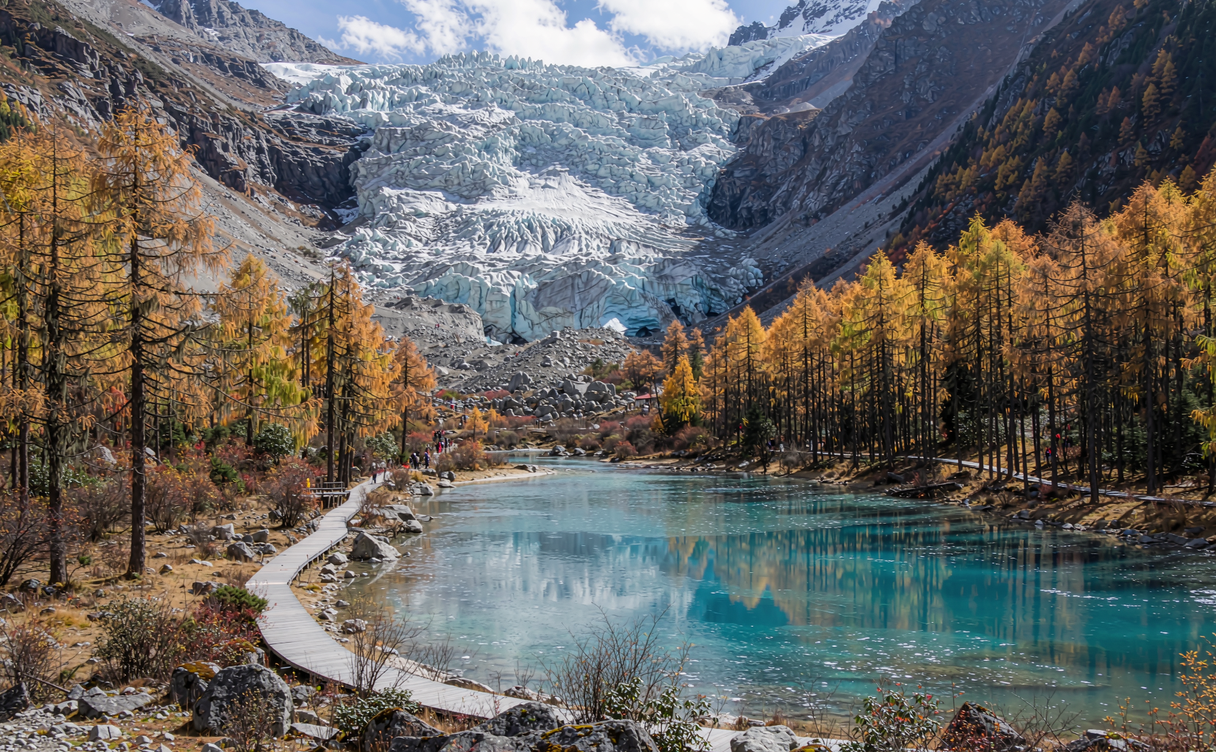
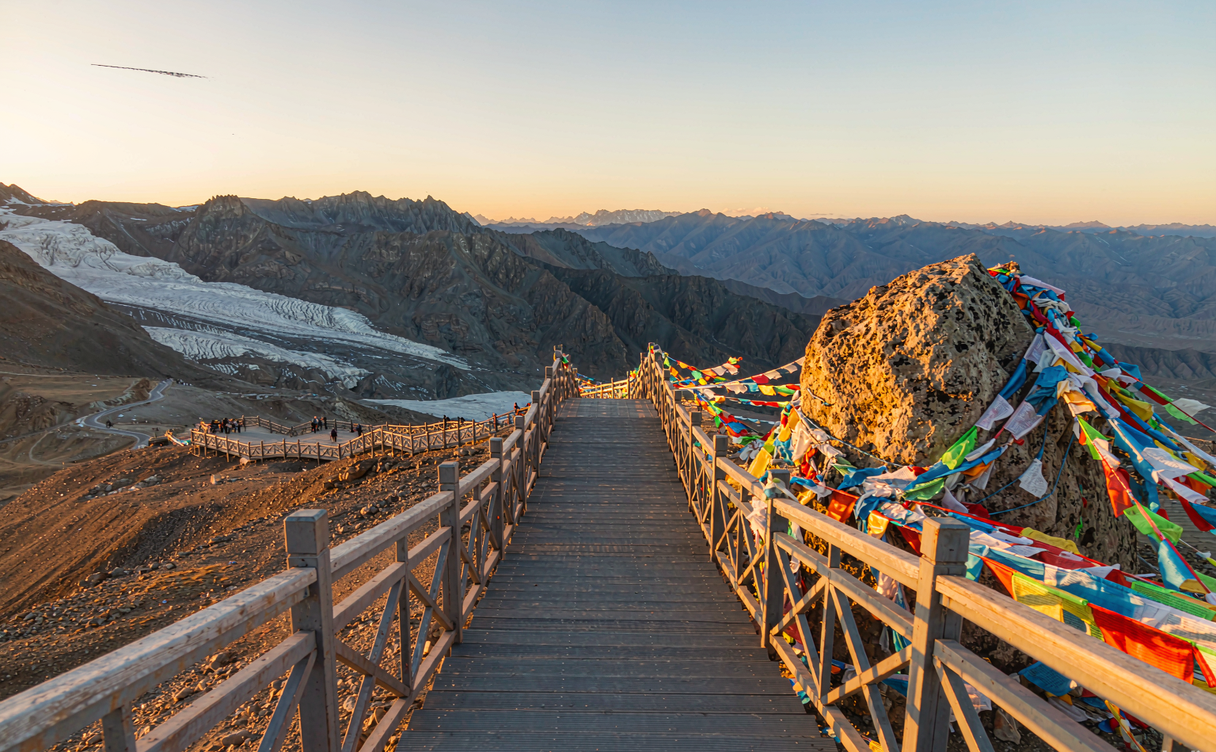
The cable car at Dagu Glacier holds a quiet record I like to tell people about: at 4,860 metres, it is one of the highest tourist cable-car stations on the planet. I rode it on a clear October morning out of Heishui County, in Aba Tibetan and Qiang Autonomous Prefecture, Sichuan, and stepped out into thin, dazzling air with a wall of blue ice filling the view. This is a Dagu Glacier guide written from that morning — what it costs, how to get there from Chengdu, and the altitude realities nobody warns you about until you are gasping at the top.
Why Dagu is different from other Sichuan ice
Most visitors to northwest Sichuan chase Jiuzhaigou or Hailuogou Glacier. Dagu is the sleeper: a compact mountain glacier you reach almost entirely by lift, with no multi-day trek required. That makes it the most accessible high glacier in the region — and the one most likely to leave a first-timer light-headed if they ignore the elevation. The mountain is known locally as Dagu (达古), and the glacier tongue sits below a cluster of snow peaks that turn gold at sunrise.
How to get to Dagu Glacier from Chengdu
Dagu sits about 310 km northwest of Chengdu, in Heishui County. There is no train to Heishui, so it is road all the way:
- Self-drive / private car: 5.5–7 hours via the Duwen Expressway then the G347 through Mao County and Heishui. A private charter from Chengdu runs ¥1,200–1,600 (US$165–220) for the day-plus transfer. I drove with a friend and we broke the trip at Mao County for the night.
- Bus: Chengdu’s Chadianzi bus station has a daily service to Heishui (¥110–130, US$15–18, ~7 hours). From Heishui town, local minibuses and taxis cover the final 40 km to the scenic-area gate for ¥30–50 (US$4–7).
- Tour: Most foreign visitors book a 3-day Chengdu–Heishui–Dagu loop. The Sichuan 7-day itinerary folds Dagu in nicely alongside the grassland and peak stops.
Once at the gate, a park shuttle (included in the ticket) runs 20 km up to the lower cable-car base.
Dagu Glacier cable car tickets
The through-ticket is around ¥190 (US$26) for entry plus the shuttle, and the Dagu Glacier cable car tickets are a separate ¥180 (US$25) round trip. Buy the combo at the gate or through the official mini-program. The cable car is not optional if you want the summit — the walk-up service road is long, exposed and closed to casual hikers. I timed the ascent at about 15 minutes of smooth, glassed-in climbing; by the top my ears were popping and my breathing had shortened.
Total cash outlay for a day at Dagu runs roughly ¥370–450 (US$51–62) including shuttle and lift, before food.
Dagu Glacier altitude tips
This is the part of the trip I most want you to read. The summit platform sits at 4,860 m. Even fit sea-level travellers feel it. My Dagu Glacier altitude tips, learned the hard way on a previous trip to the plateau:
- Acclimatise first. Spend a night in Heishui (2,350 m) or Mao County before ascending. Do not fly into Lhasa-style elevation and bolt straight here.
- Move slowly at the top. The boardwalk loop is only ~1 km but the air holds 55% of sea-level oxygen. I saw a young guy sprint to the viewpoint and have to sit for 20 minutes.
- Hydrate and skip alcohol the night before. The dry plateau air dehydrates you faster than you notice.
- Carry diamox or your doctor’s equivalent if you are prone to sickness; the park clinic sells canned oxygen (¥30, US$4) but it is a crutch, not a cure.
- Descend if you feel dizzy or nauseous. The cable car brings you down in minutes.
The China altitude sickness guide covers the physiology in more detail, and I suggest reading it before any Sichuan high country trip.
Dagu Glacier autumn colours
If there is one reason to time this trip, it is the Dagu Glacier autumn colours. From early October to early November the larch forest below the ice turns a violent yellow against the black rock and white snow, and the glacial lakes — the largest is a still turquoise mirror — sit in a ring of gold. I went the third week of October and the contrast was the best I have seen anywhere in Sichuan. Photographers: the light is best 08:00–09:30 before the summit clouds build.
Summer (July–August) is green and mild but the glacier recedes and the larches are plain; winter is brutally cold (–15°C at the top) with the deepest ice but closed side roads.
On the summit platform
Stepping off the cable car at 4,860 metres is the part no photograph captures. The top is a boardwalk loop edged with prayer flags, and the cold finds you before the view does — even in October I needed the gloves I had stuffed in my pocket. The glacier itself sits a short walk further on, a band of blue-white ice pressed against dark rock, with a small wooden deck letting you stand right at its edge. I spent a surprised amount of time simply watching the ice: it creaks, it shifts colour with the light, and the larch forest below turns the whole basin gold. There is a cafe up top selling instant noodles and sweet yak-milk tea; budget ¥40 (US$5.5) and treat it as fuel rather than flavour. Allow at least 90 minutes at the summit before riding down — rush it and you waste the altitude you paid to reach.
A smart add-on is Heishui’s hot-spring town, about an hour back toward Chengdu, where a soak at 2,000 metres loosens the legs after the cold summit. I built that in as a final night and it was the right call. If you are photographing the ice, the 08:00–09:00 window is best: the south face catches first light while the lake stays mirror-still, and the wind is usually calm before the afternoon builds.
Best time to visit Dagu Glacier
The best time to visit Dagu Glacier is mid-October, balancing open access, stable weather and peak colour. Late September is quieter; early November risks the first snow closures on the G347. Avoid Chinese New Year travel windows and the National Day week in early October, when Heishui’s few hotels double in price.
Where to eat and stay
Heishui town has simple Tibetan-style guesthouses from ¥180 (US$25) a night and hot-pot joints serving yak beef for ¥60–90 (US$8–12) a head. At the scenic-area gate there is a basic food court — noodles ¥20 (US$3), yak-milk tea ¥10 (US$1.5). Bring snacks for the summit; the top café charges ¥15 (US$2) for instant coffee and the air makes you crave warmth.
For a wider plateau loop, pair Dagu with Siguniang Mountain to the south or the open pastures of Zoige Grassland to the northwest — both are within a day’s drive and round out a proper Aba journey. The Dagu Glacier page on Wikipedia has useful background on the geopark’s designation and the glacier’s retreat.