

The Zoige grassland is the kind of place that ruins other grasslands for you. Out on the high plateau of northern Sichuan, the land flattens into a sea of green threaded with black-necked cranes, yak herds and a river that refuses to behave — the Yellow River, having dropped out of the Tibetan Plateau, swings north here in a slow, perfect horseshoe and turns back on itself. We’ve sent travellers here as the quiet counterpoint to the busy Jiuzhaigou circuit, and almost all of them tell us the same thing: they did not expect it to be this big, this empty, or this moving. This Zoige grassland guide covers the practical side — when to come, how to arrive, what to do, and how to handle the altitude — so you can plan it without the guesswork.
Why Visit the Zoige Grassland
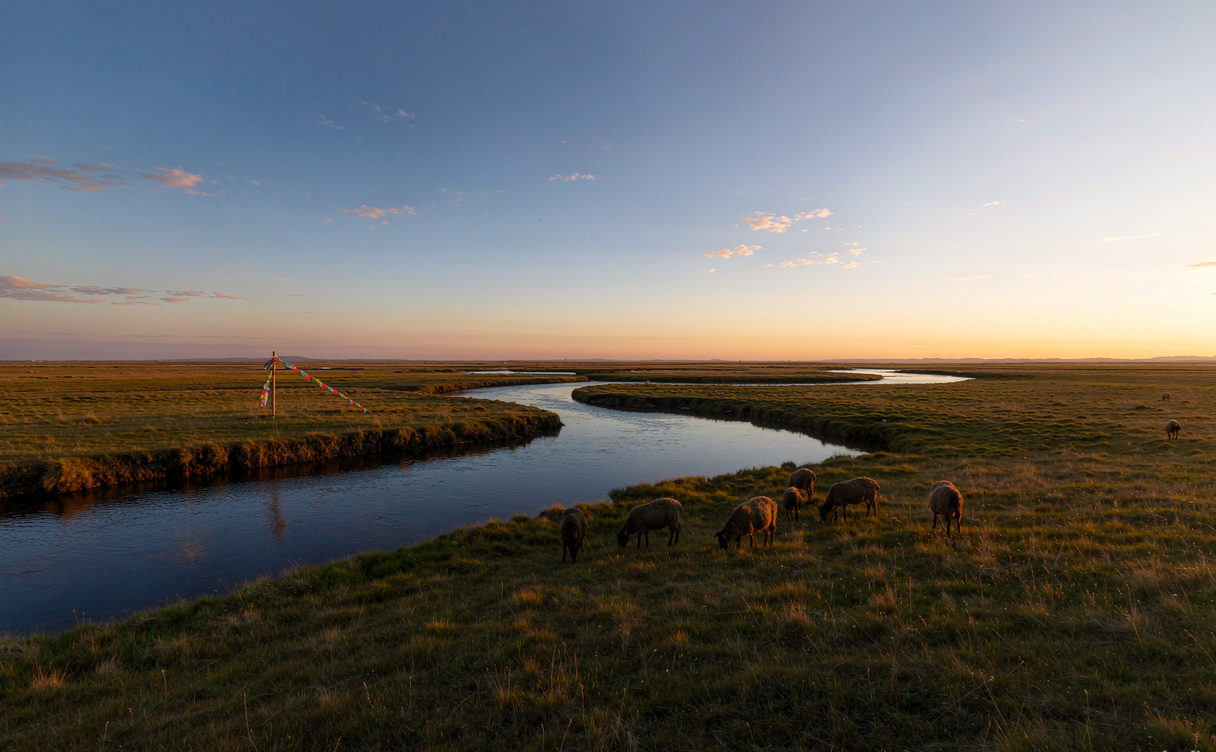
Zoige (若尔盖, Ruo’ergai) sits in Aba Tibetan and Qiang Autonomous Prefecture at around 3,400 to 3,600 metres above sea level. What makes it unusual is that it is not dry steppe but a vast alpine wetland: the Zoige wetland is one of the largest high-altitude peat marsh systems on Earth and the single most important “water tower” feeding the Yellow River. Walk out onto the boardwalks and you are standing on sponge underfoot, with braided channels glittering in every direction.
For travellers, the draw is threefold. First, the Yellow River first bend viewpoint Zoige at Tangke (唐克) is genuinely spectacular at sunset, when the low light turns the water gold and the bend looks like a brushstroke. Second, the summer flower meadows — late June into August — are carpeted with yellow swertia, purple gentian and edelweiss-like blooms, the best Zoige flower meadow month being July. Third, this is living Tibetan plateau culture: nomad tents, prayer-flag ridges, and towns like Langmusi where Sichuan and Gansu meet. Our Langmusi guide explains the monastery town that most visitors use as their jumping-off point.
Best Time to Visit Zoige
The Zoige wetland best season is short and you should plan around it.
- Late June to mid-August (peak). Daytime 12–22°C, nights 4–9°C. Meadows in full flower, birds nesting, clearest water. This is when the grassland looks like the postcards. Domestic crowds pick up in late July and the August school holidays.
- September to early October. Daytime 8–18°C, nights near 0°C. Golden grass, fewer people, crisp light. The best window if you want photographs without tour buses.
- May and late October. Shoulder. Cold but quiet; some boardwalks and tent camps may be closing.
- November to April. Harsh. Daytime −5 to 8°C, nights well below freezing, snow on the passes, many facilities shut. We do not recommend it for a first visit.
A note on weather: the plateau makes its own. Afternoon thunderstorms are common in July and August, so plan driving for the morning and sightseeing for the evening light.
How to Get to Zoige from Chengdu
This is the part that catches people out. Zoige is roughly 500 km from Chengdu as the crow flies but more like 600–700 km by road, across high passes. There are two realistic ways in.
| From | Mode | Duration | Approx. cost |
|—|—|—|—|
| Chengdu → Ruo’ergai (bus) | Long-distance coach | 9–11 hr | ¥150–200 (US$21–28) |
| Chengdu (Tianfu/Shuangliu) → Ruo’ergai Hongyuan Airport | Flight | 1 hr (limited schedule) | ¥400–900 (US$55–125) |
| Ruo’ergai Airport → Tangke / grassland | Taxi / charter | 1.5–2 hr | ¥250–400 (US$35–55) |
| Songpan / Jiuzhaigou → Ruo’ergai town | Bus / charter | 3–4 hr | ¥80–150 (US$11–21) |
| Langmusi → Ruo’ergai town | Bus / charter | 2–2.5 hr | ¥60–120 (US$8–17) |
The direct answer to how to get to Zoige from Chengdu depends on your tolerance for mountain roads. The overnight or early-morning coach is cheap and drops you in Ruo’ergai town, but it is a long day. The flight to Ruo’ergai Hongyuan Airport is far easier and runs seasonally — usually daily or near-daily in summer — but tickets sell out and weather delays happen. Most of our clients combine Zoige with a wider loop: fly or bus into the region, then charter a car for the grassland and Tangke, looping down to Jiuzhaigou or up through Langmusi. A private charter for the day runs about ¥600–900 (US$85–125) including driver, and it is money well spent given the distances between sites.
Things to Do on the Zoige Grassland
The Yellow River First Bend at Tangke
The headline sight. A purpose-built hillside platform and boardwalk climb above the river’s horseshoe bend; go for the last two hours before sunset. Entry to the scenic area is about ¥60–75 (US$8–11), with an optional sightseeing shuttle (¥15–30) and a glass viewing deck. Bring a warm layer even in summer — the wind up there is real. On a clear evening the bend glows red-gold and you will share the rail with photographers who have driven all day for the shot.
Huahu (Flower Lake)
A raised boardwalk loops out across the wetland to a lake that, in July, is ringed with blooming sedges. It is the best place to see the marsh ecosystem up close and spot waterbirds. Ticket plus shuttle is roughly ¥75–95 (US$10–13). Go early; by midday the light is flat and the tour groups arrive.
Meadow drives and nomad camps
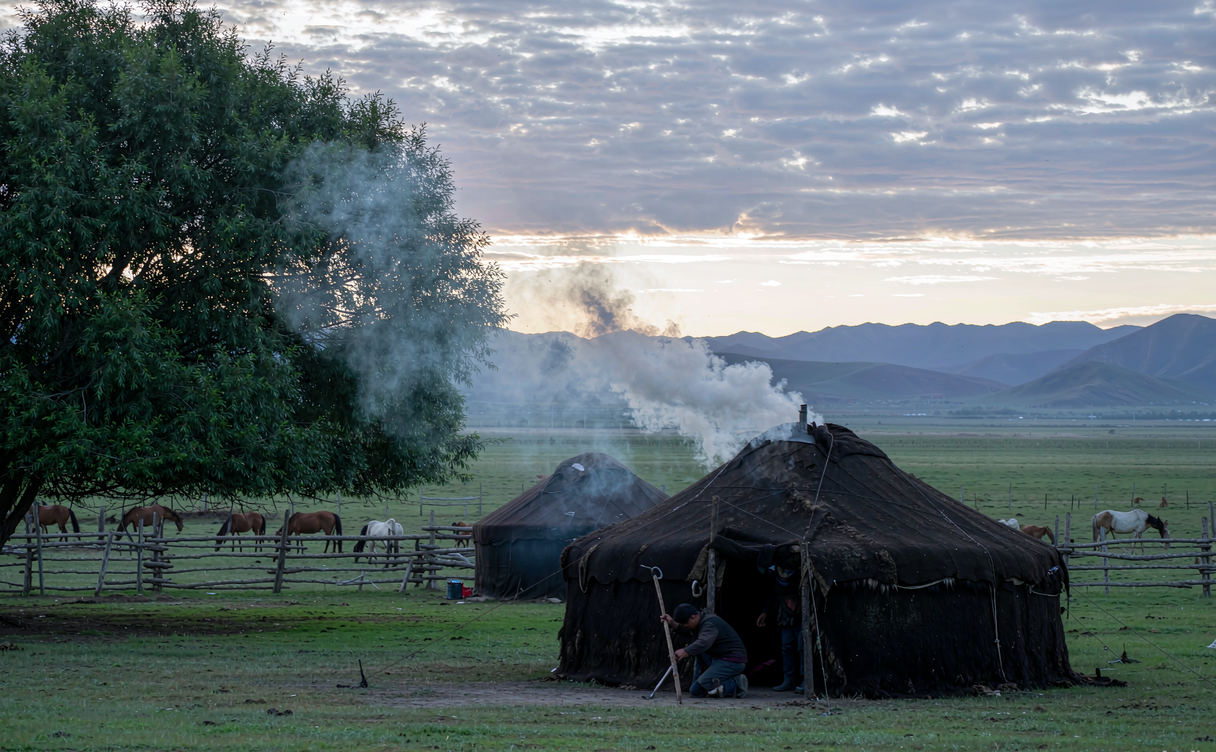
Between Ruo’ergai town and Tangke the road runs past black yak herds, white canvas tents and prayer-flag ridges. Several nomad-family camps near Tangke offer yak yoghurt, butter tea and a ride on a horse or motorbike across the grass for ¥50–120. Our Zhagana village guide covers the stone-village trekking just over the Gansu side that pairs naturally with this region.
Monasteries and towns
Langmusi, split across the Sichuan–Gansu border, has two active Gelugpa monasteries and a tight lane of guesthouses. Ruo’ergai town itself has a large Tibetan monastery on the hill and a weekly market where nomads trade. Neither is a major sight, but both ground the trip in living culture rather than scenery alone.
What to Eat on the Grassland
Plateau food is hearty and dairy-heavy. Expect:
- Yak meat (牦牛肉). Stir-fried, dried, or in a hotpot; ¥45–80 a dish.
- Yak yoghurt and butter tea. Thick, sour yoghurt topped with sugar; salty butter tea to warm you. ¥10–20.
- Tibetan noodles (藏面). Beef-broth wheat noodles, ¥12–20.
- Tsampa and momos. Roasted barley flour and steamed dumplings at the simpler eateries.
- Wild mushrooms. Late summer brings plateau fungi into the woks.
Vegetarians do fine on noodles, momos and dairy, but variety is limited — this is ranch country, not a culinary capital. For the wider regional food picture, our Gannan travel guide covers the Tibetan-influenced cooking just across the provincial line in Gansu.
Where to Stay
- Ruo’ergai town — budget to mid ¥150–400 (US$21–56). The practical base: clean Chinese-style hotels, 24-hour hot water in the better ones, restaurants and a pharmacy.
- Tangke tent camps — ¥200–500 (US$28–70) summer only. Yak-hair or canvas yurts a short drive from the first-bend viewpoint. Atmospheric and cold at night; book ahead in July–August.
- Langmusi guesthouses — ¥120–300 (US$17–42). Best if you are entering from Gansu or looping north.
All of these register foreign passports; carry yours. In winter most close, so plan accordingly.
Sample Itinerary: Two Days on the Grassland
- Day 1. Fly Chengdu → Ruo’ergai Hongyuan Airport (or arrive by road). Settle in town, acclimatise, light walk. Overnight Ruo’ergai.
- Day 2 morning. Huahu boardwalk (2 hr). Day 2 afternoon. Drive to Tangke, check the tent camp, rest. Day 2 evening. Yellow River first bend for sunset. Overnight Tangke or return to town.
- Day 3 (optional). Langmusi monastery town, then continue to Jiuzhaigou or Gansu.
Practical Tips
- Altitude first. At 3,400 m the Zoige grassland altitude tips are simple but non-negotiable: arrive by flight and rest the first half-day, drink water, skip alcohol on night one, and walk slowly. Mild headache is normal; persistent breathlessness is not. Our China altitude sickness guide walks through symptoms and when to descend.
- Layer, then layer again. Sun is fierce at this elevation; a hat and sunscreen are essential. Evenings are cold year-round.
- Cash and signal. Bring ¥200–300 in small notes; nomad camps and remote stalls may not take cards, and mobile coverage drops between towns.
- Drive in daylight. Passes and marsh roads are unlit and prone to fog after rain.
- Background reading. The wetland’s role in the Yellow River basin is summarised at Wikipedia’s Yellow River page, useful context before you stand at the bend.
FAQ
Is Zoige grassland worth it if I’m already doing Jiuzhaigou?
Yes, and they are different experiences. Jiuzhaigou is forested lakes and crowds; Zoige is open wetland, nomads and the Yellow River. Together they make a rounded trip.
How many days do I need?
Two full days covers the first bend and Huahu comfortably. Add a third if you want Langmusi or a slower pace for altitude.
Can I visit in winter?
Technically yes, but facilities close, roads ice over and the wetland is frozen. We steer first-timers to June–October.
Will I feel the altitude at Zoige?
Most people notice mild breathlessness walking uphill at 3,400 m. Build in rest time and you will be fine; the flight in makes it easier than a same-day drive.
Written by Karl, China Travel Places — updated August 2026.