

Most glaciers in China sit at the end of a multi-day trek, but Hailuogou glacier guide readers get a rare treat: a glacier you can reach by cable car and short walk. Tucked on the eastern flank of Mount Gongga in Sichuan, China, Hailuogou (海螺沟) is a valley where a broad tongue of blue-grey ice descends from the high peaks almost to the tree line, framed by forested moraine ridges and fed by steaming hot springs. It is one of the few places in the country where you can soak in a thermal pool and look up at a glacier at the same time.
This guide covers the route from Chengdu, the hot springs, the sunrise viewpoint, altitude and tickets, and the best season to go.
What Makes Hailuogou Special
Hailuogou is part of the Gongga Mountain massif, whose main summit (Minya Konka, 7,556 m) is the highest peak in Sichuan, China. The glacier itself is a valley glacier that has retreated but still reaches low enough — around 2,850 meters at its tongue — to be walked to without mountaineering gear. That accessibility is the draw: you stand on a viewing platform a few hundred meters from crevassed ice, with snow-capped Gongga rising behind.
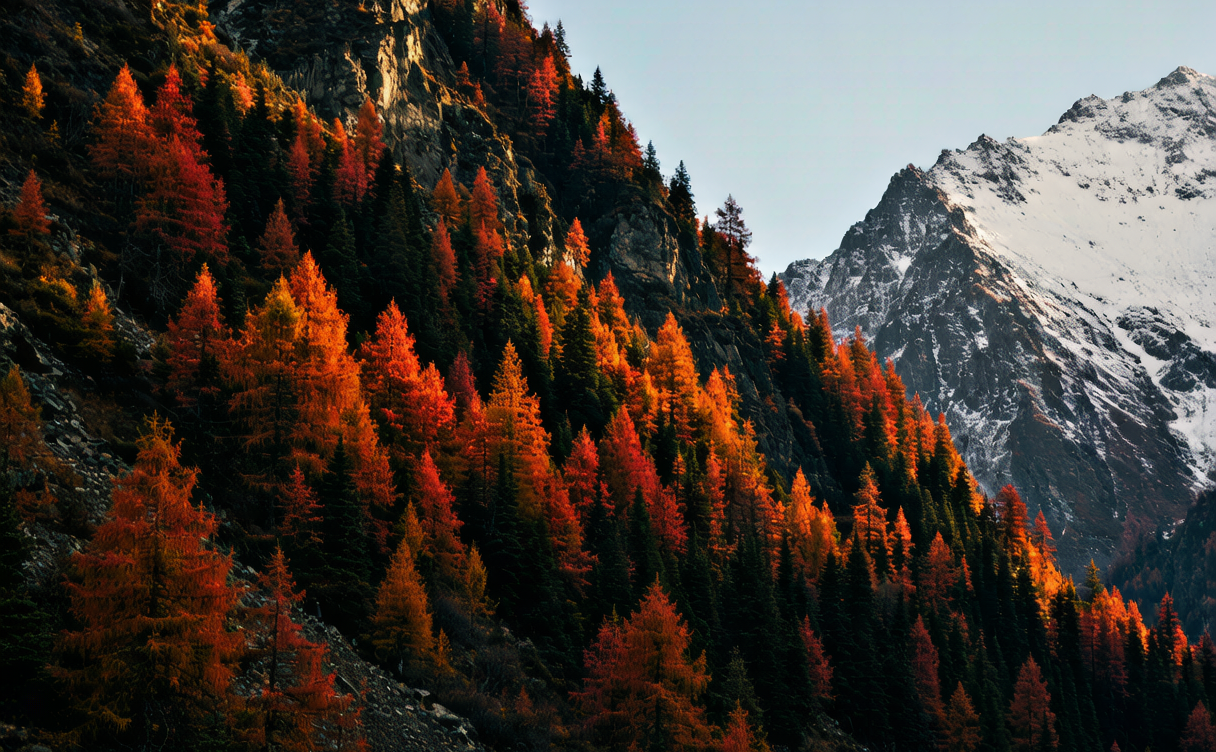
The valley also layers ecosystems: subtropical forest at the entrance, temperate woodland mid-valley, and alpine ice at the top. In autumn the maple and fir slopes turn red and gold, making the ice even more striking.
How to Get to Hailuogou from Chengdu
For most visitors, how to get to Hailuogou from Chengdu is the main logistics question. The glacier is about 280 km southwest of Chengdu in Garzê (Ganzi) prefecture, Sichuan, China.
- Self-drive or private car: the fastest road route runs via Ya’an and Luding, then up the valley to the town of Moxi (Moshi), the gateway to the park. Allow 4–5 hours with stops. The road is paved and well maintained.
- Bus: long-distance buses leave Chengdu’s Xinnanmen or Chadianzi stations for Luding or Moxi; from Moxi a short shuttle reaches the park gate.
- Tour or driver: many travelers book a private driver for two or three days, which also lets you add Luding Bridge and the photography town of Xinduqiao.
- Tip: show “海螺沟” (Hǎiluógōu) and “磨西镇” (Móxī Zhèn) to drivers. The final park shuttle is mandatory — private cars stop at the entrance.
Hailuogou Hot Springs
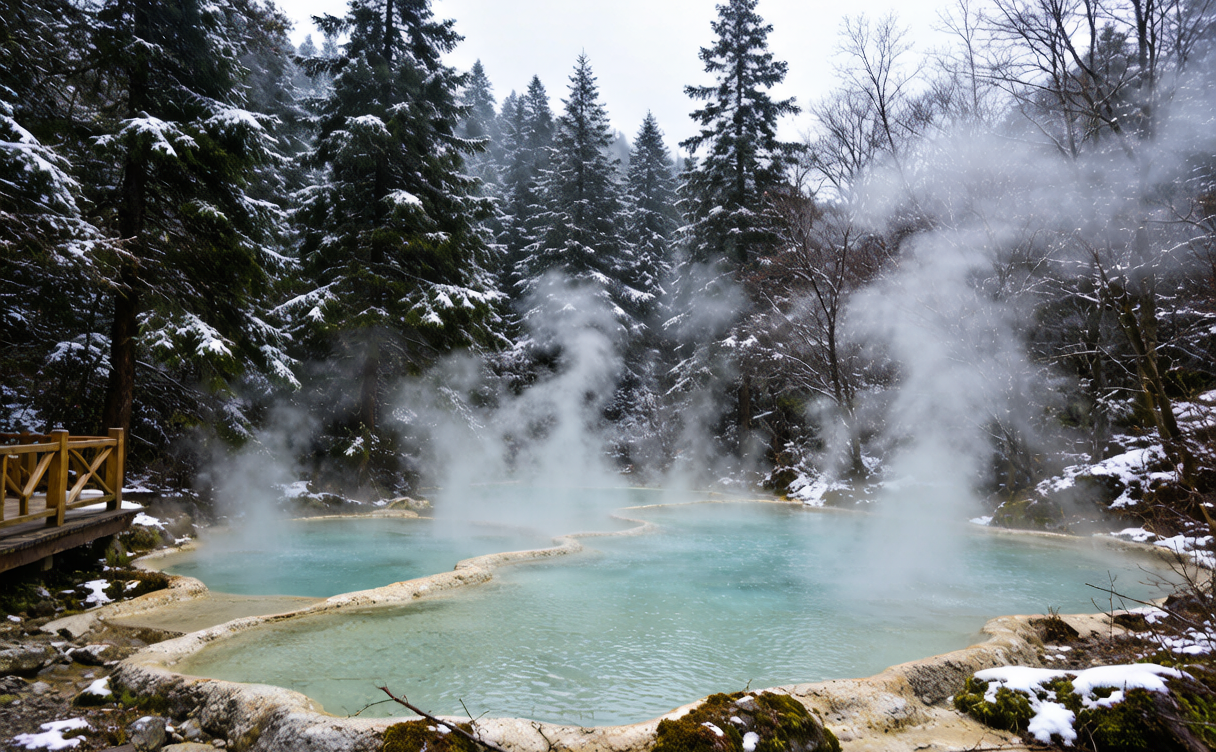
The Hailuogou hot springs are the perfect counterpoint to the cold ice. Several open-air pool complexes sit among the conifers in Moxi and inside the park, with naturally heated, mineral-rich water that steams in the cold mountain air.
- Park hot springs: the best-known pools are near Camp 2 (No. 2 Camp), fed by a geothermal spring at the forest edge.
- Town pools: Moxi has hotel spas and public baths if you prefer to soak after a long drive.
- Etiquette: bring a swimsuit; mixed public pools are common, and shower facilities are basic.
- Best timing: evening, after the glacier visit, when the steam meets the cool air and the stars come out.
Soaking while snow rests on the branches around you is a signature Hailuogou memory.
Mount Gongga Sunrise Viewpoint
The Mount Gongga sunrise viewpoint is the reason early risers love this valley. From the higher viewing terraces (around Camp 3 or the cable-car top), clear mornings reveal Gongga’s summit catching the first pink light while the glacier glows below.
- Reach the viewpoint by the park cable car, which climbs from Camp 1 to near the ice lookout in about 15–20 minutes.
- Arrive before first light; the summit is only visible in stable, clear air, so autumn and early winter give the best odds.
- If the summit is cloud-hidden (common in summer), the glacier and forest views are still excellent.
Hailuogou Altitude and Tickets
Two practical points dominate planning: Hailuogou altitude and tickets.
- Altitude: the entrance at Moxi is about 1,600 m, the glacier viewing terrace around 2,850–3,000 m. Most visitors feel fine, but if you are sensitive to altitude, ascend gradually from Chengdu (500 m) and hydrate. Spend the first night in Moxi rather than rushing to the ice.
- Tickets: a combined entrance-and-shuttle ticket costs roughly ¥90–¥110; the cable car to the glacier viewpoint is extra, about ¥150 round trip. Prices shift by season, so confirm at booking.
- Payment: mobile pay is standard; carry cash.
- Hours: shuttles start early (around 07:00–08:00) and the last descent is mid-afternoon — plan the glacier for the morning light.
Food and Stay in Moxi
The gateway town of Moxi (Moshi) is where you sleep, eat, and stage the glacier visit. It is a compact mountain town with guesthouses, a few hotels, and straightforward Sichuanese cooking — think mapo tofu, Twice-cooked pork, and noodle soups spiced with local chili. Tibetan-influenced dishes appear on some menus, reflecting the region’s culture within Sichuan, China: butter tea, yak meat, and barley bread for the curious. Prices are reasonable, and a hot dinner resets you after the cold glacier air. Book a place with its own spring pool if you want to soak without leaving the property. Reserve ahead in autumn, the peak season, when the town fills with domestic travelers chasing the clear-sky summit views.
Best Time to Visit Hailuogou
The best time to visit Hailuogou is autumn (October–November), when skies are clearest, the maple forest is fiery, and the chance of seeing Gongga’s summit is highest. Late spring (April–May) is green and pleasant. Summer is lush but cloudy and rainy, with more hidden peaks. Winter is cold and quiet, with the glacier at its bluest and the hot springs at their best.
Avoid the week of the National Day holiday in early October if you want calm; otherwise the valley absorbs visitors easily.
Planning a Sichuan Mountain Loop
Hailuogou sits on a superb western-Sichuan route. The gateway city is Chengdu, covered in our Chengdu travel guide, and the mountain town of Kangding is the next hub east — see our Kangding travel guide for the plateau town and its monasteries.
From Kangding you can continue to Xinduqiao travel guide (a photographer’s paradise of light and grassland), the watchtower villages of Danba travel guide, or the twin peaks of Mount Siguniang Sichuan. For a longer pilgrimage into alpine Sichuan, the Daocheng Yading Sichuan guide describes the sacred snow mountains farther southwest.
All of these are in Sichuan, China — a region of Tibetan culture and Himalayan foothills, but firmly within the province of Sichuan.
Tips for Foreign Visitors
- Acclimatize: sleep low in Moxi before climbing to the glacier terrace.
- Pack layers — the valley is mild but the glacier viewpoint is cold and windy year-round.
- The park shuttle is mandatory; private cars cannot enter.
- Mobile pay and basic Mandarin cover most needs; download an offline map.
Sources
Park information: Sichuan Provincial Culture and Tourism Department (Sichuan, China).