

Four hours west of Chengdu’s teahouses, the road climbs over a 4,500-meter pass and drops into a different world: glaciated granite peaks, yak meadows, and Tibetan villages strung along a river at 3,200 meters. This is Siguniang Shan — the Four Sisters Mountain — whose tallest “sister,” Yaomei Feng at 6,250 m, is the highest summit in the Qionglai range and a magnet for alpinists. You don’t need a rope to fall for the place. Three walkable valleys fan out beneath the peaks, offering everything from flat boardwalk strolls to multi-day horse treks and a guided 5,025-meter beginner’s summit. This Mount Siguniang guide covers the three-valley system, ticket and shuttle logistics, acclimatization strategy, and how to get to Mount Siguniang without a tour.
The Lay of the Land: Three Valleys, Four Peaks
The Siguniang Shan National Park (part of a UNESCO-recognized panda-habitat landscape) is organized around three parallel valleys radiating from Rilong town, plus the peaks themselves:
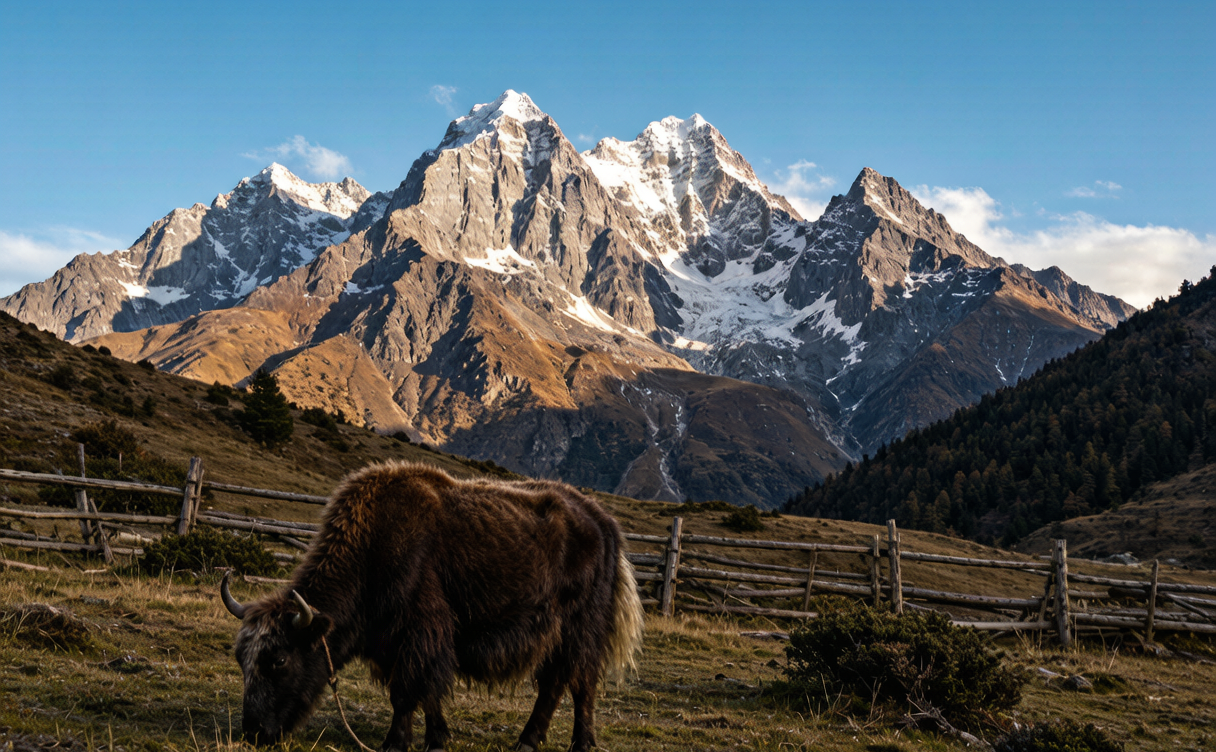
- Shuangqiao Valley (Double Bridge) — the accessible showpiece. A 34-km paved valley served by shuttle buses and boardwalks, no serious hiking required, with granite walls, glacier views, larch forest and roadside yaks. If you have one day and average fitness, this is your valley.
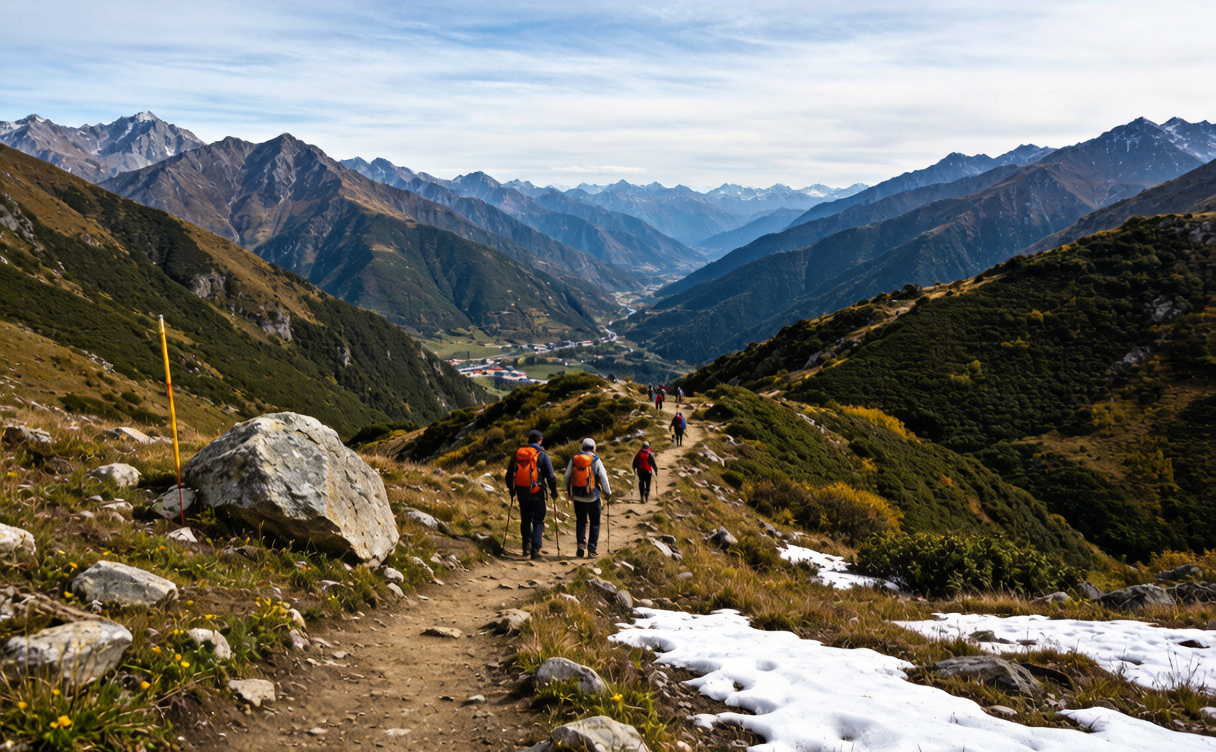
- Changping Valley — the trekker’s valley. A boardwalk gives way to a dirt-and-mud trail through forest and meadow beneath the four peaks’ west faces. Day hikers go as far as Muluozi or the two-lakes area and return; multi-day walkers continue over the 4,668-meter pass to Bipenggou — one of Sichuan’s classic treks.
- Haizigou Valley (Lake Valley) — the wild one. A long climb to a chain of alpine lakes (Dahaizi, Huahaizi) and the base-camp zone for climbing the sisters. Fewer facilities, bigger effort, biggest solitude.
- The peaks — Dafeng (5,025 m), the “beginner’s 5,000er,” is climbable in two days with a licensed local guide, crampons and a night at base camp. The higher sisters demand real mountaineering credentials and permits.
Best Time to Visit Mount Siguniang
The best time to visit Mount Siguniang splits by goal. For wildflower meadows and green valleys, June and early July are glorious (with some rain). For stable weather and the famous gold-larch autumn, late September through late October is the prime window — crisp air, snow-dusted peaks, and Changping Valley glowing yellow. Winter (November–March) brings hard blue skies, frozen waterfalls in Shuangqiao and ice climbing, with brutal dawn cold; many consider winter light the best of the year for photographing the peaks. April–May is shoulder season: melting trails, moody weather, empty valleys. July–August afternoons often cloud over and rain, hiding summits — start early. Avoid the first week of October (national holiday crowds). Match the window against the rest of your route with our best time to visit China breakdown.
How to Get to Mount Siguniang
The gateway is Rilong town, on the park’s doorstep. Since the Wenchuan–Wolong tunnel road fully opened, the drive from Chengdu runs about 3.5–4.5 hours.
| Route | Option | Time | Approx. Cost |
|—|—|—|—|
| Chengdu Chadianzi → Rilong | Direct long-distance bus | 4–5 hours | RMB 90–120 (US$13–17) |
| Chengdu → Rilong | Shared van / small-group transfer | 3.5–4.5 hours | RMB 150–250 per seat |
| Chengdu → Rilong | Private car with driver | 3.5–4 hours | RMB 800–1,200 per vehicle |
| Chengdu → Dujiangyan/Wolong → Rilong | Train + bus combo | 4–5 hours total | RMB 60–120 combined |
| Danba/Xiaojin → Rilong | Local bus | 1.5–2.5 hours | RMB 30–50 |
Buses from Chengdu’s Chadianzi station typically leave in the morning; book a day ahead in peak season. The route crosses the Balang Shan area with spectacular pass scenery — sit on the left side heading west. If you’re connecting from elsewhere in China by rail first, our high-speed train guide for foreigners covers getting to Chengdu smoothly.
Tickets, Shuttles and Valley Logistics
Each valley is ticketed separately, and prices differ by season (roughly April–November high season, December–March low season):
- Shuangqiao Valley: around RMB 80 high season plus a mandatory RMB 70 shuttle — the bus is the valley; it stops at a dozen scenic platforms and you walk boardwalk segments between them.
- Changping Valley: around RMB 70 plus a short RMB 20 shuttle to the trailhead at Lama Temple; beyond that, feet or hired horse.
- Haizigou: around RMB 60, no shuttle — pure hiking from the gate.
Gates typically open around 8am, earlier in peak summer. Buy tickets at the Rilong visitor centers or via WeChat mini-program with your passport. In Changping and Haizigou, register your route at the gate; rangers log walkers heading toward the passes. Horses with handlers can be hired inside Changping (negotiate, roughly RMB 200–400 per stage) — a knee-saver on the muddy stretches.
Top Experiences
Ride-and-stroll Shuangqiao Valley
Take the shuttle to the far end (Hongshan viewing area) and work backward: glacier viewpoints, the “Ghost Trees” larch flats, Bonsai Beach’s braided streams, and constant granite towers with names like Hunter Peak. Total walking can be as little as 3–4 km of flat boardwalk. Winter adds frozen-waterfall ice climbers to the scenery.
Day hike Changping Valley
Shuttle to Lama Temple, then walk the boardwalk into old-growth forest and out into meadows at Muluozi (round trip 15–18 km). The west faces of the four sisters tower overhead the entire way. Turn around whenever you like — this is the best effort-to-reward hiking day in the park.
Climb Dafeng (5,025 m)
With a licensed Rilong guiding outfit: day one, trek to Dafeng base camp (~4,300 m) and sleep; day two, pre-dawn start, summit by mid-morning, back to town by evening. No technical climbing, but altitude makes it genuinely hard. Budget RMB 1,500–2,500 all-in. Book guides in advance in October.
Haizigou to the lakes
A big day (or camp overnight) up to Dahaizi lake at ~4,100 m, with yak pastures and near-guaranteed solitude. Trails connect toward the peaks’ base camps.
Photography timing
Dawn is sacred here: the four summits catch pink alpenglow 20–30 minutes before the valleys get sun, best watched from the Maobiliang ridge viewpoints above Rilong or from Changping’s lower meadows. Afternoons cloud up most of the year, so shoot peaks in the morning, forests and streams after lunch. In late October, larch gold peaks in upper Changping about a week before the lower valley.
Where to Stay
Rilong town is the base: dozens of Tibetan-run guesthouses (RMB 120–300), mid-range hotels with oxygen-supplied rooms (RMB 300–600), and a couple of comfort-plus lodges with peak-view terraces (RMB 600–1,200). Many guesthouses arrange guides, horses and transfers. In-valley options are limited to base-camp huts and camping for trekkers. Book ahead for late October weekends. Rooms at 3,200 m get cold at night year-round — confirm heating, not just air-conditioning.
What to Eat
Rilong’s kitchens serve Tibetan-Sichuan crossover: yak stew and yak hotpot, butter tea, tsampa, hand-pulled noodles, and Sichuan stir-fries with plateau vegetables. Try matsutake dishes in late summer — these mountains are prime mushroom country. Guesthouse breakfasts (eggs, porridge, baba flatbread) are built for early starts; ask the night before for a 6am dawn-photography breakfast box. Carry snacks and water on all trails; only Shuangqiao has food service inside.
Sample Itinerary: 3 Days
Day 1 — Arrive and acclimatize. Morning bus from Chengdu, afternoon check-in at Rilong (3,200 m). Easy stroll to the Maobiliang viewpoint for sunset on the peaks. Early night, lots of water, no alcohol.
Day 2 — Shuangqiao Valley. Full shuttle-and-boardwalk day at gentle effort while your blood catches up. Evening yak hotpot.
Day 3 — Changping Valley hike. Shuttle to Lama Temple, hike to Muluozi meadows and back (6–8 hours). Late bus or overnight again and return to Chengdu next morning.
With five days, swap in the Dafeng summit (days 3–4) or the Haizigou lakes. The valleys’ shuttle-plus-boardwalk structure also makes a two-day family version realistic — pacing ideas in our China family travel guide.
Practical Tips
- Altitude is the main risk. Rilong sits at 3,200 m and trails climb from there. Spend day one easy, hydrate, and descend if headaches worsen. Coming straight from sea-level Chengdu, don’t attempt Dafeng before day three.
- Weather changes in minutes; pack a warm layer and shell even for Shuangqiao’s boardwalks.
- Sunscreen and sunglasses are mandatory — UV at altitude burns fast, especially off snow.
- Cash is nearly dead here too; set up Alipay/WeChat Pay, and keep your passport on you for tickets and hotel check-ins.
- For anything beyond marked trails or any summit, hire licensed local guides — solo off-trail travel is restricted and rescues are hard. The park lies within the UNESCO-listed Sichuan Giant Panda Sanctuaries landscape, and ranger rules protect both you and the habitat.
- Buses back to Chengdu fill up on Sunday afternoons; reserve your return seat when you arrive.
FAQ
Do I need mountaineering experience?
Not for the valleys — Shuangqiao is boardwalk-flat and Changping is a normal hiking trail. Dafeng requires a guide and crampon basics taught on the spot; the three higher sisters require real alpine experience and permits.
Will I get altitude sickness?
Mild symptoms (headache, poor sleep) are common on night one at 3,200 m. Most people adjust within a day. Take it seriously above 4,000 m.
Which valley is best if I only have one day?
Shuangqiao for scenery-per-effort; Changping if you’d rather earn the views on foot.
Is Mount Siguniang open in winter?
Yes — typically all three valleys stay open, with low-season ticket prices, frozen waterfalls and superb clear-sky peak views. Roads can ice over; transfers take longer.
Can beginners really summit Dafeng?
Fit beginners with a guide, yes — thousands do it yearly. It’s an endurance test, not a technical climb, and weather can still turn parties back.
How does it compare with Jiuzhaigou?
Different genres: Jiuzhaigou is lakes and boardwalks, Siguniang is peaks and trails. Ambitious itineraries combine both in a week via Chengdu.
Written by Karl Huang, updated July 2026.