

I tell travelers who’ve done the famous walls of the north that Linhai will quietly correct their assumptions. This county-level city in southeast Zhejiang was the old prefectural seat of Taizhou, and its Ming-era wall climbs the hills above the city in a green, serpentine line that locals proudly call the “Jiangnan Great Wall” — the Great Wall of the south. I’ve walked it at dawn with hardly another person on the stones, then dropped down into a living old street for breakfast, and that combination is the whole reason to come. This Linhai travel guide is the briefing I give people who want Zhejiang’s coast without the resort gloss: how to arrive, what to climb, what to eat, and how to spend a calm overnight.
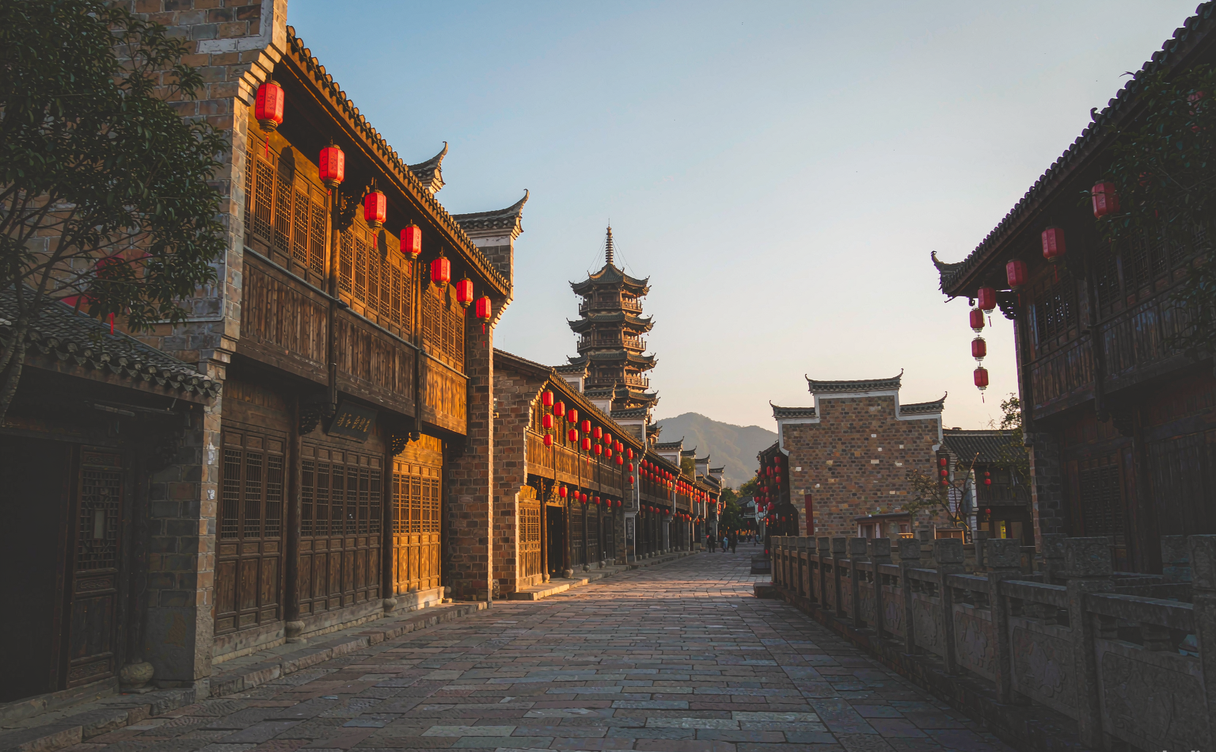
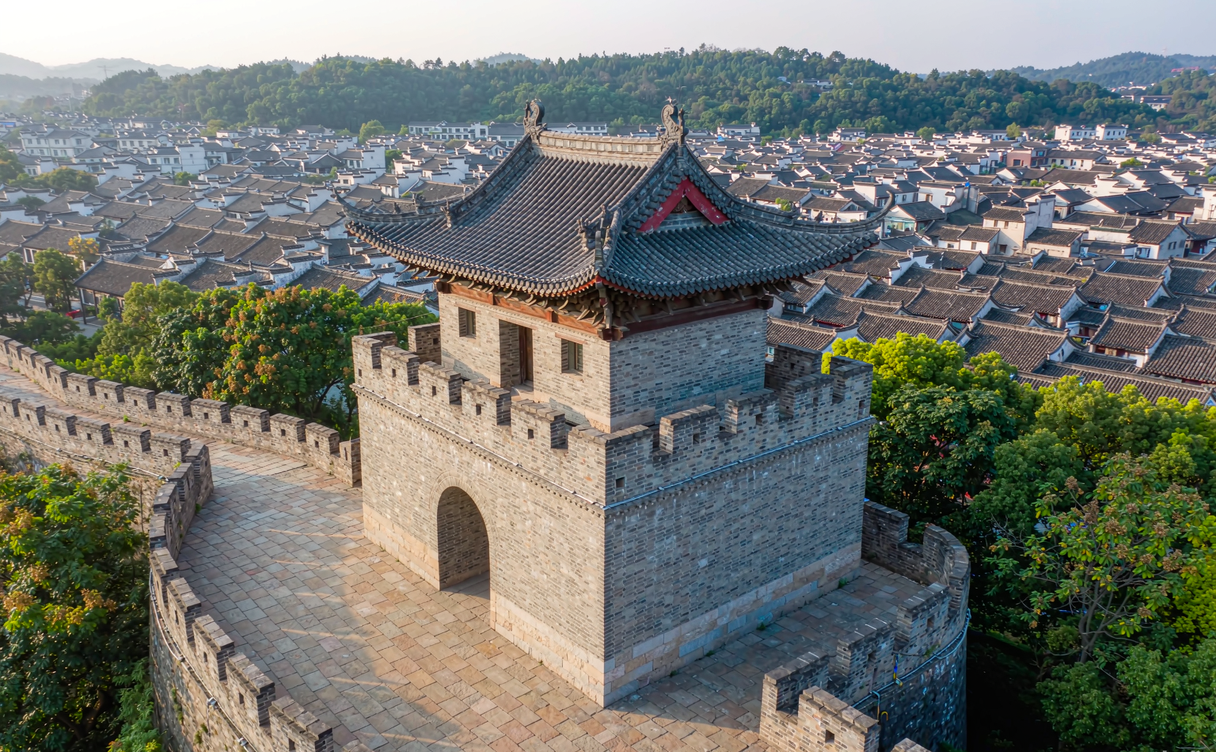
Linhai’s defining feature is the Taizhou Fucheng city wall (台州府城墙), a roughly 6 km circuit built to defend the prefecture and remarkably intact, especially the stretch that mounts the ridge north of the old town. It was engineered in the Ming period by the same military architect who worked on parts of the northern Great Wall, which is why the comparison sticks. Inside the wall, Ziyang ancient street (紫阳古街) is one of the best-preserved Song-through-Qing commercial streets in the region — not a reconstructed theme lane but a working neighbourhood with century-old shops. For the wider region, the Taizhou Zhejiang travel guide sets Linhai in its coastal context, since the modern city of Taizhou sprawls well beyond the old walls.
The Taizhou Fucheng City Wall Linhai: Walking the Ridge
The Taizhou Fucheng city wall Linhai is best walked from the Lansheng Gate (揽胜门) on the east, where a steep stair of a few hundred steps earns you the first panorama over the city and the Lingjiang River. From there the wall runs northwest along the ridge, dipping and rising past watchtowers and a restored section you can follow for about 2–3 km before it drops toward the river. A full circuit on top is no longer possible — parts were lost to development — but the ridge walk is the meat of it. Admission to the wall is about ¥60–70; the view alone, with tiled roofs stepping down to the water, is worth it.
Go early. I’ve had the eastern stairs to myself at 7:30, and by 10:00 the tour groups from Taizhou city arrive. Wear real shoes — the stones are uneven and the descent is slick after rain. The wall’s genius is defensive: notice how it bends to deflect floodwater from the river, a detail the Ming engineers built in because Linhai sits in a flood path.
Ziyang Ancient Street Food and the Old Town Below
Ziyang ancient street food is the reward you earn by coming down off the wall. This is a straight, narrow lane of grey-brick shops selling the snacks Linhai is quietly famous for: haitang cake (海苔饼), a flaky round pastry with a sweet-savoury seaweed filling at about ¥3–5 each; wheat cake (麦饼), a stuffed flatbread griddled over charcoal; and egg-white “lamb tail” (蛋清羊尾), a sweet fried meringue fritter that contains neither lamb nor tail — order it fresh from a back-lane shop at ¥10–15. The lane also holds an old pharmacy, a bean-curd maker and a teahouse where locals play cards; it’s the most unselfconscious old street I know on this coast.
Beyond the street, the East Lake (东湖) park just inside the wall is a tidy classical garden worth an hour, and Jinshan hill (巾山) rises inside the city with the Song-dynasty Thousand-Buddha Pagoda (千佛塔) on its shoulder — climb it for a second wall panorama without the stairs. The best ancient towns in China guide lists Linhai among the genuine ones, and it belongs there precisely because the streets still function rather than perform.
How to Get to Linhai
The practical answer to how to get to Linhai is the high-speed line. Trains reach Linhai station (临海站) from Hangzhou East in about 1.5–2 hours for ¥90–130, and from Taizhou station in 15–25 minutes for ¥15–30. From Shanghai, count on 2.5–3 hours with a change. A bus or taxi from Linhai station to the old town is 20–30 minutes for ¥40–70; the wall’s eastern gate is walkable from the centre. If you’re exploring the province’s quieter corners, the China off-the-beaten-path guide flags Linhai as a standout that hides in plain sight between the famous hubs.
Things to Do in Linhai Beyond the Wall
Things to do in Linhai fill a relaxed day and a half. After the wall and the street, visit the Lu’s Villa (骆宾王? no) — better, the 台州府文庙 (Confucian temple of the prefecture) and the old yamen ruins, both inside the walls and free or nearly so. South of the city, the Lingjiang riverside makes a flat evening walk. If you have a second day, the Shenxianju guide describes the nearby pillar-mountain scenery an hour northwest, and the Tiantai Mountain Zhejiang guide covers the Buddhist mountain south — both are easy Linhai-based excursions. The Nanxi River Yongjia guide is a longer reach but pairs well if you’re already roaming the coast-and-mountain band.
Food beyond snacks: Linhai does a good “zao geng” (糟羹), a thick savoury soup eaten especially around the Lantern Festival, and seafood from the nearby coast — steamed grouper, river shrimp, chased with the local yellow wine. A dinner for two runs ¥130–220.
Best Time to Visit Linhai
The best time to visit Linhai is April to May and September to November, when the ridge walk is cool and the old street’s light is soft. Avoid July–August, when the coast hits 33–37°C with humidity that turns the climb into a sweat, and mid-June’s plum rains, when the wall stones get treacherous. Winter is quiet, cold (5–12°C) and cheap, and the mist on the ridge can be lovely if you dress for it. The Lantern Festival period (roughly February) is the liveliest for street food and the zao geng tradition.
Where to Stay and a Two-Day Plan
Lodging runs from old-town guesthouses (¥250–450) to modern hotels near the station (¥300–550). I sleep inside the walls when I can, so the morning wall walk starts at the gate. A workable plan: Day 1, arrive from Hangzhou around noon, lunch on wheat cake and haitang pastry, walk East Lake and Jinshan hill, then Ziyang street at dusk; sleep in the old town. Day 2, an early climb of the city wall from Lansheng Gate, breakfast on the street, a slow look at the Confucian temple and yamen, and a train back by early afternoon. Realistic spend for two: ¥200–350 transport, ¥300–550 lodging, ¥250–400 food and tickets. Two pitfalls I warn people about. First, arriving after 10:00 and finding the ridge wall shared with a dozen tour groups — come at opening instead. Second, assuming Ziyang street is a daytime-only sight; the snacks are best at dusk when the bakers fire up the charcoal and the lanterns go on. Linhai is small enough that neither mistake ruins the day, but both are easy to avoid with an early start.
For background on the city and its walls, the Wikipedia entry on Linhai is a useful primer, especially the notes on the Ming fortification that give the “Jiangnan Great Wall” its name. Pair Linhai with Tiantai and Shenxianju and you have a Zhejiang loop that trades crowds for stone, snack and mountain air.