

Most travelers blow through Zhuji on the train and never know what they missed. I almost did, the first time, treating it as a change at Shaoxing — until a local pulled me off the platform toward the western hills and a staircase of five waterfalls that empties into a green lake. Zhuji is a county-level city under Shaoxing in Zhejiang, and it hands you two very different days: the legend of Xi Shi, the most famous beauty in Chinese history, and the Wuxie gorges, where the water does the talking. This Zhuji travel guide is the briefing I give clients who want the delta without the crowds — how to arrive, what to climb, what to eat, and how to spend a calm overnight.
Zhuji’s reputation is historical and natural at once. On the human side, it is the hometown of Xi Shi (西施), one of the Four Beauties of ancient China, who according to legend was sent by the kingdom of Yue to undo the rival kingdom of Wu. On the natural side, it holds Wuxie (五泄), whose name means “five cascades” and which is one of the most satisfying half-day hikes in the province. The two sit at opposite ends of the county — the Xi Shi story in the city, the waterfalls an hour west — so a visit naturally splits into a cultural morning and a wet afternoon. For the wider region, the Shaoxing travel guide is the natural base, since Zhuji is administratively part of Shaoxing and shares its rice-wine, canal-and-hill character.
A Wuxie Waterfall Zhuji Hike
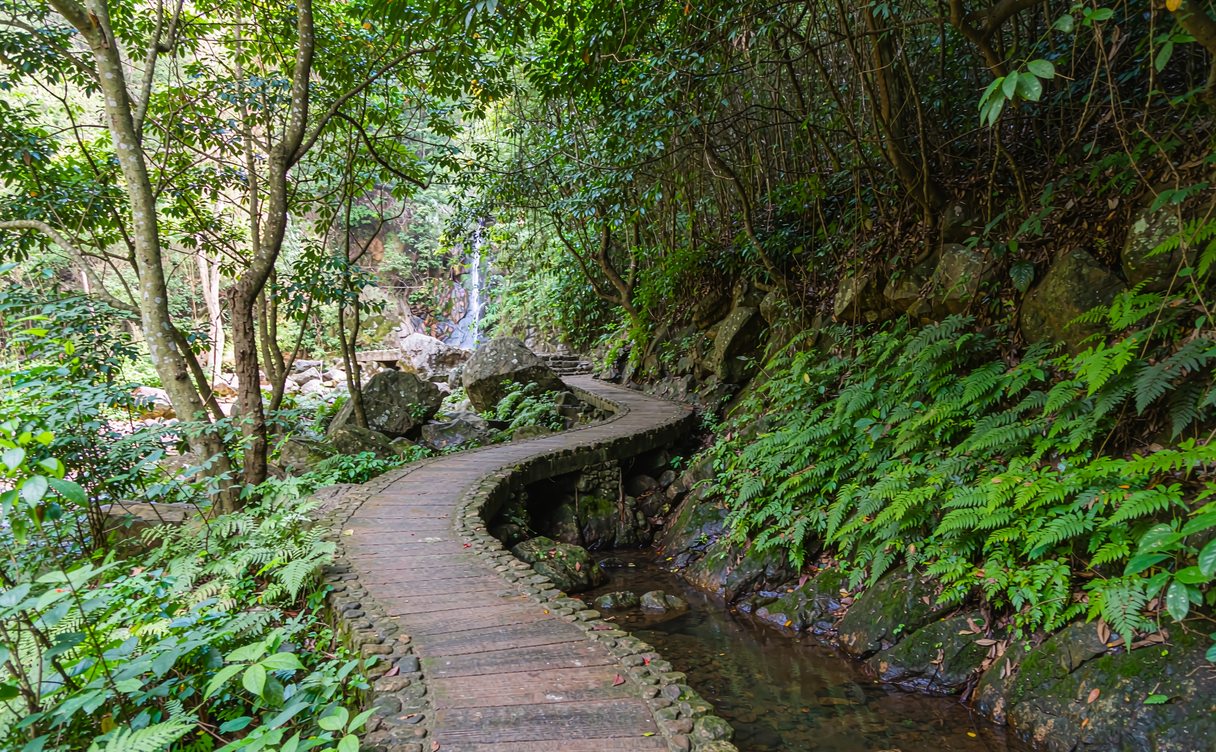
A Wuxie waterfall Zhuji hike starts at Wuxie Lake, where a boat ferries you across to the trailhead — buy the combined boat-and-park ticket (about ¥80–100) at the entrance. From there a paved path follows the gorge up past the fifth, fourth and third falls, each worth a pause; the second and first cascades sit higher and demand more climb, but the fifth fall alone, a single 30 m sheet into a deep pool, justifies the trip. The whole loop is about 5–6 km and takes two to three hours at a relaxed pace. I’ve taken fit travelers and slow walkers alike; the lower falls are accessible, the upper ones are a proper leg workout in summer heat.
Go on a weekday if you can — weekends bring coach tours from Hangzhou, and the boat queue alone can cost you an hour. The China hiking and treks guide lists Wuxie among the delta’s best short walks, and it’s right: this is hiking that rewards without exhausting. Bring water shoes if you want to wade the shallows below the fifth pool, and a dry bag for the camera on the boat.
The Xi Shi Hometown Scenic Area
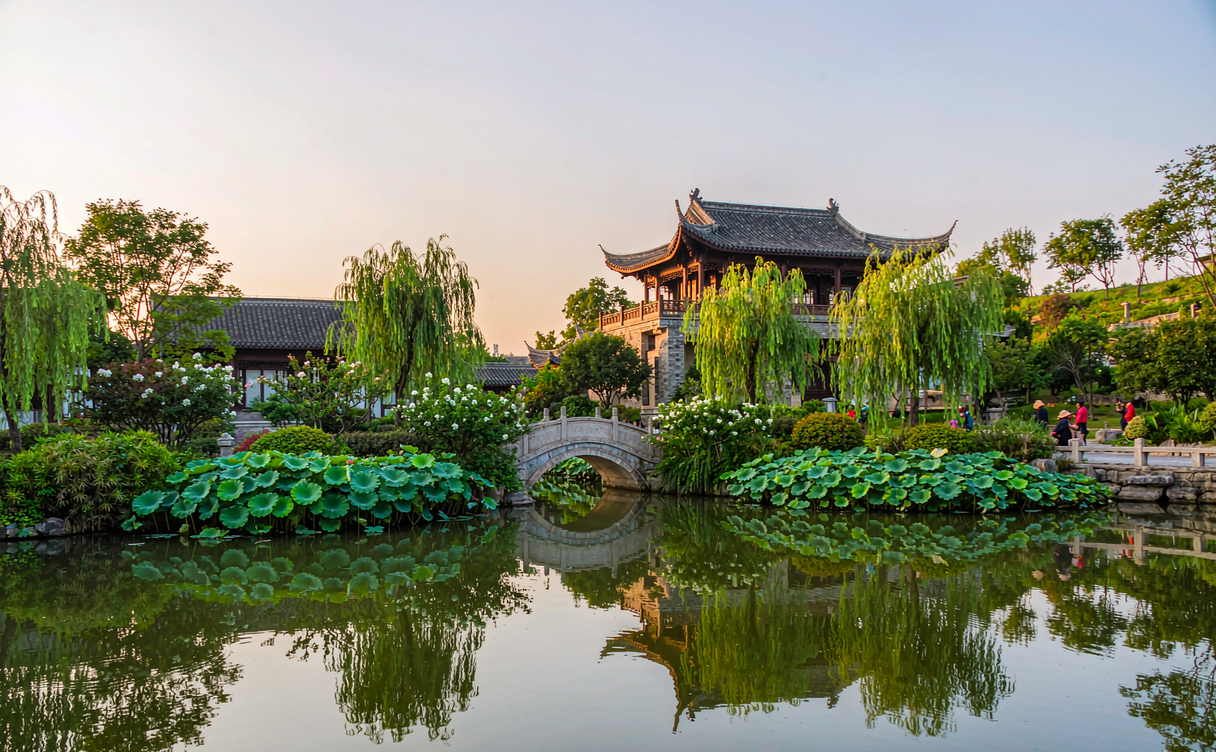
The Xi Shi hometown scenic area (西施故里) sits on the banks of the Puyang River (浦阳江) in Zhuji city itself — a riverside park, museum and reconstructed courtyards telling the Xi Shi story through tablets, statues and a small theatre. Admission runs about ¥45–70 for the combined park and museum. It’s more curated than the falls, and some of the “ancient” buildings are modern reconstructions, but the riverside setting is genuine and the museum does a clean job of separating legend from recorded history. I send people here on the afternoon they arrive, as a gentle on-ramp to the next day’s climb.
Zhuji has a second claim beyond beauty: it is one of China’s great freshwater-pearl centres, and the Shanxiahu (山下湖) pearl market on the city’s edge is worth a browse if you want a strand at source prices — ¥80–600 depending on size and lustre. It’s a working wholesale town, not a tourist show, which is exactly why some travelers like it.
How to Get to Zhuji
The practical answer to how to get to Zhuji is the high-speed line. Trains run from Hangzhou East to Zhuji station (诸暨站) in about 20–30 minutes for ¥30–50, and from Shaoxing in roughly 15–25 minutes for a similar fare. From Shanghai, allow 1–1.5 hours with a change, making Zhuji an easy day trip from any delta hub. If China rail ticketing is new to you, our high-speed train guide for foreign visitors walks through passport booking and the station routine. From Zhuji station, a bus or taxi covers the 5 km into the city centre in 15 minutes for ¥20–40; the Wuxie scenic area is another 30 km west, best reached by a pre-booked car (¥100–150 each way) since buses are slow and infrequent.
Things to Do in Zhuji Beyond the Headlines
Things to do in Zhuji fill a relaxed two days without straining. After Xi Shi’s park, walk the Puyang riverside and the old bridge district, where evening food stalls set up under the lamps. North of the city, the Torreya grandis (香榧) hills around Zhaojia town produce a prized nut roasted in autumn — if you’re here in September or October, buy a bag from a roadside roaster at ¥60–120 per 500 g. The Ningbo travel guide makes a logical next stop if you want to continue southeast to the coast, or loop back through Shaoxing for the canals.
Food is hearty river-and-hill cooking: steamed Puyang river fish, free-range chicken with mountain yam, and a local “xishi tofu” dressed with scallion. A dinner for two at a city restaurant runs ¥130–220. The night market by the river is the place for a late graze — grilled skewers, sticky-rice rolls and sweet soy pudding for under ¥50 a head.
Best Time to Visit Zhuji
The best time to visit Zhuji is April to May and September to November, when the gorges are full from spring rain or autumn showers and the heat stays below 28°C. The waterfalls are at their most theatrical after a wet spell, so a day or two of rain followed by sun is ideal — counterintuitive, but true. Summer (July–August) is hot and humid, 33–37°C, and the climb gets sticky; winter is quiet and cheap but the upper pools can thin to a trickle. If you want the off-beaten texture, the China off-the-beaten-path guide flags Zhuji precisely because it sits between the famous hubs and keeps its local pace.
Where to Stay and a Two-Day Plan
Lodging runs from city business hotels (¥250–450) to a handful of hillside guesthouses near Wuxie (¥300–600). I usually sleep in Zhuji city and train to the falls in the morning, keeping the luggage light. A workable plan: Day 1, arrive from Hangzhou around noon, lunch on river fish, walk the Xi Shi hometown scenic area and the riverside at dusk; sleep in the city. Day 2, an 8:30 taxi to Wuxie, boat across the lake, hike the five falls at a slow pace, lunch near the entrance, and train back to Hangzhou by late afternoon. Realistic spend for two: ¥160–240 transport, ¥300–600 lodging, ¥300–450 tickets, boat and food.
For background on the county and its place in Zhejiang, the Wikipedia entry on Zhuji is a useful primer before you go, especially the sections on the Yue–Wu history that the Xi Shi legend grows out of. Pair Zhuji with Shaoxing and Hangzhou and you have a delta triangle that trades crowds for water, legend and good plain cooking.