

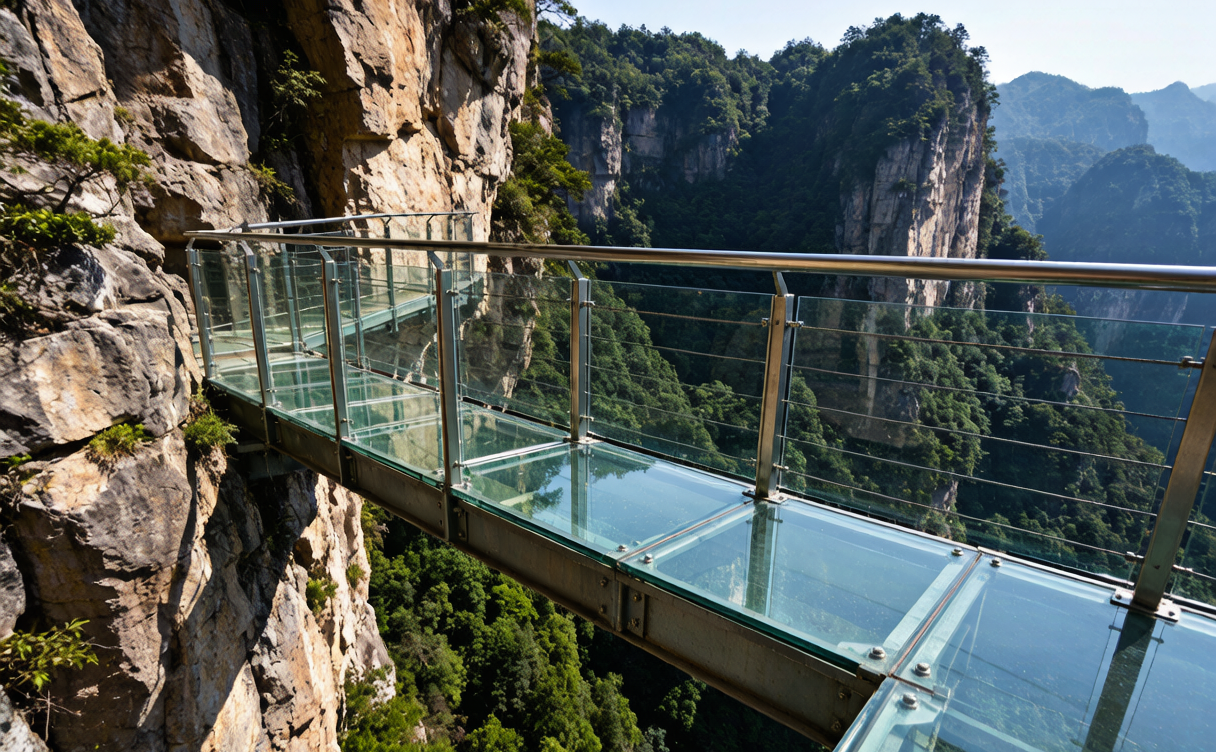
Three hours south of Hangzhou, in a county most foreign travellers have never heard of, a block of volcanic rhyolite has weathered into a set of flat-topped cliffs and needle spires that look less like a mountain range than a stage set. The name Shenxianju means “where the immortals live,” which in Chinese scenic naming usually signals hyperbole and here does not. Cloud fills the valleys most mornings, waterfalls drop off the tablelands in white threads, and a suspension bridge with a glass deck hangs between two cliffs a hundred metres above the trees. This Shenxianju guide covers the routes, the cable cars, the tickets and how to get there without a tour group.
Why Visit Shenxianju
Xianju County sits in the mountains of central Zhejiang, and its scenic area protects roughly 158 square kilometres of volcanic rock formed about 100 million years ago. The rhyolite here cooled into vertical columns, so erosion has left sheer walls and freestanding towers rather than the rounded granite domes you see at Huangshan. The effect is harder-edged and, in mist, considerably more theatrical.
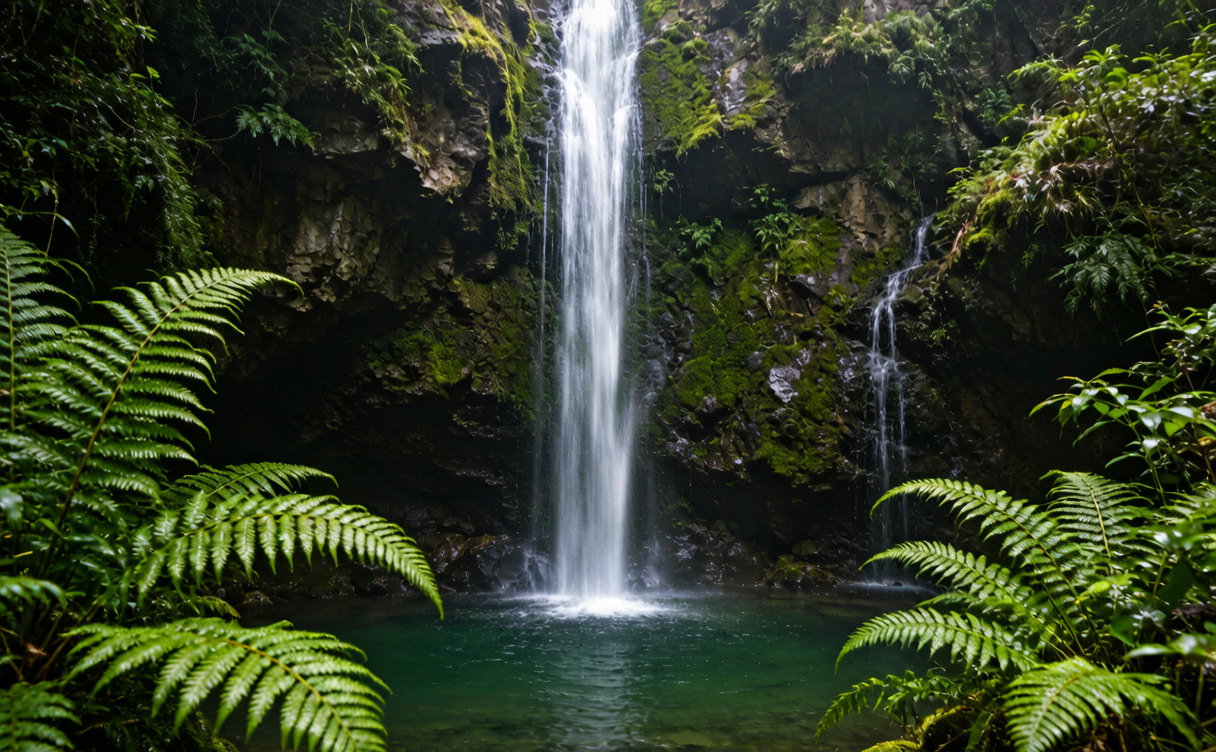
Three things make it worth the detour. The cliff scenery itself, best from the ridge trails on the north and south rims. The engineered walkways — glass-floored bridges, cliff-hugging plank paths and a set of long escalators built into the rock, which sound gimmicky and turn out to be the only practical way to link the plateaus. And the water, with a dozen named falls, the tallest around 300 metres in wet season.
If you are planning a Zhejiang route, this pairs with Taizhou, the nearest city with fast rail, and works as a mountain counterweight to Hangzhou at the start of a trip.
Shenxianju Best Time to Visit
April to June. The Shenxianju best time to visit if you want cloud and water. Spring rain keeps the falls running and fills the valleys with the sea-of-cloud effect that appears in every photograph of the place. Temperatures 15–26°C. Bring rain gear and expect slick stone.
September to November. The steadier season: 12–24°C, clear air, less rain, and autumn colour in the broadleaf forest through late October. Best for long walking days.
July and August. Hot at 28–35°C in the valleys, cooler on the tops. Afternoon thunderstorms are frequent and the glass walkways close in lightning. Domestic crowds peak, and the falls are strong.
December to March. Cold at 0–12°C, quiet, occasional snow on the tablelands, waterfalls reduced. Some higher walkways close in ice. Cheap and empty if you accept the trade-off.
Avoid the first weeks of May and October, when the cable car queues run past two hours.
Shenxianju Glass Walkway and the Engineered Routes
The Shenxianju glass walkway is the site’s signature. The main span, the Rulai Suspension Bridge, crosses a gorge at around 100 metres with a partly glass deck; a second, longer bridge links the northern cliffs. Neither is a novelty attraction bolted onto the landscape — they connect trail sections that would otherwise need a two-hour descent and re-climb.
Alongside them, the site has built cliff plank paths cut into overhangs with railings and, more unusually, a series of outdoor escalators and lifts rising several hundred metres through the rock. Purists grumble. In practice they turn a brutal day into a manageable one, and they make the upper plateaus reachable for people who could not otherwise get there.
Vertigo-sensitive visitors should know the glass sections are short and skirtable in most cases, and the bridges have solid-floor lanes.
Xianju Scenic Area Cable Car
There are two gates, north and south, and each has its own lift system. Understanding this saves you a wasted day.
North gate (北入口). Serves the main cable car up to the northern tableland, the Rulai bridge and the highest viewpoints. This is the side most visitors use and the one with the escalators.
South gate (南入口). Cable car to the southern ridge, quieter trails, and the best of the waterfalls. Good for a second day or for avoiding crowds on a holiday weekend.
The Xianju scenic area cable car costs roughly ¥60–80 one way per section (US$8–11), or ¥110–150 return, and runs 08:00 to 16:30 with the last downward car around 17:00. Walking up instead takes two to three hours on stone steps and is a genuine workout; walking down is easier on the legs than most Chinese mountains because the escalator sections absorb the worst gradients.
A through-route from north gate to south gate across the tops is possible in a long day, but you finish 25 kilometres by road from where you parked, so arrange transport in advance.
Shenxianju Hiking Route
The standard Shenxianju hiking route most people should do, from the north gate:
Cable car up, walk the rim path east to the main viewing platforms, cross the Rulai suspension bridge, continue to the second bridge and the Shixiang Cliff viewpoints, then take the plank path down the western side to the waterfall basin and ride the escalators back to the cable car station. That is five to six hours including stops, mostly on engineered surfaces, with perhaps 400 metres of cumulative climbing once the cable car has done the heavy lifting.
Stronger walkers can add the southern traverse, another four hours along the far rim with far fewer people and the best waterfall views. Nothing here needs scrambling or technical skill, but the exposure on the plank paths is real and the steps are relentless. Our China hiking and trekking guide explains the boardwalk-and-steps model you will meet at nearly every Chinese scenic mountain, and what footwear actually helps.
How to Get to Shenxianju
The answer to how to get to Shenxianju is rail to Xianju County, then a short drive.
| From | Mode | Duration | Approx. cost |
|—|—|—|—|
| Hangzhou → Xianju | High-speed rail | 1 hr 40 min – 2 hr 20 min | ¥100–160 (US$14–22) |
| Shanghai → Xianju | High-speed rail | 3 hr – 4 hr | ¥180–280 (US$25–39) |
| Taizhou → Xianju | Rail or car | 40 min rail / 1 hr 20 min car | ¥30–50 / ¥250–350 |
| Wenzhou → Xianju | High-speed rail | 1 hr 30 min | ¥80–130 (US$11–18) |
| Xianju Station → north gate | Taxi | 30–40 min | ¥70–110 (US$10–15) |
Local buses run from Xianju county bus station to both gates several times a day, roughly ¥10–15, but they finish early and do not wait. A car with driver for the day, ¥400–600, is the sensible option if you plan a through-route between gates.
Where to Stay
North gate village — ¥180–400 (US$25–56). Guesthouses and small hotels within walking distance of the ticket office. The right choice for an early start, since the cloud inversion happens before 08:00.
Xianju county town — ¥140–300 (US$20–42). Chain hotels, reliable foreign-passport registration, better restaurants, 30 to 40 minutes from the gate.
Mountain boutique stays — ¥450–900 (US$63–126). A few design-led properties have opened in the valleys with cliff-facing terraces. Book well ahead in spring and autumn.
Most people stay one night at the gate and leave the following afternoon.
Tickets and Opening Hours
Entry runs roughly ¥110–125 per person (US$15–18), with cable cars, the glass bridges and the escalator sections charged separately at ¥20–80 each. Combined passes bundling entry, return cable car and the bridges typically land at ¥250–320 (US$35–45) and are usually better value than paying piecemeal. Gates open 07:30–08:00 and stop selling around 16:00, with shorter winter hours; passports are checked at the window. Provincial tourism notices and seasonal closures are published through the Zhejiang provincial government portal.
Glass walkways and cable cars suspend in high wind, thunderstorms and ice. Ask at the ticket office before buying an add-on you may not be able to use.
Practical Tips
- Passport for rail tickets, the gate and hotel registration.
- Alipay and WeChat Pay everywhere; keep ¥200 cash for village stalls and buses.
- Shoes with grip. Wet stone steps are the main hazard, not the heights.
- Layers. The tablelands run 5–8°C cooler than the valley floor and the wind is constant.
- Start at opening. Cloud burns off by mid-morning and the bridges fill up.
- Food. Xianju is known for its pomelo, bamboo shoots and mountain chicken stew. Two people eat for ¥90–160.
- Shoe covers. Glass sections require them; they are handed out at the entrance.
FAQ
Is Shenxianju worth visiting?
Yes, if you like dramatic rock and do not mind that the access is heavily engineered. The cliff forms are unlike anything else in Zhejiang, and on a misty spring morning it is one of the more remarkable landscapes in eastern China.
How many days do I need?
One full day covers the north side properly. Two lets you add the southern ridge and the waterfalls, which is where the crowds are not.
Is it suitable for children or older visitors?
More than most Chinese mountains, thanks to the cable cars and escalators. The rim paths are level and railed. The plank sections and glass decks are optional.
How does it compare to Yandang Mountain?
Both are volcanic and both are in this region. Yandang Mountain is larger and better known, with more spread-out sights; Shenxianju is more concentrated and more vertical. Both feature in our China national parks guide, and either makes a good pairing with a quiet hill retreat like Moganshan.
Written by Karl, China Travel Places — updated August 2026.