

I went to Shangxiajiu (上下九) in October 2025 because I wanted the most Cantonese street in Guangzhou: a long pedestrian run shaded by qilou (骑楼) arcades, humming with dim sum, dried-fruit shops, and silk stalls. Shangxiajiu Pedestrian Street sits in the old Liwan district of Guangzhou, a working commercial drag rather than a cleaned-up showpiece, and that is exactly why it works. This Guangzhou Shangxiajiu guide comes from a couple of walking visits, with the metro I rode, the dim sum I paid for, and the arcades I photographed. It is written for travelers who want to eat and shop where Guangzhou actually lives.
How to visit Shangxiajiu
Shangxiajiu is simple to reach and walkable once you are there. Metro Line 1 stops at Changshou Lu (长寿路站), and I came from Guangzhou East in about 30 minutes for RMB 5, then walked out Exit D and followed the signs eight minutes to the street mouth. Line 6 to Huangsha (黄沙站) also works if you are coming from Shamian Island, a ten-minute walk northeast. For the rail basics, our China metro and subway guide explains riding with Alipay QR or a foreign card, and it is the guide I used to tap through the gates without a paper ticket.
Entry to the street is free; you pay only for food and buys. The whole drag is flat and traffic-free, so comfortable shoes are all you need, and the arcades keep the rain and sun off. The street’s history and qilou form are outlined on Shangxiajiu Pedestrian Street at Wikipedia if you want the background before you go, and it helps to know the arcades were built for shade and trade in the old port climate.
Best time to visit Shangxiajiu
Shangxiajiu is a year-round street, but the arcades make it bearable even in heat. I went in October with highs around 28°C and a breeze, which was pleasant for slow walking and frequent snacking. Spring (March to May) and autumn (October to November) are the comfortable windows; summer is hot and humid, often above 34°C, so you will appreciate the covered walkway more than ever; winter is mild, rarely below 10°C, and good for long strolls. Our Guangzhou travel guide places Shangxiajiu in a sensible old-town day and notes that mornings are calmer before the shopping crowds build.
The Qilou arcades and the street itself
The headline is the architecture. Guangzhou Qilou are the covered ground-floor arcades — European-colonial facades with Chinese shopfronts underneath, built so pedestrians walk dry and shaded through the whole commercial strip. I spent the first twenty minutes just looking up at the plasterwork and the faded shop names, then at the tiled columns that line the walk. This is where things to do in Shangxiajiu start: read the buildings before the menus.
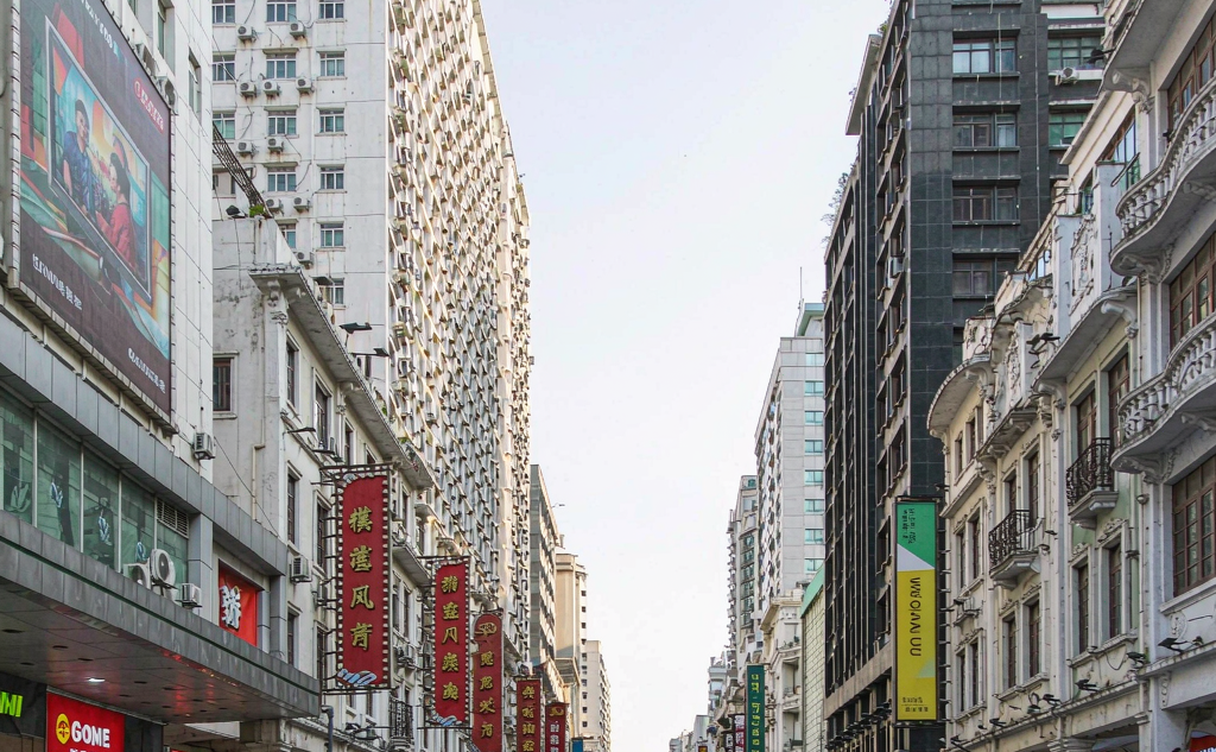
The street runs roughly a kilometer and connects the older Liwan core with the newer malls, so the mix is real: century-old teahouses next to phone shops and pearl stalls. Unlike a themed district, this one is used daily by locals, which keeps it honest. Go early for photos with fewer bodies, and return at night when the neon and the steam from the food stalls make it feel alive.
Shangxiajiu food and the dim sum houses
The eating is the main event. Shangxiajiu food means Cantonese classics in their home setting: I had dim sum at a storied house for about RMB 50 per person — har gow (shrimp dumplings) RMB 28, char siu bao (barbecue pork bun) RMB 18, congee RMB 12 — and a bowl of wonton noodles at a street counter for RMB 16. The old names along the street, like the century-old teahouses, do set lunches from RMB 45 to 80 that are a steal for the pedigree.
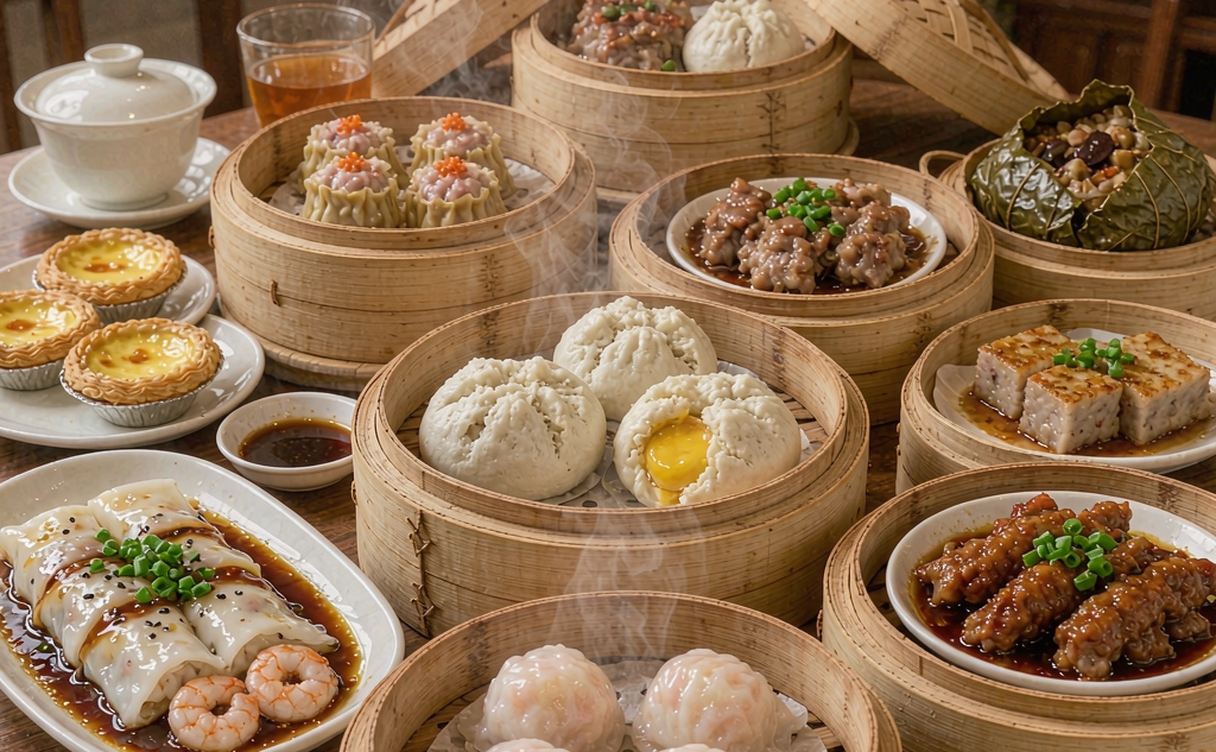
For the wider table, our Guangzhou dim sum guide explains how to order cart-by-cart and which dumplings to point at, and our Cantonese food and dim sum guide maps the regional dishes you will meet from here to Hong Kong, China. I used both to read menus that had no English, and pointing at a neighboring table’s basket never failed me. Save room: the street rewards a graze across three or four stops more than one big sit-down.
Shopping and the bargaining rhythm
Beyond food, the street is a working market. Silk scarves ran RMB 30 to 80, a bag of dried longan or lotus seed RMB 20 to 40, and jade trinkets from RMB 15 up depending on what you trust. Tianzifang-style boutiques it is not; this is volume retail with a Cantonese accent. For the wider retail map, our China shopping and souvenirs guide explains what is worth carrying home, and our China bargaining and haggling guide gives the polite back-and-forth I used to take a silk scarf from RMB 100 to RMB 60 with a smile and a walk-away.
The key is to bargain only where there is no tag, and to accept that the arcade shops near the teahouses are firmer on price than the side-alley stalls. I bought a linen qipao-style top for RMB 120 after some gentle negotiation, and a tin of Cantonese tea for RMB 45 that became my best souvenir. Cash is optional — Alipay worked everywhere I tried — but small stalls liked coins for the tiny buys.
A practical Shangxiajiu itinerary
Here is the half-day plan I used. Morning: metro to Changshou Lu, walk the arcades east to west, photo the facades. Late morning: dim sum at a teahouse (budget RMB 50). Midday: graze the street snacks and browse the silk and tea stalls. Afternoon: a last arcade stroll and a tea tin to carry home. If you have more time, add Shamian Island nearby for the quiet colonial contrast, or push to the newer Beijing Road pedestrian street for a second retail vibe.
My spend was about RMB 180 to 300 including a dim sum meal and a souvenir, not counting the RMB 5 metro. It is one of the better food-and-photo values in southern China, and easy to bolt onto any Guangzhou day.
Where to stay and book
I based myself near Beijing Road and rode the metro over, but staying in Liwan puts Shangxiajiu at your door and puts you among the teahouses at opening. Mid-range hotels there ran RMB 300 to 550 a night in October, and booking on Ctrip with Alipay gave me no trouble with a foreign card. Pick the Liwan side if you want the street at dawn; pick the center if you want a hub for the whole city and the train stations.
Shangxiajiu is not a polished attraction, and it does not pretend to be — it is a working Cantonese street where the reward is a shrimp dumpling, a shaded arcade, and a bargain struck with a laugh. If you want to feel Guangzhou at its most itself, Shangxiajiu earns a morning on your route, and the qilou will shade you the whole way down.